Amines
Amines are a set of molecules containing an amino functional group (derived from ammonia). This category includes amines at any level of substitution : primary, secondary, tertiary, and ammonium salts. Amines are fundamental in organic synthesis and are widely used in pharmaceuticals, agrochemicals, and materials science. At CymitQuimica, we provide a comprehensive selection of amines to meet your research and industrial needs. Our range ensures access to various amines for diverse chemical processes and innovative research.
Subcategories of "Amines"
- Nitrosamines(2,606 products)
- Primary Amines(30,798 products)
- Quaternary Ammonium Cations and Salts(1,099 products)
- Secondary Amines(20,785 products)
- Tertiary Amines(17,108 products)
Found 8776 products of "Amines"
Sort by
Purity (%)
0
100
|
0
|
50
|
90
|
95
|
100
(Nle 35)-Amyloid b-Protein (1-42) ammonium salt
CAS:<p>Please enquire for more information about (Nle 35)-Amyloid b-Protein (1-42) ammonium salt including the price, delivery time and more detailed product information at the technical inquiry form on this page</p>Formula:C204H313N55O60Purity:Min. 95%Molecular weight:4,496 g/mol1-[(3,3-Diphenylpropyl)methylamino]-2-methyl-2-propanol
CAS:<p>1-[(3,3-Diphenylpropyl)methylamino]-2-methyl-2-propanol is an epoxy that can be synthesized from benzene and lercanidipine. It has been used in the production of cinnamic acid and other molecules. This molecule can be prepared by reacting cinnamic acid with chloromethyl methyl ether in a ring-opening reaction. The chloride ion is utilized as a nucleophile to react with the amide nitrogen atom of the cinnamic acid molecule to form the amide bond. The large-scale production of 1-[(3,3-diphenylpropyl)methylamino]-2-methyl-2-propanol utilizes refluxing to remove water and other byproducts that are formed during the process.</p>Formula:C20H27NOPurity:Min. 95%Molecular weight:297.43 g/mol7-Diethylamino-4-methylcoumarin
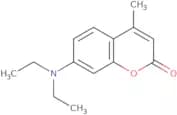
CAS:<p>7-Diethylamino-4-methylcoumarin is a fluorescence probe that can be used in applications such as the study of hydrogen bonding interactions. It is excited by laser light and emits a red-shifted fluorescent light. 7-Diethylamino-4-methylcoumarin is a hydroxyl group analogue of coumarin, which has been shown to have physiological effects on the liver cells. The absorption spectrum of 7-Diethylamino-4-methylcoumarin is sensitive to changes in pH and chemical stability. A decrease in pH increases the intensity of the emission while an increase in pH decreases the intensity of the emission. This compound can also be used to label nucleic acids during polymerase chain reactions (PCR) or for sample preparation before analysis using nuclear magnetic resonance spectroscopy (NMR).</p>Formula:C14H17NO2Purity:Min. 98 Area-%Color and Shape:PowderMolecular weight:231.29 g/mol(2R,4S)-1-tert-Butyl 2-methyl4-aminopyrrolidine-1,2-dicarboxylate
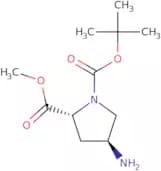
CAS:<p>Please enquire for more information about (2R,4S)-1-tert-Butyl 2-methyl4-aminopyrrolidine-1,2-dicarboxylate including the price, delivery time and more detailed product information at the technical inquiry form on this page</p>Formula:C11H20N2O4Purity:Min. 95%Molecular weight:244.29 g/mol2-Amino-4-fluorobenzaldehyde
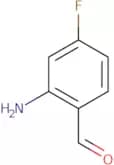
CAS:<p>2-Amino-4-fluorobenzaldehyde is a plant growth regulator that has been shown to be effective at increasing the yield of flowers and fruit crops. It is used as an intermediate in the synthesis of agrochemicals, such as 2-aminobenzaldehyde and anthranilic acid. The biosynthesis of 2-amino-4-fluorobenzaldehyde starts from methanol and intermediates such as anthranilic acid, aminoaldehydes, or alcohols. It can also be produced by oxidative coupling of 2-aminobenzaldehyde with phenylacetone in the presence of sodium hydroxide. 2-Amino-4-fluorobenzaldehyde has been shown to be more efficient than other plant growth regulators such as robinia or aminocyclopentane carboxylic acid (ACC).</p>Formula:C7H6FNOPurity:Min. 95%Color and Shape:SolidMolecular weight:139.13 g/mol2-Aminoethanesulphonamide monohydrochloride
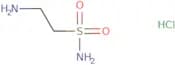
CAS:<p>2-Aminoethanesulphonamide monohydrochloride is a perovskite with a hexagonal shape. It has been shown to interact with the pharmacophore of the enzyme cytochrome P450, and it has been optimized for the reaction by altering its structure. This product is soluble in gaseous form, but can also be used as a solid. 2-Aminoethanesulphonamide monohydrochloride has an absorption maximum at 325 nm and emits fluorescence at 420 nm. It is used in devices that detect ionizing radiation.</p>Formula:C2H8N2O2S•HClPurity:Min. 95%Color and Shape:PowderMolecular weight:160.62 g/molFmoc-S-trityl-L-penicillamine
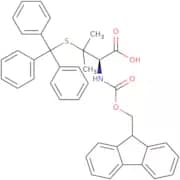
CAS:<p>Fmoc-S-trityl-L-penicillamine is a coordination compound that contains a thiolate and amide group. It has been used as a model system for studying the interaction between proteins and metal ions, with the cyclic structure mimicking the active site of enzymes. The coordination of Fmoc-S-trityl-L-penicillamine to proteins is affected by trypsin, an enzyme that cleaves peptides at carboxyl side chains. Trypsin can also lead to dehydration of Fmoc-S-trityl-L-penicillamine, forming an eliminations product. This compound also reacts with lysine residues in proteins, resulting in an alkene byproduct that can be removed by hydrogenation.</p>Formula:C39H35NO4SPurity:Min. 95%Color and Shape:PowderMolecular weight:613.77 g/molRR,R)-(-)-N,N'-bis(3,5-di-tert-butylsalicylidene)-1,2-cyclohexanediamine
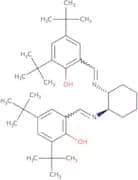
CAS:<p>RR,R)-(-)-N,N'-bis(3,5-di-tert-butylsalicylidene)-1,2-cyclohexanediamine is a coordination compound that is used as a catalyst in organic chemistry. It has been shown to catalyze the reaction of benzaldehyde with nitroethane to give phenylamine. RR,R)-(-)-N,N'-bis(3,5-di-tert-butylsalicylidene)-1,2-cyclohexanediamine also catalyzes the reaction of cyclohexanol with nitroethane to give phenylethylene. The selectivity of this catalyst depends on the site of adsorption and the ligand. This compound has been shown to be electrocatalytic by promoting the oxidation of anilines at a platinum electrode in water solution with an applied potential.</p>Formula:C36H54N2O2Purity:Min. 95%Molecular weight:546.83 g/moltrans 4-Dimethylaminocrotonic acid HCl
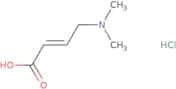
CAS:<p>Intermediate in the synthesis of afatinib</p>Formula:C6H12ClNO2Purity:Min. 95%Color and Shape:White To Off-White SolidMolecular weight:165.62 g/mol4-Dimethylamino antipyrine
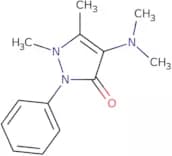
CAS:Controlled Product<p>4-Dimethylamino antipyrine is an aminopyrine derivative that has been shown to inhibit the growth of certain bacteria. It has chemiluminescence properties, which are due to its ability to release electrons from electron donor molecules. 4-Dimethylamino antipyrine has been used as a substrate for in vitro assays measuring the activity of enzymes such as growth factor-β1, pge2 levels and hepatic enzyme activities. 4-Dimethylamino antipyrine also has electrochemical impedance spectroscopy (EIS) properties, which allow it to be used in drug interactions studies. The drug can be measured using a sodium salt assay and aminophenazone as a probe molecule. In addition, amidopyrine can be used as a probe molecule for the measurement of 4-dimethylamino antipyrine because they have similar chemical structures.</p>Formula:C13H17N3OPurity:Min. 95%Color and Shape:PowderMolecular weight:231.29 g/molN-Methyl-1,2-phenylenediamine dihydrochloride
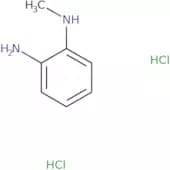
CAS:<p>N-Methyl-1,2-phenylenediamine dihydrochloride (NMP) is a synthetic compound that is used as the precursor to various pharmaceuticals, such as the antihypertensive drug clonidine. NMP can be synthesized from benzene and ammonia or phenylmagnesium bromide. It is carcinogenic in animals and humans, and has been shown to cause DNA damage and cell apoptosis. The chemical has a high potential for nitrosation reactions when exposed to nitrites. This reaction produces nitric oxide, which is cytotoxic and can lead to liver cancer in rats.<br>The synthesis of NMP generates impurities such as methanol solvent, sodium sulfide, and hydrogen chloride gas. These impurities are often found in recycled NMP due to incomplete removal during processing.</p>Formula:C7H12Cl2N2Purity:Min. 95%Color and Shape:PowderMolecular weight:195.09 g/molEthyl 3-(pyridin-2-ylamino)propanoate
CAS:<p>Ethyl 3-(pyridin-2-ylamino)propanoate is a thrombin inhibitor that can be used for the treatment of cancer. Ethyl 3-(pyridin-2-ylamino)propanoate is a reactive, profile compound with electrons and hydrogen bonds. It has been shown to have anticancer activity in vitro and in vivo, inhibiting tumor cell growth by inhibiting DNA synthesis. This molecule also has anti-inflammatory properties, which may be due to its ability to inhibit platelet aggregation.</p>Formula:C10H14N2O2Purity:Min. 95 Area-%Color and Shape:PowderMolecular weight:194.23 g/mol(3S)-3-(tert-Butoxycarbonyl)amino-1-chloro-4-phenyl-2-butanone
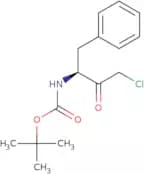
CAS:<p>(3S)-3-(tert-Butoxycarbonyl)amino-1-chloro-4-phenyl-2-butanone is an organic compound that belongs to the class of carbonyl reductase. It is used as a catalyst for the transformation of secondary alcohols to ketones or aldehydes, including isopropyl alcohol. The reaction proceeds via an intermediate carboxylic acid. The enzyme has been found in various microorganisms, and can be purified from Bacillus megaterium and Streptomyces lividans. The enzyme’s activity can be inhibited by steric effects, metal ions, or other compounds. (3S)-3-(tert-Butoxycarbonyl)amino-1-chloro-4-phenyl-2-butanone crystallizes in two forms: one with the chiral center at the 3 position and one with it at the 4 position.</p>Purity:Min. 95%2-Amino-6-fluorobenzoic acid ethyl ester
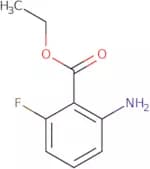
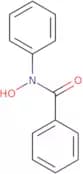
CAS:<p>2-Amino-6-fluorobenzoic acid ethyl ester is a chemical that can be used as a building block in the synthesis of more complex compounds. It is a versatile intermediate and can be used to synthesize other important compounds, such as pharmaceuticals. This compound has been shown to be useful for the preparation of 2-amino-4,6-difluorobenzoic acid ethyl ester and many other derivatives. The colorless solid is soluble in ether and dichloromethane.</p>Formula:C9H10FNO2Purity:Min. 95%Color and Shape:PowderMolecular weight:183.18 g/molN-Benzoyl-N-phenylhydroxylamine
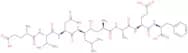
CAS:<p>N-Benzoyl-N-phenylhydroxylamine is a compound that has been shown to be an optimum concentration for the production of molybdenum. It is a model system for the extraction and separation of molybdenum from other metals. The extraction process involves acidification with nitric acid, followed by precipitation with sodium benzoate. N-Benzoyl-N-phenylhydroxylamine is extracted using an electrode and then purified with a metal chelate. This compound has been shown to have synergistic effects when combined with vanadium, which may be due to their similar chemical properties.</p>Formula:C13H11NO2Purity:Min. 95%Molecular weight:213.23 g/molOM99-2trifluoroacetate salt
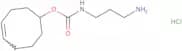
CAS:<p>Please enquire for more information about OM99-2trifluoroacetate salt including the price, delivery time and more detailed product information at the technical inquiry form on this page</p>Formula:C41H64N8O14Purity:Min. 95%Molecular weight:892.99 g/molTCO-amine hydrochloride
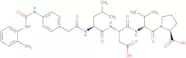
CAS:<p>Please enquire for more information about TCO-amine hydrochloride including the price, delivery time and more detailed product information at the technical inquiry form on this page</p>Formula:C12H22N2O2•HClPurity:Min. 95%Color and Shape:PowderMolecular weight:262.78 g/mol(4-((2-Methylphenyl)aminocarbonyl)-aminophenyl)acetyl-Fibronectin CS-1 Fragment (1980-1983)
CAS:<p>Please enquire for more information about (4-((2-Methylphenyl)aminocarbonyl)-aminophenyl)acetyl-Fibronectin CS-1 Fragment (1980-1983) including the price, delivery time and more detailed product information at the technical inquiry form on this page</p>Formula:C36H48N6O9Purity:Min. 95%Molecular weight:708.8 g/mol2-Methoxy-5-[[(phenylmethyl)sulfonyl]methyl]benzenamine
CAS:<p>3-Amino-4-methoxybenzyl sulphone is a high quality, versatile building block that is used in the synthesis of complex compounds. It is a reagent that can be used for reactions such as the coupling of amines and carboxylic acids. 3-Amino-4-methoxybenzyl sulphone is also useful in the synthesis of pharmaceuticals and speciality chemicals. The compound has been shown to react with other substances, such as thiols and alcohols, to form new materials with interesting properties.</p>Formula:C15H17NO3SPurity:Min. 95%Color and Shape:PowderMolecular weight:291.37 g/mol(7-Diethylaminocoumarin-3-yl)carbonyl-Amyloid b-Protein (1-40) trifluoroacetate salt
CAS:<p>Please enquire for more information about (7-Diethylaminocoumarin-3-yl)carbonyl-Amyloid b-Protein (1-40) trifluoroacetate salt including the price, delivery time and more detailed product information at the technical inquiry form on this page</p>Formula:C208H308N54O61SPurity:Min. 95%Molecular weight:4,573.06 g/mol


![1-[(3,3-Diphenylpropyl)methylamino]-2-methyl-2-propanol](/_next/image/?url=https%3A%2Fstatic.cymitquimica.com%2Fproducts%2F3D%2Fthumb-webp%2FFD22513.webp&w=3840&q=75)

![2-Methoxy-5-[[(phenylmethyl)sulfonyl]methyl]benzenamine](/_next/image/?url=https%3A%2Fstatic.cymitquimica.com%2Fproducts%2F3D%2Fthumb-webp%2FFA70820.webp&w=3840&q=75)