


Amines
Amines are a set of molecules containing an amino functional group (derived from ammonia). This category includes amines at any level of substitution : primary, secondary, tertiary, and ammonium salts. Amines are fundamental in organic synthesis and are widely used in pharmaceuticals, agrochemicals, and materials science. At CymitQuimica, we provide a comprehensive selection of amines to meet your research and industrial needs. Our range ensures access to various amines for diverse chemical processes and innovative research.
Subcategories of "Amines"
- Nitrosamines(2,605 products)
- Primary Amines(30,805 products)
- Quaternary Ammonium Cations and Salts(1,098 products)
- Secondary Amines(20,809 products)
- Tertiary Amines(17,111 products)
Found 8777 products of "Amines"
Sort by
Purity (%)
0
100
|
0
|
50
|
90
|
95
|
100
4-[4-(4-Methyloxy-phenyl)-piperazin-1-yl]-phenylamine
CAS:<p>4-Methyloxy-phenyl)-piperazin-1-yl]-phenylamine is an organic compound that has a reactive silicon group. It contains two phenyl groups, one of which is attached to the silicon. This compound exhibits phase equilibrium in water and can be used as a monomer for fabricating inorganic materials with orderly patterns, such as glass and metal oxides. This product also has impurities and can be grown at different rates depending on the conditions, such as temperature. The optical properties of 4-methyloxy-phenyl)-piperazin-1-yl]-phenylamine are dependent on its environment and it has been shown to have exothermic properties when reacting with iron powder.</p>Formula:C17H21N3OPurity:Min. 95%Molecular weight:283.37 g/molDABCYL-(Asn670,Leu671)-Amyloid b/A4 Protein Precursor770 (667-675)-EDANS ammonium salt
CAS:<p>Please enquire for more information about DABCYL-(Asn670,Leu671)-Amyloid b/A4 Protein Precursor770 (667-675)-EDANS ammonium salt including the price, delivery time and more detailed product information at the technical inquiry form on this page</p>Formula:C71H91N15O21SPurity:Min. 95%Molecular weight:1,522.64 g/molN1-Glutathionyl-spermidine disulfide [
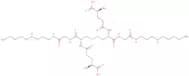
CAS:<p>N1-Glutathionyl-spermidine disulfide (N1-GS) is a molecule that has been shown to have clinical use in the treatment of chronic hepatitis C infection. The N1-GS molecule is composed of a glutathione (GSH) scaffold with two sulfhydryl groups and an amino acid side chain. N1-GS has a hydrophobic nature, which allows it to penetrate the cellular membrane and enter cells. It is also able to form hydrogen bonds and act as a catalyst for reactions. Fluorescence analysis revealed that this molecule is selective for disulfides over thiols, amines, or alcohols. Disulfides are very important in biological systems since they can be found in enzymes, proteins, and cellular membranes. The insolubility of the N1-GS molecule makes it difficult to analyze its structure using traditional methods such as gas chromatography or nuclear magnetic resonance spectroscopy. However, fluorescence</p>Formula:C34H66N12O10S2Purity:Min. 95%Molecular weight:867.09 g/mol(S)-4-(4-Aminobenzyl)-2-(1H)-oxazolidinone
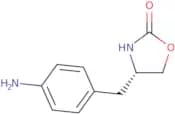
CAS:<p>(S)-4-(4-Aminobenzyl)-2-(1H)-oxazolidinone is a drug substance. It is an intermediate in the synthesis of doripenem, an antibiotic used to treat bacterial infections. The compound's purity can be determined using LC-MS/MS methods. (S)-4-(4-Aminobenzyl)-2-(1H)-oxazolidinone can be quantitated by utilizing the following analytical methods: isocratic high performance liquid chromatography with UV detection at 254 nm, isocratic high performance liquid chromatography with UV detection at 280 nm, and electrospray ionization mass spectrometry.</p>Formula:C10H12N2O2Purity:Min. 95%Molecular weight:192.21 g/molS-(+)-N,N-Dimethyl-3-(1-naphthalenyloxy)-3-(2-thienyl)-1-propanamine oxalate
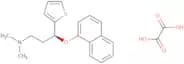
CAS:<p>Please enquire for more information about S-(+)-N,N-Dimethyl-3-(1-naphthalenyloxy)-3-(2-thienyl)-1-propanamine oxalate including the price, delivery time and more detailed product information at the technical inquiry form on this page</p>Purity:Min. 95%Boc-15-amino-4,7,10,13-tetraoxapentadecanoic acid
CAS:<p>Boc-15-amino-4,7,10,13-tetraoxapentadecanoic acid is a PEG compound with two different functional groups (also known as heterobifunctional). Unlike homobifunctional PEG compounds (same functional group on both ends), this type of compounds are more versatile as have two different anchor points. Boc-15-amino-4,7,10,13-tetraoxapentadecanoic acid is used as a linker and spacer to add a PEG moiety, via pegylation (a bioconjugation technique) to proteins, peptides, oligonucleotides, small molecules and nanoparticles.</p>Formula:C16H31NO8Purity:Min. 95%Molecular weight:365.42 g/mol6-Aminochrysene
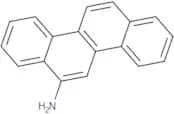
CAS:<p>Inhibitor of benzopyrene metabolism</p>Formula:C18H13NPurity:Min. 95%Color and Shape:Slightly Yellow PowderMolecular weight:243.3 g/molPropylamine
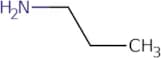
CAS:<p>Propylamine is a colorless, volatile liquid with a boiling point of -26.3°C. It has been shown to have the ability to react with sephadex g-100, which is a chromatographic material that separates proteins according to their size and charge. Propylamine has also been shown to undergo transfer reactions in the presence of hydroxyl groups and disulfide bonds. The chemical properties of propylamine have been studied using analytical methods such as nuclear DNA analysis, as well as biological studies involving the use of trifluoroacetic acid and nitrogen atoms for hydrogen bonding interactions.</p>Formula:C3H9NPurity:Min. 95%Molecular weight:59.11 g/mol4-Acetylamino-5-bromo-2-methoxy-benzoic acid methylester
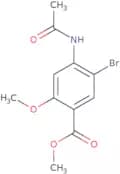
CAS:<p>Please enquire for more information about 4-Acetylamino-5-bromo-2-methoxy-benzoic acid methylester including the price, delivery time and more detailed product information at the technical inquiry form on this page</p>Formula:C11H12BrNO4Purity:Min. 95%Color and Shape:PowderMolecular weight:302.12 g/mol4-Amino-6-mercaptopyrazolo[3,4-d]pyrimidine
CAS:<p>Please enquire for more information about 4-Amino-6-mercaptopyrazolo[3,4-d]pyrimidine including the price, delivery time and more detailed product information at the technical inquiry form on this page</p>Formula:C5H5N5SPurity:Min. 95%Molecular weight:167.19 g/mol4-Methylaminophenol sulfate
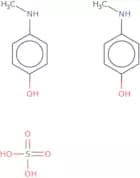
CAS:<p>4-Methylaminophenol sulfate is an enzyme substrate that is used in the analytical method for determining the concentration of potassium dichromate. It is prepared by reacting 4-methylaminophenol with sulfuric acid, and its optimum concentration is 0.2 mM. The linear calibration curve was obtained at a pH range of 2 to 5.4 and a temperature range of 25 to 37°C. The analytical method can be applied to human serum samples and has been shown to be applicable for studies on autoimmune diseases and anthelmintics.</p>Formula:C7H9NO•(H2O4S)0Purity:Min. 95%Color and Shape:White PowderMolecular weight:344.39 g/molAmmonium Undecafluorohexanoate
CAS:<p>Undecafluorohexanoic acid is a perfluoroalkyl carboxylic acid that has been shown to disrupt steroidogenesis in vitro. It may be able to inhibit the transport of cholesterol, fats, and other lipids in cells, which causes disruption in steroidogenesis. This compound also has anti-cancer properties due to its ability to induce apoptosis and arrest cancer cell proliferation. Undecafluorohexanoic acid may also have developmental effects on animals because it can bind to estrogen receptors and disrupt the normal process of estrogen-mediated signaling pathways.</p>Formula:C6H4F11NO2Purity:Min. 95%Molecular weight:331.08 g/molN-(3-Aminopropyl)-2,2,3,3,4,4,5,5,6,6,7,7,8,8,8-pentadecafluorooctanamide
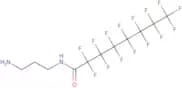
CAS:Controlled Product<p>Please enquire for more information about N-(3-Aminopropyl)-2,2,3,3,4,4,5,5,6,6,7,7,8,8,8-pentadecafluorooctanamide including the price, delivery time and more detailed product information at the technical inquiry form on this page</p>Formula:C11H9F15N2OPurity:Min. 95%Molecular weight:470.18 g/molTetrapropylammonium perruthenate
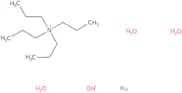
CAS:<p>Tetrapropylammonium perruthenate is a polymeric matrix that contains a chelate ligand and can be used as an oxygen sensor. The polymer is synthesized in the presence of trifluoroacetic acid (TFA) using tetrapropylammonium chloride (TPACl) and perruthenate. Tetrapropylammonium perruthenate forms a polymeric matrix with TPACl, which contains a chelate ligand. The polymer is sensitive to changes in the environment such as pH, temperature, and oxidation-reduction potential. The polymeric matrix can be used for sensing the concentration of oxygen in liquid or gas phase by measuring fluorescence intensity at various wavelengths. These measurements are correlated with the concentration of oxygen in the environment.</p>Formula:C12H28NO4RuPurity:Min. 95%Molecular weight:351.43 g/molBoc-4-aminopiperidine
CAS:<p>Boc-4-aminopiperidine is a molecule that is used as a substrate in chemical reactions. It reacts with sodium hydroxide solution to form an imine, which is hydrogenated by reducing agents such as NaBH4. This reaction yields the products 4-aminopiperidine and acetaldehyde. Boc-4-aminopiperidine is also utilized as a cholinesterase inhibitor, which inhibits the breakdown of acetylcholine at nerve endings. The inhibitory activity of Boc-4-aminopiperidine can be determined using diagnostic techniques and it can be used to inhibit viruses such as HIV and influenza A virus.</p>Formula:C10H20N2O2Purity:Min. 95%Molecular weight:200.28 g/molTES
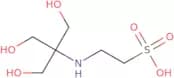
CAS:<p>TES, also known as N-Tris(hydroxymethyl)methyl-2-aminoethanesulfonic acid, is a buffering agent that is used in protein assays and forms complexes with DNA and copper ions. The optimal pH range of this zwitterionic buffer is 6.8-8.2 and its pKa is 7.4.</p>Formula:C6H15NO6SPurity:Min. 95%Color and Shape:PowderMolecular weight:229.25 g/molEDTA ferric ammonium
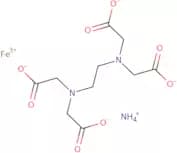
CAS:<p>EDTA ferric ammonium is a metal complex that is used in the manufacture of textile dyes. EDTA ferric ammonium is an oxidizing agent that can be used as a reducing agent by adding an oxidizing agent such as potassium permanganate. The solution form of this compound has a particle size distribution with a median particle size of about 0.5 micrometers and a polydispersity index of about 2. In addition, it has been shown to have surfactant properties, which may be due to its ability to interact with the surface tension of water molecules. EDTA ferric ammonium has also been shown to react with silver ions to form silver ethylene diamine tetraacetic acid (AgEDTA), which can then be used for patterning purposes in textiles.</p>Formula:C10H12FeN2O8•NH4Purity:80%MinColor and Shape:PowderMolecular weight:362.09 g/molDextroamphetamine saccharate
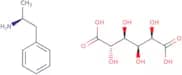
CAS:Controlled Product<p>Dextroamphetamine saccharate is a pharmaceutical drug that belongs to the group of amphetamine derivatives. It is used in the treatment of conditions such as narcolepsy and attention-deficit disorder (ADD). The epidermal growth factor receptor (EGFR) is an important target for the effects of this drug, which has been shown to stimulate growth and proliferation in vitro. Dextroamphetamine saccharate has a complex pharmacokinetic profile and is metabolized by hydrolysis into dextroamphetamine. This drug also binds to voltage-dependent calcium channels, which regulate neurotransmitter release at nerve terminals. The pain relief associated with dextroamphetamine saccharate may be due to its ability to block pro-inflammatory cytokines or inhibit trigeminal nerve activity.</p>Formula:C6H10O8(C9H13N)2Purity:Min. 95%Molecular weight:480.6 g/molEVP4593
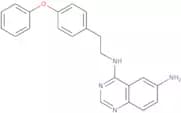
CAS:<p>6-Amino-4-(4-phenoxyphenylethylamino)quinazoline is a potential anticancer drug that has been shown to inhibit the polymerase chain reaction in human osteosarcoma cells. It also inhibits the signaling pathway of nuclear factor-κB (NF-κB), which is involved in cell death and tumorigenesis. 6-Amino-4-(4-phenoxyphenylethylamino)quinazoline has shown significant cytotoxicity against murine hepatoma cells and bowel disease cells, but not against normal tissue. This drug is also an inhibitor of the drug transporter Pgp. 6-Amino-4-(4-phenoxyphenylethylamino)quinazoline has been shown to be effective in experimental models for cancer, AIDS, and other infectious diseases.</p>Formula:C22H20N4OPurity:Min. 95%Color and Shape:PowderMolecular weight:356.42 g/molIsopropyl 2-amino-4-hydroxy-5,8-dihydropyrido[3,4-d]pyrimidine-7(6H)-carboxylate
CAS:<p>Please enquire for more information about Isopropyl 2-amino-4-hydroxy-5,8-dihydropyrido[3,4-d]pyrimidine-7(6H)-carboxylate including the price, delivery time and more detailed product information at the technical inquiry form on this page</p>Formula:C11H16N4O3Purity:Min. 95%Molecular weight:252.27 g/mol
![4-[4-(4-Methyloxy-phenyl)-piperazin-1-yl]-phenylamine](/_next/image/?url=https%3A%2Fstatic.cymitquimica.com%2Fproducts%2F3D%2Fthumb-webp%2FFM25923.webp&w=3840&q=75)



![4-Amino-6-mercaptopyrazolo[3,4-d]pyrimidine](/_next/image/?url=https%3A%2Fstatic.cymitquimica.com%2Fproducts%2F3D%2Fthumb-webp%2FFA17663.webp&w=3840&q=75)


![Isopropyl 2-amino-4-hydroxy-5,8-dihydropyrido[3,4-d]pyrimidine-7(6H)-carboxylate](/_next/image/?url=https%3A%2Fstatic.cymitquimica.com%2Fproducts%2F3D%2Fthumb-webp%2FFI135088.webp&w=3840&q=75)