Cyano-, Nitrile-
Cyano and nitrile compounds are organic molecules that contain cyano (C≡N) or nitrile groups in their structure, characterized by the presence of nitrogen. These groups play important roles in various chemical reactions and industrial applications. In this category, you will find a wide range of cyano and nitrile compounds, ranging from simple to complex structures. At CymitQuimica, we offer high-quality cyano and nitrile compounds tailored to meet research and industrial needs. Our compounds are suitable for a variety of synthesis and analytical applications.
Found 9618 products of "Cyano-, Nitrile-"
Sort by
Purity (%)
0
100
|
0
|
50
|
90
|
95
|
100
1-Amino-3-p-tolyl-benzo[4,5]imidazo[1,2-a]pyridine-2,4-dicarbonitrile
CAS:Purity:95.0%Molecular weight:323.35900878906255-Cyanophthalide
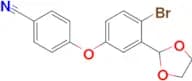
CAS:Controlled Product<p>Applications A useful synthetic intermediate.<br></p>Formula:C9H5NO2Color and Shape:NeatMolecular weight:159.144-(4-Bromo-3-(1,3-dioxolan-2-yl)phenoxy)benzonitrile
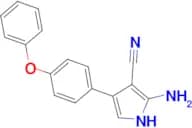
CAS:Purity:95.0%Molecular weight:346.179992675781252-amino-4-(4-phenoxyphenyl)-1H-pyrrole-3-carbonitrile
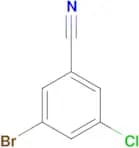
CAS:Purity:95.0%Molecular weight:275.31100463867193-Bromo-5-chlorobenzonitrile
CAS:Formula:C7H3BrClNPurity:98%Color and Shape:Crystalline PowderMolecular weight:216.461-(Chloromethyl)cyclohexanecarbonitrile
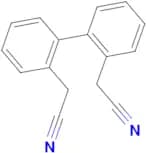
CAS:Purity:95.0%Color and Shape:LiquidMolecular weight:157.63999938964844Biphenyl-2,2′-diacetonitrile
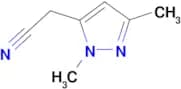
CAS:Formula:C16H12N2Purity:98%Color and Shape:SolidMolecular weight:232.286(1,3-dimethyl-1H-pyrazol-5-yl)acetonitrile
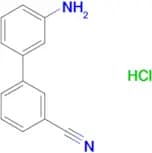
CAS:Formula:C7H9N3Purity:97%Color and Shape:SolidMolecular weight:135.173′-Amino-biphenyl-3-carbonitrilehydrochloride
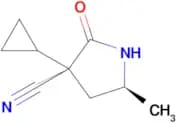
CAS:Formula:C13H11ClN2Color and Shape:SolidMolecular weight:230.7(3r,5s)-3-Cyclopropyl-5-methyl-2-oxo-pyrrolidine-3-carbonitrile
CAS:Purity:98%Molecular weight:164.20799255371094Dipyrazino[2,3-f:2',3'-h]quinoxaline-2,3,6,7,10,11-hexacarbonitrile
CAS:Purity:95.0%Molecular weight:384.28201293945312-Fluoro-4-(trifluoromethyl)phenylacetonitrile
CAS:Formula:C9H5F4NPurity:98%Color and Shape:LiquidMolecular weight:203.149-(Diethylamino)-5-oxo-5H-benzo[a]phenoxazine-6-carbonitrile
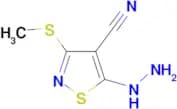
CAS:Purity:95+%Molecular weight:343.3859863281255-Hydrazinyl-3-(methylthio)isothiazole-4-carbonitrile
CAS:Formula:C5H6N4S2Color and Shape:SolidMolecular weight:186.256,7-Bis(benzyloxy)-4-oxo-1,4-dihydroquinoline-3-carbonitrile
CAS:Purity:98%Molecular weight:382.419006347656254-Octylbenzylamine
CAS:<p>4-Octylbenzylamine is a hydrophobic molecule that is soluble in organic solvents. In simulations, it was shown to have affinity for anions and aromatic hydrocarbons, as well as the ability to be immobilized on surfaces. 4-Octylbenzylamine is also a chromatographic stationary phase that can be used to separate solutes with similar properties. This molecule has been oriented so that it binds to the hydrated surface of the column, which improves its affinity for anions and aromatic hydrocarbons. The high-performance liquid chromatography (HPLC) technique utilizes this property to separate molecules of different affinities from one another in a systematic manner.</p>Formula:C15H25NPurity:Min. 95%Color and Shape:PowderMolecular weight:219.37 g/mol4-Cyanophenol
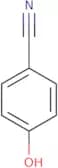
CAS:<p>4-Cyclohexyphenol is a natural compound that belongs to the class of compounds known as phenols. It has a hydroxyl group and an intramolecular hydrogen bond. The thermal expansion of 4-cyanophenol is approximately 6.6 × 10⁻⁶/°C, which is greater than the thermal expansion of p-hydroxybenzoic acid (approximately 1.8 × 10⁻⁶/°C). The reaction mechanism for 4-cyanophenol involves intramolecular hydrogen bonding, which leads to its rapid degradation. 4-Cyanophenol reacts with trifluoroacetic acid in the presence of sodium carbonate to form p-hydroxybenzoic acid, which can be determined by measuring its absorbance at 290 nm. Hydrogen bonding interactions with the surface are responsible for the high sensitivity and selectivity of this analytical method.<br>4-Cyanophenol may also be detected using plasma mass spect</p>Formula:C7H5NOPurity:Min. 95%Color and Shape:PowderMolecular weight:119.12 g/molButyl cyanoacrylate
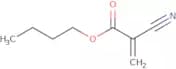
CAS:<p>Butyl cyanoacrylate is a cyanoacrylate, a type of monomer that reacts with water to form a polymer. Cyanoacrylates are used in sealants and tissue adhesives because they form strong bonds with tissues and are biocompatible. Butyl cyanoacrylate has been shown to have an exothermic reaction when it is mixed with water, which can cause burns if the user is not careful. This product also has toxicological studies on fetal bovine and mammalian tissue. Butyl cyanoacrylate has been shown to inhibit vasoactive intestinal peptide release in the nervous system, which may be due to its ability to interfere with fatty acid metabolism.</p>Formula:C8H11NO2Purity:Min. 95%Color and Shape:Clear LiquidMolecular weight:153.18 g/molEthyl (2Z)-2-cyano-3-(2-furyl)acrylate
CAS:<p>Please enquire for more information about Ethyl (2Z)-2-cyano-3-(2-furyl)acrylate including the price, delivery time and more detailed product information at the technical inquiry form on this page</p>Formula:C10H9NO3Purity:Min. 95%Molecular weight:191.18 g/mol3,4-Dihydroxybenzylamine hydrobromide
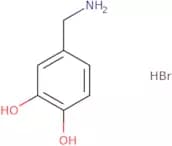
CAS:<p>3,4-Dihydroxybenzylamine hydrobromide is a chemical that reacts with hydrogen peroxide to produce light. It is used as a nutrient for the chemiluminescent reaction in a nutrient solution to detect dopamine, chlorogenic acids, and trifluoroacetic acid. 3,4-Dihydroxybenzylamine hydrobromide can also be used as an analytical method for the measurement of cortisol concentration in plasma and saliva samples. This chemical analogically reacts with monoamine neurotransmitters such as dopamine and gamma-aminobutyric acid (GABA) to form fluorescent probes. 3,4-Dihydroxybenzylamine hydrobromide is not toxic or mutagenic and has been shown to be safe for use in humans.</p>Formula:C7H10BrNO2Purity:Min. 95%Color and Shape:PowderMolecular weight:220.06 g/mol2-Fluoro-4-methoxybenzylamine hydrochloride
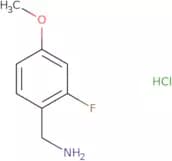
CAS:<p>2-Fluoro-4-methoxybenzylamine hydrochloride is a potent inhibitor of polymerase (DNA and RNA). It has been shown to inhibit the growth of human breast cancer cells and to induce apoptosis. 2-Fluoro-4-methoxybenzylamine hydrochloride binds to the polymerase, which blocks synthesis of DNA or RNA. The binding site is located near the active site of the enzyme. This drug also has an insulin-like effect by stimulating IGF-I production and increasing protein synthesis in somatotrophic cells.</p>Formula:C8H11ClFNOPurity:Min. 95%Color and Shape:PowderMolecular weight:191.63 g/mol2-(4-tert-Butyl-phenoxy)acetonitrile
CAS:<p>2-(4-tert-Butyl-phenoxy)acetonitrile is a high quality, reagent, complex compound that is useful as a building block in the synthesis of fine chemicals and speciality chemicals. 2-(4-tert-Butyl-phenoxy)acetonitrile can be used as an intermediate in the synthesis of various pharmaceuticals and agrochemicals. It has a CAS number of 50635-24-0. This chemical is also useful for research purposes.</p>Formula:C12H15NOPurity:(%) Min. 85%Color and Shape:PowderMolecular weight:189.25 g/mol2-Benzyloxyphenylacetonitrile
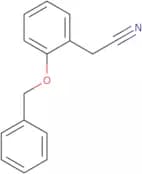
CAS:<p>2-Benzyloxyphenylacetonitrile is a compound that is used in the manufacture of polyester, fibre and crystallized products. It is also used as a solvent for dyes and oils, as well as an industrial chemical intermediate. 2-Benzyloxyphenylacetonitrile can be thermolysed to produce benzoic acid, which can then be oxidized to produce phenol. The residue obtained from this process has been found to have a calorific value of around 2500kcal/kg. This substance has been found to react with oxygen at high temperatures and form an oxygenated product.<br>2-Benzyloxyphenylacetonitrile can be synthesised by reacting benzene with styrene in the presence of water and a catalyst such as sodium hydroxide or calcium oxide. The reaction produces hydrogen gas, benzoic acid and 2-benzyloxyphenylacetonitrile.</p>Formula:C15H13NOPurity:Min. 95%Color and Shape:PowderMolecular weight:223.27 g/mol[(4-Methylphenyl)sulfonyl]acetonitrile
CAS:<p>[(4-Methylphenyl)sulfonyl]acetonitrile is a synthetic compound that has been shown to inhibit the enzyme SHP2. This inhibition leads to decreased proliferation of cells and may be useful in the treatment of degenerative diseases. [(4-Methylphenyl)sulfonyl]acetonitrile is an organic solvent and a nucleophilic reagent that reacts with metal carbonates, such as calcium carbonate, to form carbanions. The carbanion intermediate can react with nucleophiles, such as acetonitrile, to form a new compound that is structurally related to the original starting material.</p>Formula:C9H9SNO2Purity:Min. 95%Molecular weight:195.24 g/mol2-Hydroxy-2-(3-phenoxyphenyl)acetonitrile
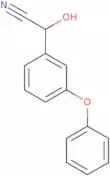
CAS:<p>2-Hydroxy-2-(3-phenoxyphenyl)acetonitrile is an organic compound that is synthesized by the reaction of 3-phenoxybenzaldehyde with nitrous acid in aqueous solution. This compound can be racemized by the enzyme lipase and esterified to form an ester linkage. 2-Hydroxy-2-(3-phenoxyphenyl)acetonitrile has been shown to exhibit insecticidal activity against various strains of bacteria, including Bacillus subtilis, Staphylococcus aureus, and Escherichia coli. 2HPA is a pyrethroid insecticide that has been shown to inhibit lipid synthesis by binding to phospholipids in the bacterial cell membrane. This inhibits the production of fatty acids and glycerol phosphate, inhibiting the growth of the bacteria.</p>Formula:C14H11NO2Purity:Min. 95%Color and Shape:Clear LiquidMolecular weight:225.24 g/mol4-tert-Butylcalix[4]arene - contains 12% residual solvent (ethyl acetate and acetonitrile)
CAS:<p>4-tert-Butylcalix[4]arene is a polymorphic compound with transport properties. It has been shown to have an activation energy of ˜30 kcal/mol, and can be characterized by its nmr spectra. The molecule can be found in n-hexane and zirconium. 4-tert-Butylcalix[4]arene is a coordination complex with a transfer mechanism that contains chloride or metal ion. It forms an acid complex with thermally stable molecules.</p>Formula:C44H56O4Purity:Min. 95%Color and Shape:PowderMolecular weight:648.91 g/mol1,4-Diamino-2,3-dicyanoanthraquinone
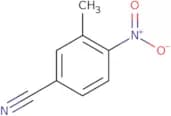
CAS:<p>1,4-Diamino-2,3-dicyanoanthraquinone is a chemical compound that belongs to the amines group. It has transcription-polymerase chain activity and inhibits the growth of cancer cells by regulating blood pressure and stimulating the production of growth factors. The effect on cancer cells is due to its ability to inhibit kinases. 1,4-Diamino-2,3-dicyanoanthraquinone has shown an inhibitory effect on glutamate decarboxylase and fatty acid synthase, which are enzymes that regulate cell metabolism. This chemical compound also exhibits quinoline derivatives with a redox potential that can be used as hydrogen chloride in organic synthesis reactions.</p>Formula:C16H8N4O2Purity:Min. 95%Color and Shape:Blue PowderMolecular weight:288.26 g/mol3-Methyl-4-nitrobenzonitrile
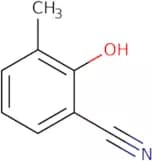
CAS:<p>3-Methyl-4-nitrobenzonitrile is a fluorescing aromatic amine that is synthesized by aliphatic amines. It has been shown to inhibit the growth of cells in culture, which may be due to its ability to bind with and inhibit the insulin-like growth factor receptor-1 (IGF-1R). 3-Methyl-4-nitrobenzonitrile has also been shown to bind with cytochrome P450 enzymes, where it can be oxidized or reduced. The conformation of 3-methyl-4 nitrobenzonitrile is dependent on the solvent molecules present.</p>Formula:C8H6N2O2Purity:Min. 95%Color and Shape:PowderMolecular weight:162.15 g/mol2-Hydroxy-3-methylbenzonitrile
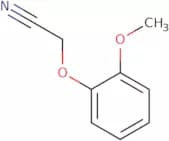
CAS:<p>2-Hydroxy-3-methylbenzonitrile is a high quality chemical that is used as an intermediate in the synthesis of complex compounds. It can be used as a reagent in organic chemistry, and has been shown to be useful for the production of fine chemicals, such as antibiotics. 2-Hydroxy-3-methylbenzonitrile is also a versatile building block for the production of pharmaceuticals and research chemicals. It can be used as a reaction component for the synthesis of speciality chemicals and various building blocks.</p>Formula:C8H7NOPurity:Min. 95%Color and Shape:PowderMolecular weight:133.15 g/mol(2-Methoxyphenoxy)acetonitrile
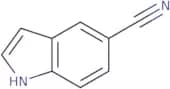
CAS:<p>(2-Methoxyphenoxy)acetonitrile is a versatile building block that has been used in the synthesis of fine chemicals, complex compounds, research chemicals, reagents and speciality chemicals. It is a useful building block for high quality pharmaceuticals. (2-Methoxyphenoxy)acetonitrile can be used as a reaction component or scaffold to synthesize organic molecules with interesting biological activities.</p>Formula:C9H9NO2Purity:Min. 95%Color and Shape:Clear LiquidMolecular weight:163.17 g/mol5-Cyanoindole
CAS:<p>5-Cyanoindole is a hydrophobic molecule that has been shown to have an inhibitory effect on the trifluoroacetic acid-induced fluorescence in the presence of chloride ions. It is also able to bind peptides and has been used as an antimicrobial peptide. 5-Cyanoindole can be synthesized electrochemically or by electrochemical impedance spectroscopy. The synthesis of 5-cyanoindole can be achieved through a Friedel-Crafts reaction, followed by a hydrolysis with hydrogen peroxide and then a reduction with sodium borohydride.<br>!-- END OF PRODUCT DESCRIPTION --></p>Formula:C9H6N2Color and Shape:White PowderMolecular weight:142.16 g/mol2-Amino-6-methoxybenzonitrile
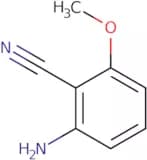
CAS:<p>2-Amino-6-methoxybenzonitrile is an organic compound that belongs to a group of monosubstituted hydroxylamines. It has been used in the synthesis of various analogues, such as caprolactam and methoxyanthranilic acid. Hydrochloric acid reacts with 2-amino-6-methoxybenzonitrile to form 2-amino-6-hydroxybenzonitrile, which can be oxidized to 2-amino-6-(hydroxymethyl)benzonitrile. This reaction is catalyzed by copper or zinc metal.</p>Formula:C8H8N2OPurity:Min. 95%Color and Shape:PowderMolecular weight:148.16 g/mol3-Cyano-5-bromopyridine
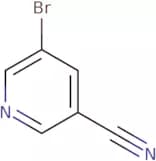
CAS:<p>3-Cyano-5-bromopyridine is an enantiopure organic compound that belongs to the group of halides. It is a functional group that is a reagent in organic synthesis, and it can be used as a precursor to dyestuffs. 3-Cyano-5-bromopyridine has been shown to have antimicrobial activity against bacteria and fungi. It also has a metabotropic glutamate receptor subtype selective affinity, which may be due to its ability to bind with glutamate in complex molecules.</p>Formula:C6H3BrN2Purity:Min. 95%Color and Shape:White To Beige To Light (Or Pale) Yellow SolidMolecular weight:183.01 g/mol1-Isocyanoadamantane
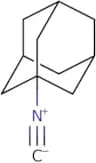
CAS:<p>1-Isocyanoadamantane is a compound that exhibits anti-influenza drug activity. It has been shown to inhibit virus replication by interacting with the active site of the influenza virus ribonucleoprotein (RNP) and inhibiting the synthesis of viral proteins. 1-Isocyanoadamantane binds to the RNP through coordination chemistry, which is mediated by nitrogen atoms on the amides and amines in its structure. The reaction mechanism for 1-isocyanoadamantane consists of two steps: reductive elimination followed by functional group activation. In this process, an amide or an amine is eliminated as a hydrogen atom, while a functional group reacts with it to form a new bond.</p>Formula:C11H15NPurity:Min. 95%Color and Shape:White PowderMolecular weight:161.24 g/mol2-(2-formyl-6-methoxyphenoxy)acetonitrile
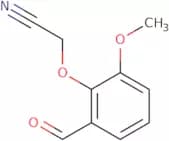
CAS:<p>Please enquire for more information about 2-(2-formyl-6-methoxyphenoxy)acetonitrile including the price, delivery time and more detailed product information at the technical inquiry form on this page</p>Formula:C10H9NO3Purity:Min. 95%Color and Shape:PowderMolecular weight:191.18 g/mol(3R,5R)-6-Cyano-3,5-dihydroxy-hexanoic acid tert-butyl ester
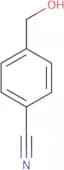
CAS:<p>(3R,5R)-6-Cyano-3,5-dihydroxy-hexanoic acid tert-butyl ester is a building block for organic synthesis. It is a versatile intermediate that can be used in the preparation of pharmaceuticals and other organic compounds. The compound is also used as a reagent to study the biological activity of other compounds. CAS No. 125971-93-9 is a fine chemical that has been shown to have high quality and purity.</p>Formula:C11H19NO4Purity:Min. 98 Area-%Color and Shape:Yellow PowderMolecular weight:229.27 g/mol4-Cyanobenzyl alcohol
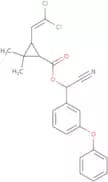
CAS:<p>4-Cyanobenzyl alcohol is a phosphane that reacts with amines to form imines. This reaction can be used as a tool for the identification of amines in protein samples. The reaction time for this reaction is about 3 hours and can only be done at room temperature. 4-Cyanobenzyl alcohol also has potent inhibition activity against cyclopentadienyl, which is an important intermediate of organic synthesis. The ruthenium complex catalyzes this reaction and it can be used as a homogeneous catalyst.</p>Formula:C8H7NOPurity:Min. 95%Color and Shape:PowderMolecular weight:133.15 g/molCyano-3-phenoxybenzyl 3-(2,2-dichloroethenyl)-2,2-dimethylcyclopropanecarboxylate
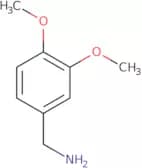
CAS:<p>Cypermethrin is an insecticide that belongs to the family of chemical pesticides. It is used in agriculture and in public health to control malaria-transmitting mosquitoes, head lice, and scabies mites. Cypermethrin disrupts the insect nervous system by inhibiting the function of synapses between nerves, resulting in paralysis and death. The compound also affects signal pathways that regulate locomotor activity and enzyme activities. Cypermethrin has been shown to have a high resistance to degradation by glycol ethers such as ethylene glycol monomethyl ether acetate (EGMEA). It has an optimum concentration of 0.01 ppm for mosquito control and 0.1 ppm for lice control. The analytical method involves liquid chromatography with sodium citrate as an ion-pairing agent and a linear calibration curve using a standard curve generated from known concentrations of cypermethrin.</p>Formula:C22H19Cl2NO3Purity:Min. 95%Color and Shape:Colorless Clear LiquidMolecular weight:416.3 g/mol3,4-Dimethoxybenzylamine
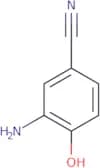
CAS:<p>3,4-Dimethoxybenzylamine is an amine that is used in the synthesis of pharmaceuticals. It can be polymerized by heating with aqueous formaldehyde and hydrochloric acid to form a resin. 3,4-Dimethoxybenzylamine inhibits serotonin receptors, exhibiting inhibitory properties at concentrations of 10-5 M. 3,4-Dimethoxybenzylamine also has pharmacokinetic properties that are similar to vitamin B1. This compound has been shown to inhibit homogeneous catalysts and is used for coatings for ganglion cells.</p>Formula:C9H13NO2Purity:Min. 95%Color and Shape:Clear LiquidMolecular weight:167.21 g/mol2-Amino-4-cyano-phenol
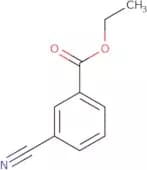
CAS:<p>2-Amino-4-cyano-phenol is a compound that has been shown to have antitubercular activity. It modulates the activity of cromakalim, which is a drug used for the treatment of tuberculosis. 2-Amino-4-cyano-phenol is also an antibacterial agent and has been shown to activate bacterial DNA replication and protein synthesis. The mechanism of action of this compound is thought to be due in part to its ability to bind with the ribosomes on the outside surface of cells and inhibit their function. 2-Amino-4-cyano-phenol has also been shown to have structural similarities with phenylephrine, which inhibits bacterial growth by binding to DNA gyrase, thereby preventing transcription and replication.</p>Formula:C7H6N2OPurity:Min. 95%Color and Shape:PowderMolecular weight:134.14 g/mol3-Cyanobenzoic acid ethyl ester
CAS:<p>3-Cyanobenzoic acid ethyl ester is a reaction component that is used in organic synthesis. It is a versatile building block, useful intermediate, and useful building block. 3-Cyanobenzoic acid ethyl ester is a fine chemical that can be used as a reagent for the preparation of other compounds. This compound has been assigned CAS No. 2463-16-3 and has the molecular formula C7H6O2.</p>Formula:C10H9NO2Purity:Min. 95%Color and Shape:PowderMolecular weight:175.18 g/mol4,5-Bis(2-cyanoethylthio)-1,3-dithiole-2-thione
CAS:<p>4,5-Bis(2-cyanoethylthio)-1,3-dithiole-2-thione is a fluorescent compound that exists in two orientations, cis and trans. It has been used as a linker for the construction of new compounds with interesting properties. 4,5-Bis(2-cyanoethylthio)-1,3-dithiole-2-thione has been shown to be an effective ligand for palladium cross coupling reactions. This compound can also be used in supramolecular chemistry due to its ability to fluoresce brightly.</p>Formula:C9H8N2S5Purity:Min. 95%Molecular weight:304.5 g/mol
![1-Amino-3-p-tolyl-benzo[4,5]imidazo[1,2-a]pyridine-2,4-dicarbonitrile](/_next/image/?url=https%3A%2Fstatic.cymitquimica.com%2Fproducts%2F10%2Fthumb-webp%2FF549602.webp&w=3840&q=75)


![2-[(2,2-dimethoxyethyl)amino]-5-nitrobenzonitrile](/_next/image/?url=https%3A%2Fstatic.cymitquimica.com%2Fproducts%2F10%2Fthumb-webp%2FF366262.webp&w=3840&q=75)

![9-Oxo-9H-indeno[1,2-b]pyrazine-2,3-dicarbonitrile](/_next/image/?url=https%3A%2Fstatic.cymitquimica.com%2Fproducts%2F10%2Fthumb-webp%2FF787794.webp&w=3840&q=75)
![Dipyrazino[2,3-f:2',3'-h]quinoxaline-2,3,6,7,10,11-hexacarbonitrile](/_next/image/?url=https%3A%2Fstatic.cymitquimica.com%2Fproducts%2F10%2Fthumb-webp%2FF432983.webp&w=3840&q=75)

![9-(Diethylamino)-5-oxo-5H-benzo[a]phenoxazine-6-carbonitrile](/_next/image/?url=https%3A%2Fstatic.cymitquimica.com%2Fproducts%2F10%2Fthumb-webp%2FF760018.webp&w=3840&q=75)
![7-Amino-5-phenylpyrazolo[1,5-a]pyrimidine-3-carbonitrile](/_next/image/?url=https%3A%2Fstatic.cymitquimica.com%2Fproducts%2F10%2Fthumb-webp%2FF098189.webp&w=3840&q=75)






![[(4-Methylphenyl)sulfonyl]acetonitrile](/_next/image/?url=https%3A%2Fstatic.cymitquimica.com%2Fproducts%2F3D%2Fthumb-webp%2FFM58773.webp&w=3840&q=75)
![4-tert-Butylcalix[4]arene - contains 12% residual solvent (ethyl acetate and acetonitrile)](/_next/image/?url=https%3A%2Fstatic.cymitquimica.com%2Fproducts%2F3D%2Fthumb-webp%2FFB59591.webp&w=3840&q=75)