Cyano-, Nitrile-
Found 9677 products of "Cyano-, Nitrile-"
2-Cyano-N-((furan-2-ylmethyl)carbamoyl)acetamide
CAS:Controlled ProductApplications 2-Cyano-N-((furan-2-ylmethyl)carbamoyl)acetamide is an intermediate in the synthesis of novel 1- and 8-substituted-3-furfuryl xanthines as adenosine receptor antagonists.
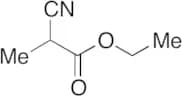
References Balo, M. C., et al.: Bioorg. Med. Chem., 17, 6755 (2009);Formula:C7H14O6·C3H8OColor and Shape:NeatMolecular weight:254.278Ethyl 2-Cyanopropanoate
CAS:Controlled ProductApplications Ethyl 2-Cyanopropanoate is a building block used in many organic reactions such as the preparation of highly substituted benzenes.
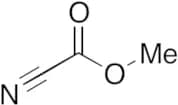
References Zhang, X., et. al.: Organic Lett., 13, 5024 (2011)Formula:C21H26N2OColor and Shape:NeatMolecular weight:322.444Methyl Cyanoformate
CAS:Controlled ProductApplications Methyl cyanoformate is a reagent that is used in the preparation of XEN907, which is a spiro-oxindole blocker of Nav1.7 for the treatment of pain.
Not a dangerous good if item is equal to or less than 1g/ml and there is less than 100g/ml in the package
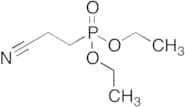
References Chowdhury, S., et al.: Bioorg. Med. Chem. Lett., 21, 3676 (2011);Formula:C3H3NO2Color and Shape:NeatMolecular weight:85.06Diethyl (2-cyanoethyl)phosphonate
CAS:Controlled ProductApplications Diethyl (2-cyanoethyl)phosphonate, is a useful reactant used in various chemical synthesis such as in synthesis of lipophilic oxoamides with activity against phospholipase A2, Triose phosphate isomerase of muscle inhibitors, and also in base-catalyzed stereospecific anti-Markovnikov addition.
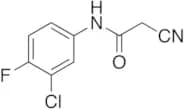
Formula:C7H14NO3PColor and Shape:NeatMolecular weight:191.16N-(3-Chloro-4-fluorophenyl)-2-cyanoacetamide
CAS:Controlled ProductApplications N-(3-Chloro-4-fluorophenyl)-2-cyanoacetamide (cas# 219529-31-4) is a compound useful in organic synthesis.
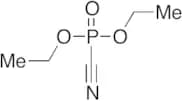
Formula:C9H6ClFN2OColor and Shape:NeatMolecular weight:212.61Diethyl Cyanophosphonate
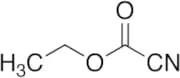
CAS:Controlled ProductFormula:C5H10NO3PColor and Shape:NeatMolecular weight:163.11Ethyl Cyanoformate
CAS:Controlled ProductApplications Ethyl Cyanoformate (cas# 623-49-4) is a compound useful in organic synthesis.
Formula:C4H5NO2Color and Shape:NeatMolecular weight:99.09N-(4-Cyano-2-chlorophenyl)acetamide
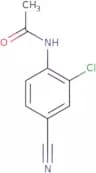
CAS:N-(4-Cyano-2-chlorophenyl)acetamide is a versatile building block that is used in the synthesis of complex compounds. N-(4-Cyano-2-chlorophenyl)acetamide has been shown to be a useful intermediate in the synthesis of important compounds such as 4-aminoantipyrine, 4,5-dichloroanthranilic acid and 2,6-dichloropurine. This chemical has also been found to be an effective reagent for the preparation of other chemicals.Formula:C9H7ClN2OPurity:Min. 95%Molecular weight:194.62 g/mol4,4'-Dicyanodiphenylsulphone
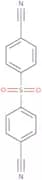
CAS:Dicyanodiphenylsulphone is an inhibitory agent that prevents the HIV-2 virus from entering cells. It binds to the viral envelope, forming a sealant that blocks the virus from entering the cell and infecting it. Dicyanodiphenylsulfone also has immunosuppressive properties, but can be used in conjunction with sulfa drugs and polysulfides to prevent the development of bacterial resistance. The efficacy of dicyanodiphenylsulfone has been demonstrated in cellular assays and in human immunodeficiency virus (HIV) infected patients. This drug is not active against other types of viruses, such as herpes simplex, influenza A, or cytomegalovirus.Formula:C14H8N2O2SPurity:Min. 95%Molecular weight:268.29 g/molN-Cyano-N',N''-dimethylguanidine
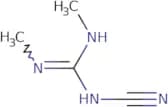
CAS:N-Cyano-N',N''-dimethylguanidine is a clinical drug that has been shown to have a detectable concentration in the serum of humans. The drug is metabolized by nitrite ion, maleate, and potassium phosphate to form reaction products. N-Cyano-N',N''-dimethylguanidine binds to h2 receptors and inhibits the activity of cytochrome p450 enzymes. This inhibition can lead to carcinogenic activity. N-Cyano-N',N''-dimethylguanidine is an analog of methylene blue, which inhibits the synthesis of rna in bacteria and is used as a therapeutic agent for malaria.Formula:C4H8N4Purity:Min. 95%Color and Shape:White PowderMolecular weight:112.14 g/mol(1,3-Dioxo-1,3-dihydro-2H-isoindol-2-yl)acetonitrile
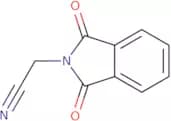
CAS:Acetonitrile is a colorless liquid that is miscible with water and most organic solvents. It is mainly used as a solvent for chemical reactions, including the synthesis of pharmaceuticals. Acetonitrile has been shown to be mutagenic in vitro and in vivo. Acetonitrile was found to induce micronuclei formation, which may be due to its ability to form reactive oxygen species or cause DNA damage by forming adducts with DNA bases. Acetonitrile also induced chromosomal aberrations and micronucleated polychromatic erythrocytes in mice, as well as increased reticulocytes (immature red blood cells) in humans. The dihedral angle between the nitrate group and the benzyl group has been found to be 163°, while the average frequency of acetonitrile is 164 Hz.Formula:C10H6N2O2Purity:Min. 95%Color and Shape:PowderMolecular weight:186.17 g/mol3-Cyanophenylacetone
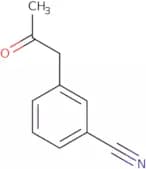
CAS:3-Cyanophenylacetone is a versatile building block and useful intermediate in the synthesis of various pharmaceuticals, agrochemicals, and other chemical products. It can be used as a reagent or speciality chemical. 3-Cyanophenylacetone is also a useful scaffold for the synthesis of complex compounds. This compound is listed on the Chemical Abstracts Service (CAS) registry with the number 73013-50-0.Formula:C10H9NOPurity:Min. 95%Molecular weight:159.18 g/mol2-Cyano-5-fluorobenzoic acid
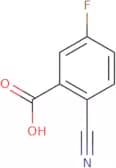
CAS:2-Cyano-5-fluorobenzoic acid (2C5FBA) is a chemical that is synthesized by the reaction of sodium nitrite with methyl ester. It can be used in organic synthesis as a target product and can also be used as an intermediate for the synthesis of other chemicals. 2C5FBA has been shown to react with nitrogen to produce cyanide, which is toxic to humans and animals. 2C5FBA also reacts with acid methyl to produce methyl esters, which are often used as solvents in industrial settings.
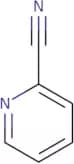
Formula:C8H4FNO2Purity:Min. 95%Color and Shape:PowderMolecular weight:165.12 g/mol2-Cyanopyridine
CAS:2-Cyanopyridine is a chelate ligand that is structurally related to picolinic acid. It binds to the active site of IDO1 and prevents the enzyme from converting tryptophan into kynurenine. This leads to an increase in tryptophan levels, which can then be used for protein synthesis. 2-Cyanopyridine has been shown to have antimicrobial activity against Gram-positive bacteria in vitro and in vivo. It also inhibits the growth of Gram-negative bacteria, yeast, and fungi by binding to the iron atom of their heme molecules. 2-Cyanopyridine has shown potential as a pharmacological agent or as a biochemical probe for transfer reactions.
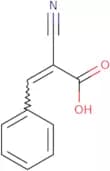
Formula:C6H4N2Purity:Min. 95%Color and Shape:PowderMolecular weight:104.11 g/mola-Cyanocinnamic acid
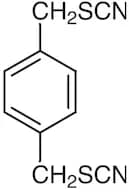
CAS:a-Cyanocinnamic acid is a 3-hydroxycinnamic acid that can be found in coffee. It has been shown to inhibit the growth of colorectal adenocarcinoma cells and other cancer cells by binding to an inhibitor site on fatty acid synthesis enzymes, such as pyruvate carboxylase, hydroxylase, and acetyl-CoA carboxylase. This inhibition leads to decreased levels of fatty acids and increased levels of pyruvate and hydrogen peroxide, which inhibits cell proliferation. In addition, a-cyanocinnamic acid has been shown to have a hypoxic tumor selectivity index of 10.7%, which means it selectively targets tumors with low oxygen levels.Formula:C10H7NO2Purity:Min. 95%Color and Shape:White PowderMolecular weight:173.17 g/molp-Xylylene Dithiocyanate
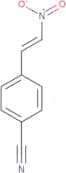
CAS:Formula:C10H8N2S2Purity:>98.0%(GC)Color and Shape:White to Almost white powder to crystalineMolecular weight:220.311-(4-Cyanophenyl)-2-nitroethene
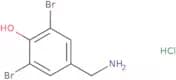
CAS:1-(4-Cyanophenyl)-2-nitroethene is a reactive intermediate that belongs to the group of carboxylic acids. It is an unsaturated compound with a cinnamic acid derivative. The nitration of 1-(4-cyanophenyl)-2-nitroethene leads to the formation of 1,2-dinitrobenzene, which can be used for the synthesis of other heterocyclic compounds. This intermediate has been shown to have catalytic activity in biomolecules, including carboxylic and phenolic groups, and can be used for the synthesis of other organic compounds.Formula:C9H6N2O2Purity:Min. 95%Molecular weight:174.16 g/mol3,5-Dibromo-4-hydroxybenzylamine hydrochloride
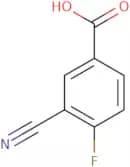
CAS:3,5-Dibromo-4-hydroxybenzylamine hydrochloride is a high quality reagent that can be used as an intermediate in the production of fine chemicals and speciality chemicals. It is also a versatile building block for the synthesis of complex compounds. 3,5-Dibromo-4-hydroxybenzylamine hydrochloride has been shown to be useful in research due to its ability to react with other compounds in a variety of ways. The CAS number for this compound is 1134950-89-2.Formula:C7H8Br2ClNOPurity:Min. 95%Color and Shape:PowderMolecular weight:317.41 g/mol3-Cyano-4-fluorobenzoic acid
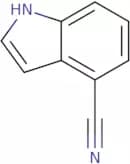
CAS:3-Cyano-4-fluorobenzoic acid is a fluorinated analog of 3-cyano-4-fluorobenzoic acid, which has been shown to be effective in the treatment of prostate cancer. It is a prodrug that is metabolized by activated esterases to release the active form. The 18F radiolabeled form of 3-Cyano-4-fluorobenzoic acid has a high affinity for prostate carcinoma cells and has been used as a diagnostic agent. This drug also has an excellent pharmacokinetic profile and can be used as a nonradioactive tracer for imaging tumor cells in vivo.Formula:C8H4FNO2Purity:Min. 95%Color and Shape:White To Off-White SolidMolecular weight:165.12 g/mol4-Cyanoindole
CAS:The 4-cyanoindole is a fluorescent molecule that binds to proteins and affects protein homeostasis. It has been shown to bind to the sodium salt form of proteins, which are typically found in human liver cells. The binding of 4-cyanoindole to these proteins leads to its reduction by borohydride and fluorescence resonance energy transfer (FRET) between the molecule and the protein. This binding can be detected using a fluorescence lifetime spectroscopy technique, which detects changes in the fluorescence's lifetime as well as intensity. The binding of 4-cyanoindole to proteins has been shown to have anti-cancer properties. It has also been used for detection of monoclonal antibodies against cancer cells or for fluorescent labeling of cancer cells for immunofluorescent microscopy.Formula:C9H6N2Color and Shape:White PowderMolecular weight:142.16 g/mol