Cyano-, Nitrile-
Found 9677 products of "Cyano-, Nitrile-"
5-amino-3-oxo-3,4-dihydro-2H-pyrrole-4-carbonitrile
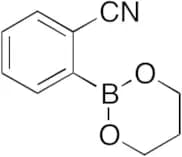
CAS:Purity:95%Molecular weight:123.114997863769532-(2-Cyanophenyl)-1,3,2-dioxaborinane
CAS:Controlled ProductStability Hygroscopic
Applications 2-(2-Cyanophenyl)-1,3,2-dioxaborinane is used in the synthesis of AMPA receptor antagonists in the treatment of neurological diseases causing dysfunction of glutamatergic neurotransmission. Also used in the small scale synthesis of Perampanel (P285520), an AMPA receptor antagonist.
References Hibi, S. et al.: J. Med. Chem., 55, 10584 (2012); McElhinny, C. et al.: Synthesis, 44, 57 (2012);Formula:C10H10BNO2Color and Shape:NeatMolecular weight:187.0Methyl 2-(((2'-cyano-[1,1'-biphenyl]-4-yl)methyl)amino)-3-nitrobenzoate
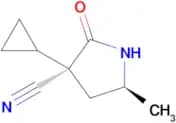
CAS:Purity:95.0%Molecular weight:387.3949890136719(3s,5s)-3-Cyclopropyl-5-methyl-2-oxo-pyrrolidine-3-carbonitrile
CAS:Purity:98%Molecular weight:164.207992553710942-Oxo-2,3-dihydro-1H-pyrrolo[3,2-b]pyridine-5-carbonitrile
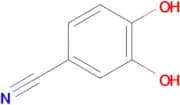
CAS:Purity:95.0%Molecular weight:159.14799499511723,4-Dihydroxybenzonitrile
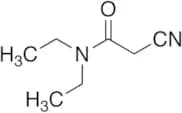
CAS:Formula:C7H5NO2Purity:95%Color and Shape:White powderMolecular weight:135.122N,N-Diethylcyanoacetamide
CAS:Controlled ProductApplications N,N-Diethylcyanoacetamide (cas# 26391-06-0) is a compound useful in organic synthesis.
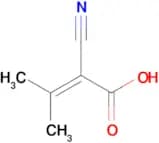
Formula:C7H12N2OColor and Shape:NeatMolecular weight:140.182-Cyano-3-methylbut-2-enoic acid
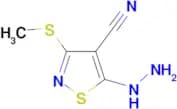
CAS:Purity:95%Color and Shape:SolidMolecular weight:125.126998901367195-Hydrazinyl-3-(methylthio)isothiazole-4-carbonitrile
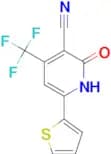
CAS:Formula:C5H6N4S2Color and Shape:SolidMolecular weight:186.252-Oxo-6-thiophen-2-yl-4-trifluoromethyl-1,2-dihydropyridine-3-carbonitrile
CAS:Formula:C11H5F3N2OSPurity:97%Color and Shape:SolidMolecular weight:270.232-Methyl-3-oxobutanenitrile
CAS:Formula:C5H7NOPurity:95.0%Color and Shape:LiquidMolecular weight:97.1173-Phenoxyphenylacetonitrile
CAS:Controlled ProductApplications 3-PHENOXYPHENYLACETONITRILE (cas# 51632-29-2) is a useful research chemical.
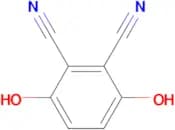
Formula:C14H11NOColor and Shape:NeatMolecular weight:209.242,3-Dicyanohydroquinone
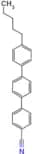
CAS:Formula:C8H4N2O2Purity:99.0%Color and Shape:SolidMolecular weight:160.1324-Cyano-4''-N-pentyl-p-terphenyl
CAS:Purity:98.0%Color and Shape:Liquid, No data available.Molecular weight:325.45498657226562-[(3Z)-1-(ethanesulfonyl)piperidin-3-ylidene]acetonitrile
CAS:Purity:97.0%Molecular weight:214.279998779296882-(4'-(Diphenylamino)-[1,1'-biphenyl]-4-yl)acetonitrile
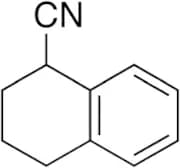
CAS:Purity:98%Molecular weight:360.45999145507811-Cyanotetraline
CAS:Controlled ProductApplications 1-Cyanotetraline is used in the synthesis of aldose reductase inhibitors. Also reductase enzymes are believed to catalyze the formation of sorbitol from glucose leading to the chronic complications of diabetes mellitus. It is also used in the synthesis of baclofen analogs, potent GABAB agonists.
References Sarges, R. et al.: J. Med. Chem., 31, 230 (1988); Mann, A. et al.: J. Med. Chem., 34, 1307 (1991);Formula:C11H11NColor and Shape:Colourless LiquidMolecular weight:157.21Ref: 10-F794972
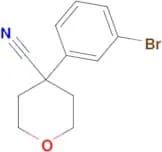
1gTo inquire5gTo inquire25gTo inquire10mgTo inquire25mgTo inquire100mgTo inquire250mgTo inquire4-(3-Bromophenyl)oxane-4-carbonitrile
CAS:Purity:95.0%Color and Shape:Solid, Yellow solidMolecular weight:266.138000488281252-(4-Cyanophenyl)-1H-anthra[1,2-d]imidazole-6,11-dione
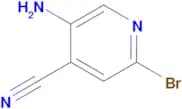
CAS:Color and Shape:SolidMolecular weight:349.0851265925-Amino-2-bromo-pyridine-4-carbonitrile
CAS:Purity:98+%Color and Shape:SolidMolecular weight:198.02299499511726-Isopropyl-7-oxo-5-phenyl-4,7-dihydropyrazolo[1,5-a]pyrimidine-3-carbonitrile
CAS:Purity:97.0%Color and Shape:SolidMolecular weight:278.31500244140625TOLUENE-4-SULFONIC ACID 1-CYANO-CYCLOBUTYLMETHYL ESTER
CAS:Purity:95.0%Molecular weight:265.3299865722656Ref: 10-F467544
1gTo inquire2gTo inquire5gTo inquire10gTo inquire100mgTo inquire250mgTo inquire500mgTo inquire(2-Chlorophenoxy)-acetonitrile
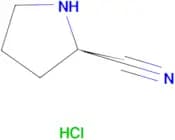
CAS:Formula:C8H6ClNOPurity:98%+Color and Shape:Liquid, ClearMolecular weight:167.59(R)-Pyrrolidine-2-carbonitrile hydrochloride
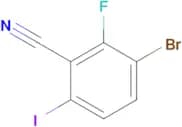
CAS:Formula:C5H9ClN2Purity:97%Color and Shape:SolidMolecular weight:132.593-Bromo-2-fluoro-6-iodobenzonitrile
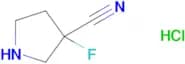
CAS:Formula:C7H2BrFINPurity:90.0%Color and Shape:SolidMolecular weight:325.9073-CYANO-3-FLUOROPYRROLIDINE HCL
CAS:Purity:97.0%Color and Shape:SolidMolecular weight:150.58000183105472-Amino-4-phenyl-5,6,7,8-tetrahydro-quinoline-3-carbonitrile
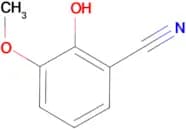
CAS:Purity:95.0%Color and Shape:SolidMolecular weight:249.317001342773442-Hydroxy-3-methoxybenzonitrile
CAS:Formula:C8H7NO2Purity:96%Color and Shape:SolidMolecular weight:149.1492-Isopropyl-2,3-dimethylbutyronitrile
CAS:Purity:95.0%Color and Shape:LiquidMolecular weight:139.24200439453125[4-(1-benzofuran-2-yl)-1,3-thiazol-2-yl]acetonitrile
CAS:Purity:95.0%Molecular weight:240.27999877929688TERT-BUTYL 4-(7-CHLOROQUINOLIN-4-YL)-4-CYANOPIPERIDINE-1-CARBOXYLATE
CAS:Purity:95.0%Molecular weight:371.8699951171875Ethyl 2-ethoxy-1-[[(2'-cyanobiphenyl-4-yl)methyl]benzimidazole]-7-carboxylate
CAS:Purity:95.0%Color and Shape:Liquid, No data available.Molecular weight:425.48800659179692-Amino-4-(3-(benzyloxy)phenyl)-1H-pyrrole-3-carbonitrile
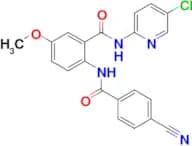
CAS:Purity:95.0%Molecular weight:289.3380126953125N-(5-chloropyridin-2-yl)-2-(4-cyanobenzamido)-5-methoxybenzamide
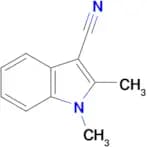
CAS:Purity:97%Molecular weight:406.82998657226561,2-Dimethyl-1H-indole-3-carbonitrile
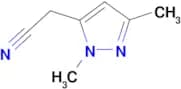
CAS:Formula:C11H10N2Purity:95.0%Color and Shape:SolidMolecular weight:170.215(1,3-dimethyl-1H-pyrazol-5-yl)acetonitrile
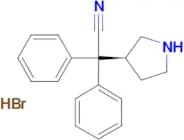
CAS:Formula:C7H9N3Purity:97%Color and Shape:SolidMolecular weight:135.17(S)-2,2-Diphenyl-2-(pyrrolidin-3-yl)acetonitrile hydrobromide
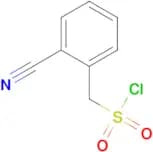
CAS:Purity:97%Molecular weight:343.26800537109375(2-Cyanophenyl)methanesulfonyl chloride
CAS:Formula:C8H6ClNO2SPurity:97%Color and Shape:SolidMolecular weight:215.652-(4-Nitrophenyl)acetonitrile
CAS:Formula:C8H6N2O2Purity:97.0%Color and Shape:SolidMolecular weight:162.148Propanoic acid, 3-cyano-2-[[(9H-fluoren-9-ylmethoxy)carbonyl]amino]-, (2R)-
CAS:Purity:98%Molecular weight:336.3469849Pyrazol-1-yl-acetonitrile
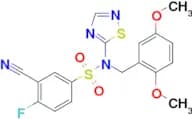
CAS:Formula:C5H5N3Purity:95.0%Color and Shape:LiquidMolecular weight:107.1163-Cyano-N-(2,5-dimethoxybenzyl)-4-fluoro-N-(1,2,4-thiadiazol-5-yl)benzenesulfonamide
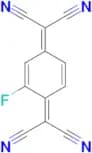
Purity:85%Molecular weight:434.45999145507812,2'-(2-Fluorocyclohexa-2,5-diene-1,4-diylidene)dimalononitrile
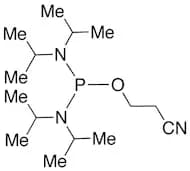
CAS:Purity:98%Molecular weight:222.18200683593752-Cyanoethyl N,N,N’,N’-Tetraisopropylphosphoramidite
CAS:Controlled ProductStability Explodes When Heated
Applications 2-Cyanoethyl N,N,N’,N’-Tetraisopropylphosphoramidite (cas# 102691-36-1) is a compound useful in organic synthesis.
Not a dangerous good if item is equal to or less than 1g/ml and there is less than 100g/ml in the packageFormula:C15H32N3OPColor and Shape:NeatMolecular weight:301.413-Cyanopropyltrimethoxysilane
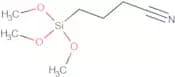
CAS:S05035 - 3-Cyanopropyltrimethoxysilane
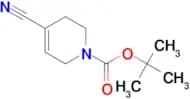
Formula:C7H15NO3SiColor and Shape:Liquid, ClearMolecular weight:189.286Tert-Butyl 4-cyano-5,6-dihydropyridine-1(2H)-carboxylate
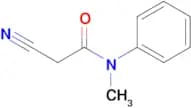
CAS:Purity:95.0%Color and Shape:SolidMolecular weight:208.261001586914062-Cyano-N-methyl-n-phenylacetamide
CAS:Formula:C10H10N2OPurity:95+%Color and Shape:SolidMolecular weight:174.203Tert-Butyl 3-cyano-2-(triphenylphosphoranylidene)propanoate
CAS:Purity:97%Molecular weight:415.4729919433594Methyl 1-((2'-cyano-[1,1'-biphenyl]-4-yl)methyl)-2-ethoxy-1H-benzo[d]imidazole-7-carboxylate
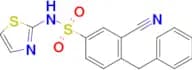
CAS:Purity:97%Molecular weight:411.460998535156254-Benzyl-3-cyano-N-(thiazol-2-yl)benzenesulfonamide
CAS:Purity:95.0%Molecular weight:355.429992675781256,7-Bis(benzyloxy)-4-oxo-1,4-dihydroquinoline-3-carbonitrile
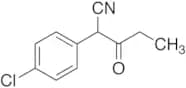
CAS:Purity:98%Molecular weight:382.41900634765625α-(4-Chlorophenyl)-α-propionylacetonitrile
CAS:Controlled ProductApplications Pyrimethamine intermediate.
References Takayama, K., et al.: Antimicrob. Agents Chemother., 33, 1493 (1989), Robson, C., et al.: J. Med. Chem., 40, 3040 (1997), Horton, J., et al.: J. Mol. Biol., 353, 334 (2005), Horton, J., et al.: J. Mol. Biol., 353, 334 (2005), Janin, Y., et al.: Bioorg. Med. Chem., 15, 2479 (2007),Formula:C11H10ClNOColor and Shape:White To BrownMolecular weight:207.66Pyrazolo[1,5-a]pyrazine-7-carbonitrile, 4,5,6,7-tetrahydro-5-(phenylmethyl)-
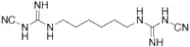
CAS:Purity:97%Molecular weight:238.294006347656251,6-Bis(cyano-guanidino)hexane
CAS:Controlled ProductApplications 1,6-Bis(cyano-guanidino)hexane (cas# 15894-70-9) is a compound useful in organic synthesis.
Formula:C10H18N8Color and Shape:NeatMolecular weight:250.31-(Chloromethyl)cyclohexanecarbonitrile
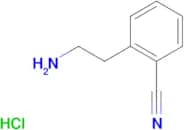
CAS:Purity:95.0%Color and Shape:LiquidMolecular weight:157.639999389648442-Cyanophenylethylamine hydrochloride
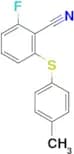
CAS:Purity:97.0%Color and Shape:SolidMolecular weight:182.649993896484382-Fluoro-6-(4-methylphenylthio)benzonitrile
CAS:Formula:C14H10FNSColor and Shape:SolidMolecular weight:243.34-Cyanobenzoic acid ethyl ester
CAS:4-Cyanobenzoic acid ethyl ester is a hydrogen-bonding acceptor that is also able to form exciplexes with styrene. It has a conformation that is similar to that of aminobenzoate, which is a hydrogen-bonding donor. 4-Cyanobenzoic acid ethyl ester reacts with solvents such as benzene and chloroform, undergoing hydration reactions to form the corresponding 4-cyanophenol derivatives. It undergoes cyclization when heated in the presence of ruthenium(II) chloride to produce 1,4-dihydropyridine derivatives. The reaction mechanism for this reaction consists of two steps: an intramolecular nucleophilic attack followed by an intramolecular electrophilic substitution. The deionized water used in this synthetic process eliminates the need for drying agents and stabilizers, making it easier to carry out the synthesis.Formula:C10H9NO2Purity:Min. 95%Color and Shape:PowderMolecular weight:175.18 g/mol3-Cyanobenzylamine HCl
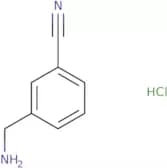
CAS:3-Cyanobenzylamine HCl is a high quality chemical that is used as a reagent, intermediate, or building block in the synthesis of complex compounds. It is a fine chemical and speciality chemical that may be used as a research chemical and versatile building block for the synthesis of organic compounds. 3-Cyanobenzylamine HCl has been shown to react with other chemicals to form useful scaffolds and building blocks, such as amides, amino acid esters, and ureas.Formula:C8H9ClN2Purity:Min. 95%Color and Shape:PowderMolecular weight:168.62 g/mol4-Octylbenzylamine
CAS:4-Octylbenzylamine is a hydrophobic molecule that is soluble in organic solvents. In simulations, it was shown to have affinity for anions and aromatic hydrocarbons, as well as the ability to be immobilized on surfaces. 4-Octylbenzylamine is also a chromatographic stationary phase that can be used to separate solutes with similar properties. This molecule has been oriented so that it binds to the hydrated surface of the column, which improves its affinity for anions and aromatic hydrocarbons. The high-performance liquid chromatography (HPLC) technique utilizes this property to separate molecules of different affinities from one another in a systematic manner.Formula:C15H25NPurity:Min. 95%Color and Shape:PowderMolecular weight:219.37 g/mol4-Cyano-4'-aminobiphenyl
CAS:4-Cyano-4'-aminobiphenyl is a fluorescent dye that exhibits a strong fluorescence under UV irradiation. The dye has an absorption maximum at about 335 nm and a fluorescence emission maximum at about 455 nm, with excitation maxima of 333 nm and 478 nm. It has been used in the development of photocurrent devices, which are used for photochemical reactions and electrochemistry studies. This compound can also be used for the determination of amino groups in organic molecules such as carbostyril. The compound can be synthesized by reacting an amine with an aldehyde in the presence of acid.
Formula:C13H10N2Color and Shape:PowderMolecular weight:194.23 g/molN-Cyanomorpholine
CAS:N-Cyanomorpholine is a synthetic compound that is used as a reagent in organic synthesis. It has been shown to form stable complexes with amines, such as aniline and pyridine. In addition, it can be used in the intramolecular hydrogenation of alkenes, which is catalyzed by palladium on carbon. N-Cyanomorpholine was found to be effective against some viruses, such as herpes simplex virus type 1 and influenza virus type A. It also has been validated for use in the synthesis of dianthus caryophyllus and acrylonitrile.Formula:C5H8N2OPurity:Min. 95%Molecular weight:112.13 g/molethyl 2-cyano-3-(4-nitrophenyl)prop-2-enoate
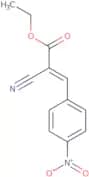
CAS:Ethyl 2-cyano-3-(4-nitrophenyl)prop-2-enoate is a functionalized molecule that contains a dipole. It has high selectivity for 1,3-dipolar cycloadditions because the electron density of the methylene group is greater than that of the aldehyde group. The mechanistic theory for this reaction is that the electron density on the methylene group in ethyl 2-cyano-3-(4-nitrophenyl)prop-2-enoate will cause it to become more reactive than the aldehyde group. The dipoles in this molecule are oriented such that they can react with each other to form an intermediate and then an adduct. This isomerization occurs through either dipolarophilic or electrocyclic mechanisms.Purity:Min. 95%2-Fluoro-4-methoxybenzylamine hydrochloride
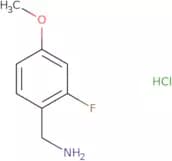
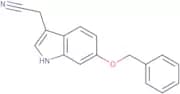
CAS:2-Fluoro-4-methoxybenzylamine hydrochloride is a potent inhibitor of polymerase (DNA and RNA). It has been shown to inhibit the growth of human breast cancer cells and to induce apoptosis. 2-Fluoro-4-methoxybenzylamine hydrochloride binds to the polymerase, which blocks synthesis of DNA or RNA. The binding site is located near the active site of the enzyme. This drug also has an insulin-like effect by stimulating IGF-I production and increasing protein synthesis in somatotrophic cells.Formula:C8H11ClFNOPurity:Min. 95%Color and Shape:PowderMolecular weight:191.63 g/mol2-(6-Benzyloxyindolyl)acetonitrile
CAS:Please enquire for more information about 2-(6-Benzyloxyindolyl)acetonitrile including the price, delivery time and more detailed product information at the technical inquiry form on this page
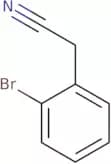
Formula:C17H14N2OPurity:Min. 95%Molecular weight:262.31 g/mol2-Bromophenylacetonitrile
CAS:2-Bromophenylacetonitrile is a synthetic compound that is used in wastewater treatment. It is effective at removing cyanides, phenylpropionic acid, and aldehydes from wastewater. 2-Bromophenylacetonitrile has been shown to be an efficient method for the removal of liriodenine from sewage water and for the removal of 2-bromostyrene from industrial waste water. This process can be used as an analytical method to measure the concentration of these substances in samples of wastewater. The reaction mechanism involves the formation of a nitrilium ion intermediate and subsequent reactions with alcohols to form esters or ethers.
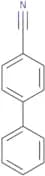
Formula:C8H6BrNPurity:Min. 95%Color and Shape:Colourless To Pale Yellow Clear LiquidMolecular weight:196.04 g/mol4-Cyanobiphenyl
CAS:4-Cyanobiphenyl is a contaminant of the environment. It is a reactive substance that can be found in the air, soil, and water. 4-Cyanobiphenyl is an active substance that can be used as an intermediate for the production of other chemicals. The chemical structure of 4-cyanobiphenyl has been elucidated by using a number of spectroscopic techniques including Raman spectroscopy. 4-Cyanobiphenyl is unstable in acidic conditions and reacts with chloride ions to form crotonic acid and benzoate. This reaction also occurs under basic conditions with biphenyl to form benzoate and low energy products such as benzene or phenol.Formula:C13H9NPurity:Min. 95%Color and Shape:Off-White PowderMolecular weight:179.22 g/mol




![Methyl 2-(((2'-cyano-[1,1'-biphenyl]-4-yl)methyl)amino)-3-nitrobenzoate](/_next/image/?url=https%3A%2Fstatic.cymitquimica.com%2Fproducts%2F10%2Fthumb-webp%2FF235024.webp&w=3840&q=75)
![2-Oxo-2,3-dihydro-1H-pyrrolo[3,2-b]pyridine-5-carbonitrile](/_next/image/?url=https%3A%2Fstatic.cymitquimica.com%2Fproducts%2F10%2Fthumb-webp%2FF228449.webp&w=3840&q=75)



![2-[(3Z)-1-(ethanesulfonyl)piperidin-3-ylidene]acetonitrile](/_next/image/?url=https%3A%2Fstatic.cymitquimica.com%2Fproducts%2F10%2Fthumb-webp%2FF519455.webp&w=3840&q=75)
![2-(4'-(Diphenylamino)-[1,1'-biphenyl]-4-yl)acetonitrile](/_next/image/?url=https%3A%2Fstatic.cymitquimica.com%2Fproducts%2F10%2Fthumb-webp%2FF612519.webp&w=3840&q=75)


![2-(4-Cyanophenyl)-1H-anthra[1,2-d]imidazole-6,11-dione](/_next/image/?url=https%3A%2Fstatic.cymitquimica.com%2Fproducts%2F10%2Fthumb-webp%2FF098008.webp&w=3840&q=75)
![6-Isopropyl-7-oxo-5-phenyl-4,7-dihydropyrazolo[1,5-a]pyrimidine-3-carbonitrile](/_next/image/?url=https%3A%2Fstatic.cymitquimica.com%2Fproducts%2F10%2Fthumb-webp%2FF516411.webp&w=3840&q=75)





![[4-(1-benzofuran-2-yl)-1,3-thiazol-2-yl]acetonitrile](/_next/image/?url=https%3A%2Fstatic.cymitquimica.com%2Fproducts%2F10%2Fthumb-webp%2FF495412.webp&w=3840&q=75)

![Ethyl 2-ethoxy-1-[[(2'-cyanobiphenyl-4-yl)methyl]benzimidazole]-7-carboxylate](/_next/image/?url=https%3A%2Fstatic.cymitquimica.com%2Fproducts%2F10%2Fthumb-webp%2FF076507.webp&w=3840&q=75)


![Propanoic acid, 3-cyano-2-[[(9H-fluoren-9-ylmethoxy)carbonyl]amino]-, (2R)-](/_next/image/?url=https%3A%2Fstatic.cymitquimica.com%2Fproducts%2F10%2Fthumb-webp%2FF862079.webp&w=3840&q=75)


![2-[(2,2-dimethoxyethyl)amino]-5-nitrobenzonitrile](/_next/image/?url=https%3A%2Fstatic.cymitquimica.com%2Fproducts%2F10%2Fthumb-webp%2FF366262.webp&w=3840&q=75)


![Methyl 1-((2'-cyano-[1,1'-biphenyl]-4-yl)methyl)-2-ethoxy-1H-benzo[d]imidazole-7-carboxylate](/_next/image/?url=https%3A%2Fstatic.cymitquimica.com%2Fproducts%2F10%2Fthumb-webp%2FF689582.webp&w=3840&q=75)
![4-(6-chloroimidazo[1,2-a]pyridin-2-yl)benzonitrile](/_next/image/?url=https%3A%2Fstatic.cymitquimica.com%2Fproducts%2F10%2Fthumb-webp%2FF517932.webp&w=3840&q=75)
![4-(7-bromoimidazo[1,2-a]pyridin-2-yl)benzonitrile](/_next/image/?url=https%3A%2Fstatic.cymitquimica.com%2Fproducts%2F10%2Fthumb-webp%2FF517933.webp&w=3840&q=75)

![4-(bicyclo[1.1.1]pentan-1-yl)benzonitrile](/_next/image/?url=https%3A%2Fstatic.cymitquimica.com%2Fproducts%2F10%2Fthumb-webp%2FF516253.webp&w=3840&q=75)
![Pyrazolo[1,5-a]pyrazine-7-carbonitrile, 4,5,6,7-tetrahydro-5-(phenylmethyl)-](/_next/image/?url=https%3A%2Fstatic.cymitquimica.com%2Fproducts%2F10%2Fthumb-webp%2FF613781.webp&w=3840&q=75)