Cyano-, Nitrile-
Cyano and nitrile compounds are organic molecules that contain cyano (C≡N) or nitrile groups in their structure, characterized by the presence of nitrogen. These groups play important roles in various chemical reactions and industrial applications. In this category, you will find a wide range of cyano and nitrile compounds, ranging from simple to complex structures. At CymitQuimica, we offer high-quality cyano and nitrile compounds tailored to meet research and industrial needs. Our compounds are suitable for a variety of synthesis and analytical applications.
Found 9674 products of "Cyano-, Nitrile-"
Sort by
Purity (%)
0
100
|
0
|
50
|
90
|
95
|
100
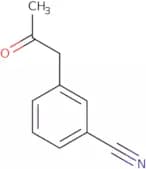
3-Cyanophenylacetone
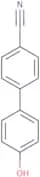
CAS:3-Cyanophenylacetone is a versatile building block and useful intermediate in the synthesis of various pharmaceuticals, agrochemicals, and other chemical products. It can be used as a reagent or speciality chemical. 3-Cyanophenylacetone is also a useful scaffold for the synthesis of complex compounds. This compound is listed on the Chemical Abstracts Service (CAS) registry with the number 73013-50-0.Formula:C10H9NOPurity:Min. 95%Molecular weight:159.18 g/mol4-Cyano-4'-hydroxybiphenyl
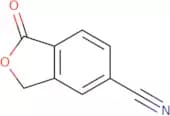
CAS:<p>4-Cyano-4'-hydroxybiphenyl is a phenolic compound that belongs to the family of compounds known as polycyclic aromatic hydrocarbons. It has been shown to bind to a variety of receptors and is used in sample pretreatment for assays. 4-Cyano-4'-hydroxybiphenyl also has a number of uses in polymerization reactions, including cationic polymerization, which involves the reaction of an electron donor with an electrophile. The electron donor is typically a Lewis acid, such as trifluoroacetic acid or formyl chloride. 4-Cyano-4'-hydroxybiphenyl can be used as an amide coupling agent, which involves the reaction of an amine with another organic compound to form an amide bond. It also reacts with chlorine gas in iodination reactions to produce hypochlorous acid.</p>Formula:C13H9NOPurity:Min. 96.5 Area-%Color and Shape:PowderMolecular weight:195.22 g/mol5-Cyanophthalide
CAS:<p>5-Cyanophthalide is an inorganic acid that is a white solid. It has a molecular weight of 114.07 g/mol and a melting point of -43 degrees Celsius. 5-Cyanophthalide can be synthesized by reacting 5-carboxyphthalide with chlorine gas in the presence of an inert solvent and heat. The product is then purified by crystallization or recrystallization. The biological properties of 5-cyanophthalide are unknown, but it has been shown to have amide and chloride groups on either side of the molecule's carbon backbone. Mass spectrometry reveals that this compound exists as an enantiomer, meaning that it exists as two mirror images that are not superimposable on each other. This means there are two different forms: one left-handed and one right-handed form.</p>Formula:C9H5NO2Purity:Min. 95%Color and Shape:PowderMolecular weight:159.14 g/mol2-[1,2,4]Triazol-1-yl-benzylamine
CAS:<p>2-[1,2,4]Triazol-1-yl-benzylamine is a chemical compound that has been shown to be an excellent reagent in organic synthesis. It is also used as a building block for the synthesis of compounds related to pharmaceuticals, pesticides and other speciality chemicals. 2-[1,2,4]Triazol-1-yl-benzylamine is a versatile intermediate that can be used in the synthesis of complex compounds with good yields and high purity.</p>Formula:C9H10N4Purity:Min. 95%Color and Shape:PowderMolecular weight:174.2 g/mol2-Chloro-5-methylbenzonitrile
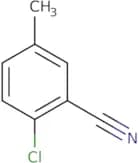
CAS:<p>2-Chloro-5-methylbenzonitrile (2C5MB) is a versatile building block that is used in the production of fine chemicals, specialty chemicals, and pharmaceuticals. It is also used as a reagent for organic synthesis and as a speciality chemical. 2C5MB can be used in the synthesis of various complex compounds and research chemicals. The compound has been shown to have high reactivity and has been used as a reaction component or scaffold for the synthesis of other products.</p>Formula:C8H6ClNPurity:Min. 95%Color and Shape:PowderMolecular weight:151.59 g/mola-Cyanocinnamic acid
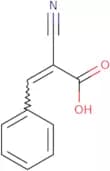
CAS:a-Cyanocinnamic acid is a 3-hydroxycinnamic acid that can be found in coffee. It has been shown to inhibit the growth of colorectal adenocarcinoma cells and other cancer cells by binding to an inhibitor site on fatty acid synthesis enzymes, such as pyruvate carboxylase, hydroxylase, and acetyl-CoA carboxylase. This inhibition leads to decreased levels of fatty acids and increased levels of pyruvate and hydrogen peroxide, which inhibits cell proliferation. In addition, a-cyanocinnamic acid has been shown to have a hypoxic tumor selectivity index of 10.7%, which means it selectively targets tumors with low oxygen levels.Formula:C10H7NO2Purity:Min. 95%Color and Shape:White PowderMolecular weight:173.17 g/mol1,2,2,3-Propanetetracarbonitrile
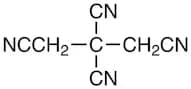
CAS:Formula:C7H4N4Purity:>96.0%(GC)Color and Shape:White to Light yellow to Light orange powder to crystalMolecular weight:144.142-Hydroxy-2-(trifluoromethyl)propionitrile
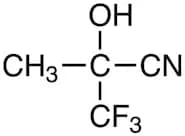
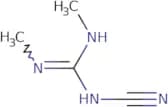
CAS:Formula:C4H4F3NOPurity:>96.0%(GC)Color and Shape:White to Almost white clear liquidMolecular weight:139.08N-Cyano-N',N''-dimethylguanidine
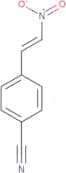
CAS:N-Cyano-N',N''-dimethylguanidine is a clinical drug that has been shown to have a detectable concentration in the serum of humans. The drug is metabolized by nitrite ion, maleate, and potassium phosphate to form reaction products. N-Cyano-N',N''-dimethylguanidine binds to h2 receptors and inhibits the activity of cytochrome p450 enzymes. This inhibition can lead to carcinogenic activity. N-Cyano-N',N''-dimethylguanidine is an analog of methylene blue, which inhibits the synthesis of rna in bacteria and is used as a therapeutic agent for malaria.Formula:C4H8N4Purity:Min. 95%Color and Shape:White PowderMolecular weight:112.14 g/mol1-(4-Cyanophenyl)-2-nitroethene
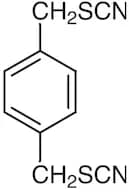
CAS:<p>1-(4-Cyanophenyl)-2-nitroethene is a reactive intermediate that belongs to the group of carboxylic acids. It is an unsaturated compound with a cinnamic acid derivative. The nitration of 1-(4-cyanophenyl)-2-nitroethene leads to the formation of 1,2-dinitrobenzene, which can be used for the synthesis of other heterocyclic compounds. This intermediate has been shown to have catalytic activity in biomolecules, including carboxylic and phenolic groups, and can be used for the synthesis of other organic compounds.</p>Formula:C9H6N2O2Purity:Min. 95%Molecular weight:174.16 g/molp-Xylylene Dithiocyanate
CAS:Formula:C10H8N2S2Purity:>98.0%(GC)Color and Shape:White to Almost white powder to crystalineMolecular weight:220.312-Nitrobenzylamine hydrochloride
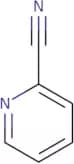
CAS:<p>2-Nitrobenzylamine hydrochloride is a compound that has been shown to have cancer-fighting properties. It inhibits the synthesis of proteins necessary for the proliferation of cancer cells, but it does not affect the synthesis of proteins in healthy cells. This drug is used to diagnose and treat certain types of cancers, such as lymphoma and leukemia. 2-Nitrobenzylamine hydrochloride can be modified by genetic engineering techniques to specifically target cancer cells, which may help with the treatment of other types of diseases in the future. It is believed that this drug will be useful for treating cancers that are resistant to chemotherapy or radiation therapy, as well as those that are caused by mutations in DNA.</p>Formula:C7H9ClN2O2Purity:Min. 95%Color and Shape:PowderMolecular weight:188.61 g/mol2-Cyanopyridine
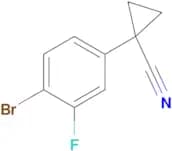
CAS:<p>2-Cyanopyridine is a chelate ligand that is structurally related to picolinic acid. It binds to the active site of IDO1 and prevents the enzyme from converting tryptophan into kynurenine. This leads to an increase in tryptophan levels, which can then be used for protein synthesis. 2-Cyanopyridine has been shown to have antimicrobial activity against Gram-positive bacteria in vitro and in vivo. It also inhibits the growth of Gram-negative bacteria, yeast, and fungi by binding to the iron atom of their heme molecules. 2-Cyanopyridine has shown potential as a pharmacological agent or as a biochemical probe for transfer reactions.</p>Formula:C6H4N2Purity:Min. 95%Color and Shape:PowderMolecular weight:104.11 g/mol1-(4-BROMO-3-FLUOROPHENYL)CYCLOPROPANE-1-CARBONITRILE
CAS:Formula:C10H7BrFNPurity:98%Molecular weight:240.0753-(5-Chloro-[1,2,4]thiadiazol-3-yl)-benzonitrile
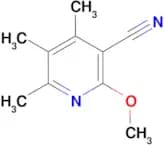
Formula:C9H4ClN3SPurity:95.0%Molecular weight:221.662-methoxy-4,5,6-trimethylpyridine-3-carbonitrile
CAS:Formula:C10H12N2OPurity:95.0%Molecular weight:176.219

![2-[1,2,4]Triazol-1-yl-benzylamine](/_next/image/?url=https%3A%2Fstatic.cymitquimica.com%2Fproducts%2F3D%2Fthumb-webp%2FFT50933.webp&w=3840&q=75)



![[1,1′-Biphenyl]-3,3′-dicarbonitrile](/_next/image/?url=https%3A%2Fstatic.cymitquimica.com%2Fproducts%2F10%2Fthumb-webp%2FF612488.webp&w=3840&q=75)
![3-(5-Chloro-[1,2,4]thiadiazol-3-yl)-benzonitrile](/_next/image/?url=https%3A%2Fstatic.cymitquimica.com%2Fproducts%2F10%2Fthumb-webp%2FF316583.webp&w=3840&q=75)
![3′,5′-Dimethyl-[1,1′-biphenyl]-4-carbonitrile](/_next/image/?url=https%3A%2Fstatic.cymitquimica.com%2Fproducts%2F10%2Fthumb-webp%2FF633216.webp&w=3840&q=75)