Cyano-, Nitrile-
Found 9687 products of "Cyano-, Nitrile-"
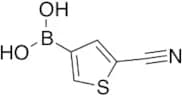
(5-Cyanothiophen-3-yl)boronic Acid
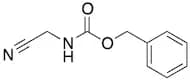
CAS:Controlled ProductFormula:C5H4BNO2SColor and Shape:NeatMolecular weight:152.967Benzyl Cyanomethylcarbamate
CAS:Controlled ProductApplications BENZYL CYANOMETHYLCARBAMATE (cas# 3589-41-1) is a useful research chemical.
Formula:C10H10N2O2Color and Shape:NeatMolecular weight:190.194-Cyano-4-[(ethylsulfanylthiocarbonyl)sulfanyl]pentanoic Acid
CAS:Controlled ProductApplications 4-CYANO-4-[(ETHYLSULFANYLTHIOCARBONYL)SULFANYL]PENTANOIC ACID (cas# 1137725-46-2) is a useful research chemical.
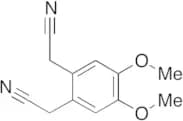
Formula:C9H13NO2S3Color and Shape:NeatMolecular weight:263.44,5-Dimethoxy-1,2-benzenediacetonitrile
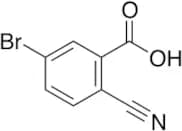
CAS:Controlled ProductFormula:C12H12N2O2Color and Shape:NeatMolecular weight:216.245-Bromo-2-cyanobenzoic Acid
CAS:Controlled ProductFormula:C8H4BrNO2Color and Shape:NeatMolecular weight:226.027p-Cyanobenzoic Acid Trimer
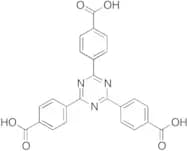
CAS:Controlled ProductApplications p-Cyanobenzoic Acid Trimer is used in the synthetic preparation of Terbium Triazinetribenzoate Formate Metal Organic Framework (MOF).
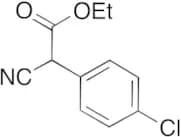
References Han, Y., et al.: J. Mater. Chem. A Mater. Energy Sustain., 3, 24525 (2015)Formula:C24H15N3O6Color and Shape:NeatMolecular weight:441.39Ethyl (4-chlorophenyl)cyanoacetate
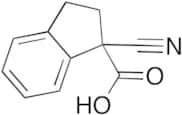
CAS:Controlled ProductFormula:C11H10ClNO2Color and Shape:NeatMolecular weight:223.6561-Cyano-2,3-dihydro-1H-indene-1-carboxylic Acid
CAS:Controlled ProductFormula:C11H9NO2Color and Shape:NeatMolecular weight:187.19(3,5-Dimethoxyphenyl)acetonitrile
CAS:Controlled ProductApplications (3,5-Dimethoxyphenyl)acetonitrile (cas# 13388-75-5) is a compound useful in organic synthesis.
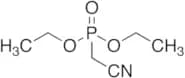
Formula:C10H11NO2Color and Shape:NeatMolecular weight:177.2Diethyl Cyanomethylphosphonate
CAS:Controlled ProductApplications A Wittig reagent.
References Laine, D., et al.: J. Med. Chem., 52, 5241 (2009), Nakao, A., et al.: Bioorg. Med. Chem. Lett., 19, 4607 (2009), Arakawa, Y., et al.: Chem. Pharm. Bull., 57, 167 (2009),Formula:C6H12NO3PColor and Shape:NeatMolecular weight:177.14Tert-butyl N-[(5-Cyanothiophen-2-yl)methyl]carbamate
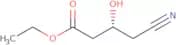
CAS:Controlled ProductFormula:C11H14N2O2SColor and Shape:NeatMolecular weight:238.306Ethyl (R)-(-)-4-cyano-3-hydroxybutyrate
CAS:Ethyl (R)-(-)-4-cyano-3-hydroxybutyrate is an asymmetric synthesis of D-(+)-glyceraldehyde. This compound is an acidic, high cholesterol substrate that binds to disaccharides and has hydroxyl groups. It has been shown to reduce low density lipoprotein levels in the blood by inhibiting the production of cholesterol in the liver. The reaction solution is immobilized on a solid support and is used for kinetic studies. Kinetic measurements were performed at different concentrations of hydrochloric acid and immobilized cells as a function of time. The reaction yield was determined using UV absorbance at 275 nm, which was plotted against time.Purity:Min. 95%D-2-Cyanophenylalanine
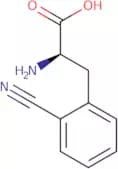
CAS:Please enquire for more information about D-2-Cyanophenylalanine including the price, delivery time and more detailed product information at the technical inquiry form on this pageFormula:C10H10N2O2Purity:Min. 95%Molecular weight:190.2 g/mol4-Cyano-2-methylphenylboronic acid, pinacol ester
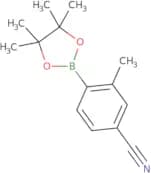
CAS:Please enquire for more information about 4-Cyano-2-methylphenylboronic acid, pinacol ester including the price, delivery time and more detailed product information at the technical inquiry form on this pageFormula:C14H18BNO2Purity:Min. 95%Molecular weight:243.11 g/mol3-Cyanothiophene-4-boronic acid pinacol ester
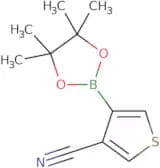
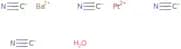
CAS:Please enquire for more information about 3-Cyanothiophene-4-boronic acid pinacol ester including the price, delivery time and more detailed product information at the technical inquiry form on this pageFormula:C11H14BNO2SPurity:Min. 95%Molecular weight:235.11 g/molBarium tetracyanoplatinate(II) hydrate
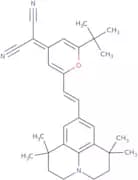
CAS:Controlled ProductPlease enquire for more information about Barium tetracyanoplatinate(II) hydrate including the price, delivery time and more detailed product information at the technical inquiry form on this pageFormula:C4H2BaN4OPtPurity:Min. 95%Molecular weight:454.5 g/mol4-(Dicyanomethylene)-2-tert-butyl-6-(1,1,7,7-tetramethyljulol
CAS:4-(Dicyanomethylene)-2-tert-butyl-6-(1,1,7,7-tetramethyljulolidinium) (DCJTB) is a red fluorescent dye that emits light when activated by heat. DCJTB is cationic and can be polymerized thermally or chemically. The molecule has been shown to be activated by the addition of an electron donor such as a metal chelate. This reaction takes place in the solution phase. DCJTB has been used for the diagnosis of nonpolar solvents such as gasoline and oil leaks in machine parts. DCJTB has also been used to detect groundwater contamination with trichloroethylene (TCE).
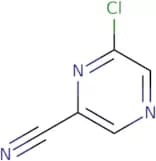
Formula:C30H35N3OPurity:Min. 95%Molecular weight:453.62 g/mol2-Chloro-6-cyanopyrazine
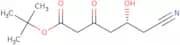
CAS:2-Chloro-6-cyanopyrazine is a compound that has been shown to have antimycobacterial activity against Mycobacterium avium. It may also have tuberculostatic activity and be useful for the treatment of tuberculosis. 2-Chloro-6-cyanopyrazine inhibits bacterial growth by binding to DNA, RNA, and protein synthesis in mycobacteria. The antibacterial effect is due to its ability to inhibit amidation and alkylation reactions, as well as its nucleophilic properties. 2-Chloro-6-cyanopyrazine is an acidic compound with a pKa of 3.2, which makes it more soluble in water than hydrophobic compounds such as alkanoic acids.Formula:C5H2ClN3Purity:Min. 95%Molecular weight:139.54 g/mol(5R)-6-Cyano-5-hydroxy-3-oxo-hexanoic acid tert-butyl ester
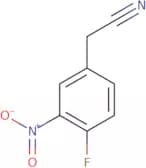
CAS:Please enquire for more information about (5R)-6-Cyano-5-hydroxy-3-oxo-hexanoic acid tert-butyl ester including the price, delivery time and more detailed product information at the technical inquiry form on this pageFormula:C11H17NO4Purity:Min. 95%Molecular weight:227.26 g/mol(4-Fluoro-3-Nitrophenyl)Acetonitrile
CAS:4-Fluoro-3-nitrophenylacetonitrile is a monomer that can be synthesised from the reaction of carbamic acid and diphenyl ether. It is chiral, stereoselective and nucleophilic. 4-Fluoro-3-nitrophenylacetonitrile can also be synthesised by reacting fluoroacetamide with sodium cyanide in water, forming the corresponding amide, which reacts with acetonitrile to form the nitro compound. The anti-cancer properties of 4-fluoro-3 nitrophenylacetonitrile have been studied in vitro and in vivo. This substance has been shown to inhibit growth of cancer cells and induce apoptosis. In addition, this substance has been used as a synthetic strategy for dihydroisoquinolines, which are important for their anti-cancer properties.
Formula:C8H5FN2O2Purity:Min. 95%Molecular weight:180.14 g/mol

![4-Cyano-4-[(ethylsulfanylthiocarbonyl)sulfanyl]pentanoic Acid](/_next/image/?url=https%3A%2Fstatic.cymitquimica.com%2Fproducts%2FTR%2Fthumb-webp%2FC998578.webp&w=3840&q=75)

![Tert-butyl N-[(5-Cyanothiophen-2-yl)methyl]carbamate](/_next/image/?url=https%3A%2Fstatic.cymitquimica.com%2Fproducts%2FTR%2Fthumb-webp%2FB815518.webp&w=3840&q=75)