Cyano-, Nitrile-
Cyano and nitrile compounds are organic molecules that contain cyano (C≡N) or nitrile groups in their structure, characterized by the presence of nitrogen. These groups play important roles in various chemical reactions and industrial applications. In this category, you will find a wide range of cyano and nitrile compounds, ranging from simple to complex structures. At CymitQuimica, we offer high-quality cyano and nitrile compounds tailored to meet research and industrial needs. Our compounds are suitable for a variety of synthesis and analytical applications.
Found 9624 products of "Cyano-, Nitrile-"
Sort by
Purity (%)
0
100
|
0
|
50
|
90
|
95
|
100
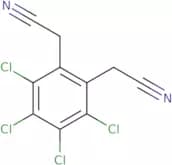
2,2'-(Perchloro-1,2-phenylene)diacetonitrile
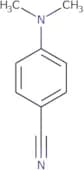
CAS:<p>Please enquire for more information about 2,2'-(Perchloro-1,2-phenylene)diacetonitrile including the price, delivery time and more detailed product information at the technical inquiry form on this page</p>Formula:C10H4Cl4N2Purity:Min. 95%Molecular weight:293.96 g/mol1-Cyano-4-(dimethylamino)benzene
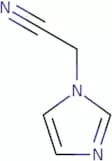
CAS:<p>1-Cyano-4-(dimethylamino)benzene is a molecule that has been shown to inhibit the growth of hamster v79 cells. It also inhibits the synthesis of DNA and RNA. The binding constants for this molecule have been determined to be 1.0 x 10^9 M^-1, with an n-octanol/water partition coefficient (log P) of 5.5. This molecule is soluble in nonpolar solvents and may be used as a model system for hydrogen bonding interactions or reaction mechanisms in organic chemistry. This compound contains a deuterium isotope and can be used to study the effects of hydrogen bonding on reactions in organic chemistry at high temperatures, with the use of preparative hplc.</p>Formula:C9H10N2Purity:Min. 95%Color and Shape:Beige PowderMolecular weight:146.19 g/molImidazol-1-ylacetonitrile
CAS:<p>Imidazol-1-ylacetonitrile is a synthetic compound that belongs to the class of ethyl methanesulfonates. It has been shown to be an effective antifungal drug against Candida spp. and Aspergillus spp., with a minimum inhibitory concentration (MIC) of 0.5 μM in vitro. Imidazol-1-ylacetonitrile has also been shown to have anti-inflammatory properties and was able to reduce bone resorption in mice, as well as inhibit the production of osteoclasts in vitro by inhibiting the activity of cathepsin K, which is an enzyme involved in bone resorption. This compound may be used for the treatment of metabolic disorders such as diabetes mellitus type 2 and hyperglycemia, since it inhibits glucose uptake by decreasing the expression of GLUT4 at the cell membrane level.</p>Formula:C5H5N3Purity:Min. 95%Molecular weight:107.11 g/mol2-Cyano-3,4,5,6-tetrachloropyridine
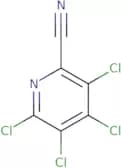
CAS:<p>2-Cyano-3,4,5,6-tetrachloropyridine is a genotoxic compound that is used for the preparation of picolinic acid. It has been shown to induce DNA damage and cytotoxicity in vitro. The reaction products of this compound have also been found to be genotoxic in vitro and in vivo. This chemical has been shown to inhibit the growth of cells in culture as well as cause cell death by releasing hydrogen chloride gas. 2-Cyano-3,4,5,6-tetrachloropyridine is a potent mutagen and carcinogen that can be activated by fluorine or chlorine compounds. This chemical can also form chlorinated derivatives with chlorine. 2-Cyano-3,4,5,6-tetrachloropyridine reacts with phosphorus pentachloride to produce hydrogen chloride gas and other reaction products such as chloride (Cl) or sublimed (P</p>Formula:C6Cl4N2Purity:Min. 95%Molecular weight:241.89 g/mol2,3-(Dimethoxyphenyl)acetonitrile
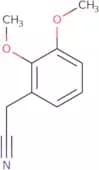
CAS:<p>2,3-(Dimethoxyphenyl)acetonitrile is a chemical intermediate that is used in the synthesis of pharmaceuticals and specialty chemicals. It can be used as a reaction component and reagent for the synthesis of other chemicals. This compound has a high quality and is also a versatile building block for complex compounds. 2,3-(Dimethoxyphenyl)acetonitrile has been shown to be useful in the production of fine chemicals such as pharmaceuticals, agrochemicals, and dyes. The CAS number for this compound is 4468-57-9.</p>Formula:C10H11NO2Purity:Min. 95%Molecular weight:177.2 g/mol2-[4-(2-Cyanoethylthio)methyl]thiazolyl guanidine
CAS:<p>2-[4-(2-Cyanoethylthio)methyl]thiazolyl guanidine (HCTZ) is a histamine H2 receptor antagonist that belongs to the class of synthetic compounds. It is an effective anti-histamine and has been shown to inhibit acid secretion in the stomach in response to histamine. HCTZ also inhibits the release of gastric acid by blocking the action of histamine on the H2 receptor of parietal cells, which are located in the lining of the stomach. This drug is also used for treating reflux esophagitis and gastroesophageal reflux disease. Other uses include as a proton pump inhibitor for treatment of peptic ulcers, and as an adjunct therapy for ulcerative colitis. The following product details are about a company that sells organic food products:</p>Formula:C8H11N5S2Purity:Min. 98 Area-%Color and Shape:White PowderMolecular weight:241.34 g/molEthyl-2-ethoxy-1-[[(2'-cyanobiphenyl-4-yl) methyl] benzimidazole-7-carboxylate
CAS:<p>Candesartan is a selective angiotensin II receptor antagonist that inhibits the binding of angiotensin II to its receptors, which in turn decreases the activity of angiotensin-converting enzyme. Candesartan cilexetil is an ester prodrug that has been shown to be effective in the treatment of high blood pressure. In the crystalline form, candesartan cilexetil is a white powder with a melting point of 130–135 °C and a solubility in water of >1 g/L. The molecular weight of candesartan cilexetil is 393.8 g/mol and it has a molecular formula C17H21NO2S. The chemical structure consists of two benzimidazole rings coupled together through an ethyl-2-ethoxy linker and attached to a carboxylate group on one end and an amide group on the other</p>Formula:C26H23N3O3Purity:Min. 95%Molecular weight:425.48 g/molN-Allyl-n-(2-chloro-5-cyanophenyl)acetamide
CAS:<p>N-Allyl-n-(2-chloro-5-cyanophenyl)acetamide is a fine chemical that is used as a building block in the synthesis of other compounds. It is also used in research and as a reagent or speciality chemical. N-Allyl-n-(2-chloro-5-cyanophenyl)acetamide has been shown to be an excellent intermediate for complex organic reactions, such as coupling reactions with amines, alcohols, and thiols. In addition, this compound can be used to form new scaffolds for biological studies.</p>Formula:C12H11ClN2OPurity:Min. 95%Color and Shape:PowderMolecular weight:234.68 g/mol3-Cyanopropanoic acid
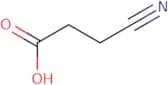
CAS:<p>3-Cyanopropanoic acid is a reactive compound that forms a complex with palladium. It is produced by the reaction of acrylonitrile and chloride in the presence of a base such as sodium hydroxide. The reaction mechanism is shown below:</p>Formula:C4H5NO2Purity:Min. 95%Color and Shape:PowderMolecular weight:99.09 g/mol4-Bromo-3-cyanoanisole
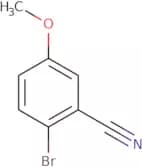
CAS:<p>4-Bromo-3-cyanoanisole is a potent inhibitor of the tyrosine kinase receptor. The functional theory behind this drug's mechanism of action is that it binds to the ATP binding site of the receptor and blocks ATP from binding, preventing downstream signaling. 4-Bromo-3-cyanoanisole has been shown to be an effective inhibitor of cancer cell proliferation. This drug has also been shown to inhibit microtubule assembly and disrupt cellular function by inhibiting protein synthesis.</p>Formula:C8H6BrNOPurity:Min. 95%Color and Shape:PowderMolecular weight:212.04 g/molIminodiacetonitrile
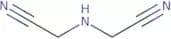
CAS:<p>Iminodiacetonitrile is a chemical compound that is used in wastewater treatment. It is a nitrite-oxidizing agent that reacts with nitrite ion to form nitric acid, which can be then used to oxidize hexamethylenetetramine and iminodiacetic acid to produce ammonia and cyanide ions. Iminodiacetonitrile has an optimum pH of 7.5, so it will not react at higher or lower pH levels. This reaction occurs in the presence of hydroxide solution, hydrochloric acid, and inorganic acids such as sulfuric acid or phosphoric acid. The reaction mechanism for this process is shown below: C6H11N2O2 + HNO3 → C6H11N2O4 + H+ + NO2- C6H11N2O4 → NH3 + HCN</p>Formula:C4H5N3Purity:Min. 95%Color and Shape:Light (Or Pale) Yellow To Brown SolidMolecular weight:95.1 g/molIsocyanomethyl resin (200-400 mesh)
<p>Please enquire for more information about Isocyanomethyl resin (200-400 mesh) including the price, delivery time and more detailed product information at the technical inquiry form on this page</p>Purity:Min. 95%Color and Shape:PowderN-(4-Chlorophenyl)-2-cyanoacetamide
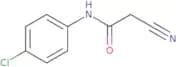
CAS:<p>N-(4-Chlorophenyl)-2-cyanoacetamide is a pyridine compound that can be synthesized from chloroacetonitrile and acetamide. It has been shown to react with an active methylene group in benzene or pyridine to produce a heterocycle. This reaction is reversible and can be used as a preparative method for the synthesis of heterocycles. The 1,3-dipolar cycloaddition of N-(4-chlorophenyl)-2-cyanoacetamide with nitro groups in nitrobenzene produces the corresponding 2-nitropyridines, which are important intermediates in the synthesis of other heterocycles. N-(4-Chlorophenyl)-2-cyanoacetamide has been used as an efficient method for the preparation of nitrogen nucleophiles that are useful for catalysis.</p>Formula:C9H7ClN2OPurity:Min. 95%Molecular weight:194.62 g/mol3'-[2- Cyanoethyl N, N- bis(1- methylethyl) phosphoramidite]-5'- O- [bis(4- methoxyphenyl) phenylmethyl] - 2'- O- methyl- N- [2- [4- (1- methylethyl) phenoxy] acetyl] -guanosine
CAS:<p>Please enquire for more information about 3'-[2- Cyanoethyl N, N- bis(1- methylethyl) phosphoramidite]-5'- O- [bis(4- methoxyphenyl) phenylmethyl] - 2'- O- methyl- N- [2- [4- (1- methylethyl) phenoxy] acetyl] -guanosine including the price, delivery time and more detailed product information at the technical inquiry form on this page</p>Formula:C52H62N7O10PPurity:Min. 95%Molecular weight:976.06 g/molPhycocyanobilin
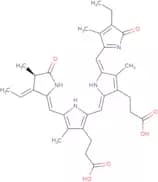
CAS:<p>Phycocyanobilin is a chromophore found in blue-green algae and cyanobacteria. It is a component of the holoprotein phycocyanin and aids in the harvesting of light energy. This biliverdin derivative is converted to phycocyanorubin by biliverdin reductase in mammalian cells. The addition of phycocyanobilin to human cells leads to potent inhibition of NADPH oxidase. It also binds to human serum albumin (HSA). Structurally, Phycocyanin shares many similarities to bilirubin and biliverdin.</p>Formula:C33H38N4O6Purity:Min. 95 Area-%Color and Shape:Blue PowderMolecular weight:586.68 g/mol2,6-Dimethoxy-4-hydroxybenzylamine
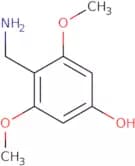
CAS:<p>2,6-Dimethoxy-4-hydroxybenzylamine is a fine chemical that is used as a versatile building block for the synthesis of complex compounds. It is also used as a reagent and reaction component in various chemical reactions. CAS No. 130632-98-3.</p>Formula:C9H13NO3Purity:Min. 95%Color and Shape:Yellow PowderMolecular weight:183.2 g/mol4-(Trifluoromethoxy)benzonitrile
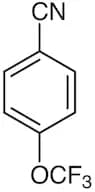
CAS:Formula:C8H4F3NOPurity:>98.0%(GC)Color and Shape:Colorless to Almost colorless clear liquidMolecular weight:187.122-Fluoro-5-(trifluoromethyl)benzonitrile
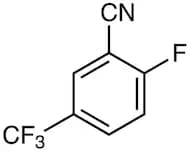
CAS:Formula:C8H3F4NPurity:>98.0%(GC)Color and Shape:Colorless to Almost colorless clear liquidMolecular weight:189.111-Pentyl isocyanate, 97%
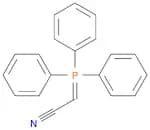
CAS:<p>This Thermo Scientific Chemicals brand product was originally part of the Alfa Aesar product portfolio. Some documentation and label information may refer to the legacy brand. The original Alfa Aesar product / item code or SKU reference has not changed as a part of the brand transition to Thermo Scientific Chemicals.</p>Formula:C6H11NOPurity:97%Color and Shape:Liquid, Clear colorlessMolecular weight:113.162-(Triphenylphosphoranylidene)acetonitrile
CAS:Formula:C20H16NPPurity:98%Color and Shape:SolidMolecular weight:301.3215

![2-[4-(2-Cyanoethylthio)methyl]thiazolyl guanidine](/_next/image/?url=https%3A%2Fstatic.cymitquimica.com%2Fproducts%2F3D%2Fthumb-webp%2FFC21486.webp&w=3840&q=75)
![Ethyl-2-ethoxy-1-[[(2'-cyanobiphenyl-4-yl) methyl] benzimidazole-7-carboxylate](/_next/image/?url=https%3A%2Fstatic.cymitquimica.com%2Fproducts%2F3D%2Fthumb-webp%2FFE31863.webp&w=3840&q=75)


![3'-[2- Cyanoethyl N, N- bis(1- methylethyl) phosphoramidite]-5'- O- [bis(4- methoxyphenyl) phenylm…](/_next/image/?url=https%3A%2Fstatic.cymitquimica.com%2Fproducts%2F3D%2Fthumb-webp%2FFC165570.webp&w=3840&q=75)