Cyano-, Nitrile-
Cyano and nitrile compounds are organic molecules that contain cyano (C≡N) or nitrile groups in their structure, characterized by the presence of nitrogen. These groups play important roles in various chemical reactions and industrial applications. In this category, you will find a wide range of cyano and nitrile compounds, ranging from simple to complex structures. At CymitQuimica, we offer high-quality cyano and nitrile compounds tailored to meet research and industrial needs. Our compounds are suitable for a variety of synthesis and analytical applications.
Found 9624 products of "Cyano-, Nitrile-"
Sort by
Purity (%)
0
100
|
0
|
50
|
90
|
95
|
100
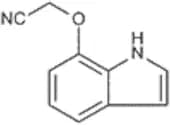
7-(Cyanomethoxy)indole
CAS:<p>7-(Cyanomethoxy)indole is a versatile building block that can be used as a scaffold for the synthesis of complex molecules. It has been used as an intermediate in organic synthesis and as a reaction component for the preparation of useful compounds. 7-(Cyanomethoxy)indole is also known to have high quality and is widely used in research laboratories.</p>Formula:C10H8N2OPurity:Min. 95%Molecular weight:172.18 g/molN-Nitrosodibenzylamine
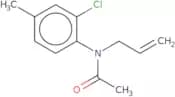
CAS:<p>N-Nitrosodibenzylamine is a chemical compound that has genotoxic effects. It is used as an analytical method to identify the presence of amines and to measure their concentration, as well as in the preparation of sodium salts. N-Nitrosodibenzylamine was found to cause damage to DNA in animals and cells in culture. The matrix effect, which is the difference in response between a sample contained in an organic solvent and one contained in water, was investigated using multi-walled carbon nanotubes (MWCNTs). The results showed that MWCNTs produce a significant matrix effect when compared with other solvents. This study also showed that MWNTs have a higher capacity for nitrosamine adsorption than do other solvents.</p>Formula:C14H14N2OPurity:Min. 96 Area-%Color and Shape:Off-White PowderMolecular weight:226.27 g/molN-Allyl-n-(4-cyano-2-chlorophenyl)acetamide
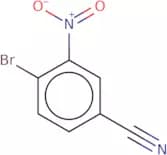
CAS:<p>N-Allyl-N-(4-cyano-2-chlorophenyl)acetamide is a high quality reagent that has been used as an intermediate in the synthesis of fine chemicals, useful scaffolds and building blocks. It is also a versatile building block that can be used to synthesize high quality compounds with a wide range of functionalities. N-Allyl-N-(4-cyano-2-chlorophenyl)acetamide is a speciality chemical that can be used for research purposes. This compound has been shown to produce reactions with other compounds, such as nitrobenzene, to generate useful products.</p>Formula:C12H11ClN2OPurity:Min. 95%Molecular weight:234.68 g/mol2-Bromo-5-cyanonitrobenzene
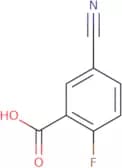
CAS:<p>2-Bromo-5-cyanonitrobenzene is a chemical compound that has been shown to have broad-spectrum activity against drug-resistant bacteria. It is able to kill gram-negative and gram-positive bacteria, including drug-resistant strains. The mechanism of action for 2-bromo-5-cyanonitrobenzene is not well understood but it has been observed that the molecule undergoes an oxidative cyclization reaction in the presence of chloride ions or hydroxides. This process leads to the formation of a nitrosobenzene metabolite which reacts with DNA to inhibit protein synthesis and cause cell death. 2-Bromo-5-cyanonitrobenzene has also been shown to be potent against a wide range of different types of bacteria, including those most commonly associated with skin infections, respiratory tract infections, and urinary tract infections.</p>Formula:C7H3BrN2O2Purity:Min. 95%Color and Shape:PowderMolecular weight:227.02 g/mol5-Cyano-2-fluorobenzoic acid
CAS:<p>5-Cyano-2-fluorobenzoic acid is a macrocyclization agent that is used in the synthesis of 16-membered macrocycles. It is a nucleophilic reagent that reacts with an electrophile to form a 5,5'-bifluoro-2,2'-dioxodibenzofuranone. This reaction can be performed under mild conditions and proceeds via a 1,4-addition mechanism. The product has two stereogenic centers and four stereoisomers that are formed by the relative configuration of these centers. 5-Cyano-2-fluorobenzoic acid also has application in the clinic as an analogue for fluoroquinolones.</p>Formula:C8H4FNO2Purity:Min. 95%Color and Shape:PowderMolecular weight:165.12 g/mol2-Bromophenylacetonitrile
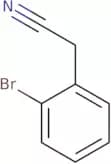
CAS:<p>2-Bromophenylacetonitrile is a synthetic compound that is used in wastewater treatment. It is effective at removing cyanides, phenylpropionic acid, and aldehydes from wastewater. 2-Bromophenylacetonitrile has been shown to be an efficient method for the removal of liriodenine from sewage water and for the removal of 2-bromostyrene from industrial waste water. This process can be used as an analytical method to measure the concentration of these substances in samples of wastewater. The reaction mechanism involves the formation of a nitrilium ion intermediate and subsequent reactions with alcohols to form esters or ethers.</p>Formula:C8H6BrNPurity:Min. 95%Color and Shape:Colourless To Pale Yellow Clear LiquidMolecular weight:196.04 g/mol4,5-Bis(2-cyanoethylthio)-1,3-dithiole-2-thione
CAS:<p>4,5-Bis(2-cyanoethylthio)-1,3-dithiole-2-thione is a fluorescent compound that exists in two orientations, cis and trans. It has been used as a linker for the construction of new compounds with interesting properties. 4,5-Bis(2-cyanoethylthio)-1,3-dithiole-2-thione has been shown to be an effective ligand for palladium cross coupling reactions. This compound can also be used in supramolecular chemistry due to its ability to fluoresce brightly.</p>Formula:C9H8N2S5Purity:Min. 95%Molecular weight:304.5 g/mol1-(4-Cyanophenyl)-2-nitropropene
<p>Please enquire for more information about 1-(4-Cyanophenyl)-2-nitropropene including the price, delivery time and more detailed product information at the technical inquiry form on this page</p>Formula:C10H8N2O2Purity:Min. 95%Molecular weight:188.18 g/mol2,4,6-Trimethoxybenzonitrile
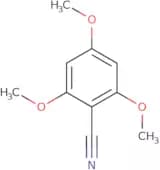
CAS:<p>2,4,6-Trimethoxybenzonitrile is a ligand that forms coordination complexes with metal ions. It can be used to make N-oxide compounds and reaction products with aryl chlorides. The 2,4,6-trimethoxybenzonitrile ligand has been shown to form cross-coupling complexes with benzotriazolyl. This compound is soluble in organic solvents and has a vapor pressure of 0.0025 mm Hg at 25°C. The molecular weight of this compound is 196.2 g/mol and its melting point is 190°C. 2,4,6-Trimethoxybenzonitrile has a symmetric molecule in the gas phase and an asymmetric molecule in solution due to the interactions of hydrogen bonding and van der Waals forces.</p>Formula:C10H11NO3Purity:Min. 95%Color and Shape:PowderMolecular weight:193.2 g/mol3,4-Difluoro-5-nitrobenzonitrile
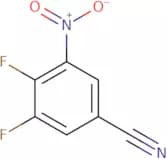
CAS:<p>3,4-Difluoro-5-nitrobenzonitrile is a hepatotoxic compound that is found in the environment. It has been shown to cause cirrhosis and overgrowth of the liver. 3,4-Difluoro-5-nitrobenzonitrile also inhibits hepatic encephalopathy and may be used to treat liver disease. This toxicant has been detected in the bowel and duodenum of humans with nonalcoholic steatohepatitis, as well as in the jejunum and duodenum of mice with spontaneous steatohepatitis. It also causes nonalcoholic steatohepatitis when given orally to rats.</p>Formula:C7H2F2N2O2Purity:Min. 95%Color and Shape:Yellow PowderMolecular weight:184.1 g/moltert-Butyl 4-cyanobenzylcarbamate
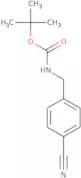
CAS:<p>tert-Butyl 4-cyanobenzylcarbamate (tB4Cbz) is a high quality chemical that can be used as a reagent, complex compound, or useful intermediate in the production of fine chemicals. Tert-Butyl 4-cyanobenzylcarbamate is also a useful scaffold for the synthesis of speciality chemicals and research chemicals. It can be used as a versatile building block for reactions involving amides, nitriles, esters, and amines.</p>Formula:C13H16N2O2Purity:Min. 95%Color and Shape:PowderMolecular weight:232.28 g/mol(3-Methoxyphenyl)acetonitrile
CAS:<p>3-Methoxyphenylacetonitrile (3MPAN) is a small molecule that has been shown to inhibit the activity of kinases, which are enzymes that transfer phosphate groups from ATP onto other substrates. 3MPAN has been found to be selective for the estrogen receptor alpha (ERα), with little or no effect on ERβ, and shows promise as a potential drug for hormone-dependent breast cancer. It also inhibits fatty acid synthesis and is active against some viruses. 3MPAN binds to the enzyme's ATP binding site and blocks phosphorylation by preventing access of ATP. This prevents DNA synthesis and protein synthesis, leading to cell death.</p>Formula:C9H9NOPurity:Min. 95%Color and Shape:PowderMolecular weight:147.17 g/mol4-Fluorobenzylamine
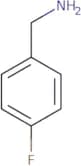
CAS:<p>4-Fluorobenzylamine is a chemical compound with the molecular formula CHF. It has been shown to radiosensitize tumor cells by inhibiting the synthesis of cyclin D2, which is required for cell proliferation. 4-Fluorobenzylamine can also be used in asymmetric synthesis reactions such as nitration and trifluoroacetic acid hydrolysis. 4-Fluorobenzylamine has been shown to have synergistic effects on cells when paired with flupirtine or maleate. This synergistic effect is primarily due to its ability to inhibit DNA repair, which leads to cell death through apoptosis or necrosis.</p>Formula:C7H8FNPurity:Min. 98 Area-%Color and Shape:Colourless To Pale Yellow LiquidMolecular weight:125.14 g/molMethyl-4-cyanobenzoate
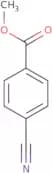
CAS:<p>Methyl-4-cyanobenzoate is a nucleophilic compound that reacts with electrophilic functional groups. It is used in organic chemistry as an immobilized reagent for the conversion of alcohols, amines, and thiols to their corresponding halides. Methyl-4-cyanobenzoate has been shown to have anti-inflammatory properties by inhibiting neutrophil migration into cutaneous tissue and reducing the production of proinflammatory compounds such as isobutene and naphthalene. It also inhibits the release of histamine from mast cells.</p>Formula:C9H7NO2Purity:Min. 95%Color and Shape:PowderMolecular weight:161.16 g/mol4-Cyanoheptane
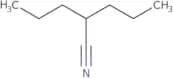
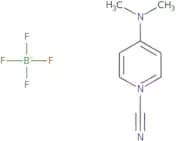
CAS:<p>4-Cyanoheptane is a liquid that has been decarboxylated, which means it contains no CO2 molecules. It is an organic solvent with a boiling point of -2°C and a density of 0.7 g/mL. This product is used in the hydrolysis of carboxylic acids to form carboxylates. 4-Cyanoheptane has been shown to be able to hydrolyze amides, carbones, phenoxy groups, and functional groups as well as produce alkylation reactions with high concentrations.</p>Formula:C8H15NPurity:Min. 95%Color and Shape:Clear LiquidMolecular weight:125.21 g/mol1-Cyano-4-(dimethylamino)pyridinium tetrafluoroborate
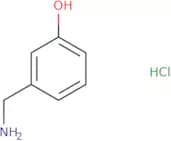
CAS:<p>1-Cyano-4-(dimethylamino)pyridinium tetrafluoroborate (CDAP) is an organic cyanylating agent. It is reactive under acidic conditions giving CDAP an advantage over other sulfhydryl labeling agents, as it can avoid potential thiol-disulfide exchange.</p>Formula:C8H10N3BF4Purity:Min. 98 Area-%Color and Shape:PowderMolecular weight:234.99 g/mol3-Hydroxybenzylamine hydrochloride
CAS:<p>3-Hydroxybenzylamine hydrochloride (3HBH) is a chemical compound that has been used as a reagent and in the synthesis of other compounds. It is also known to be a useful scaffold for complex compounds, and can be used as a building block for the synthesis of fine chemicals. 3HBH has been found to have many applications in research, such as being an intermediate for pharmaceuticals, pesticides, dyes, and agrochemicals. 3HBH is also useful in organic syntheses where it has been found to react with nitriles and amides to form esters and amides respectively.</p>Formula:C7H9NO·HClPurity:Min. 95%Color and Shape:PowderMolecular weight:159.61 g/molMesitylacetonitrile
CAS:<p>Mesitylacetonitrile is a mesityl-substituted acetonitrile. It is used in organic synthesis as a Grignard reagent, which is an organometallic compound containing an alkyl or other carbon group bound to magnesium. Mesitylacetonitrile has been shown to react with chlorides to produce furyl chlorides and chloride. Mesitylacetonitrile can be synthesized by reacting phenylacetonitrile (a byproduct of the synthesis of acetone) with chlorine gas and hydrogen in the presence of a catalyst such as copper(II) chloride. This reaction produces mesitylacetonitrile and hydrogen chloride gas as byproducts. The compound has been used to synthesize corticotropin-releasing factor receptor antagonists that have potential therapeutic applications for the treatment of stress-related disorders.</p>Formula:C11H13NPurity:Min. 95%Color and Shape:PowderMolecular weight:159.23 g/mol4-Aminophenylacetonitrile
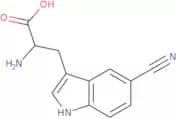
CAS:<p>4-Aminophenylacetonitrile is a molecule that is structurally similar to nitrobenzene. 4-Aminophenylacetonitrile has been shown to be an efficient method for inhibiting faecalis growth and secretory phospholipase A2 (sPLA2) activity in vitro. It also inhibits the population growth of E. coli in vivo, which can be attributed to its ability to inhibit the enzyme catalysed by hydrogen bond formation.</p>Formula:C8H8N2Purity:Min. 95%Color and Shape:PowderMolecular weight:132.16 g/mol5-Cyano-DL-tryptophan
CAS:<p>5-Cyano-DL-tryptophan is an antimicrobial peptide that exhibits potent antimicrobial activity against Gram-positive and Gram-negative bacteria. It also has a high affinity for the bacterial ribosome, which leads to inhibition of protein synthesis. 5-Cyano-DL-tryptophan can be synthesized by dehydration of tryptophan in a model system. The molecule is an analog of the natural amino acid tryptophan and has fluorescence properties that are sensitive to hydration levels. 5-Cyano-DL-tryptophan binds to the peptide binding site on the ribosome and induces a frequency shift in its fluorescence emission spectrum when bound. This property makes it a useful tool for studying peptide binding sites on the ribosome.</p>Formula:C12H11N3O2Purity:Min. 95%Color and Shape:Yellow PowderMolecular weight:229.23 g/mol