Cyano-, Nitrile-
Cyano and nitrile compounds are organic molecules that contain cyano (C≡N) or nitrile groups in their structure, characterized by the presence of nitrogen. These groups play important roles in various chemical reactions and industrial applications. In this category, you will find a wide range of cyano and nitrile compounds, ranging from simple to complex structures. At CymitQuimica, we offer high-quality cyano and nitrile compounds tailored to meet research and industrial needs. Our compounds are suitable for a variety of synthesis and analytical applications.
Found 9618 products of "Cyano-, Nitrile-"
Sort by
Purity (%)
0
100
|
0
|
50
|
90
|
95
|
100
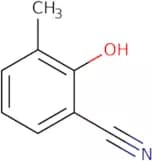
2-Hydroxy-3-methylbenzonitrile
CAS:<p>2-Hydroxy-3-methylbenzonitrile is a high quality chemical that is used as an intermediate in the synthesis of complex compounds. It can be used as a reagent in organic chemistry, and has been shown to be useful for the production of fine chemicals, such as antibiotics. 2-Hydroxy-3-methylbenzonitrile is also a versatile building block for the production of pharmaceuticals and research chemicals. It can be used as a reaction component for the synthesis of speciality chemicals and various building blocks.</p>Formula:C8H7NOPurity:Min. 95%Color and Shape:PowderMolecular weight:133.15 g/mol2-Bromo-4-nitrobenzonitrile
CAS:<p>2-Bromo-4-nitrobenzonitrile is a chemical compound that can be used to study the relationship between genetic polymorphism and chromosome structure. This compound has been found to induce polyploidy in Brassica plants, which may have implications for the evolution of these species. 2-Bromo-4-nitrobenzonitrile also has been shown to be a useful marker for phylogenetic and ecological studies of Lepidium species. The compound is diploid in nature, but can be used as a matrix in tetraploid plants.</p>Formula:C7H3BrN2O2Purity:Min. 95%Color and Shape:PowderMolecular weight:227.02 g/molPyridine-3-acetonitrile
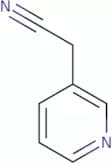
CAS:<p>Pyridine-3-acetonitrile is a coordination complex that can be used for the treatment of diabetes. It has been shown to have a high affinity for plasma glucose and to be selective for biological samples containing amino acids, such as proteins. The molecule is able to bind with carbon disulphide in order to form the active methylene, which has been shown to be an effective bifunctional ligand. The compound has also been shown to have a ph optimum of 9.8 - 10.2 and exhibits an atomic orbital with a molecular electrostatic potential of 0.5 eV. Pyridine-3-acetonitrile binds strongly to nucleophilic groups, such as amines and hydroxyls, making it suitable for use as a ligand in metal complexes. This compound may also have some interesting properties related to its morphology, which can be further investigated using functional theory and molecular electrostatic potential.br>br> br>br></p>Formula:C7H6N2Purity:Min. 95%Color and Shape:Clear LiquidMolecular weight:118.14 g/mol4-Amino-2-chlorobenzonitrile
CAS:<p>4-Amino-2-chlorobenzonitrile (4ACB) is a copper salt that can be used in antimalarial therapy. It has been shown to have strong antiplasmodial activity against the parasite Plasmodium falciparum and other species of the genus Plasmodium. 4ACB is synthesized by nitro group reduction and ammonolysis, followed by an addition reaction with chloroformate. 4ACB binds to the enzyme ferredoxin reductase and inhibits electron transfer, which leads to inhibition of ATP production and cell death. The molecular modelling study showed that 4ACB is a reactive molecule with high affinity constants for copper ion.</p>Formula:C7H5ClN2Purity:Min. 95%Color and Shape:PowderMolecular weight:152.58 g/mol4-Hydroxyphenylacetonitrile
CAS:<p>4-Hydroxyphenylacetonitrile (HPA) is a chemical compound that belongs to the group of nitriles. It is a precursor to the pigment sinalbin, which is found in corynebacterium and related bacteria. HPA has been shown to have an apoptotic effect on human cells, which may be due to its ability to inhibit protein synthesis and induce DNA fragmentation. The synthetic pathway for HPA starts with the conversion of L-phenylalanine into 4-hydroxyphenylpyruvic acid by a wild-type strain or bacterial strain. The 4-hydroxyphenylpyruvic acid is then converted into 4-hydroxybenzaldehyde through polymerase chain reactions or expression plasmids in corynebacterium glutamicum. This molecule can then be transformed into HPA by hydrolysis with hydrochloric acid or enzymatic activity. HPA has also been shown to stimulate</p>Formula:C8H7NOPurity:Min. 95%Color and Shape:PowderMolecular weight:133.15 g/mol2-Chloro-5-cyanopyrazine
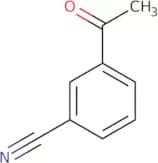
CAS:<p>2-Chloro-5-cyanopyrazine is a synthetic compound that has been shown to have anti-cancer properties. It is an acceptor molecule that has a nucleophilic character and can react with electrophiles to form covalent bonds. This compound has been shown to selectively inhibit the growth of cancer cells in vitro. The mechanism of action is not yet clear, but it may be due to its ability to induce apoptosis and arrest cell cycle progression at the G1 phase. 2-Chloro-5-cyanopyrazine also has the potential for use as an analytical reagent because of its high solubility in organic solvents. In addition, this compound can be used as a copper donor in reactions involving carboxylic acids or other nucleophiles. <br>2-Chloro-5-cyanopyrazine can be synthesized from benzene and chloropicrin in the presence of copper(II)</p>Formula:C5H2ClN3Purity:Min. 95%Color and Shape:Off-White To Yellow SolidMolecular weight:139.54 g/mol3-Acetylbenzonitrile
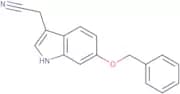
CAS:<p>3-Acetylbenzonitrile is an isomeric, asymmetric synthesis that has been synthesised in the presence of copper complex and salicylic acid. The reaction was carried out with a gaseous phase, where the chalcone was formed. The experimental techniques used were cross-coupling reactions and molecular modeling techniques. 3-Acetylbenzonitrile has been synthesised by a rationalized enthalpic approach that includes alcohol dehydrogenases and molecular modeling techniques.</p>Formula:C9H7NOPurity:Min. 95%Color and Shape:PowderMolecular weight:145.16 g/mol2-(6-Benzyloxyindolyl)acetonitrile
CAS:<p>Please enquire for more information about 2-(6-Benzyloxyindolyl)acetonitrile including the price, delivery time and more detailed product information at the technical inquiry form on this page</p>Formula:C17H14N2OPurity:Min. 95%Molecular weight:262.31 g/mol4-Amino-2-cyanotoluene
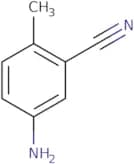
CAS:<p>4-Amino-2-cyanotoluene is a quinazoline compound that inhibits the synthesis of thymine, which is necessary for DNA replication. This compound binds to the enzyme thymidylate synthetase, thereby inhibiting the synthesis of thymine. The inhibitory effect has been shown in a study using calf thymus DNA. 4-Amino-2-cyanotoluene also inhibits the synthesis of other nucleic acids such as adenine and guanine.</p>Formula:C8H8N2Purity:Min. 95%Color and Shape:PowderMolecular weight:132.16 g/mol4-(Bromomethyl)benzylamine HBr
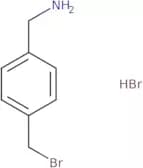
CAS:<p>4-(Bromomethyl)benzylamine HBr is a fine chemical that can be used as a building block for organic synthesis. This compound is also a useful research chemical, reagent, and specialty chemical. 4-(Bromomethyl)benzylamine HBr has been used as a reaction component in the synthesis of various pharmaceuticals, such as theophylline and ampicillin. It has also been used as an intermediate in the production of other compounds, such as 4-hydroxybutyric acid and 3-methylthiopropionic acid. This complex compound can be purchased at high quality and is versatile enough to act as a scaffold for many reactions.</p>Formula:C8H11Br2NPurity:Min. 95%Color and Shape:PowderMolecular weight:280.99 g/mol(3,5-Dimethoxyphenyl)acetonitrile
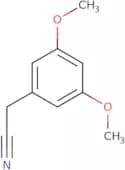
CAS:<p>3,5-Dimethoxyphenylacetonitrile is a synthetic compound that has been shown to be an inhibitor of the demethylation reaction. It is postulated to have anticancer activity and inhibits the biosynthesis of octaketides in vitro. This compound has also been shown to have antibacterial activity and is structurally related to cannabinoids. The mechanism by which 3,5-dimethoxyphenylacetonitrile inhibits cancer cells is not known. However, it may be due to its ability to bind cannabinoid receptors.</p>Formula:C10H11NO2Purity:Min. 95%Color and Shape:PowderMolecular weight:177.2 g/mol4-Cyanobenzyl bromide
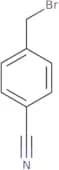
CAS:<p>4-Cyanobenzyl bromide is a chemical compound that is stable in the presence of hydrogen bonds and with a palladium-catalyzed coupling reaction. It has been shown to react with amines to form an azobenzene, which is a fluorescent compound. 4-Cyanobenzyl bromide reacts with x-ray diffraction data and molecular modeling to form halides and hydroxy groups. The mechanism of this reaction is not yet known, but it appears that the initial step involves the formation of a hydrogen bond between the 4-cyanobenzyl group and the amine. Magnetic resonance spectroscopy has confirmed that hippuric acid can be formed from this reaction as well.</p>Formula:C8H6BrNPurity:Min. 95%Color and Shape:PowderMolecular weight:196.04 g/mol5-Acetyl-2-aminobenzonitrile
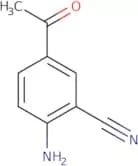
CAS:<p>5-Acetyl-2-aminobenzonitrile is a versatile building block that can be used as an intermediate in the synthesis of a wide range of chemicals. It has been used to produce pharmaceuticals and other useful compounds, including research chemicals and speciality chemicals. 5-Acetyl-2-aminobenzonitrile is also a useful reagent for the production of organic products. The compound is available at high purity levels.</p>Formula:C9H8N2OPurity:Min. 95%Color and Shape:White PowderMolecular weight:160.17 g/mol4-Cyano-2-fluorobenzyl alcohol
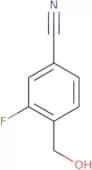
CAS:<p>4-Cyano-2-fluorobenzyl alcohol is a reagent that is used to produce chlorine and hydrochloric acid. It is also used industrially in the production of potassium chloride, a compound that is used in fertilizers, animal feed supplements, and water treatment. 4-Cyano-2-fluorobenzyl alcohol reacts with chloride ions to form hypochlorous acid (HOCl), which then reacts with water to form hydrogen chloride gas. The reaction with fluoride ions leads to the formation of hydrofluoric acid (HF).</p>Formula:C8H6FNOPurity:Min. 95%Color and Shape:White To Beige SolidMolecular weight:151.14 g/molCyanodibenzylamine
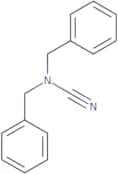
CAS:<p>Cyanodibenzylamine is a synthetic, pharmaceutical preparation. It is an amine that undergoes nucleophilic attack by an amide to form a cyanoguanidine. Cyanodibenzylamine can be used as a stabilizer and additive in pharmaceutical preparations. It also has the ability to bind metal hydroxides, which may be due to the presence of basic fibroblast growth factor and isoquinoline compound. Cyanodibenzylamine is also used as a polymerization initiator in organic chemistry, with hydrocarbon solvents such as benzene or toluene as its solvent.</p>Formula:C15H14N2Purity:Min. 95%Color and Shape:PowderMolecular weight:222.29 g/molEthyl 3-cyanopropanoate
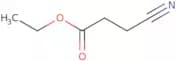
CAS:<p>Ethyl 3-cyanopropanoate is an organic compound with the formula CH3C(O)CH2CN. It is a colorless liquid that boils at 100 °C. It is used in the synthesis of other organic compounds, such as oxazolidinones, cyclopropenes, and quinolizines. The yield can be increased to 98% by using a catalyst such as potassium tert-butoxide or zinc chloride in the reaction. The reaction proceeds through an elimination followed by an acid-catalyzed alkylation to afford the desired product. This process also results in a high yield of ethyl bromoacetate as a side product.</p>Formula:C6H9NO2Purity:Min. 95%Color and Shape:PowderMolecular weight:127.14 g/mol3-Cyanocinnamic acid
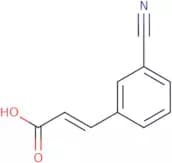
CAS:<p>3-Cyanocinnamic acid is a reactive, unreactive, and stepwise cycloaddition compound. It can participate in photochemical reactions with other compounds to form photodimers. 3-Cyanocinnamic acid has an optimal reaction temperature of 100°C and a reaction time of 5 minutes. The diradical nature of 3-cyanocinnamic acid makes it sensitive to UV light, and the photochemical reactions are simulated by quantum mechanics calculations. Photodimerisation simulations show that 3-cyanocinnamic acid is capable of forming photodimers with 2-cyanocinnamic acid or 4-cyanocinnamic acid at room temperature.</p>Formula:C10H7NO2Purity:Min. 95%Color and Shape:PowderMolecular weight:173.17 g/mol3-Methyl-4-nitrobenzonitrile
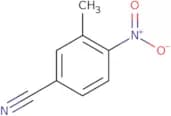
CAS:<p>3-Methyl-4-nitrobenzonitrile is a fluorescing aromatic amine that is synthesized by aliphatic amines. It has been shown to inhibit the growth of cells in culture, which may be due to its ability to bind with and inhibit the insulin-like growth factor receptor-1 (IGF-1R). 3-Methyl-4-nitrobenzonitrile has also been shown to bind with cytochrome P450 enzymes, where it can be oxidized or reduced. The conformation of 3-methyl-4 nitrobenzonitrile is dependent on the solvent molecules present.</p>Formula:C8H6N2O2Purity:Min. 95%Color and Shape:PowderMolecular weight:162.15 g/mol4-Cyanobenzylamine HCl
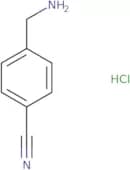
CAS:<p>4-Cyanobenzylamine HCl is a degradable polymer that has been shown to inhibit colonic adenocarcinoma in mice. This compound was synthesized by the reaction of 4-cyanobenzylamine with 3-mercaptopropionic acid and was characterized using IR, 1H NMR, and 13C NMR spectroscopy. It also showed an inhibitory effect on the proliferation of human colon cancer cells. The polymer was found to gel when mixed with different concentrations of acrylamide and methylene bisacrylamide. Gelation occurred at a lower concentration of acrylamide than the amount used in previous studies. This may be due to its functional groups and morphology, which could have contributed to the inhibition of cell growth.</p>Formula:C8H8N2·HClPurity:Min. 95%Color and Shape:PowderMolecular weight:168.62 g/mol4-Hydroxy-3-methoxybenzylamine hydrochloride
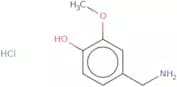
CAS:<p>4-Hydroxy-3-methoxybenzylamine hydrochloride is a reagent, complex compound and useful intermediate for the production of speciality chemicals. CAS No. 7149-10-2 is not a hazardous chemical and does not pose any significant risk to human health or the environment when used as intended. This chemical has many uses including being a useful scaffold in organic synthesis, a useful building block for the preparation of other compounds, and a versatile building block for the preparation of various compounds. It also has many applications in research such as being an intermediate for the synthesis of other compounds, or as a reactant in various reactions.</p>Formula:C8H12NO2ClPurity:Min. 98 Area-%Color and Shape:White PowderMolecular weight:189.64 g/mol