Cyano-, Nitrile-
Cyano and nitrile compounds are organic molecules that contain cyano (C≡N) or nitrile groups in their structure, characterized by the presence of nitrogen. These groups play important roles in various chemical reactions and industrial applications. In this category, you will find a wide range of cyano and nitrile compounds, ranging from simple to complex structures. At CymitQuimica, we offer high-quality cyano and nitrile compounds tailored to meet research and industrial needs. Our compounds are suitable for a variety of synthesis and analytical applications.
Found 9618 products of "Cyano-, Nitrile-"
Sort by
Purity (%)
0
100
|
0
|
50
|
90
|
95
|
100
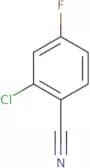
2-Chloro-4-fluorobenzonitrile
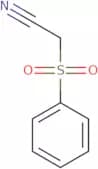
CAS:<p>2-Chloro-4-fluorobenzonitrile is a drug that has been shown to have antitumor effects by binding to the CB2 receptor. It inhibits hydrogenation reduction of the molecule, which may be due to its ability to react with both functional groups. 2-Chloro-4-fluorobenzonitrile has also been shown to inhibit progesterone receptor, which may lead to an increase in progesterone levels and a decrease in estrogen levels. The pharmacokinetic properties of this compound are not yet known.</p>Formula:C7H3ClFNPurity:Min. 95%Color and Shape:White PowderMolecular weight:155.56 g/molBenzenesulphonylacetonitrile
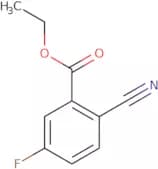
CAS:<p>Benzenesulphonylacetonitrile is an alkanoic acid nucleophile with a benzimidazole derivative. It has shown potential for use as a cancer drug by inhibiting tumor-associated enzymes and inducing apoptosis in cancer cells. Benzenesulphonylacetonitrile is also active against inflammatory diseases such as rheumatoid arthritis, psoriatic arthritis, and Crohn's disease. This drug can be synthesized by the reaction of sodium salts with benzenesulphonylacetone followed by a nucleophilic substitution reaction with methylene chloride. The synthesis of benzenesulphonylacetonitrile requires anhydrous acetonitrile and palladium-catalyzed coupling reactions in the presence of sodium carbonate. Benzenesulphonylacetonitrile has chemical stability in the presence of acids, bases, and heat.br></p>Formula:C8H7NO2SPurity:Min. 95%Color and Shape:PowderMolecular weight:181.21 g/mol2-Cyano-5-fluorobenzoic acid ethyl ester
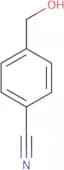
CAS:<p>2-Cyano-5-fluorobenzoic acid ethyl ester is a chemical compound with the formula C6H4(COOCH2)2FO. The compound is an intermediate in the synthesis of other chemicals, such as pharmaceuticals. It is also used as a building block in other syntheses. 2-Cyano-5-fluorobenzoic acid ethyl ester has been assigned CAS No. 1260751-65-2 and is useful in organic synthesis because it is a versatile building block, complex compound, and fine chemical.</p>Formula:C10H8FNO2Purity:Min. 95%Molecular weight:193.17 g/mol4-Cyanobenzyl alcohol
CAS:<p>4-Cyanobenzyl alcohol is a phosphane that reacts with amines to form imines. This reaction can be used as a tool for the identification of amines in protein samples. The reaction time for this reaction is about 3 hours and can only be done at room temperature. 4-Cyanobenzyl alcohol also has potent inhibition activity against cyclopentadienyl, which is an important intermediate of organic synthesis. The ruthenium complex catalyzes this reaction and it can be used as a homogeneous catalyst.</p>Formula:C8H7NOPurity:Min. 95%Color and Shape:PowderMolecular weight:133.15 g/molCyano-3-phenoxybenzyl 3-(2,2-dichloroethenyl)-2,2-dimethylcyclopropanecarboxylate
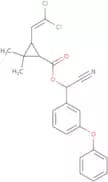
CAS:<p>Cypermethrin is an insecticide that belongs to the family of chemical pesticides. It is used in agriculture and in public health to control malaria-transmitting mosquitoes, head lice, and scabies mites. Cypermethrin disrupts the insect nervous system by inhibiting the function of synapses between nerves, resulting in paralysis and death. The compound also affects signal pathways that regulate locomotor activity and enzyme activities. Cypermethrin has been shown to have a high resistance to degradation by glycol ethers such as ethylene glycol monomethyl ether acetate (EGMEA). It has an optimum concentration of 0.01 ppm for mosquito control and 0.1 ppm for lice control. The analytical method involves liquid chromatography with sodium citrate as an ion-pairing agent and a linear calibration curve using a standard curve generated from known concentrations of cypermethrin.</p>Formula:C22H19Cl2NO3Purity:Min. 95%Color and Shape:Colorless Clear LiquidMolecular weight:416.3 g/mol5-Bromo-2-cyano-3-nitropyridine
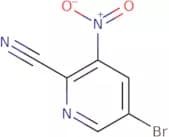
CAS:<p>5-Bromo-2-cyano-3-nitropyridine is a medication that has been shown to be an effective inhibitor of the RET tyrosine kinase. It has been used in clinical studies to treat chronic kidney disease and has been shown to inhibit the growth of cancer cells. The molecular electrostatic potential (MEP) simulations have shown that 5-bromo-2-cyano-3-nitropyridine interacts with the reactive site of RET, inhibiting its function by binding to the nucleophilic substitutions. 5-Bromo-2-cyano-3-nitropyridine is synthesized from 2,5 dibromopyridine and 3 nitrobenzene at high yield. The molecule is chromatographically separated from impurities such as 4 bromo pyridine.</p>Formula:C6H2BrN3O2Purity:Min. 95%Color and Shape:PowderMolecular weight:228 g/mol3-Acetylbenzonitrile
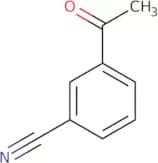
CAS:<p>3-Acetylbenzonitrile is an isomeric, asymmetric synthesis that has been synthesised in the presence of copper complex and salicylic acid. The reaction was carried out with a gaseous phase, where the chalcone was formed. The experimental techniques used were cross-coupling reactions and molecular modeling techniques. 3-Acetylbenzonitrile has been synthesised by a rationalized enthalpic approach that includes alcohol dehydrogenases and molecular modeling techniques.</p>Formula:C9H7NOPurity:Min. 95%Color and Shape:PowderMolecular weight:145.16 g/mol5-Cyanoindole-3-carboxaldehyde
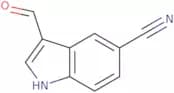
CAS:<p>5-Cyanoindole-3-carboxaldehyde is an aldehyde that is used in synthesis of β-unsaturated aldehydes. It is prepared by the reaction of 3-cyanoindole with formaldehyde. 5-Cyanoindole-3-carboxaldehyde has antibacterial activity against gram positive and gram negative bacteria. It also has a high yield and can be purified by filtration or by condensation with chlorobenzene. 5-Cyanoindole-3-carboxaldehyde can be activated by irradiation, which makes it useful for the production of pharmaceuticals.</p>Formula:C10H6N2OPurity:Min. 95%Molecular weight:170.17 g/mol4-Cyanophenylacetic acid
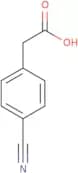
CAS:<p>4-Cyanophenylacetic acid is a thiolated organic compound that can act as a framework for the attachment of other functional groups. The synthesis of this compound has been developed in various ways, such as through the use of photoluminescence or coordination chemistry.</p>Formula:C9H7NO2Purity:Min. 95%Color and Shape:PowderMolecular weight:161.16 g/mol4-Amino-3,5-dichlorobenzylamine dihydrochloride
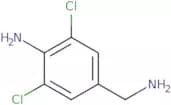
CAS:<p>4-Amino-3,5-dichlorobenzylamine dihydrochloride is a chemical intermediate that can be used as a reagent for the synthesis of other compounds. 4-Amino-3,5-dichlorobenzylamine dihydrochloride is considered to be a high quality chemical with versatile uses. It is listed in the Chemical Abstracts Service (CAS) registry under 164648-75-3, and can be obtained from various suppliers.</p>Formula:C7H8Cl2N2·2HClPurity:Min. 95%Color and Shape:PowderMolecular weight:263.98 g/mol2,6-Difluorobenzonitrile
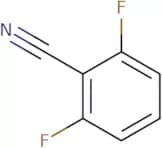
CAS:<p>2,6-Difluorobenzonitrile is a nucleophilic compound that reacts with inorganic acids to form new chemical structures. It has been shown to react with hydrochloric acid, sodium carbonate and phosphotungstic acid. The FT-IR spectroscopy of 2,6-difluorobenzonitrile shows a reaction product with a proton. This means that the molecule is able to transfer a hydrogen ion from one site to another. The reaction between 2,6-difluorobenzonitrile and sodium carbonate produces an insoluble precipitate of sodium phosphate and sodium chloride, which can be analyzed gravimetrically. 2,6-Difluorobenzonitrile has also been shown to have fluorescence properties that are activated by ultraviolet light and naphthalene.</p>Formula:C7H3F2NPurity:Min. 95%Color and Shape:PowderMolecular weight:139.1 g/mol2-Amino-6-methoxybenzonitrile
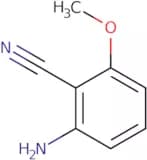
CAS:<p>2-Amino-6-methoxybenzonitrile is an organic compound that belongs to a group of monosubstituted hydroxylamines. It has been used in the synthesis of various analogues, such as caprolactam and methoxyanthranilic acid. Hydrochloric acid reacts with 2-amino-6-methoxybenzonitrile to form 2-amino-6-hydroxybenzonitrile, which can be oxidized to 2-amino-6-(hydroxymethyl)benzonitrile. This reaction is catalyzed by copper or zinc metal.</p>Formula:C8H8N2OPurity:Min. 95%Color and Shape:PowderMolecular weight:148.16 g/molEthyl 3-cyanopropanoate
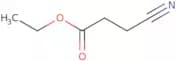
CAS:<p>Ethyl 3-cyanopropanoate is an organic compound with the formula CH3C(O)CH2CN. It is a colorless liquid that boils at 100 °C. It is used in the synthesis of other organic compounds, such as oxazolidinones, cyclopropenes, and quinolizines. The yield can be increased to 98% by using a catalyst such as potassium tert-butoxide or zinc chloride in the reaction. The reaction proceeds through an elimination followed by an acid-catalyzed alkylation to afford the desired product. This process also results in a high yield of ethyl bromoacetate as a side product.</p>Formula:C6H9NO2Purity:Min. 95%Color and Shape:PowderMolecular weight:127.14 g/mol5-Cyanoindole
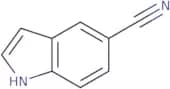
CAS:<p>5-Cyanoindole is a hydrophobic molecule that has been shown to have an inhibitory effect on the trifluoroacetic acid-induced fluorescence in the presence of chloride ions. It is also able to bind peptides and has been used as an antimicrobial peptide. 5-Cyanoindole can be synthesized electrochemically or by electrochemical impedance spectroscopy. The synthesis of 5-cyanoindole can be achieved through a Friedel-Crafts reaction, followed by a hydrolysis with hydrogen peroxide and then a reduction with sodium borohydride.<br>!-- END OF PRODUCT DESCRIPTION --></p>Formula:C9H6N2Color and Shape:White PowderMolecular weight:142.16 g/mol4-Amino-3-nitrobenzonitrile
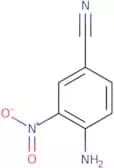
CAS:<p>4-Amino-3-nitrobenzonitrile is an organic compound that is used as a precursor in the synthesis of drugs to treat infectious diseases. 4-Amino-3-nitrobenzonitrile has been shown to have potent activity against Leishmania species, including L. major and L. braziliensis. It binds to sulfoxides by a nitro group and forms a covalent bond with the sulfoxide. This results in the formation of an intramolecular hydrogen bond between the nitro group and the sulfoxide, which prevents it from forming hydrogen bonds with other molecules. Gel permeation chromatography can be used for analytical determination of this drug. 4-Amino-3-nitrobenzonitrile has also been studied using chemosensors and in vivo studies, showing that it can be used to inhibit protozoa such as Giardia lamblia, Entamoeba histolyt</p>Formula:C7H5N3O2Purity:Min. 98%Color and Shape:PowderMolecular weight:163.13 g/mol3,4-Dihydroxybenzylamine hydrobromide
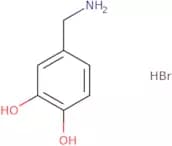
CAS:<p>3,4-Dihydroxybenzylamine hydrobromide is a chemical that reacts with hydrogen peroxide to produce light. It is used as a nutrient for the chemiluminescent reaction in a nutrient solution to detect dopamine, chlorogenic acids, and trifluoroacetic acid. 3,4-Dihydroxybenzylamine hydrobromide can also be used as an analytical method for the measurement of cortisol concentration in plasma and saliva samples. This chemical analogically reacts with monoamine neurotransmitters such as dopamine and gamma-aminobutyric acid (GABA) to form fluorescent probes. 3,4-Dihydroxybenzylamine hydrobromide is not toxic or mutagenic and has been shown to be safe for use in humans.</p>Formula:C7H10BrNO2Purity:Min. 95%Color and Shape:PowderMolecular weight:220.06 g/molMesitylacetonitrile
CAS:<p>Mesitylacetonitrile is a mesityl-substituted acetonitrile. It is used in organic synthesis as a Grignard reagent, which is an organometallic compound containing an alkyl or other carbon group bound to magnesium. Mesitylacetonitrile has been shown to react with chlorides to produce furyl chlorides and chloride. Mesitylacetonitrile can be synthesized by reacting phenylacetonitrile (a byproduct of the synthesis of acetone) with chlorine gas and hydrogen in the presence of a catalyst such as copper(II) chloride. This reaction produces mesitylacetonitrile and hydrogen chloride gas as byproducts. The compound has been used to synthesize corticotropin-releasing factor receptor antagonists that have potential therapeutic applications for the treatment of stress-related disorders.</p>Formula:C11H13NPurity:Min. 95%Color and Shape:PowderMolecular weight:159.23 g/molCyanodibenzylamine
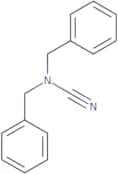
CAS:<p>Cyanodibenzylamine is a synthetic, pharmaceutical preparation. It is an amine that undergoes nucleophilic attack by an amide to form a cyanoguanidine. Cyanodibenzylamine can be used as a stabilizer and additive in pharmaceutical preparations. It also has the ability to bind metal hydroxides, which may be due to the presence of basic fibroblast growth factor and isoquinoline compound. Cyanodibenzylamine is also used as a polymerization initiator in organic chemistry, with hydrocarbon solvents such as benzene or toluene as its solvent.</p>Formula:C15H14N2Purity:Min. 95%Color and Shape:PowderMolecular weight:222.29 g/mol3,4-Dimethoxybenzylamine
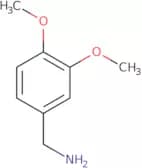
CAS:<p>3,4-Dimethoxybenzylamine is an amine that is used in the synthesis of pharmaceuticals. It can be polymerized by heating with aqueous formaldehyde and hydrochloric acid to form a resin. 3,4-Dimethoxybenzylamine inhibits serotonin receptors, exhibiting inhibitory properties at concentrations of 10-5 M. 3,4-Dimethoxybenzylamine also has pharmacokinetic properties that are similar to vitamin B1. This compound has been shown to inhibit homogeneous catalysts and is used for coatings for ganglion cells.</p>Formula:C9H13NO2Purity:Min. 95%Color and Shape:Clear LiquidMolecular weight:167.21 g/mol(5-Methyl-1,3-thiazol-2-yl)acetonitrile
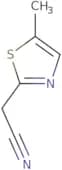
CAS:<p>5-Methyl-1,3-thiazol-2-yl)acetonitrile is a chemical that is used as a building block in organic synthesis. It has been shown to be an intermediate in the preparation of other compounds and has been used as a research chemical. This chemical has also been shown to have useful properties, such as high quality and versatility. 5-Methyl-1,3-thiazol-2-yl)acetonitrile can be used as a reaction component or a reagent for synthesizing other chemicals.</p>Formula:C6H6N2SPurity:Min. 95%Color and Shape:Clear LiquidMolecular weight:138.19 g/mol