Cyano-, Nitrile-
Cyano and nitrile compounds are organic molecules that contain cyano (C≡N) or nitrile groups in their structure, characterized by the presence of nitrogen. These groups play important roles in various chemical reactions and industrial applications. In this category, you will find a wide range of cyano and nitrile compounds, ranging from simple to complex structures. At CymitQuimica, we offer high-quality cyano and nitrile compounds tailored to meet research and industrial needs. Our compounds are suitable for a variety of synthesis and analytical applications.
Found 9618 products of "Cyano-, Nitrile-"
Sort by
Purity (%)
0
100
|
0
|
50
|
90
|
95
|
100
2-Cyanoethyl phosphate barium salt hydrate
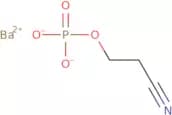
CAS:<p>2-Cyanoethyl phosphate barium salt hydrate is an alkaline compound that is soluble in water. It has been used to synthesize phosphodiesters, benzene, dioxan and alcohols. The chemical was originally developed as a reagent for the quantitative conversion of ethyl acetate esters to their corresponding acid chlorides. This reaction can be carried out quantitatively in tetrahydrofuran at room temperature with yields of about 95%. 2-Cyanoethyl phosphate barium salt hydrate also converts alcohols to their corresponding monophosphates quantitatively in alkaline conditions. Crystalline forms are obtained by reacting the compound with triethylamine and benzene.</p>Formula:C3H6BaNO4P•xH2OPurity:Min. 95%Color and Shape:PowderMolecular weight:324.42 g/mol3,4-Diethoxyphenylacetonitrile
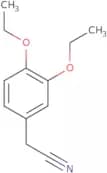
CAS:<p>3,4-Diethoxyphenylacetonitrile is an intermediate that is used in the synthesis of drotaverine. It can also be used to synthesize catechol, which is a medicine used to treat depression and anxiety. 3,4-Diethoxyphenylacetonitrile can be chloromethylated with phosphorus pentachloride to produce 3,4-diethoxyphenylacetic acid. This product has been used in the synthesis of sodium cyanide and catechol hydrochloride.</p>Formula:C12H15NO2Purity:Min. 95%Color and Shape:PowderMolecular weight:205.25 g/molN-Nitrosodibenzylamine
CAS:<p>N-Nitrosodibenzylamine is a chemical compound that has genotoxic effects. It is used as an analytical method to identify the presence of amines and to measure their concentration, as well as in the preparation of sodium salts. N-Nitrosodibenzylamine was found to cause damage to DNA in animals and cells in culture. The matrix effect, which is the difference in response between a sample contained in an organic solvent and one contained in water, was investigated using multi-walled carbon nanotubes (MWCNTs). The results showed that MWCNTs produce a significant matrix effect when compared with other solvents. This study also showed that MWNTs have a higher capacity for nitrosamine adsorption than do other solvents.</p>Formula:C14H14N2OPurity:Min. 96 Area-%Color and Shape:Off-White PowderMolecular weight:226.27 g/molN-Allyl-n-(4-cyano-2-chlorophenyl)acetamide
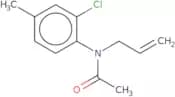
CAS:<p>N-Allyl-N-(4-cyano-2-chlorophenyl)acetamide is a high quality reagent that has been used as an intermediate in the synthesis of fine chemicals, useful scaffolds and building blocks. It is also a versatile building block that can be used to synthesize high quality compounds with a wide range of functionalities. N-Allyl-N-(4-cyano-2-chlorophenyl)acetamide is a speciality chemical that can be used for research purposes. This compound has been shown to produce reactions with other compounds, such as nitrobenzene, to generate useful products.</p>Formula:C12H11ClN2OPurity:Min. 95%Molecular weight:234.68 g/mol2-(3-Cyano-1H-1,2,4-triazol-1-yl)acetic acid
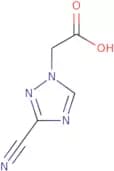
CAS:<p>Please enquire for more information about 2-(3-Cyano-1H-1,2,4-triazol-1-yl)acetic acid including the price, delivery time and more detailed product information at the technical inquiry form on this page</p>Formula:C5H4N4O2Purity:Min. 95%Color and Shape:PowderMolecular weight:152.11 g/mol3-Ethoxy-4-hydroxyphenylacetonitrile
CAS:<p>3-Ethoxy-4-hydroxyphenylacetonitrile is a versatile building block and reagent that is used in the manufacturing of pharmaceuticals, agricultural chemicals, and other chemical products. It has been shown to be an excellent starting material for the synthesis of complex compounds. 3-Ethoxy-4-hydroxyphenylacetonitrile can be used as a high quality research chemical or useful scaffold for organic synthesis. CAS No. 205748-01-2</p>Formula:C10H11NO2Purity:Min. 95%Color and Shape:PowderMolecular weight:177.2 g/mol(3R,5R)-6-Cyano-3,5-dihydroxy-hexanoic acid tert-butyl ester
CAS:<p>(3R,5R)-6-Cyano-3,5-dihydroxy-hexanoic acid tert-butyl ester is a building block for organic synthesis. It is a versatile intermediate that can be used in the preparation of pharmaceuticals and other organic compounds. The compound is also used as a reagent to study the biological activity of other compounds. CAS No. 125971-93-9 is a fine chemical that has been shown to have high quality and purity.</p>Formula:C11H19NO4Purity:Min. 98 Area-%Color and Shape:Yellow PowderMolecular weight:229.27 g/mol4-Nitrobenzylamine hydrochloride
CAS:<p>4-Nitrobenzylamine hydrochloride is a bifunctional immobilizing agent that can be used for the immobilization of Zn2+. It reacts with nitrogen atoms, forming an amination reaction. The linker is covalently immobilized to the surface and the nature of this chemical is synthetic. 4-Nitrobenzylamine hydrochloride is synthesized by reacting nitric acid with benzaldehyde in ammonia solution at room temperature. This chemical has shown to be effective in reactions where a flow rate is needed or when diamidines are present in the reaction mixture.</p>Formula:C7H8N2O2·HClPurity:Min. 95%Color and Shape:PowderMolecular weight:188.61 g/molEthyl acetamidocyanoacetate
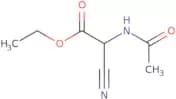
CAS:<p>Ethyl acetamidocyanoacetate is an amide which inhibits the enzyme thrombin. It inhibits the conversion of fibrinogen to fibrin, and thus prevents blood clot formation. Ethyl acetamidocyanoacetate has been shown to inhibit serine protease, one of the most abundant enzymes in the human body. This inhibition causes a decrease in inflammatory diseases caused by these enzymes. Ethyl acetamidocyanoacetate also has analog properties that can be used for solid-phase synthesis.</p>Formula:C7H10N2O3Purity:Min. 98 Area-%Molecular weight:170.17 g/mol2-Cyanoacetamide
CAS:<p>2-Cyanoacetamide is an organic compound that is used in pharmaceutical preparations. It reacts with malonic acid to form a dioxime, which is a precursor of various drugs. The optimum concentration for the reaction to occur is at 10% (w/v). The reaction mechanism has not been fully elucidated and it involves the transfer of nitrogen from an amide group to a carbonyl group. 2-Cyanoacetamide has shown anti-angiogenic effects in mice by inhibiting the expression of Mcl-1 protein, which is involved in the regulation of apoptosis and inflammation. This drug also has biological functions as a precursor for dopamine, which helps regulate motor and cognitive functions.</p>Formula:C3H4N2OPurity:Min. 98%Color and Shape:White Off-White PowderMolecular weight:84.08 g/mol2-Hydroxy-3-methylbenzonitrile
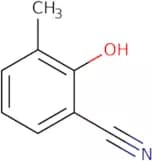
CAS:<p>2-Hydroxy-3-methylbenzonitrile is a high quality chemical that is used as an intermediate in the synthesis of complex compounds. It can be used as a reagent in organic chemistry, and has been shown to be useful for the production of fine chemicals, such as antibiotics. 2-Hydroxy-3-methylbenzonitrile is also a versatile building block for the production of pharmaceuticals and research chemicals. It can be used as a reaction component for the synthesis of speciality chemicals and various building blocks.</p>Formula:C8H7NOPurity:Min. 95%Color and Shape:PowderMolecular weight:133.15 g/molN-Cyanopiperidine
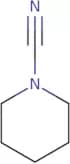
CAS:<p>N-Cyanopiperidine is a cyclohexane ring with a trifluoroacetic acid group. It is used in the synthesis of pharmaceutical preparations and has been shown to be stable in low-energy environments, such as when mixed with glycol ethers or chlorides. N-Cyanopiperidine is also used as an intermediate for the preparation of other compounds, such as metal carbonyl complexes and derivatives. N-Cyanopiperidine can be synthesized by reacting anhydrous hydrogen cyanide with piperidinium chloride in the presence of metal hydroxides. This reaction mechanism is known to produce two products: 1) a stable complex with a metal ion, and 2) a reaction product that contains the desired product and hydrogen cyanide.</p>Formula:C6H10N2Purity:Min. 95%Color and Shape:PowderMolecular weight:110.16 g/mol3,4-Dihydroxybenzonitrile
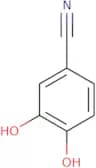
CAS:<p>3,4-Dihydroxybenzonitrile is a chemical compound that is found in soybean lipoxygenase. The molecule has been shown to be an excellent Michaelis-Menten substrate and hydrogen bonding partner. It also reacts with chlorine to form chlorinating agents such as 3,4-dichlorobenzonitrile and 3,4-dibromobenzonitrile. 3,4-Dihydroxybenzonitrile can act as a nucleophile and forms stable complexes when reacted with hydroxyl group compounds such as protocatechuic acid or reaction solution. This chemical is reactive and can be activated by redox cycling or light.<br>3,4-Dihydroxybenzonitrile has been used to treat protocatechuic acid levels in the blood of patients with chronic liver disease who are being treated for alcoholism.</p>Formula:C7H5NO2Purity:Min. 95%Color and Shape:PowderMolecular weight:135.12 g/molPhenoxyacetonitrile
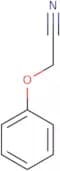
CAS:<p>Phenoxyacetonitrile is an efficient method for the synthesis of ethylene diamine by the reaction of hydrochloric acid, chloride and a carbon source. The nitro group can be reduced to an amine or a hydroxyl group by hydrogen chloride in acetonitrile. This method has been used in the synthesis of drugs such as acyclovir and penciclovir. Phenoxyacetonitrile also inhibits growth factor production, which may be due to its inhibitory properties on the enzyme houben-hoesch reaction.</p>Formula:C8H7NOPurity:Min. 95%Molecular weight:133.15 g/mol4-Bromo-3-cyanotoluene
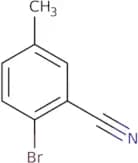
CAS:<p>4-Bromo-3-cyanotoluene is a quinazolinone that can be synthesized by reacting 2-bromotoluene with nitric acid. It is a substrate for the synthesis of other quinazolinones.</p>Formula:C8H6BrNPurity:Min. 95%Molecular weight:196.04 g/moltert-Butyl 4-cyanobenzylcarbamate
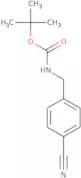
CAS:<p>tert-Butyl 4-cyanobenzylcarbamate (tB4Cbz) is a high quality chemical that can be used as a reagent, complex compound, or useful intermediate in the production of fine chemicals. Tert-Butyl 4-cyanobenzylcarbamate is also a useful scaffold for the synthesis of speciality chemicals and research chemicals. It can be used as a versatile building block for reactions involving amides, nitriles, esters, and amines.</p>Formula:C13H16N2O2Purity:Min. 95%Color and Shape:PowderMolecular weight:232.28 g/mol3-Cyano-4-methoxybenzoicacid
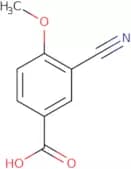
CAS:<p>3-Cyano-4-methoxybenzoic acid is a white crystalline solid that is soluble in water. This compound is a useful intermediate for the synthesis of other organic compounds, as well as a useful scaffold for the synthesis of complex compounds. 3-Cyano-4-methoxybenzoic acid also has potential use as a research chemical, and can be used as an effective building block for the preparation of fine chemicals.<br>3-Cyano-4-methoxybenzoic acid may be used to produce speciality chemicals such as pharmaceuticals, dyes, pesticides, and perfumes. It can also be used to synthesize compounds with diverse functionalities.</p>Formula:C9H7NO3Purity:Min. 95%Color and Shape:SolidMolecular weight:177.16 g/mol2-Cyano-5-fluorobenzoic acid ethyl ester
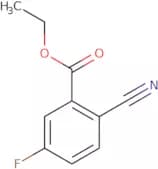
CAS:<p>2-Cyano-5-fluorobenzoic acid ethyl ester is a chemical compound with the formula C6H4(COOCH2)2FO. The compound is an intermediate in the synthesis of other chemicals, such as pharmaceuticals. It is also used as a building block in other syntheses. 2-Cyano-5-fluorobenzoic acid ethyl ester has been assigned CAS No. 1260751-65-2 and is useful in organic synthesis because it is a versatile building block, complex compound, and fine chemical.</p>Formula:C10H8FNO2Purity:Min. 95%Molecular weight:193.17 g/mol1,2-Diphenyl-1-cyanoethylene
CAS:<p>1,2-Diphenyl-1-cyanoethylene is a molecule that is involved in the cancer process. It has been shown to inhibit the growth of skin cancer cells and other types of cancer cells by binding to mitochondria and inhibiting the formation of proton gradients across mitochondrial membranes. This inhibition leads to a decrease in cellular ATP production and an increase in reactive oxygen species (ROS), resulting in cell death. 1,2-Diphenyl-1-cyanoethylene also has anticancer activity due to its ability to induce light emission from the skin and interfere with the optical properties of holothuria, which are sea cucumbers.</p>Formula:C15H11NPurity:Min. 95%Color and Shape:PowderMolecular weight:205.25 g/mol4-Cyanoheptane
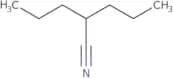
CAS:<p>4-Cyanoheptane is a liquid that has been decarboxylated, which means it contains no CO2 molecules. It is an organic solvent with a boiling point of -2°C and a density of 0.7 g/mL. This product is used in the hydrolysis of carboxylic acids to form carboxylates. 4-Cyanoheptane has been shown to be able to hydrolyze amides, carbones, phenoxy groups, and functional groups as well as produce alkylation reactions with high concentrations.</p>Formula:C8H15NPurity:Min. 95%Color and Shape:Clear LiquidMolecular weight:125.21 g/mol