Cyano-, Nitrile-
Cyano and nitrile compounds are organic molecules that contain cyano (C≡N) or nitrile groups in their structure, characterized by the presence of nitrogen. These groups play important roles in various chemical reactions and industrial applications. In this category, you will find a wide range of cyano and nitrile compounds, ranging from simple to complex structures. At CymitQuimica, we offer high-quality cyano and nitrile compounds tailored to meet research and industrial needs. Our compounds are suitable for a variety of synthesis and analytical applications.
Found 9618 products of "Cyano-, Nitrile-"
Sort by
Purity (%)
0
100
|
0
|
50
|
90
|
95
|
100
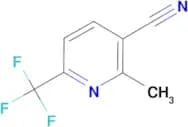
2-Methyl-6-(trifluoromethyl)nicotinonitrile
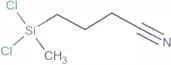
CAS:Purity:95%Color and Shape:Solid, Off white solidMolecular weight:186.136993408203123-Cyanopropylmethyldichlorosilane
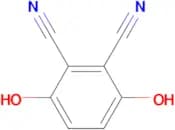
CAS:Purity:95%Color and Shape:Liquid, ClearMolecular weight:182.11999511718752,3-Dicyanohydroquinone
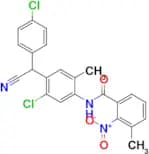
CAS:Formula:C8H4N2O2Purity:99.0%Color and Shape:SolidMolecular weight:160.132N-(5-chloro-4-((4-chlorophenyl)(cyano)methyl)-2-methylphenyl)-3-methyl-2-nitrobenzamide
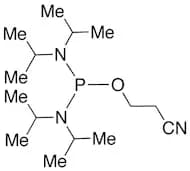
CAS:Purity:98%Molecular weight:454.309997558593752-Cyanoethyl N,N,N’,N’-Tetraisopropylphosphoramidite
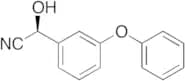
CAS:Controlled Product<p>Stability Explodes When Heated<br>Applications 2-Cyanoethyl N,N,N’,N’-Tetraisopropylphosphoramidite (cas# 102691-36-1) is a compound useful in organic synthesis.<br> Not a dangerous good if item is equal to or less than 1g/ml and there is less than 100g/ml in the package<br></p>Formula:C15H32N3OPColor and Shape:NeatMolecular weight:301.41(S)-2-Hydroxy-2-(3-phenoxyphenyl)acetonitrile
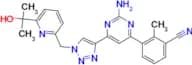
CAS:<p>Stability Light Sensitive, Moisture Sensitive<br>Applications (S)-2-Hydroxy-2-(3-phenoxyphenyl)acetonitrile is used as a reagent in the synthesis of Fluvalinate (F601100) and its related analogs which exhibit insecticidal activity.<br> Not a dangerous good if item is equal to or less than 1g/ml and there is less than 100g/ml in the package<br>References Anderson, R.J., et al.: J. Agr. Food Chem., 33, 508 (1985)<br></p>Formula:C14H11NO2Color and Shape:Light YellowMolecular weight:225.243-(2-Amino-6-(1-((6-(2-hydroxypropan-2-yl)pyridin-2-yl)methyl)-1H-1,2,3-triazol-4-yl)pyrimidin-4-yl)-2-methylbenzonitrile
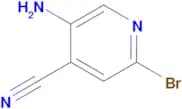
CAS:Purity:98.0%Molecular weight:426.48400878906255-Amino-2-bromo-pyridine-4-carbonitrile
CAS:Purity:98+%Color and Shape:SolidMolecular weight:198.02299499511725-Amino-1-benzo[1,3]dioxol-5-yl-3-methyl-1H-pyrazole-4-carbonitrile
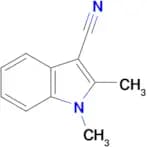
Purity:95.0%Molecular weight:242.238006591796881,2-Dimethyl-1H-indole-3-carbonitrile
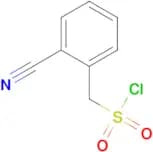
CAS:Formula:C11H10N2Purity:95.0%Color and Shape:SolidMolecular weight:170.215(2-Cyanophenyl)methanesulfonyl chloride
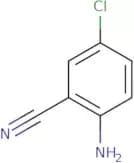
CAS:Formula:C8H6ClNO2SPurity:97%Color and Shape:SolidMolecular weight:215.652-Amino-5-chlorobenzonitrile
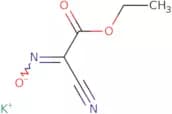
CAS:<p>2-Amino-5-chlorobenzonitrile is a potent inhibitor of butyrylcholinesterase (BChE) and has been shown to inhibit the activity of this enzyme in cell lung cancer and muscle. 2-Amino-5-chlorobenzonitrile also inhibits the activity of other enzymes, such as acetylcholinesterase (AChE) and phosphatidylcholine esterase (PCE), that are found in the membranes of cells. This inhibition leads to increased levels of acetylcholine in the synaptic cleft, which may lead to an increase in muscular contractions. 2-Amino-5-chlorobenzonitrile is also a product yield enhancer for chromene synthesis.</p>Formula:C7H5ClN2Purity:Min. 95%Color and Shape:PowderMolecular weight:152.58 g/molEthyl cyanoglyxylate-2-oxyme potassium salt
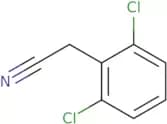
CAS:<p>Ethyl cyanoglyxylate-2-oxyme potassium salt is a high quality reagent for the production of complex compounds that can be used in fine chemicals, pharmaceuticals, and other speciality chemicals. It has been shown to be an intermediate for the synthesis of useful scaffolds and building blocks. The CAS number is 158014-03-0. This compound is a versatile building block that can be used in research chemicals, as well as reaction components for more complex syntheses.</p>Formula:C5H6N2O3KPurity:Min. 95%Color and Shape:PowderMolecular weight:181.21 g/mol2,6-Dichlorophenylacetonitrile
CAS:<p>2,6-Dichlorophenylacetonitrile (2,6-DCPA) is a cyanide herbicide that controls weed growth. 2,6-DCPA is used as a preemergent herbicide and is applied to the soil before planting. It can be mixed with calcium oxide or other materials to form a dust, which is then applied to the soil surface. 2,6-DCPA inhibits plant growth by interfering with the photosynthesis process, which may be due to its high cytotoxicity. The exact mechanism of action has not been determined but it may be due to interference with chloride transport or ethyl esters production in plants. This chemical has also been shown to inhibit amine metabolism in plants and animals.<br>2,6-DCPA has two isomers: cis and trans. They differ only in the position of the chlorine atom on the benzene ring: cis (left) and trans (right).</p>Formula:C8H5Cl2NPurity:Min. 95%Color and Shape:White PowderMolecular weight:186.04 g/mol1,2-Diphenyl-1-cyanoethylene
CAS:<p>1,2-Diphenyl-1-cyanoethylene is a molecule that is involved in the cancer process. It has been shown to inhibit the growth of skin cancer cells and other types of cancer cells by binding to mitochondria and inhibiting the formation of proton gradients across mitochondrial membranes. This inhibition leads to a decrease in cellular ATP production and an increase in reactive oxygen species (ROS), resulting in cell death. 1,2-Diphenyl-1-cyanoethylene also has anticancer activity due to its ability to induce light emission from the skin and interfere with the optical properties of holothuria, which are sea cucumbers.</p>Formula:C15H11NPurity:Min. 95%Color and Shape:PowderMolecular weight:205.25 g/mol2-Chloro-5-hydroxybenzonitrile
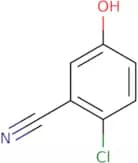
CAS:<p>2-Chloro-5-hydroxybenzonitrile is a versatile, building block chemical that can be used as a reactant or intermediate in the synthesis of other compounds. It is also an excellent research chemical with a high quality and purity. 2-Chloro-5-hydroxybenzonitrile has many uses, such as being a reagent for organic synthesis, a speciality chemical, and a useful intermediate. This compound is suitable for complex synthesis and has been shown to be useful as a building block or scaffold in the production of other chemicals.</p>Formula:C7H4ClNOPurity:Min. 95%Color and Shape:Off-White PowderMolecular weight:153.57 g/mol2-Bromo-6-fluorobenzonitrile
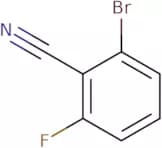
CAS:<p>2-Bromo-6-fluorobenzonitrile is an organic compound with a molecular formula of C6H3BrF. It is a colorless liquid that is used as a precursor in the synthesis of other compounds. 2-Bromo-6-fluorobenzonitrile has been shown to be an efficient fluorophore and can be activated by electron transfer, thermally, or chemically. 2-Bromo-6-fluorobenzonitrile also has a quantum efficiency of 0.5% and transport properties that make it ideal for fluorescence microscopy. The fluorescence intensity of 2-bromo-6-fluorobenzonitrile is proportional to the amount of energy absorbed, which makes it useful for quantifying the concentration of fluorescent molecules in solution. 2-Bromo-6-fluorobenzonitrile has also been shown to have high quantum yields and high efficiency levels when</p>Formula:C7H3BrFNPurity:Min. 95%Color and Shape:PowderMolecular weight:200.01 g/mol(2,3-Dichlorophenyl)acetonitrile
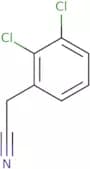
CAS:<p>(2,3-Dichlorophenyl)acetonitrile is a fine chemical that is useful as a building block in the synthesis of more complex compounds. It has been used in research as a reagent and as a speciality chemical. (2,3-Dichlorophenyl)acetonitrile reacts with many different types of compounds to form new molecules. This intermediate can be used in the synthesis of many different types of compounds and also serves as an important scaffold for larger molecules.</p>Formula:C8H5Cl2NPurity:Min. 95%Color and Shape:PowderMolecular weight:186.04 g/molDiphenylacetonitrile
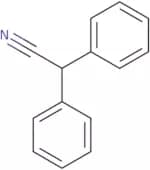
CAS:<p>Diphenylacetonitrile is an organic compound that has a low energy and is used as a nutritional supplement. It is a derivative of mandelonitrile, which can be synthesized by the Friedel-Crafts reaction between chloroform and diphenylacetic acid. Diphenylacetonitrile is an aromatic hydrocarbon with nitrogen atoms and hydroxyl groups, which can be found in the virus or p. aeruginosa. The molecule has been shown to have anti-inflammatory potency in animal models. The synthesis of this compound involves the use of halides, such as hydrogen sulfate or bromide, which are also present in high concentrations in this product. <br>Diphenylacetonitrile (DPCN) is a low-energy nitrile that undergoes Friedel-Crafts reactions with chloroform to produce the corresponding chloride (DPCCl). DPCN has been shown to inhibit inflammatory responses</p>Formula:C14H11NPurity:Min. 95%Color and Shape:PowderMolecular weight:193.24 g/molBenzenesulphonylacetonitrile
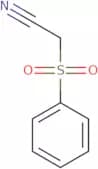
CAS:<p>Benzenesulphonylacetonitrile is an alkanoic acid nucleophile with a benzimidazole derivative. It has shown potential for use as a cancer drug by inhibiting tumor-associated enzymes and inducing apoptosis in cancer cells. Benzenesulphonylacetonitrile is also active against inflammatory diseases such as rheumatoid arthritis, psoriatic arthritis, and Crohn's disease. This drug can be synthesized by the reaction of sodium salts with benzenesulphonylacetone followed by a nucleophilic substitution reaction with methylene chloride. The synthesis of benzenesulphonylacetonitrile requires anhydrous acetonitrile and palladium-catalyzed coupling reactions in the presence of sodium carbonate. Benzenesulphonylacetonitrile has chemical stability in the presence of acids, bases, and heat.br></p>Formula:C8H7NO2SPurity:Min. 95%Color and Shape:PowderMolecular weight:181.21 g/molEthyl 4-cyano-3-nitrobenzoate
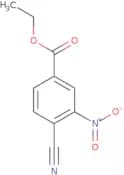
CAS:<p>Ethyl 4-cyano-3-nitrobenzoate is a chemical compound with the structural formula of CHNO. It is a building block for organic synthesis and can be used in the production of high quality research chemicals and speciality chemicals. Ethyl 4-cyano-3-nitrobenzoate has been shown to react with a variety of amines to form urea derivatives that are useful as versatile building blocks or complex compounds. This reagent is also useful as an intermediate in the synthesis of various pharmaceuticals. CAS No. 321162-58-7</p>Formula:C10H8N2O4Purity:Min. 95%Color and Shape:PowderMolecular weight:220.18 g/mol2-Cyanoacetamide
CAS:<p>2-Cyanoacetamide is an organic compound that is used in pharmaceutical preparations. It reacts with malonic acid to form a dioxime, which is a precursor of various drugs. The optimum concentration for the reaction to occur is at 10% (w/v). The reaction mechanism has not been fully elucidated and it involves the transfer of nitrogen from an amide group to a carbonyl group. 2-Cyanoacetamide has shown anti-angiogenic effects in mice by inhibiting the expression of Mcl-1 protein, which is involved in the regulation of apoptosis and inflammation. This drug also has biological functions as a precursor for dopamine, which helps regulate motor and cognitive functions.</p>Formula:C3H4N2OPurity:Min. 98%Color and Shape:White Off-White PowderMolecular weight:84.08 g/mol3-Aminobenzonitrile
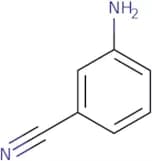
CAS:<p>3-Aminobenzonitrile is an amine that has been shown to inhibit the growth of bacteria. It was synthesized by the reaction of nitrobenzene with benzamide in the presence of acetic acid. The chemical structure of 3-aminobenzonitrile is similar to that of a group of natural amino acids, including cysteine and tryptophan, which are known inhibitors of bacterial growth. This compound is soluble in organic solvents and can be used as an injection solution. 3-Aminobenzonitrile has been evaluated by kinetic studies and found to have a high affinity for bacterial cells, with an inhibition constant (Ki) value of 0.37 mM. It is also active against other microorganisms such as yeast or mold fungi, but not against plant or animal cells. 3-Aminobenzonitrile inhibits the synthesis of proteins by binding to a number of different sites on the ribosomes where</p>Purity:Min. 95%Color and Shape:Yellow PowderMolecular weight:118.14 g/mol3-Cyano-5-bromopyridine
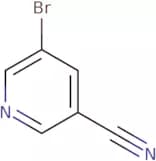
CAS:<p>3-Cyano-5-bromopyridine is an enantiopure organic compound that belongs to the group of halides. It is a functional group that is a reagent in organic synthesis, and it can be used as a precursor to dyestuffs. 3-Cyano-5-bromopyridine has been shown to have antimicrobial activity against bacteria and fungi. It also has a metabotropic glutamate receptor subtype selective affinity, which may be due to its ability to bind with glutamate in complex molecules.</p>Formula:C6H3BrN2Purity:Min. 95%Color and Shape:White To Beige To Light (Or Pale) Yellow SolidMolecular weight:183.01 g/mol3-Cyano-4,6-dimethylcoumarin
CAS:<p>3-Cyano-4,6-dimethylcoumarin is a phenolic compound with potent inhibitory activity against bacteria. It has been shown to bind to the hydroxyl group of the coumarin ring and inhibit the growth of Gram-negative and Gram-positive bacteria. 3-Cyano-4,6-dimethylcoumarin also inhibits the growth of fungi by binding to the hydroxyl group on a phenolic hydroxyl substituent. 3-Cyano-4,6-dimethylcoumarin can be used as an antimicrobial agent for various types of infections.</p>Formula:C12H9NO2Purity:Min. 95%Color and Shape:PowderMolecular weight:199.21 g/mol4-Aminophenylacetonitrile
CAS:<p>4-Aminophenylacetonitrile is a molecule that is structurally similar to nitrobenzene. 4-Aminophenylacetonitrile has been shown to be an efficient method for inhibiting faecalis growth and secretory phospholipase A2 (sPLA2) activity in vitro. It also inhibits the population growth of E. coli in vivo, which can be attributed to its ability to inhibit the enzyme catalysed by hydrogen bond formation.</p>Formula:C8H8N2Purity:Min. 95%Color and Shape:PowderMolecular weight:132.16 g/mol3,4-Dimethoxybenzylamine
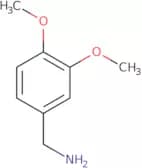
CAS:<p>3,4-Dimethoxybenzylamine is an amine that is used in the synthesis of pharmaceuticals. It can be polymerized by heating with aqueous formaldehyde and hydrochloric acid to form a resin. 3,4-Dimethoxybenzylamine inhibits serotonin receptors, exhibiting inhibitory properties at concentrations of 10-5 M. 3,4-Dimethoxybenzylamine also has pharmacokinetic properties that are similar to vitamin B1. This compound has been shown to inhibit homogeneous catalysts and is used for coatings for ganglion cells.</p>Formula:C9H13NO2Purity:Min. 95%Color and Shape:Clear LiquidMolecular weight:167.21 g/molButyl cyanoacrylate
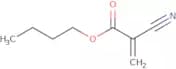
CAS:<p>Butyl cyanoacrylate is a cyanoacrylate, a type of monomer that reacts with water to form a polymer. Cyanoacrylates are used in sealants and tissue adhesives because they form strong bonds with tissues and are biocompatible. Butyl cyanoacrylate has been shown to have an exothermic reaction when it is mixed with water, which can cause burns if the user is not careful. This product also has toxicological studies on fetal bovine and mammalian tissue. Butyl cyanoacrylate has been shown to inhibit vasoactive intestinal peptide release in the nervous system, which may be due to its ability to interfere with fatty acid metabolism.</p>Formula:C8H11NO2Purity:Min. 95%Color and Shape:Clear LiquidMolecular weight:153.18 g/molMesitylacetonitrile
CAS:<p>Mesitylacetonitrile is a mesityl-substituted acetonitrile. It is used in organic synthesis as a Grignard reagent, which is an organometallic compound containing an alkyl or other carbon group bound to magnesium. Mesitylacetonitrile has been shown to react with chlorides to produce furyl chlorides and chloride. Mesitylacetonitrile can be synthesized by reacting phenylacetonitrile (a byproduct of the synthesis of acetone) with chlorine gas and hydrogen in the presence of a catalyst such as copper(II) chloride. This reaction produces mesitylacetonitrile and hydrogen chloride gas as byproducts. The compound has been used to synthesize corticotropin-releasing factor receptor antagonists that have potential therapeutic applications for the treatment of stress-related disorders.</p>Formula:C11H13NPurity:Min. 95%Color and Shape:PowderMolecular weight:159.23 g/mol3-Hydroxybenzylamine hydrochloride
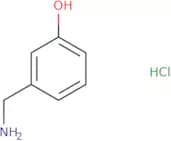
CAS:<p>3-Hydroxybenzylamine hydrochloride (3HBH) is a chemical compound that has been used as a reagent and in the synthesis of other compounds. It is also known to be a useful scaffold for complex compounds, and can be used as a building block for the synthesis of fine chemicals. 3HBH has been found to have many applications in research, such as being an intermediate for pharmaceuticals, pesticides, dyes, and agrochemicals. 3HBH is also useful in organic syntheses where it has been found to react with nitriles and amides to form esters and amides respectively.</p>Formula:C7H9NO·HClPurity:Min. 95%Color and Shape:PowderMolecular weight:159.61 g/mol3-Cyanophenylacetic acid
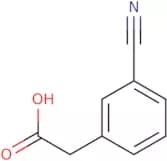
CAS:<p>3-Cyanophenylacetic acid is a versatile building block and useful intermediate that can be used in the synthesis of a wide range of organic compounds. 3-Cyanophenylacetic acid is a fine chemical with CAS No. 1878-71-3 that can be used as a research chemical, reaction component, or speciality chemical. It is an important reagent for making complex organic compounds. 3-Cyanophenylacetic acid is a high quality product with the following characteristics: <br>1) Colorless crystals; <br>2) Soluble in water; <br>3) Soluble in acetone; <br>4) Slightly soluble in ether; <br>5) Reactivity: stable to heat, light, and air; <br>6) pH (1% solution): 2.0 - 4.0; <br>7) Melting point: 129 °C; <br>8) Boiling point: 188 °C at 760 mmH</p>Formula:C9H7NO2Purity:Min. 95%Molecular weight:161.16 g/molPhenoxyacetonitrile
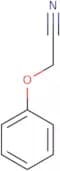
CAS:<p>Phenoxyacetonitrile is an efficient method for the synthesis of ethylene diamine by the reaction of hydrochloric acid, chloride and a carbon source. The nitro group can be reduced to an amine or a hydroxyl group by hydrogen chloride in acetonitrile. This method has been used in the synthesis of drugs such as acyclovir and penciclovir. Phenoxyacetonitrile also inhibits growth factor production, which may be due to its inhibitory properties on the enzyme houben-hoesch reaction.</p>Formula:C8H7NOPurity:Min. 95%Molecular weight:133.15 g/mol(Cyanomethyl)urea
CAS:<p>Cyanomethyl)urea is a fine chemical that belongs to a class of compounds known as ureas. It is used as a versatile building block in the synthesis of more complex compounds, as a research chemical and as an intermediate. It can be used to synthesize pharmaceuticals, pesticides, and other chemicals. Cyanomethyl)urea is used in the production of polyurethane foams, which are commonly found in mattresses, furniture upholstery and insulation.</p>Formula:C3H5N3OPurity:Min. 95%Color and Shape:Brown PowderMolecular weight:99.09 g/mol4-Cyanophenol
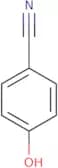
CAS:<p>4-Cyclohexyphenol is a natural compound that belongs to the class of compounds known as phenols. It has a hydroxyl group and an intramolecular hydrogen bond. The thermal expansion of 4-cyanophenol is approximately 6.6 × 10⁻⁶/°C, which is greater than the thermal expansion of p-hydroxybenzoic acid (approximately 1.8 × 10⁻⁶/°C). The reaction mechanism for 4-cyanophenol involves intramolecular hydrogen bonding, which leads to its rapid degradation. 4-Cyanophenol reacts with trifluoroacetic acid in the presence of sodium carbonate to form p-hydroxybenzoic acid, which can be determined by measuring its absorbance at 290 nm. Hydrogen bonding interactions with the surface are responsible for the high sensitivity and selectivity of this analytical method.<br>4-Cyanophenol may also be detected using plasma mass spect</p>Formula:C7H5NOPurity:Min. 95%Color and Shape:PowderMolecular weight:119.12 g/mol2,6-Difluorobenzonitrile
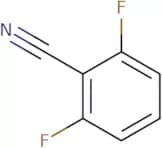
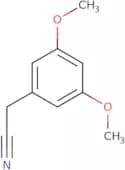
CAS:<p>2,6-Difluorobenzonitrile is a nucleophilic compound that reacts with inorganic acids to form new chemical structures. It has been shown to react with hydrochloric acid, sodium carbonate and phosphotungstic acid. The FT-IR spectroscopy of 2,6-difluorobenzonitrile shows a reaction product with a proton. This means that the molecule is able to transfer a hydrogen ion from one site to another. The reaction between 2,6-difluorobenzonitrile and sodium carbonate produces an insoluble precipitate of sodium phosphate and sodium chloride, which can be analyzed gravimetrically. 2,6-Difluorobenzonitrile has also been shown to have fluorescence properties that are activated by ultraviolet light and naphthalene.</p>Formula:C7H3F2NPurity:Min. 95%Color and Shape:PowderMolecular weight:139.1 g/mol(3,5-Dimethoxyphenyl)acetonitrile
CAS:<p>3,5-Dimethoxyphenylacetonitrile is a synthetic compound that has been shown to be an inhibitor of the demethylation reaction. It is postulated to have anticancer activity and inhibits the biosynthesis of octaketides in vitro. This compound has also been shown to have antibacterial activity and is structurally related to cannabinoids. The mechanism by which 3,5-dimethoxyphenylacetonitrile inhibits cancer cells is not known. However, it may be due to its ability to bind cannabinoid receptors.</p>Formula:C10H11NO2Purity:Min. 95%Color and Shape:PowderMolecular weight:177.2 g/mol4-Cyanobenzamide
CAS:<p>4-Cyanobenzamide is a naphthalene derivative that is both reactive and intramolecular. It has been shown to react with the amino group of peptides, forming a ruthenium complex. The functional groups are acceptors and donors that can be used in assays for the detection of anions or cations. 4-Cyanobenzamide reacts with water to release hydrogen gas, which can be used to measure its hydration ability. This compound has been synthesized using solid-phase synthesis and it has amide bonds that vibrate at a specific frequency.</p>Formula:C8H6N2OPurity:Min. 95%Color and Shape:PowderMolecular weight:146.15 g/mol




![2-[(2,2-dimethoxyethyl)amino]-5-nitrobenzonitrile](/_next/image/?url=https%3A%2Fstatic.cymitquimica.com%2Fproducts%2F10%2Fthumb-webp%2FF366262.webp&w=3840&q=75)

![5-Amino-1-benzo[1,3]dioxol-5-yl-3-methyl-1H-pyrazole-4-carbonitrile](/_next/image/?url=https%3A%2Fstatic.cymitquimica.com%2Fproducts%2F10%2Fthumb-webp%2FF521667.webp&w=3840&q=75)

![3-(3-Phenyl-[1,2,4]oxadiazol-5-yl)-benzonitrile](/_next/image/?url=https%3A%2Fstatic.cymitquimica.com%2Fproducts%2F10%2Fthumb-webp%2FF545447.webp&w=3840&q=75)