Cyano-, Nitrile-
Cyano and nitrile compounds are organic molecules that contain cyano (C≡N) or nitrile groups in their structure, characterized by the presence of nitrogen. These groups play important roles in various chemical reactions and industrial applications. In this category, you will find a wide range of cyano and nitrile compounds, ranging from simple to complex structures. At CymitQuimica, we offer high-quality cyano and nitrile compounds tailored to meet research and industrial needs. Our compounds are suitable for a variety of synthesis and analytical applications.
Found 9624 products of "Cyano-, Nitrile-"
Sort by
Purity (%)
0
100
|
0
|
50
|
90
|
95
|
100
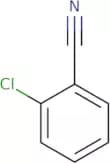
2-Chlorobenzonitrile
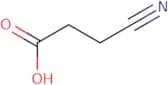
CAS:<p>2-Chlorobenzonitrile is a white solid that is soluble in organic solvents. It is an aryl halide and has a chemical structure of C6ClCN. 2-Chlorobenzonitrile is used as a raw material for the production of dyes and pharmaceuticals. This compound reacts with hydrochloric acid to form 4-chlorobenzonitrile, which can be used in the synthesis of other chemicals. 2-Chlorobenzonitrile can also react with n-dimethyl formamide in an optimal reaction solution to form 4-chlorobenzonitrile. The FTIR spectroscopy on this compound shows that it has a chloride group at 795 cm−1. The optimum reaction temperature for this compound is between 100 and 120 °C, but it will react with inorganic acids such as sulfuric acid or phosphoric acid at higher temperatures. Synthesis of this compound can be done by reacting</p>Formula:C7H4ClNPurity:Min. 95%Color and Shape:White PowderMolecular weight:137.57 g/mol3-Cyanopropanoic acid
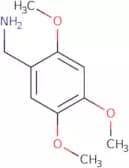
CAS:<p>3-Cyanopropanoic acid is a reactive compound that forms a complex with palladium. It is produced by the reaction of acrylonitrile and chloride in the presence of a base such as sodium hydroxide. The reaction mechanism is shown below:</p>Formula:C4H5NO2Purity:Min. 95%Color and Shape:PowderMolecular weight:99.09 g/mol2,4,5-Trimethoxybenzylamine
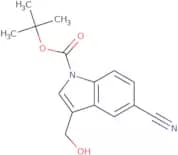
CAS:<p>2,4,5-Trimethoxybenzylamine is a synthetic compound that can be used as a precursor to the synthesis of other chemicals. It is prepared by reacting phenol with deuterium gas in a process called amination. This reaction is followed by reductive quaternization with cyanide. 2,4,5-Trimethoxybenzylamine is often used as an intermediate for the synthesis of drugs such as tamoxifen and clonidine.</p>Formula:C10H15NO3Purity:Min. 95%Color and Shape:PowderMolecular weight:197.23 g/mol1-Boc-5-Cyano-3-hydroxymethylindole
CAS:<p>Please enquire for more information about 1-Boc-5-Cyano-3-hydroxymethylindole including the price, delivery time and more detailed product information at the technical inquiry form on this page</p>Formula:C15H16N2O3Purity:Min. 95%Molecular weight:272.3 g/molAngiotensin I-Converting Enzyme (ACE) Inactivator Cyanoac-Phe-Phe-OH
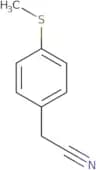
CAS:<p>Cyanoac-Phe-Phe-OH is a hydrolytic enzyme that irreversibly inactivates the ACE enzyme. It acts as an inhibitor of angiotensin-converting enzyme and inhibits the conversion of angiotensin I to angiotensin II, which is involved in blood pressure regulation. Cyanoac-Phe-Phe-OH has been shown to be more potent than captopril, another ACE inhibitor. It also has a longer half life and greater selectivity for ACE over other serine proteases.</p>Formula:C21H21N3O4Purity:Min. 95%Molecular weight:379.41 g/molp-(Methylthio)phenylacetonitrile
CAS:<p>p-(Methylthio)phenylacetonitrile (p-MTPA) is a synthetic analgesic that belongs to the group of benzyl derivatives. It has analgesic, antiinflammatory and antipyretic properties. p-MTPA is used in organic synthesis as a hydrolysis reagent for benzyl halides. The drug has been shown to be an inhibitor of cyclooxygenase-2 (COX-2) and exerts its effects by decreasing prostaglandin production. P-MTPA is also decarboxylated to produce benzoic acid and phenylacetic acid, which have acidic properties.</p>Formula:C9H9NSPurity:Min. 95%Molecular weight:163.24 g/molN-Allyl-n-(2-chloro-5-cyanophenyl)acetamide
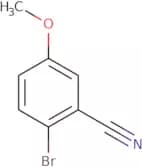
CAS:<p>N-Allyl-n-(2-chloro-5-cyanophenyl)acetamide is a fine chemical that is used as a building block in the synthesis of other compounds. It is also used in research and as a reagent or speciality chemical. N-Allyl-n-(2-chloro-5-cyanophenyl)acetamide has been shown to be an excellent intermediate for complex organic reactions, such as coupling reactions with amines, alcohols, and thiols. In addition, this compound can be used to form new scaffolds for biological studies.</p>Formula:C12H11ClN2OPurity:Min. 95%Color and Shape:PowderMolecular weight:234.68 g/mol4-Bromo-3-cyanoanisole
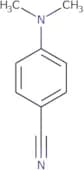
CAS:<p>4-Bromo-3-cyanoanisole is a potent inhibitor of the tyrosine kinase receptor. The functional theory behind this drug's mechanism of action is that it binds to the ATP binding site of the receptor and blocks ATP from binding, preventing downstream signaling. 4-Bromo-3-cyanoanisole has been shown to be an effective inhibitor of cancer cell proliferation. This drug has also been shown to inhibit microtubule assembly and disrupt cellular function by inhibiting protein synthesis.</p>Formula:C8H6BrNOPurity:Min. 95%Color and Shape:PowderMolecular weight:212.04 g/mol1-Cyano-4-(dimethylamino)benzene
CAS:<p>1-Cyano-4-(dimethylamino)benzene is a molecule that has been shown to inhibit the growth of hamster v79 cells. It also inhibits the synthesis of DNA and RNA. The binding constants for this molecule have been determined to be 1.0 x 10^9 M^-1, with an n-octanol/water partition coefficient (log P) of 5.5. This molecule is soluble in nonpolar solvents and may be used as a model system for hydrogen bonding interactions or reaction mechanisms in organic chemistry. This compound contains a deuterium isotope and can be used to study the effects of hydrogen bonding on reactions in organic chemistry at high temperatures, with the use of preparative hplc.</p>Formula:C9H10N2Purity:Min. 95%Color and Shape:Beige PowderMolecular weight:146.19 g/molImidazol-1-ylacetonitrile
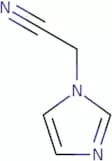
CAS:<p>Imidazol-1-ylacetonitrile is a synthetic compound that belongs to the class of ethyl methanesulfonates. It has been shown to be an effective antifungal drug against Candida spp. and Aspergillus spp., with a minimum inhibitory concentration (MIC) of 0.5 μM in vitro. Imidazol-1-ylacetonitrile has also been shown to have anti-inflammatory properties and was able to reduce bone resorption in mice, as well as inhibit the production of osteoclasts in vitro by inhibiting the activity of cathepsin K, which is an enzyme involved in bone resorption. This compound may be used for the treatment of metabolic disorders such as diabetes mellitus type 2 and hyperglycemia, since it inhibits glucose uptake by decreasing the expression of GLUT4 at the cell membrane level.</p>Formula:C5H5N3Purity:Min. 95%Molecular weight:107.11 g/mol2,3-(Dimethoxyphenyl)acetonitrile
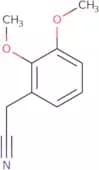
CAS:<p>2,3-(Dimethoxyphenyl)acetonitrile is a chemical intermediate that is used in the synthesis of pharmaceuticals and specialty chemicals. It can be used as a reaction component and reagent for the synthesis of other chemicals. This compound has a high quality and is also a versatile building block for complex compounds. 2,3-(Dimethoxyphenyl)acetonitrile has been shown to be useful in the production of fine chemicals such as pharmaceuticals, agrochemicals, and dyes. The CAS number for this compound is 4468-57-9.</p>Formula:C10H11NO2Purity:Min. 95%Molecular weight:177.2 g/mol4-Biphenylacetonitrile
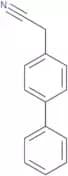
CAS:<p>Biphenylacetonitrile is an organic compound that belongs to the group of reactive functional groups and is used as a reagent in organic synthesis. It has been shown to inhibit the growth of cancer cells, likely due to its ability to react with sulfamates. Biphenylacetonitrile inhibits the production of the inflammatory mediator nitric oxide by reacting with trifluoroacetic acid, which may be useful for treating inflammatory diseases such as endometriosis. This drug also has an inhibitory effect on fatty acid metabolism and can thus be used for treating diabetes patients.</p>Formula:C14H11NPurity:Min. 95%Molecular weight:193.24 g/molIminodiacetonitrile
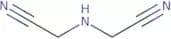
CAS:<p>Iminodiacetonitrile is a chemical compound that is used in wastewater treatment. It is a nitrite-oxidizing agent that reacts with nitrite ion to form nitric acid, which can be then used to oxidize hexamethylenetetramine and iminodiacetic acid to produce ammonia and cyanide ions. Iminodiacetonitrile has an optimum pH of 7.5, so it will not react at higher or lower pH levels. This reaction occurs in the presence of hydroxide solution, hydrochloric acid, and inorganic acids such as sulfuric acid or phosphoric acid. The reaction mechanism for this process is shown below: C6H11N2O2 + HNO3 → C6H11N2O4 + H+ + NO2- C6H11N2O4 → NH3 + HCN</p>Formula:C4H5N3Purity:Min. 95%Color and Shape:Light (Or Pale) Yellow To Brown SolidMolecular weight:95.1 g/mol3'-[2- Cyanoethyl N, N- bis(1- methylethyl) phosphoramidite]-5'- O- [bis(4- methoxyphenyl) phenylmethyl] - 2'- O- methyl- N- [2- [4- (1- methylethyl) phenoxy] acetyl] -guanosine
CAS:<p>Please enquire for more information about 3'-[2- Cyanoethyl N, N- bis(1- methylethyl) phosphoramidite]-5'- O- [bis(4- methoxyphenyl) phenylmethyl] - 2'- O- methyl- N- [2- [4- (1- methylethyl) phenoxy] acetyl] -guanosine including the price, delivery time and more detailed product information at the technical inquiry form on this page</p>Formula:C52H62N7O10PPurity:Min. 95%Molecular weight:976.06 g/molPhycocyanobilin
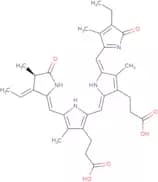
CAS:<p>Phycocyanobilin is a chromophore found in blue-green algae and cyanobacteria. It is a component of the holoprotein phycocyanin and aids in the harvesting of light energy. This biliverdin derivative is converted to phycocyanorubin by biliverdin reductase in mammalian cells. The addition of phycocyanobilin to human cells leads to potent inhibition of NADPH oxidase. It also binds to human serum albumin (HSA). Structurally, Phycocyanin shares many similarities to bilirubin and biliverdin.</p>Formula:C33H38N4O6Purity:Min. 95 Area-%Color and Shape:Blue PowderMolecular weight:586.68 g/mol2,6-Dimethoxy-4-hydroxybenzylamine
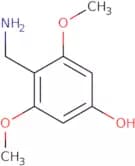
CAS:<p>2,6-Dimethoxy-4-hydroxybenzylamine is a fine chemical that is used as a versatile building block for the synthesis of complex compounds. It is also used as a reagent and reaction component in various chemical reactions. CAS No. 130632-98-3.</p>Formula:C9H13NO3Purity:Min. 95%Color and Shape:Yellow PowderMolecular weight:183.2 g/mol4-(Trifluoromethoxy)benzonitrile
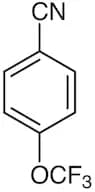
CAS:Formula:C8H4F3NOPurity:>98.0%(GC)Color and Shape:Colorless to Almost colorless clear liquidMolecular weight:187.122-Fluoro-5-(trifluoromethyl)benzonitrile
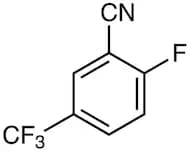
CAS:Formula:C8H3F4NPurity:>98.0%(GC)Color and Shape:Colorless to Almost colorless clear liquidMolecular weight:189.111-Pentyl isocyanate, 97%
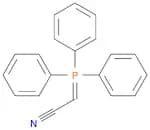
CAS:<p>This Thermo Scientific Chemicals brand product was originally part of the Alfa Aesar product portfolio. Some documentation and label information may refer to the legacy brand. The original Alfa Aesar product / item code or SKU reference has not changed as a part of the brand transition to Thermo Scientific Chemicals.</p>Formula:C6H11NOPurity:97%Color and Shape:Liquid, Clear colorlessMolecular weight:113.162-(Triphenylphosphoranylidene)acetonitrile
CAS:Formula:C20H16NPPurity:98%Color and Shape:SolidMolecular weight:301.3215



![3'-[2- Cyanoethyl N, N- bis(1- methylethyl) phosphoramidite]-5'- O- [bis(4- methoxyphenyl) phenylm…](/_next/image/?url=https%3A%2Fstatic.cymitquimica.com%2Fproducts%2F3D%2Fthumb-webp%2FFC165570.webp&w=3840&q=75)