Imines
Found 115 products for "Imines".
- Lower prices
- Higher prices
- Lower purities
- Higher purities
- Faster estimated delivery
Acetone Oxime
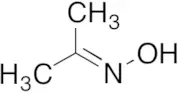
CAS:Controlled ProductApplications Acetone oxime was one of the reagents used as a part of preparation of arylbenzoxazoles as potent and selective estrogen receptor-β ligands.
Not a dangerous good if item is equal to or less than 1g/ml and there is less than 100g/ml in the package
References Malamas, M., et al.: J. Med. Chem., 47, 5021 (2004)Formula:C3H7NOColor and Shape:NeatMolecular weight:73.1Dimethylglyoxime
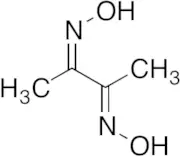
CAS:Applications Dimethylglyoxime is a chelating agent which forms complexes with metals such as copper, nickel, and palladium..
Not a dangerous good if item is equal to or less than 1g/ml and there is less than 100g/ml in the packageFormula:C4H8N2O2Color and Shape:NeatMolecular weight:116.12L-Methionine [R,S]-sulfoximine
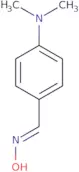
CAS:L-Methionine [R,S]-sulfoximine is a sulfoximide that inhibits the synthesis of methionine. Methionine is an essential amino acid that is converted to homocysteine and then to cysteine in the body. L-Methionine [R,S]-sulfoximine has been shown to inhibit the conversion of methionine to cysteine in vivo by acting as a competitive inhibitor of methioninase.Formula:C5H12N2O3SPurity:(Elemental Analysis) Min. 97%Color and Shape:PowderMolecular weight:180.23 g/mol4-(N,N-Dimethylamino)benzaldoxime
CAS:4-(N,N-Dimethylamino)benzaldoxime is an efficient method for the detection of cinnamic acid and its esters. It reacts with aldehydes to form 4-nitrosobenzaldehyde products that are detectable by ultraviolet spectroscopy. The reaction takes place in aqueous solutions with a pH range of 5-8 and is catalyzed by an enzyme called carboxylate. This reaction has been shown to be useful for the detection of cinnamic acid and its esters in food, tobacco smoke, and other samples.
Formula:C9H12N2OPurity:Min. 95%Color and Shape:PowderMolecular weight:164.2 g/mol4-Benzoquinone monoxime
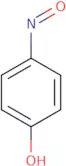
CAS:4-Benzoquinone monoxime (BQM) is a phospholipid analog that has reactive properties. It reacts with hydrochloric acid to form a nitrite ion, which is then reduced to nitric oxide. Nitric oxide has been shown to be effective in the treatment of bacterial infections and as a disinfectant. BQM also reacts with hydroxyl groups, producing sephadex g-100, which is used for separation of biological materials. The reaction mechanism of BQM has been studied using deuterium isotope labeling and electrochemical detection. This reaction takes place on the cytosolic surface of bacteria and on protein synthesis enzymes in the cytoplasm.
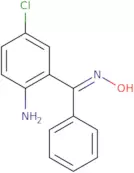
Formula:C6H5NO2Purity:Min. 95%Color and Shape:PowderMolecular weight:123.11 g/mol2-Amino-5-chlorobenzophenone oxime
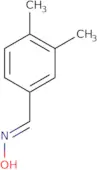
CAS:2-Amino-5-chlorobenzophenone oxime is a drug that belongs to the class of hydrazides. It was originally developed as an antidepressant and it has been shown in animal experiments to have antidepressant effects. 2-Amino-5-chlorobenzophenone oxime inhibits the enzyme monoamine oxidase, which is responsible for breaking down amines such as serotonin and norepinephrine. This inhibition leads to increased levels of these neurotransmitters in the brain, which may be responsible for its antidepressant effect. 2-Amino-5-chlorobenzophenone oxime also has analgesic properties, with yields of up to 86%.Formula:C13H11ClN2OPurity:Min. 85 Area-%Color and Shape:PowderMolecular weight:246.69 g/mol3,4-Dimethylbenzaldehyde oxime
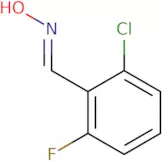
CAS:3,4-Dimethylbenzaldehyde oxime is a reactive oxygen species (ROS) that is produced by the oxidation of 3,4-dimethylbenzaldehyde. It has been shown to be an efficient oxidant in aerobic oxidation reactions. The active species generated by this reaction is the aldehyde or ketone form of 3,4-dimethylbenzaldehyde oxime, which can then react with another substrate to generate an oxidized product. This reaction is catalyzed by metal ions and is activated by molecular oxygen.Formula:C9H11NOPurity:Min. 95%Color and Shape:White Off-White PowderMolecular weight:149.19 g/mol2-Chloro-6-fluorobenzaldehyde oxime
CAS:2-Chloro-6-fluorobenzaldehyde oxime is the chemical compound with the formula ClCH=C(O)N(OH)Cl. It is a white solid that is soluble in water and ethanol. 2-Chloro-6-fluorobenzaldehyde oxime is used as a versatile building block in organic synthesis, for example as a reagent for the preparation of amides, esters, and nitriles. It is also useful as a reagent for the conversion of ketones to nitriles.
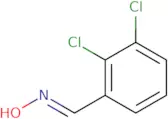
Formula:C7H5ClFNOPurity:Min. 95%Molecular weight:173.57 g/mol2,3-Dichlorobenzaldehyde oxime
CAS:2,3-Dichlorobenzaldehyde oxime is a versatile building block and reagent in the synthesis of complex compounds. It is mainly used as a research chemical and speciality chemical. 2,3-Dichlorobenzaldehyde oxime has been widely used for the preparation of fine chemicals, pharmaceuticals, agrochemicals, and other organic compounds. This compound can be reacted with various reagents to produce useful scaffolds or reaction components.
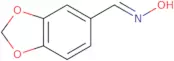
Formula:C7H5Cl2NOPurity:Min. 95%Color and Shape:PowderMolecular weight:190.03 g/molPiperonal oxime
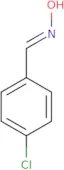
CAS:Controlled ProductPiperonal oxime is a chemical compound that is used in the synthesis of the fragrance piperonal. It can be produced by the reaction of sodium carbonate and piperonal with an aldehyde such as n-propyl chloride. Piperonal oxime can also be produced by refluxing piperonal in water with sodium carbonate, followed by acidification and polymerization. Piperonal oxime is insoluble in water and has a melting point range between 118-121 °C. The compound has been shown to catalyze the oxidation of benzaldehyde to benzoic acid and o-xylene to ortho-xylene, which are useful for the production of polymers such as nylon 6.Formula:C8H7NO3Purity:Min. 90%Molecular weight:165.15 g/mol4-Chlorobenzaldehyde oxime
CAS:4-Chlorobenzaldehyde oxime is an antibacterial agent that is classified as a chloroamine. It has been shown to be an effective inhibitor of bacterial growth, with a low toxicity to mammalian cells. 4-Chlorobenzaldehyde oxime has been shown to be activated by amines and hydroxylamine, and the resulting intermediate can cleave a variety of bonds in the bacterial cell wall. The molecular orbitals of this compound have been calculated using crystallographic data and functional theory. 4-Chlorobenzaldehyde oxime also binds to chloride ions and forms a complex with ammonium nitrate, which may account for its activity against some bacteria that are resistant to chlorinated compounds (e.g., Clostridium difficile). This compound also contains functional groups that may react with disulfides present in the bacterial cell wall.Formula:C7H6ClNOPurity:Min. 95%Color and Shape:PowderMolecular weight:155.58 g/mol3,5-Dimethylbenzaldehyde oxime
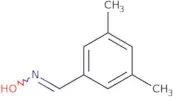
CAS:3,5-Dimethylbenzaldehyde oxime is a white crystalline solid that is soluble in organic solvents. 3,5-Dimethylbenzaldehyde oxime reacts with water to produce hydrogen peroxide and formaldehyde. This reaction is an example of a dehydration reaction.Formula:C9H11NOPurity:Min. 95%Color and Shape:PowderMolecular weight:149.19 g/molClarithromycin oxime
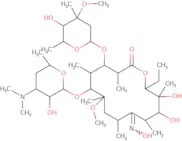
CAS:Clarithromycin oxime is an erythromycin derivative that is a potent inhibitor of protein synthesis in bacteria. It contains a methylating group, which has been shown to be necessary for its antibacterial activity. Clarithromycin oxime inhibits the growth of filamentous fungi and can be used to treat infectious diseases caused by pyogenes and staphylococci. The effective dose is not known, but it should be administered orally or intravenously.Formula:C38H70N2O13Purity:Min. 95 Area-%Color and Shape:White PowderMolecular weight:762.97 g/mol(2-Methoxyphenyl)acetone oxime
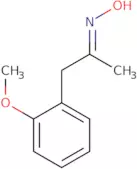
CAS:2-Methoxyphenyl)acetone oxime is a versatile building block that can be used in the synthesis of complex compounds. It is a colourless crystalline solid with a melting point of 138°C and a boiling point of 188°C. This compound has been assigned CAS No. 43021-97-2 and is soluble in water, ethanol, acetone, benzene, chloroform, ether and ethyl acetate. The chemical structure for this compound is shown below:
Formula:C10H13NO2Purity:Min. 95%Color and Shape:PowderMolecular weight:179.22 g/molIndirubin-3'-monoxime
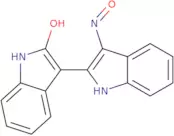
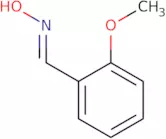
CAS:Inhibitor of YB-1 nuclear translocation; anti-cancerFormula:C16H11N3O2Purity:Min. 95%Color and Shape:PowderMolecular weight:277.28 g/mol2-Methoxybenzaldehyde oxime
CAS:2-Methoxybenzaldehyde oxime is a synthetic amine that is used in the synthesis of peroxides. The reaction rate and nature depend on the type of peroxide being synthesized, but typically, it is used with acetonitrile as a solvent and an acid catalyst. 2-Methoxybenzaldehyde oxime reacts with peracid to create an aldoxime and nitrite. This product can also be made by reacting benzaldehyde with nitrous acid, which will produce dioxane as an intermediate. The reaction time for this process takes about four hours at room temperature.Formula:C8H9NO2Purity:Min. 95%Color and Shape:PowderMolecular weight:151.16 g/mol2-Bromobenzaldoxime
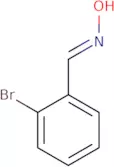
CAS:2-Bromobenzaldoxime is a chemical compound that belongs to the class of isoxazoles. It is used as an agrochemical to control nematodes and insects in crops. 2-Bromobenzaldoxime has been shown to have a high transformation efficiency, with a low response of resistant strains, and is effective against acarids and insects. The product yields are high when 2-bromobenzaldoxime is applied on soil or as a foliar spray. This chemical can be used as an alternative to diethyl ether when it comes to controlling pests in agricultural environments.Formula:C7H6BrNOPurity:Min. 95%Molecular weight:200.03 g/molSalicylaldoxime
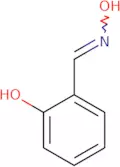
CAS:Salicylaldoxime is a coordination compound that is used for the treatment of malaria. Salicylaldoxime has a high affinity for the cell nuclei, which leads to its inhibitory properties. It binds to cell factor and inhibits the growth of malarial parasites. The inhibition of x-ray crystal structures by salicylaldoxime has been shown in Langmuir adsorption isotherms and electrochemical impedance spectroscopy. This drug binds to metal ions and forms complexes with them, which can be detected through plasma mass spectrometry. The coordination geometry and reaction solution were also analyzed using structural analysis. Hydrogen bonding interactions are present in salicylaldoxime due to its formation of chelates with metals such as iron, copper, cobalt, nickel, and zinc.Formula:C7H7NO2Purity:Min. 95%Color and Shape:PowderMolecular weight:137.14 g/mol9-Fluorenone oxime
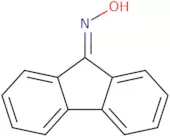
CAS:9-Fluorenone oxime is a pharmacological agent that has been shown to inhibit the activity of proteases. It has been shown to be effective in the treatment of hepatitis caused by radiation and amines, such as fluorenone. 9-Fluorenone oxime binds to the hydroxyl group of the active site on the protease enzyme and forms a covalent bond with it. This prevents hydrolysis of substrate proteins and thus blocks protein synthesis. 9-Fluorenone oxime also has chelate ligand properties, which allow it to bind to metal ions, such as phosphotungstic acid or fluorescence probes, and form complexes. The thermal expansion property of 9-fluorenones can be used for thermometry in biochemistry research.
Formula:C13H9NOPurity:90%Color and Shape:PowderMolecular weight:195.22 g/mola-Benzoin oxime
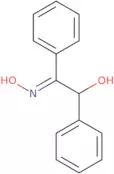
CAS:a-Benzoin oxime is a molecule that has been synthesized and characterized by nuclear magnetic resonance (NMR) spectroscopy. The compound contains a hydroxy group, which is responsible for the vibrational mode observed in anhydrous acetonitrile, sodium citrate and galleria mellonella. This molecule also has a metal ion which coordinates with the hydroxyl group of the benzoin oxime. The coordination complex is formed in an enzyme preparation containing p. aeruginosa and molybdenum as the metal ion.
Formula:C14H13NO2Purity:Min. 95%Color and Shape:PowderMolecular weight:227.26 g/mol

![L-Methionine [R,S]-sulfoximine](https://static.cymitquimica.com/products/3D/thumb-webp/FM25156.webp)