Imines
Found 115 products for "Imines".
- Lower prices
- Higher prices
- Lower purities
- Higher purities
- Faster estimated delivery
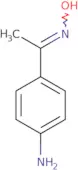
1-(4-Aminophenyl)ethanone oxime
CAS:4-Aminoacetophenone oxime is an organic compound that is soluble in water and methanol. It has a molecular weight of 169.17 g/mol, a melting point of 190 °C, and a boiling point of 260 °C. 4-Aminoacetophenone oxime has been shown to have antimicrobial activity against Gram-positive bacteria, such as Staphylococcus aureus, but not against Gram-negative bacteria. This compound can be used as a ligand for metal ions such as copper and zinc, which are important in biological processes. The magnetic properties of 4-aminoacetophenone oxime make it possible to detect the molecule using nuclear magnetic resonance spectroscopy.
4-Aminoacetophenone oxime can be synthesized by reacting 5-nitrosalicylaldehyde with ammonium acetate in the presence of hydrochloric acid:Formula:C8H10N2OPurity:Min. 95%Color and Shape:PowderMolecular weight:150.18 g/mol3,4-Dichlorobenzaldehyde oxime
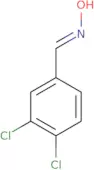
CAS:3,4-Dichlorobenzaldehyde oxime is a natural carotenoid that has been shown to have antibacterial activity. 3,4-Dichlorobenzaldehyde oxime is produced by the reaction of malonate and aldehyde in an incubated system. This compound has been shown to be active against Gram-positive bacteria such as staphylococcus and aldoximes and Gram-negative bacteria such as E. coli, Salmonella typhimurium, and Shigella flexneri. 3,4-Dichlorobenzaldehyde oxime inhibits bacterial growth by binding to the 50S ribosomal subunit of the bacterial cell membrane. This binding prevents protein synthesis, leading to cell death. The biosynthesis of 3,4-dichlorobenzaldehyde oxime involves the conversion of abscisic acid (ABA) into ABA quinone through oxidation by an enzyme called ABA oxidase
Formula:C7H5Cl2NOPurity:Min. 95%Color and Shape:PowderMolecular weight:190.03 g/mol4-Diethylaminobenzaldoxime
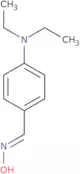
CAS:4-Diethylaminobenzaldoxime is a reaction component that is used in the synthesis of complex compounds. It has been shown to be a useful scaffold for the construction of novel chemical entities. It also has high quality, and can be used as a reagent in research or as a speciality chemical. 4-Diethylaminobenzaldoxime is versatile and can be used as an intermediate or building block in organic chemistry. This chemical has CAS No. 54376-65-7 and is classified as a fine chemical.
Formula:C11H16N2OPurity:Min. 95%Color and Shape:PowderMolecular weight:192.26 g/mol2,3-Dimethoxybenzaldoxime
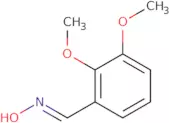
CAS:2,3-Dimethoxybenzaldoxime is an oxime that can be used as a chlorinating agent in organic synthesis. It has been shown to be a good catalyst for the Suzuki coupling of chlorides and boronic acids and for the Miyaura coupling of alkenes and halides. 2,3-Dimethoxybenzaldoxime also reacts with alkenes to form dimers. This reaction is catalyzed by a palladium complex, which may be due to its ability to activate the alkene by oxidative addition or reductive elimination.Formula:C9H11NO3Purity:Min. 95%Color and Shape:PowderMolecular weight:181.19 g/mol4-Bromo-2-fluorobenzaldoxime
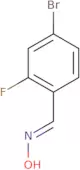
CAS:4-Bromo-2-fluorobenzaldoxime is a fine chemical that is used as a building block in the synthesis of complex molecules. It is also an intermediate in the production of pharmaceuticals, research chemicals, and other specialty chemicals. 4-Bromo-2-fluorobenzaldoxime has a CAS number of 202865-64-3 and is a useful reagent for organic synthesis. It can be used to produce high quality compounds with versatile building blocks.
Formula:C7H5BrFNOPurity:Min. 95%Color and Shape:PowderMolecular weight:218.02 g/mol2-Oxopropanal oxime
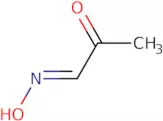
CAS:2-Oxopropanal oxime is a coordination compound that has been shown to be an effective catalyst for the oxidation of hydrochloric acid to hydrogen chloride and methane. It has also been found to have a protective effect against the nerve agent sarin. 2-Oxopropanal oxime binds to the active site of the enzyme acetylcholinesterase, which breaks down acetylcholine, preventing its action on muscle cells and leading to paralysis. The reaction mechanism of 2-Oxopropanal oxime is not well understood, but it is hypothesized that it may involve a pyridinium intermediate. This compound has been investigated as a possible treatment for metabolic disorders, such as obesity and type II diabetes, due to its ability to stimulate detoxification enzymes in the liver. 2-Oxopropanal oxime is also used in plant biotechnology as an expression plasmid because it allows plants to produce large quantities of proteins with signal pept
Formula:C3H5NO2Purity:Min. 95%Molecular weight:87.08 g/molL-Methionine (R)-sulfoximine
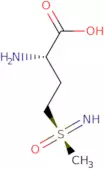
CAS:L-Methionine [R]-sulfoximine is a molecule that has been isolated from the environment. It is an electron-deconvolution and paramagnetic resonance study of the molecule. The spectrum was obtained in the frequency range from 10 to 500 MHz, with a resolution of 0.03 ppm, and a sensitivity of 20 μT. L-Methionine [R]-sulfoximine is an imine nitrogen that can be coordinated by metal ions to form an iminium ion. This compound has two enantiomers, which are both shown in this study. L-Methionine [R]-sulfoximine is a synthetase that catalyzes the formation of the methylamino group and its amino nitrogen.Formula:C5H12N2O3SPurity:Min. 95%Color and Shape:White to pale yellow solid.Molecular weight:180.23 g/molDimethylglyoxime disodium salt octahydrate
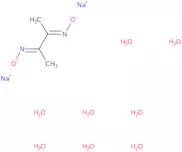
CAS:Dimethylglyoxime is a pesticide that has been used to control insects and nematodes. It has been found to be effective in controlling mosquitoes, flies, and other pests. This compound is also used as an extractor in microextraction. Dimethylglyoxime is not toxic to humans and does not cause any adverse effects on the environment or human health. It can be used with chlorine for wastewater treatment.Formula:C4H8N2Na2O2·8H2OPurity:Min. 95%Color and Shape:PowderMolecular weight:306.22 g/mol3-Bromobenzaldoxime
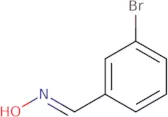
CAS:3-Bromobenzaldoxime is a dialkylamino aldoxime compound that is soluble in organic solvents such as diethyl ether, chloroform, dichloromethane, and benzene. It can be synthesized from benzaldehyde and aniline through the reaction of cyclopentenes with phenylsulfonyl chloride. This reaction produces an intermediate that is then reacted with nitrobenzene to produce 3-bromobenzaldoxime. 3-Bromobenzaldoxime has been used in the synthesis of hydroxamic acids and its use as a solvent for nitro compounds.Formula:C7H6BrNOPurity:Min. 98 Area-%Color and Shape:PowderMolecular weight:200.03 g/molSyringaldoxime
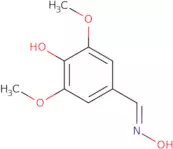
CAS:Syringaldoxime is a tyrosinase inhibitor that inhibits the production of melanin. It is used in the treatment of vitiligo, a skin condition characterized by patches of depigmented skin. Syringaldoxime binds to benzal-dioxime and inhibits its activity. This inhibition leads to decreased production of hydroxytyrosine, which is an important intermediate in the synthesis of melanin. It also has inhibitory activity against l-dopa oxidation and enzyme catalyzed reactions. Syringaldoxime has two moieties, tropolone and methoxy, which are responsible for its inhibitory effects on tyrosinase activity.
Formula:C9H11NO4Purity:Min. 95%Color and Shape:PowderMolecular weight:197.19 g/mol6,7-Dinitro-2,3-dihydro-benzo[1,4]dioxime
CAS:Controlled ProductApplications 6,7-Dinitro-2,3-dihydro-benzo[1,4]dioxime (cas# 57356-48-6) is a compound useful in organic synthesis.
Formula:C8H6N2O6Color and Shape:NeatMolecular weight:226.14N,N'-Diacetylglyoxime
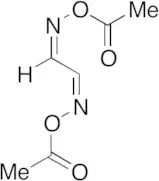
CAS:Controlled ProductApplications N,N'-Diacetylglyoxime is an intermediates in the synthesis of various nitriles.
References Subramanian, L.R., et al.: Sci. Synth., 19, 109 (2004);Formula:C6H8N2O4Color and Shape:NeatMolecular weight:172.14N-Aminohexamethylenimine
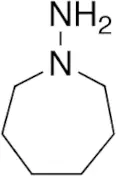
CAS:Controlled ProductApplications N-Aminohexamethylenimine is a sesquiterpene lactones with anti-hepatitis C virus activity.
Not a dangerous good if item is equal to or less than 1g/ml and there is less than 100g/ml in the package
References Rossini, M., et al.: Lett. Drug. Des. Discov., 9, 881 (2012); Hines, R.N., et al.: J. Pharmacol. Exp. Therap., 214, 88 (1980);Formula:C6H14N2Color and Shape:NeatMolecular weight:114.192,6-Dimethoxybenzaldoxime
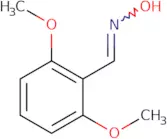
CAS:2,6-Dimethoxybenzaldoxime is a phenylhydrazone that can be used in the catalytic system for oxidation of carbonyl compounds. The reaction proceeds through the periodate-mediated oxidation of the hydrazone to form the corresponding hydroxamic acid. This compound has been shown to be efficient and selective for the oxidation of a wide range of carbonyl compounds, including porphyrins. 2,6-Dimethoxybenzaldoxime is also used as a precursor for other syntheses, such as tetraphenylporphyrin.Formula:C9H11NO3Purity:Min. 95%Molecular weight:181.19 g/mol2-(Chlorophenyl)methanimine
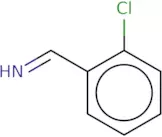
CAS:2-(Chlorophenyl)methanimine is a fine chemical with CAS No. 91589-24-1 that is used in the synthesis of other research chemicals and speciality chemicals. This compound has a high quality, complex structure, and can be used as an intermediate or scaffold for a variety of reactions. 2-(Chlorophenyl)methanimine is also versatile, as it can be used as a building block or reagent in many different reactions.Formula:C7H6ClNPurity:Min. 95%Color and Shape:PowderMolecular weight:139.58 g/molalpha-Chloro-4-fluorobenzaldehyde oxime
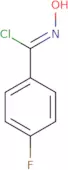
CAS:Alpha-Chloro-4-fluorobenzaldehyde oxime is a selenium compound that can be stabilized with heat resistance and structuring. It is used as an additive in the plating of alloys, thermoplastics, and rubber products. Alpha-Chloro-4-fluorobenzaldehyde oxime has been shown to have anti-oxidant effects, which may be due to its ability to stabilize free radicals.Formula:C7H5ClFNOPurity:Min. 95%Molecular weight:173.57 g/molN-Acetyl-4-benzoquinone imine
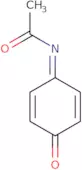
CAS:N-Acetyl-4-benzoquinone imine is an antimicrobial agent that belongs to the class of paracetamol. It inhibits the enzyme form of acetaminophen (APAP). N-Acetyl-4-benzoquinone imine is a reactive compound and can cause oxidative injury in cells. This drug has been shown to have cytotoxic effects on cells at physiological levels and a concentration–time curve similar to acetaminophen. N-Acetyl-4-benzoquinone imine also affects mitochondrial membrane potential and matrix effect, which may be due to its ability to inhibit mitochondrial enzymes. The toxic effects of N-Acetyl-4-benzoquinone imine are reversible after it is metabolized by cytochrome P450 enzymes.
Formula:C8H7NO2Purity:Min. 95%Color and Shape:White PowderMolecular weight:149.15 g/molButyraldoxime
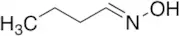
CAS:Controlled ProductApplications Butyraldoxime (cas# 110-69-0) is a useful research chemical.
Formula:C4H9NOColor and Shape:NeatMolecular weight:87.129,10-Dihydro-1-benzo[a]pyrene-7(8H)-one Oxime
CAS:Controlled ProductApplications 9,10-Dihydro-1-benzo[a]pyrene-7(8H)-one Oxime (cas# 88909-82-4) is a compound useful in organic synthesis.
Formula:C20H15NOColor and Shape:NeatMolecular weight:285.34Dibromoformaldoxime
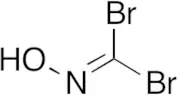
CAS:Controlled ProductApplications Dibromoformaldoxime is a reagent that undergoes cycloaddition with alkynes to prepare substituted 3-bromo-isoxazoles in high yield.
References Chiarino, D., et al.: J. Heterocyclic Chem., 24, 43 (1987); De Amici, M., et al.: J. Org. Chem., 54, 2646 (1989); Castelhano, A., et al.: 16, 335 (1988).Formula:CHBr2NOColor and Shape:NeatMolecular weight:202.83

![6,7-Dinitro-2,3-dihydro-benzo[1,4]dioxime](https://static.cymitquimica.com/products/TR/thumb-webp/D479780.webp)

![9,10-Dihydro-1-benzo[a]pyrene-7(8H)-one Oxime](https://static.cymitquimica.com/products/TR/thumb-webp/D448425.webp)