Imines
Found 115 products for "Imines".
- Lower prices
- Higher prices
- Lower purities
- Higher purities
- Faster estimated delivery
Deoxybenzoin Oxime
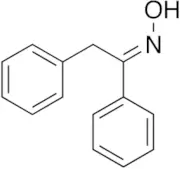
CAS:Controlled ProductApplications Deoxybenzoin Oxime (cas# 26306-06-9) is a compound useful in organic synthesis.
Formula:C14H13NOColor and Shape:NeatMolecular weight:211.26Acetaldoxime
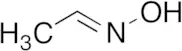
CAS:Controlled ProductApplications Acetaldoxime is a useful research chemical, an intermediate or a precursor used in the preparation of some heterocyclic compounds like spiroisoxazolines. An oxygen scavenger in boiler water.
Not a dangerous good if item is equal to or less than 1g/ml and there is less than 100g/ml in the package
References Lee, C. K. Y., et al.: ARKIVOC, 3, 175 (2006); Gallos, J. K., et al.: J. Chem. Soc., 4, 415 (2001); Zhao, Z., et al.: From Faming Zhuanli Shenqing (2019), CN 109368821 A 20190222Formula:C2H5NOColor and Shape:NeatMolecular weight:59.07trans-Benzaldoxime
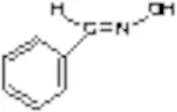
CAS:Controlled ProductApplications An antioxidant
References Jeong, H., et al.: Bioorg. Med. Chem. Lett., 16, 5576 (2006), Andresen Bergstroem, M., et al.: J. Med. Chem., 51, 2541 (2008),Formula:C7H7NOColor and Shape:NeatMolecular weight:121.14(Benzenesulphonyl)acetamide oxime
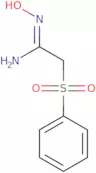
CAS:Benzenesulphonyl)acetamide oxime is a herbicide that inhibits the growth of plants by binding to the enzyme acetohydroxy acid synthase, which is involved in the synthesis of fatty acids. The compound has been shown to be a potent herbicide against many types of weeds, such as thistles, canary grass, ragweed, and lambsquarters. Benzenesulphonyl)acetamide oxime is also used as an analytical reagent to detect peroxides.Formula:C8H10N2O3SPurity:Min. 95%Color and Shape:PowderMolecular weight:214.24 g/mol4-Acetophenone oxime
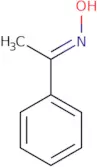
CAS:4-Acetophenone oxime is a triazine compound that has been shown to inhibit the growth of bacteria by binding to the alcohol group of picolinic acid. The binding of 4-acetophenone oxime to picolinic acid creates an acylation intermediate, which is then hydrolyzed. This reaction is reversible and can be repeated multiple times. The inhibitory effect of 4-acetophenone oxime on bacterial growth is highly dependent on its concentration and the pH of the solution in which it is dissolved. 4-Acetophenone oxime has been used as a reagent for analytical chemistry and as a starting material for other organic compounds such as acetanilide, phenol, and phenylhydrazine. It has also been used in x-ray crystal structures obtained at different temperatures, which provided structural analyses and thermodynamic data.
Formula:C8H9NOPurity:Min. 95%Color and Shape:PowderMolecular weight:135.16 g/mol4-Iodobenzaldoxime
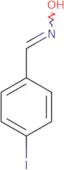
CAS:4-Iodobenzaldoxime is an isoxazoline, phenyl derivative that forms a 4-iodobenzaldehyde oxime from a 4-bromobenzaldehyde or 4-chlorobenzaldehyde. This compound has been used for the synthesis of organic compounds and pharmaceuticals. The reaction is catalyzed by acid or base in water or alcohol.Formula:C7H6INOPurity:Min. 95%Color and Shape:PowderMolecular weight:247.03 g/molVeratraldoxime
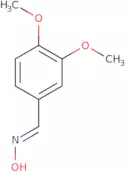
CAS:Veratraldoxime is a synthetic compound that is the diacetate ester of oxime and has been used in the treatment of inflammatory bowel disease. It has been shown to be effective in some patients, but not all, with ulcerative colitis. Veratraldoxime inhibits the production of inflammatory mediators by inhibiting the activity of cyclooxygenase-2 and lipoxygenase. This drug also has anti-inflammatory properties by inhibiting prostaglandin synthesis at the level of phospholipase A2 and cyclooxygenase-1. The mechanism of action for this drug is similar to that of other nonsteroidal anti-inflammatory drugs (NSAIDs). Veratraldoxime also inhibits protein synthesis by blocking the formation of amide bonds, thereby inhibiting bacterial growth. The oxidation products are responsible for its antibiotic properties. Veratraldoxime binds to copper chromite to form a coordination complex, which is
Formula:C9H11NO3Purity:Min. 95%Color and Shape:PowderMolecular weight:181.19 g/mol2,5-Dichlorobenzenesulphonylacetamide oxime
Please enquire for more information about 2,5-Dichlorobenzenesulphonylacetamide oxime including the price, delivery time and more detailed product information at the technical inquiry form on this page
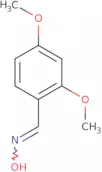
Purity:Min. 95%2,4-Dimethoxybenzaldoxime
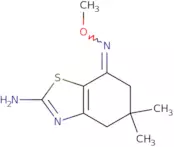
CAS:2,4-Dimethoxybenzaldoxime is an aldoxime that has been used in the synthesis of formyl compounds. It is a synthetic molecule with a molecular weight of 192.2 g/mol and a melting point of 97°C. 2,4-Dimethoxybenzaldoxime is used to synthesize fulvenes, which are highly reactive molecules that have been shown to be useful in the study of formyl group reactivity. It also has been used as a photosensitizer for photochemical reactions. In addition, it can be used to prepare unsaturated alkyl compounds by reacting with alcohols in the presence of base or acid.Formula:C9H11NO3Purity:Min. 95%Color and Shape:PowderMolecular weight:181.19 g/mol7-(O-methyloxime)-5,5-dimethyl-4,5,6-trihydrobenzothiazole-2-ylamine
CAS:Please enquire for more information about 7-(O-methyloxime)-5,5-dimethyl-4,5,6-trihydrobenzothiazole-2-ylamine including the price, delivery time and more detailed product information at the technical inquiry form on this pagePurity:Min. 95%Naphthalene-2-sulphonylacetamide oxime
CAS:Please enquire for more information about Naphthalene-2-sulphonylacetamide oxime including the price, delivery time and more detailed product information at the technical inquiry form on this page
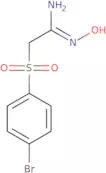
Purity:Min. 95%4-Bromobenzenesulphonylacetamide oxime
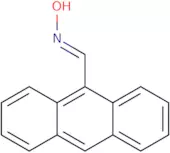
CAS:Please enquire for more information about 4-Bromobenzenesulphonylacetamide oxime including the price, delivery time and more detailed product information at the technical inquiry form on this pageFormula:C8H9BrN2O3SPurity:Min. 95%Color and Shape:PowderMolecular weight:293.14 g/mol9-Anthraldoxime
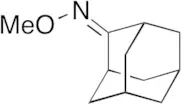
CAS:9-Anthraldoxime is an oxime that is used in the preparation of new synthetic strategies. It has been shown to be a precursor for a variety of functional groups and has been used in the synthesis of a variety of organic compounds. 9-Anthraldoxime is also an electron spin resonance (ESR) reagent and can be used in the study of electron spin resonance spectra. This chemical compound is also useful for examining functional groups, such as methyl groups, through its spectral data. Being an ESR reagent, it can be used to measure the nature of electrons and their spin orientation.Formula:C15H11NOPurity:Min. 95%Color and Shape:PowderMolecular weight:221.25 g/molN-Methoxyadamantan-2-imine
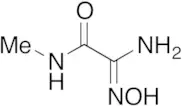
CAS:Controlled ProductFormula:C11H17NOColor and Shape:NeatMolecular weight:179.259Methyloxamide 2-Oxime
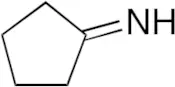
CAS:Controlled ProductFormula:C3H7N3O2Color and Shape:NeatMolecular weight:117.107Cyclopentanimine
CAS:Controlled ProductApplications Cyclopentanimine can be obtained from Cyclopentanone (C988395) which is a chemical compound used in the synthesis of various simple and complex organic compounds. Also used in the synthesis of peptidase IV inhibitors for the treatment of type 2 diabetes.
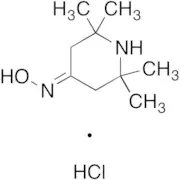
References Imamoto, T. et al.: J. Am. Chem. Soc., 112, 5244 (1990); Augeri, D. et al.: J. Med. Chem., 48, 5025 (2005);Formula:C5H9NColor and Shape:NeatMolecular weight:83.132Tempoxime Hydrochloride
CAS:Controlled ProductFormula:C9H18N2O•HClColor and Shape:NeatMolecular weight:170.25 +(36.46)(E)-1-(Benzo[b]thiophen-2-yl)ethanone Oxime
CAS:Controlled ProductApplications (E)-1-(Benzo[b]thiophen-2-yl)ethanone Oxime is an isomer of N-(1-Benzo[b]thiophen-2-yl-ethyl)-hydroxylamine a reagent used in the preparation of Zileuton, an anti-asthmatic drug.
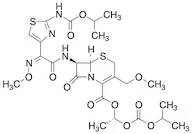
References Guinchard, X. et al.: J. Org. Chem., 73, 2028 (2008)Formula:C10H9NOSColor and Shape:NeatMolecular weight:191.25(1R)-Cefpodoxime Proxetil Isopropylcarbamate
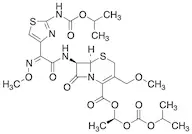
Controlled ProductFormula:C25H33N5O11S2Color and Shape:NeatMolecular weight:643.686(1S)-Cefpodoxime Proxetil Isopropylcarbamate
Controlled ProductFormula:C25H33N5O11S2Color and Shape:NeatMolecular weight:643.686



![(E)-1-(Benzo[b]thiophen-2-yl)ethanone Oxime](https://static.cymitquimica.com/products/TR/thumb-webp/B276763.webp)