Ethers
Ethers are organic compounds containing an ether functional group, characterized by an oxygen atom bonded to two hydrocarbon radicals. These compounds are valuable in synthesis and serve as solvents in various chemical reactions. At CymitQuimica, we offer a selection of high-quality ethers to support your research and industrial applications, ensuring reliable and effective results. Our range of ethers meets diverse laboratory requirements, from routine experiments to advanced research.
Found 40729 products of "Ethers"
Sort by
Purity (%)
0
100
|
0
|
50
|
90
|
95
|
100
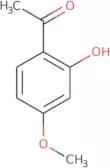
2-Hydroxy-4-methoxyacetophenone
CAS:<p>2-Hydroxy-4-methoxyacetophenone is a compound that has been shown to have a minimal toxicity profile and a wide range of pharmacological activities. It inhibits the activity of NF-κB, which is an inflammatory signaling protein, and also has antioxidant properties. 2-Hydroxy-4-methoxyacetophenone has been shown to reduce the severity of cardiovascular disease by inhibiting oxidative injury in the mitochondria and reducing oxidative stress. This drug also reduces atherosclerotic lesions and prevents hypoglycemia by increasing glucose uptake in tissues. Moreover, it can be used to treat leukemia inhibitory factor in patients with chronic myeloid leukemia (CML).</p>Formula:C9H10O3Purity:Min. 95%Color and Shape:PowderMolecular weight:166.17 g/mol4-Desmethoxy-4-chloro omeprazole sulfide
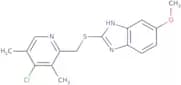
CAS:<p>4-Desmethoxy-4-chloro omeprazole sulfide is a versatile building block in the synthesis of new chemical compounds. The compound can be used as a reagent, speciality chemical, or reaction component and is suitable for use in research or as a building block. 4-Desmethoxy-4-chloro omeprazole sulfide is a valuable intermediate that can be used in the synthesis of many useful scaffolds. CAS No. 220757-74-4</p>Formula:C16H16ClN3OSPurity:Min. 95%Color and Shape:Off-white to light pink to pink solid.Molecular weight:333.84 g/mol3,4,5-Trimethoxybenzoic acid
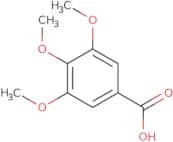
CAS:<p>3,4,5-Trimethoxybenzoic acid is an experimental drug that has been shown to have significant cytotoxicity in a chronic oral model. It inhibits the activity of a number of enzymes including esterases, lipases, and proteases. This compound also showed significant cytotoxicity when tested in the water vapor chronic inhalation model. 3,4,5-Trimethoxybenzoic acid may be toxic to humans because it binds to calcium channels and inhibits the release of ryanodine from its storage sites on the sarcoplasmic reticulum. This inhibition may lead to muscle cramps and tetany as well as cardiac arrhythmias. The toxicity of 3,4,5-trimethoxybenzoic acid has been studied in rats using a number of methods including titration calorimetry and chlorogenic acids extraction from rat liver.</p>Formula:C10H12O5Purity:Min. 95%Color and Shape:PowderMolecular weight:212.2 g/mol3-Methoxybenzhydrazide
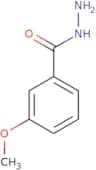
CAS:<p>3-Methoxybenzhydrazide is a molecule that has been studied for its biological properties. It has the ability to inhibit tyrosinase, an enzyme involved in melanin production, and is a potent inhibitor of bacterial growth. 3-Methoxybenzhydrazide also has the property of fluorescence, which can be used to detect its presence in cells. The stability of this molecule has been studied by x-ray crystallography and it is found to have high structural stability. 3-Methoxybenzhydrazide has been shown to be potentially useful for cancer research due to its ability to suppress tumor growth in mice.</p>Formula:C8H10N2O2Purity:Min. 95%Color and Shape:PowderMolecular weight:166.18 g/mol2,2-Dimethoxy-2-phenylacetophenone
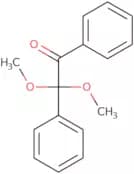
CAS:<p>2,2-Dimethoxy-2-phenylacetophenone is a glycol ether substrate film that can be used to study the reaction mechanism of glycol ethers. It has been found that this substrate film reacts with oxygen in the air to form an organic peroxide and hydrogen peroxide. The product of the reaction is then identified by measuring the rate of thermal expansion. This method has been shown to be a useful tool for determining the kinetic constants of glycol ethers. The 2,2-dimethoxy-2-phenylacetophenone substrate film can also be used as a fluorescence probe for detecting radiation and wastewater treatment. The hydroxyl group on this substrate film is susceptible to degradation by acids, which may lead to its chemical instability.</p>Formula:C16H16O3Purity:Min. 95%Color and Shape:White To Off-White SolidMolecular weight:256.3 g/mol(3,4,5-Trimethoxyphenyl)methyl carbinol
CAS:<p>(3,4,5-Trimethoxyphenyl)methyl carbinol is a neuroprotective compound that belongs to the class of benzyl alcohols. It has been shown to have neuroprotective effects against daldinia-induced oxidative stress and biotoxicity. This compound has high electron transfer rates and can be used as an electron donor in enzymatic reactions. (3,4,5-Trimethoxyphenyl)methyl carbinol exhibits a high reactivity with alcohols and can be used in the synthesis of other compounds by transferring its alcohol group onto other molecules. The addition of deuterium atoms to this molecule has been shown to increase its reactivity with oxidants.</p>Formula:C11H16O4Purity:Min. 95%Color and Shape:LiquidMolecular weight:212.24 g/mol2-Methoxy-5-nitroaniline
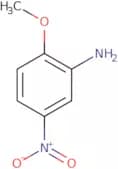
CAS:<p>2-Methoxy-5-nitroaniline is a nitro compound that is cytotoxic at high doses. It is a diazonium salt that can be synthesised from hydrochloric acid and nitrous acid. The toxicity of 2-methoxy-5-nitroaniline has been tested in rats and found to have significant cytotoxicity at doses of 5000 mg/kg, with a LD50 of 2700 mg/kg. The chemical structure of 2-methoxy-5-nitroaniline consists of an amine group, two nitro groups, and two methyl groups. This compound can be synthesized by reacting ammonia with formaldehyde in the presence of nitric acid. 2-Methoxy-5-nitroaniline has shown to inhibit transcription polymerase chain reactions (PCR) in mouse erythrocytes at concentrations as low as 0.1 mM. Dietary</p>Formula:C7H8N2O3Purity:95%NmrColor and Shape:PowderMolecular weight:168.15 g/mol2-(2-Hydroxy-4-methoxyphenyl)-5,5-dimethyl-4-thiazolidinecarboxylic acid
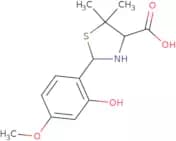
CAS:<p>Please enquire for more information about 2-(2-Hydroxy-4-methoxyphenyl)-5,5-dimethyl-4-thiazolidinecarboxylic acid including the price, delivery time and more detailed product information at the technical inquiry form on this page</p>Formula:C13H17NO4SPurity:Min. 95%Color and Shape:PowderMolecular weight:283.34 g/mol2-(((4-Bromo-2,5-dimethoxyphenyl)amino)methylene)-5,5-dimethylcyclohexane-1,3-dione
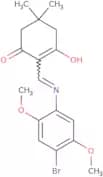
CAS:<p>Please enquire for more information about 2-(((4-Bromo-2,5-dimethoxyphenyl)amino)methylene)-5,5-dimethylcyclohexane-1,3-dione including the price, delivery time and more detailed product information at the technical inquiry form on this page</p>Formula:C17H20BrNO4Purity:Min. 95%Molecular weight:382.25 g/mol4-Methoxybenzoic anhydride
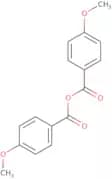
CAS:<p>4-Methoxybenzoic anhydride is a nonsteroidal anti-inflammatory drug (NSAID) that has a hydroxy group, which makes it susceptible to nucleophilic attack. The reaction mechanism of 4-methoxybenzoic anhydride involves hydroxyl group and phosphorus pentachloride. Kinetic data for the reaction was obtained from kinetic studies. The kinetic study found that the rate of the reaction increased with increasing concentration of amines and amides in the reaction mixture. 4-Methoxybenzoic anhydride has been shown to have antiinflammatory activity in various tests on animals, including rats, guinea pigs, and rabbits. The mechanism of this activity may be due to its ability to inhibit prostaglandin synthesis by blocking cyclooxygenase enzyme activity.</p>Formula:C16H14O5Purity:Min. 95%Color and Shape:PowderMolecular weight:286.28 g/mol2,3-Dimethoxy-1,4-benzoquinone
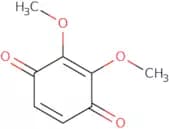
CAS:<p>2,3-Dimethoxy-1,4-benzoquinone is a chemical compound that belongs to the class of quinones. It is one of the most potent inhibitors of bacterial growth and has been shown to be effective against Gram-positive bacteria such as Staphylococcus aureus and Mycobacterium tuberculosis. 2,3-Dimethoxy-1,4-benzoquinone inhibits bacterial growth by interfering with fatty acid synthesis. This inhibition is due to its ability to react with methoxy groups on membrane lipids and nucleophilic attack on the carbon atom in the fatty acid chain. The binding constants for this interaction are relatively weak, which may explain why 2,3-dimethoxy-1,4-benzoquinone does not inhibit other types of cells like eukaryotic cells.</p>Formula:C8H8O4Purity:Min. 95%Color and Shape:Red PowderMolecular weight:168.15 g/mol2-Hydroxy-4'-(2-hydroxyethoxy) -2-methylpropiophenone
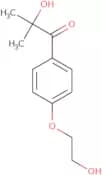
CAS:2-Hydroxy-4'-(2-hydroxyethoxy)-2-methylpropiophenone is a reactive chemical substance that has been shown to have significant cytotoxicity and biological properties. It is used in the treatment of cervical cancer and has been shown to inhibit the growth of cancer cells. This compound is found in a number of commercial products, including sunscreens and hair dyes, but its use may be limited due to its photochemical reactivity. The structure of 2HEPP was determined using nuclear magnetic resonance (NMR) spectroscopy and mass spectrometry. The chemical formula for 2HEPP is C10H14O3. It has a molecular weight of 192.22 g/mol and an empirical formula of C10H14O3. 2HEPP is soluble in methanol, acetone, ether, chloroform, benzene, ethanol, ethyl acetate, diethyl ether, and acetonFormula:C12H16O4Purity:Min. 95%Color and Shape:White PowderMolecular weight:224.25 g/mol5-Iodo-2-methoxybenzonitrile
CAS:<p>5-Iodo-2-methoxybenzonitrile is a fine chemical that is used as a building block in the synthesis of other chemicals or pharmaceuticals. The compound reacts with strong bases to produce an aryl amine and iodoethane, and can be used to make derivatives as well. 5-Iodo-2-methoxybenzonitrile has a number of uses, including as a research chemical, reagent, specialty chemical, and intermediate. It is also useful in the synthesis of other complex compounds. 5-Iodo-2-methoxybenzonitrile belongs to the group of organoiodine compounds that are classified as speciality chemicals. This compound has CAS number 933672-32-3.</p>Formula:C8H6INOColor and Shape:PowderMolecular weight:259.04 g/mol1,2,3,5-Tetramethoxybenzene
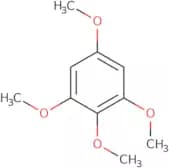
CAS:Controlled Product<p>1,2,3,5-Tetramethoxybenzene is a tannin that belongs to the class of arenes. It can be synthesized by Friedel-Crafts acylation of benzene with an acyl chloride in the presence of aluminum chloride. This reaction produces 1,2,3,5-tetramethoxybenzene and triketone as byproducts. The synthetic pathway for this compound is based on techniques such as irradiation and thermally induced rearrangement. The oxidized form has a redox potential of -0.6 V vs NHE (normal hydrogen electrode). Methoxy groups on the aromatic ring increase the electron affinity and lower the redox potential.</p>Formula:C10H14O4Purity:Min. 95%Color and Shape:White PowderMolecular weight:198.22 g/mol3,6-Dihydroxy-2,4-dimethoxyacetophenone
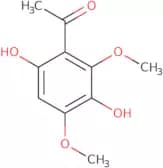
CAS:<p>3,6-Dihydroxy-2,4-dimethoxyacetophenone is an aromatic compound that has a molecular structure with hydrogen-bonded groups. It also contains both acetoxy and intramolecular substituents. 3,6-Dihydroxy-2,4-dimethoxyacetophenone is used in research as a starting material for the synthesis of other compounds. It is also used to study the dihedral angles in molecules due to the presence of two asymmetric carbon atoms.</p>Formula:C10H12O5Purity:Min. 95%Color and Shape:PowderMolecular weight:212.2 g/mol2'-Ethoxyacetophenone
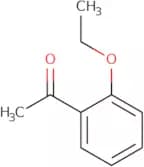
CAS:<p>2'-Ethoxyacetophenone is a Friedel-Crafts acylation agent. It reacts with nucleophilic groups, such as alcohols and amines, to form an acylated product. 2'-Ethoxyacetophenone has been shown to be a useful tool for the synthesis of chiral compounds with high yields and good enantiomeric excesses. This compound can also be used as a precursor in the synthesis of polyaromatic molecules containing a chiral center. The reaction requires low substrate concentrations and short reaction times, making it advantageous for some reactions that are sensitive to these parameters.</p>Formula:C10H12O2Purity:Min. 95%Color and Shape:PowderMolecular weight:164.2 g/molp-(Trifluoromethoxy)benzonitrile
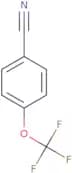
CAS:<p>p-(Trifluoromethoxy)benzonitrile is an organic compound that reacts with electron-rich molecules to form a covalent bond. It has been shown to be reactive in abiotic conditions and can be used as a probe for electron transfer reactions. p-Trifluoromethoxybenzonitrile undergoes a reaction mechanism in which the carbonyl group first reacts with an electron donor, such as acetonitrile, to form an unstable intermediate. This intermediate then reacts with a second electron-rich molecule to form the product. p-Trifluoromethoxybenzonitrile also has been shown to react efficiently with benzonitrile and produce the desired product in one step.</p>Formula:C8H4F3NOPurity:Min. 95%Color and Shape:Clear LiquidMolecular weight:187.12 g/mol(4-Methoxyphenyl)-(2,4,5-trimethoxybenzylidene)-amine
CAS:<p>4-Methoxyphenyl-(2,4,5-trimethoxybenzylidene)-amine is a chemical compound that is used as a research chemical and a building block for the synthesis of other chemicals. It has been shown to be useful as an intermediate in the synthesis of complex compounds. The product is typically used as a reaction component in organic chemistry. It can also be used as a reagent or as an additive to other chemicals. 4-Methoxyphenyl-(2,4,5-trimethoxybenzylidene)-amine is high quality and has many uses in research and industry.</p>Formula:C16H16BrNO3Purity:Min. 95%Molecular weight:350.21 g/mol5-Bromo-2-ethoxybenzoic acid
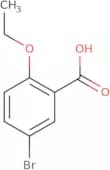
CAS:<p>5-Bromo-2-ethoxybenzoic acid is a versatile building block that can be used as a reagent, speciality chemical, or a useful scaffold. It is used in the synthesis of complex compounds that include pharmaceuticals, agrochemicals, and research chemicals. 5-Bromo-2-ethoxybenzoic acid is also a useful intermediate and reaction component in organic synthesis. This compound has high quality and is listed on the Chemical Abstract Service (CAS) registry number 60783-90-6.</p>Formula:C9H9BrO3Purity:Min. 95%Color and Shape:SolidMolecular weight:245.07 g/mol3'-Iodo-4'-methoxyacetophenone
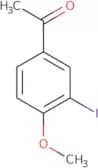
CAS:<p>3'-Iodo-4'-methoxyacetophenone is a chemical compound that is used in the synthesis of other organic compounds. It is a byproduct of the reaction between acetophenone and iodomethane. 3'-Iodo-4'-methoxyacetophenone is soluble in most solvents, such as ethanol, ether, chloroform, and acetone. The compound has a CAS number of 79324-77-9.</p>Formula:C9H9IO2Purity:Min. 95%Color and Shape:PowderMolecular weight:276.07 g/mol