Ethers
Ethers are organic compounds containing an ether functional group, characterized by an oxygen atom bonded to two hydrocarbon radicals. These compounds are valuable in synthesis and serve as solvents in various chemical reactions. At CymitQuimica, we offer a selection of high-quality ethers to support your research and industrial applications, ensuring reliable and effective results. Our range of ethers meets diverse laboratory requirements, from routine experiments to advanced research.
Found 40729 products of "Ethers"
Sort by
Purity (%)
0
100
|
0
|
50
|
90
|
95
|
100
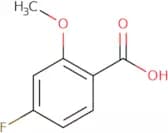
4-Fluoro-2-methoxybenzoic acid
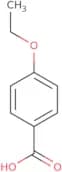
CAS:<p>4-Fluoro-2-methoxybenzoic acid is a versatile building block that is used in the synthesis of many complex compounds. It is a reagent, which means it can be used as an intermediate in the synthesis of other compounds. 4-Fluoro-2-methoxybenzoic acid is also a useful scaffold for the preparation of new chemical entities with specific pharmaceutical properties. The CAS number for this compound is 395-82-4.</p>Formula:C8H7FO3Purity:Min. 95%Color and Shape:PowderMolecular weight:170.14 g/mol4-Ethoxybenzoic acid
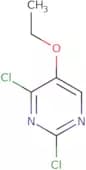
CAS:<p>4-Ethoxybenzoic acid is a phenolic compound that has shown significant cytotoxicity. This molecule has been shown to inhibit the production of tyrosinase, an enzyme that catalyzes the oxidation of tyrosine to produce melanin. 4-Ethoxybenzoic acid also inhibits detoxification enzymes such as glutathione transferases and quinone reductase, which may be responsible for its cytotoxicity. 4-Ethoxybenzoic acid is soluble in organic solvents but insoluble in water. It reacts with other compounds to form insoluble polymers. 4-Ethoxybenzoic acid can react with piperonyl butoxide or caproic acid to form p-hydroxybenzoic acid or friedel-crafts reaction products respectively.</p>Formula:C9H10O3Purity:Min. 95%Color and Shape:PowderMolecular weight:166.17 g/mol2,4-Dichloro-5-ethoxypyrimidine
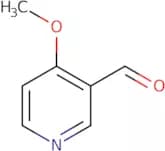
CAS:<p>2,4-Dichloro-5-ethoxypyrimidine is a chemical compound that is used as a reagent and a reaction component in organic synthesis. It is an intermediate for the production of other chemicals. The high purity of this compound makes it suitable for research purposes. It can be used as a versatile building block or as an intermediate to build complex compounds. 2,4-Dichloro-5-ethoxypyrimidine has CAS No. 280582-25-4. This chemical is also known by the name Et2N2Cl5O2P.</p>Formula:C6H6Cl2N2OPurity:Min. 95%Color and Shape:SolidMolecular weight:193.03 g/mol3-Formyl-4-methoxypyridine
CAS:<p>3-Formyl-4-methoxypyridine is a synthetic compound that belongs to the group of pyrimidine ring compounds. It is synthesized by the reaction of triflic acid with 2,6-dichloropyridine and has been shown to have antiviral and antitumour properties. The compound has also been synthetized as a potential drug for the treatment of malaria. 3-Formyl-4-methoxypyridine is an analog of variolin, which is an alkaloid that can be found in marine organisms such as sponges and tunicates. 3-Formyl-4-methoxypyridine has been shown to inhibit protein synthesis by inhibiting the enzyme RNA polymerase II, which leads to cell death by apoptosis or necrosis.</p>Formula:C7H7NO2Purity:Min. 95%Color and Shape:PowderMolecular weight:137.14 g/mol2,4,6-Tribromo-3-methoxyphenol
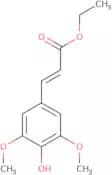
CAS:<p>2,4,6-Tribromo-3-methoxyphenol is a high quality reagent that is used as an intermediate in the production of many fine chemicals. It is also a useful building block for the synthesis of speciality chemicals and research chemicals. This chemical can be used as a versatile building block for reactions with other compounds. 2,4,6-Tribromo-3-methoxyphenol has CAS number 24967-79-1 and can be found at Chemical & Laboratory Equipment.</p>Formula:C7H5Br3O2Purity:Min. 95%Molecular weight:360.83 g/mol3,5-Dimethoxy-4-hydroxycinnamic acid ethyl ester
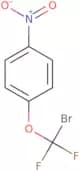
CAS:<p>3,5-Dimethoxy-4-hydroxycinnamic acid ethyl ester is a redox potential with an acidic character. It can be synthesized from p-hydroxybenzoic acid and acetate extract of the plant Carthamus tinctorius. The synthesis starts with an asymmetric synthesis of protocatechuic acid and its derivatives. This compound is also found in the surface methodology of fatty acids and radiation that has been studied by nmr spectroscopic data. 3,5-Dimethoxy-4-hydroxycinnamic acid ethyl ester has bioactive phenolic properties and can be used for the treatment of various diseases such as cancer or diabetes.</p>Formula:C13H16O5Purity:Min. 95%Color and Shape:PowderMolecular weight:252.26 g/mol4-(Bromodifluoromethoxy)Nitrobenzene
CAS:<p>4-(Bromodifluoromethoxy)Nitrobenzene is a versatile building block that can be used to synthesize a wide variety of organic and inorganic compounds. It is a brominated derivative of nitrobenzene, which is useful for the synthesis of complex compounds and research chemicals. 4-(Bromodifluoromethoxy)Nitrobenzene is also an intermediate for the synthesis of pharmaceuticals and other valuable chemical compounds. This compound has been shown to provide high quality results in reactions with other molecules. 4-(Bromodifluoromethoxy)Nitrobenzene can be used as a scaffold for the construction of more complex molecules.</p>Formula:C7H4BrF2NO3Purity:Min. 95%Color and Shape:LiquidMolecular weight:268.01 g/mol3-Ethoxycinnamic acid
CAS:<p>3-Ethoxycinnamic acid is a polyhydric alcohol that has been shown to inhibit the growth of various microorganisms. 3-Ethoxycinnamic acid inhibits the growth of microorganisms by binding to the alkenyl groups in the cell membrane, thereby preventing them from synthesizing their own fatty acids. The binding of 3-ethoxycinnamic acid to alkali metal ions also prevents their uptake into the cell, which leads to an accumulation of these ions outside the cell and eventually results in cell death. 3-Ethoxycinnamic acid is soluble in water and may be used as a stain or quaternary ammonium compound.</p>Formula:C11H12O3Purity:Min. 95%Color and Shape:SolidMolecular weight:192.21 g/mol(S)-2-Amino-5-methoxytetralin (S)-mandelate
CAS:Controlled Product<p>Please enquire for more information about (S)-2-Amino-5-methoxytetralin (S)-mandelate including the price, delivery time and more detailed product information at the technical inquiry form on this page</p>Formula:C19H23NO4Purity:Min. 95%Molecular weight:329.39 g/mol2,4,6-Trimethoxy-3-methylbenzaldehyde
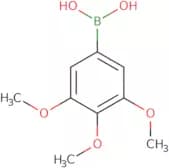
CAS:<p>2,4,6-Trimethoxy-3-methylbenzaldehyde is a flavanone that is structurally related to the drug ciprofloxacin. The two molecules share a common molecular framework with the addition of a hydroxyl group on the 2 position of the benzene ring. In molecular docking studies, 2,4,6-Trimethoxy-3-methylbenzaldehyde has shown antitubercular activity against Mycobacterium tuberculosis and Mycobacterium avium complex. It is also an inhibitor of protein tyrosine phosphatase and has been shown to have antibacterial activity against various strains of bacteria.</p>Formula:C11H14O4Purity:Min. 95%Color and Shape:PowderMolecular weight:210.23 g/mol(3,4,5-Trimethoxyphenyl)boronic acid
CAS:<p>(3,4,5-Trimethoxyphenyl)boronic acid is an active analogue of 3,4,5-trimethoxybenzoic acid. It has potent anti-inflammatory properties and inhibits cancer cell proliferation. (3,4,5-Trimethoxyphenyl)boronic acid has been shown to inhibit the growth of cancer cells in vitro by binding to the gyrase enzyme. This drug also has biological properties that may be useful for treating human liver diseases such as hepatic steatosis or nonalcoholic fatty liver disease (NAFLD).</p>Formula:C9H13BO5Purity:Min. 95 Area-%Color and Shape:PowderMolecular weight:212.01 g/mol2-Fluoro-6-methoxybenzoic acid
CAS:<p>2-Fluoro-6-methoxybenzoic acid is a monocarboxylic acid that is synthesized from 2,6-dichlorobenzoic acid by a mediated, synthetic sequence. This compound can be used as a substrate for kinetic analyses of the transport of carboxylic acids across cellular membranes. The uptake of 2-fluoro-6-methoxybenzoic acid is expressed in the apical surface membrane of Caco2 cells. Kinetic studies indicate that this compound reacts rapidly with butyllithium to form an enamine intermediate. The enamine intermediate then reacts with either water or methanol to produce a final product, depending on the reaction time.</p>Formula:C8H7FO3Purity:Min. 95%Color and Shape:PowderMolecular weight:170.14 g/mol1,2-Bis(2-mercaptoethoxy)ethane
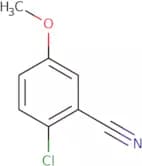
CAS:<p>1,2-Bis(2-mercaptoethoxy)ethane is a functional chemical that belongs to the group of trifluoroacetic acid. It is a liquid that has a viscosity of 0.056 centipoise at 20 degrees Celsius and has primary amino groups in the molecule. The chemical can be used as a polymerization initiator in solid-phase synthesis or as an additive in cell culture media. 1,2-Bis(2-mercaptoethoxy)ethane reacts with 3-mercaptopropionic acid to form ring structures with two disulfide bonds. This reaction mechanism is shown below: The reactive chemical can also be used as a reagent for the formation of benzyl groups from benzal chloride and methylene blue, which are commonly used in the synthesis of carcinoma cell lines and maldi-tof mass spectrometry.</p>Formula:C6H14O2S2Purity:Min. 95%Color and Shape:Colorless Clear LiquidMolecular weight:182.31 g/mol2-Chloro-5-methoxybenzonitrile
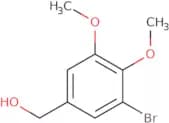
CAS:<p>2-Chloro-5-methoxybenzonitrile is an organic compound that has a chlorinated methoxy group and a cyano group. It is synthesized by the reaction of 2-chloro-5-hydroxybenzonitrile with sulfuryl chloride in the presence of potassium carbonate. The yield of this reaction can be increased by adding a chlorinated solvent such as dichloromethane or chloroform. 2-Chloro-5-methoxybenzonitrile is used in the synthesis of various drugs and other organic compounds, such as amides and benzene ring compounds.</p>Formula:C8H6ClNOColor and Shape:PowderMolecular weight:167.59 g/mol5-Bromo-3,4-dimethoxybenzyl alcohol
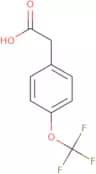
CAS:<p>5-Bromo-3,4-dimethoxybenzyl alcohol is a natural product that can be synthesized from the methyl ethers of 5-bromo-3,4-dimethoxybenzoic acid. It has been reported to have high yields and good yields for the synthesis of methyl ethers. The reaction conditions for this natural product are mild and do not require an organic solvent or a catalyst.</p>Formula:C9H11BrO3Purity:Min. 98 Area-%Color and Shape:PowderMolecular weight:247.09 g/mol4-(Trifluoromethoxy)phenylacetic acid
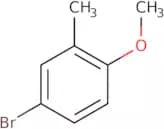
CAS:<p>4-(Trifluoromethoxy)phenylacetic acid is a useful scaffold, versatile building block, and useful intermediate in organic synthesis. It is a speciality chemical that is used as a reaction component in the preparation of complex compounds. 4-(Trifluoromethoxy)phenylacetic acid is also a reagent for the synthesis of high-quality pharmaceuticals, such as antibiotics and antiviral agents. This compound has CAS No. 4315-07-5 and can be found at Chemicals Online.</p>Formula:C9H7F3O3Purity:Min. 95%Color and Shape:PowderMolecular weight:220.15 g/mol5-Bromo-2-methoxytoluene
CAS:<p>5-Bromo-2-methoxytoluene is a bromoarene that reacts to form aziridines and phosphotungstic acid. It is used in the synthesis of polyaromatic compounds with steric interactions. 5-Bromo-2-methoxytoluene is also a functional group that can be used as an allosteric modulator. This compound also has stereoisomers that are chiral, meaning they have different structures despite being mirror images of each other. The carbonyl group on the 5-bromo compound is polar, which means it has a charge. The hydrogen bonds between this compound and other molecules are nonpolar, which means they do not have a charge and are more likely to form in a nonpolar solvent.</p>Formula:C8H9BrOPurity:Min. 95%Color and Shape:PowderMolecular weight:201.06 g/mol3-(tert-butyl)-4-((2-hydroxy-3-methoxyphenyl)methylene)-1-phenyl-2-pyrazolin-5-one
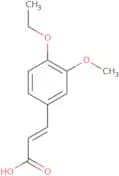
CAS:<p>Please enquire for more information about 3-(tert-butyl)-4-((2-hydroxy-3-methoxyphenyl)methylene)-1-phenyl-2-pyrazolin-5-one including the price, delivery time and more detailed product information at the technical inquiry form on this page</p>Purity:Min. 95%4-Ethoxy-3-methoxycinnamic acid
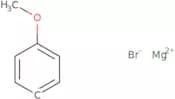
CAS:<p>4-Ethoxy-3-methoxycinnamic acid (4EMC) is a metabolite of propionic acid. It is produced by the fungus Phanerochaete chrysosporium when it is grown on lignocellulose. 4EMC can be cleaved from its ester bond with benzyl alcohol and vanillyl alcohol to produce vanillyl, benzyl, and ethanol. These products are then further metabolized to produce other compounds such as acetaldehyde, acetic acid, and butanol. 4EMC also inhibits the enzyme catalysed that converts propanol to butanol in cultures of P. chrysosporium</p>Formula:C12H14O4Purity:Min. 95%Color and Shape:PowderMolecular weight:222.24 g/mol4-Methoxyphenylmagnesium bromide - 0.5M solution in THF
CAS:<p>4-Methoxyphenylmagnesium bromide - 0.5M solution in THF is a cytotoxic agent that binds to the estrogen receptor, which is involved in breast cancer cell proliferation and differentiation. It is an azide that has been shown to react with hydrochloric acid to form an amide. This reaction may be stereoselective and involve dehydration of the amine group. The mechanism of this reaction involves the formation of a trifluoroacetic acid derivative, which undergoes unsaturated alkyl halogenation followed by chloride ion attack on the double bond. 4-Methoxyphenylmagnesium bromide - 0.5M solution in THF has been shown to inhibit the proliferation of human MCF-7 breast cancer cells, as well as other estrogen receptor modulators such as amines and trifluoroacetic acid.</p>Formula:C7H7BrMgOPurity:Min. 95%Color and Shape:PowderMolecular weight:211.34 g/mol