Ethers
Ethers are organic compounds containing an ether functional group, characterized by an oxygen atom bonded to two hydrocarbon radicals. These compounds are valuable in synthesis and serve as solvents in various chemical reactions. At CymitQuimica, we offer a selection of high-quality ethers to support your research and industrial applications, ensuring reliable and effective results. Our range of ethers meets diverse laboratory requirements, from routine experiments to advanced research.
Found 40729 products of "Ethers"
Sort by
Purity (%)
0
100
|
0
|
50
|
90
|
95
|
100
3,4-Dimethoxyphenol
CAS:Controlled Product<p>Applications A substituted alkynyl phenoxy compound as new synergists in pesticidal compositions.<br>References Hefner,T., et al.: Bioorg. Med. Chem., 10, 1731 (2002),<br></p>Formula:C8H10O3Color and Shape:NeatMolecular weight:154.162,6-Dimethoxytoluene
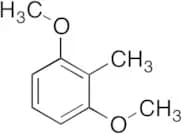
CAS:Controlled Product<p>Applications 2,6-Dimethoxytoluene is an organic synthesis intermediate.<br>References Liu, C., et al.: Bioorg. Med. Chem., 24, 4263 (2016); Della S., et al.: J. Org. Chem., 81, 5726 (2016); Zhang, M., et al.: Asian J. Org. Chem., 4, 1047 (2015); Peixoto, P. A., et al.: J. Am. Chem. Soc., 136, 15248 (2014)<br></p>Formula:C9H12O2Color and Shape:NeatMolecular weight:152.19N-(Methoxymethyl)-N-[(trimethylsilyl)methyl]benzenemethanamine (>90%)
CAS:Controlled Product<p>Applications N-(Methoxymethyl)-N-[(trimethylsilyl)methyl]benzenemethanamine is used in the synthesis of pyrrolidine derivatives as novel sodium channel blockers used to treat ischemic related ailments.<br>References Seki, M. et al.: Bioorg. Med. Chem. Lett., 23, 4230 (2013);<br></p>Formula:C13H23NOSiPurity:>90%Color and Shape:NeatMolecular weight:237.41(2S)-2-[[(phenylmethoxy)carbonyl]amino]-4-Pentenoic acid
CAS:Controlled Product<p>Applications (2S)-2-[[(phenylmethoxy)carbonyl]amino]-4-Pentenoic acid is a useful building block, and has been used in the regioselective preparation of nonracemic silylated amino acids.<br>References Marchand, D.; et al.: Eur. J. Org. Chem., 18, 3107 (2008).<br></p>Formula:C13H15NO4Color and Shape:NeatMolecular weight:249.26cis-1-Ethoxy-2-(tributylstannyl)ethene
CAS:Controlled Product<p>Applications cis-1-Ethoxy-2-(tributylstannyl)ethene is used in the synthesis of (+)-pleuromutilin (P610500), an antibiotic substance produced by the basidiomycetes Pleurotus mutilus.<br> Not a dangerous good if item is equal to or less than 1g/ml and there is less than 100g/ml in the package<br>References Fazakerley, N.J., et. al.: Chem. Eur. J., 19, 6718 (2013)<br></p>Formula:C16H34OSnColor and Shape:NeatMolecular weight:361.15Methyl β,β-Dimethoxypropionate
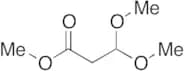
CAS:Controlled Product<p>Applications Methyl β,β-Dimethoxypropionate is used as a reactant in the preparation of tetrahydro-β-carboline derivatives as antitumor growth and metastasis agents.<br>References Zheng, C., et. al.: J. Med. Chem., 57, 600 (2014)<br></p>Formula:C6H12O4Color and Shape:NeatMolecular weight:148.16a-Hydroxy-4-(2-oxiranylmethoxy)-benzeneacetamide
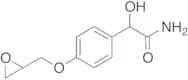
CAS:Controlled Product<p>Applications α-Hydroxy-4-(2-oxiranylmethoxy)-benzeneacetamide is an intermediate in the synthesis of hydroxyatenolol (H802480), which is a metabolite of Atenolol (A790075); a cardioselective β-adrenergic blocker, antihypertensive, antianginal, and antiarrhythmic (class II).<br>References Escher, B., et al.: Environ. Sci. Technol., 40, 7402 (2006); Caplar, V., et al.: Anal. Profiles Drug Subs., 13, 1 (1984)<br></p>Formula:C11H13NO4Color and Shape:Off-WhiteMolecular weight:223.23(Z)-2-(Methoxyimino)-3-oxo-butanoic Acid
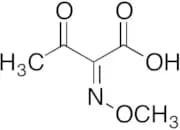
CAS:Controlled Product<p>Applications (Z)-2-(Methoxyimino)-3-oxo-butanoic Acid is an intermediate used in the synthesis of Cefotaxime Bromoacetyl Analogue (C242940), which is an impurity of Cefotaxime (C242950), a broad spectrum third generation cephalosporin antibiotic<br>References Wise, R., et al.: Antimicrob. Agents Chemother., 14, 807 (1978), Muhtadi, F.J., et al.: Anal. Profiles Drug Subs., 11, 139 (1982),<br></p>Formula:C5H7NO4Color and Shape:NeatMolecular weight:145.11Chloromethoxysulfonyl Chloride
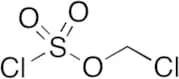
CAS:Controlled Product<p>Stability Moisture Sensitive<br>Applications Chloromethoxysulfonyl Chloride is a useful intermediate for organic synthesis. Chloromethoxysulfonyl Chloride is a useful reagent for the preparation of HIV-attachment inhibitor BMS-663068, and in the synthesis of water soluble benzimidazole derivatives useful for treatment of fasciolosis.<br>References Fox, R. J., et al.; Org. Process Res. Dev., 21, 1095 (2017); Flores-Ramos, M., et al.: Bioorg. Med. Chem. Lett., 24, 5814 (2014); Zheng, B., et al.: Org. Process Res. Dev., 16, 1827 (2012)<br></p>Formula:CH2Cl2O3SColor and Shape:NeatMolecular weight:164.996N-[2-[3,4-Bis(phenylmethoxy)phenyl]ethyl]-3,4,5-trimethoxybenzeneacetamide
CAS:Controlled Product<p>Applications N-[2-[3,4-Bis(phenylmethoxy)phenyl]ethyl]-3,4,5-trimethoxybenzeneacetamide is an intermediate used in the synthesis of S-(-)-Tretoquinol Hydrochloride (T798100), which belongs to the class of adrenergic inhalants, selective β-2-adrenoreceptor agonists. S-(-)-Tretoquinol is used in the treatment of obstructive airway diseases. S-(-)-Tretoquinol is a bronchodilator.<br>References Meshi, et al.: Biochem. Pharmacol., 19, 2937 (1970), Satoh, et al.: Chem. Pharm. Bull., 19, 667 (1971),<br></p>Formula:C33H35NO6Color and Shape:NeatMolecular weight:541.63Octadecyl Vinyl Ether
CAS:Formula:C20H40OPurity:>85.0%(GC)Color and Shape:White to Almost white powder to lumpMolecular weight:296.544-(Trifluoromethoxy)phenyl isocyanate
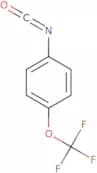
CAS:<p>4-(Trifluoromethoxy)phenyl isocyanate (4-TFPC) is a potent antagonist of the platelet P2Y12 receptor. It inhibits platelet aggregation and adhesion, as well as prevents the formation of blood clots. 4-TFPC has a low molecular weight and can be administered orally. It also has been shown to increase insulin sensitivity and reduce blood glucose levels in mice with type 2 diabetes. This antiplatelet agent binds to receptors on the surface of platelets, preventing activation. 4-TFPC is also an inhibitor of protein kinase C and phosphodiesterases, which are enzymes that regulate cell signalling pathways. In vitro studies have shown that 4-TFPC inhibits cycloheptyl (CPH)-induced aggregation in human platelets in a dose-dependent manner with an IC50 value of 0.5 μM.END></p>Formula:C8H4F3NO2Purity:Min. 95%Color and Shape:Colorless Clear LiquidMolecular weight:203.12 g/mol6-Methoxybenzothiazole-2-carboxylic acid
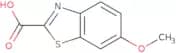
CAS:<p>6-Methoxybenzothiazole-2-carboxylic acid is a synthetic sulfur compound that is used in the synthesis of benzothiazines. It is also an intermediate in the biosynthesis of thiocyanate, a natural product that has been shown to have anti-inflammatory properties. 6-Methoxybenzothiazole-2-carboxylic acid has been shown to be highly efficient as a luciferin, and can be used in the production of bioluminescence. 6-Methoxybenzothiazole-2-carboxylic acid belongs to the family of benzothiazines, which are benzoquinones with two fused rings. Benzothiazines are found in marine natural products such as luciferins and some other nature products.</p>Formula:C9H7NO3SPurity:Min. 95%Color and Shape:PowderMolecular weight:209.22 g/mol3-Ethoxy-4-hydroxyphenylacetone
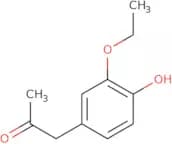
CAS:<p>3-Ethoxy-4-hydroxyphenylacetone is a fine chemical that can be used as a versatile building block and useful intermediate. It has a CAS number of 88659-82-9. 3-Ethoxy-4-hydroxyphenylacetone is a complex compound with many uses, such as research chemicals, reaction component, or speciality chemical. It is water soluble and has been shown to be non toxic. The purity of the product is high quality.</p>Formula:C11H14O3Purity:Min. 95%Molecular weight:194.23 g/mol4-Methyl-5,7-dimethoxycoumarin
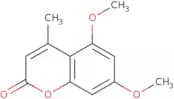
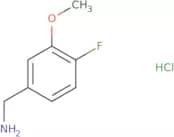
CAS:<p>4-Methyl-5,7-dimethoxycoumarin is a coumarin derivative that has been synthesized from acetonitrile and aluminium. It is used as an antiplatelet drug in the treatment of cardiovascular diseases such as unstable angina, myocardial infarction, and transient ischemic attack. 4-Methyl-5,7-dimethoxycoumarin reversibly inhibits platelet aggregation by blocking the platelet receptor P2Y12 on the surface of platelets. This drug also has antioxidant effects and can be used to identify markers associated with cardiovascular disease.</p>Formula:C12H12O4Purity:Min. 95%Molecular weight:220.22 g/mol4-Fluoro-3-methoxybenzylamine hydrochloride
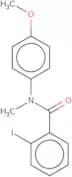
CAS:<p>4-Fluoro-3-methoxybenzylamine hydrochloride is a fine chemical that can be used as a building block in research, as a reagent in the synthesis of complex compounds, and as a versatile scaffold for the synthesis of natural products. This compound is an intermediate for the production of other pharmaceuticals and has been shown to be useful in the production of various drugs. It is also used as a reactant in organic chemistry reactions due to its high quality. 4-Fluoro-3-methoxybenzylamine hydrochloride has CAS No. 869296-41-3 and can be found on the Chemical Abstract Service (CAS) database.</p>Formula:C8H11ClFNOPurity:Min. 95%Molecular weight:191.63 g/mol2-Iodo-N-(4-methoxyphenyl)-N-methylbenzamide
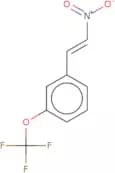
CAS:<p>2-Iodo-N-(4-methoxyphenyl)-N-methylbenzamide is a versatile building block that can be used in research and as a reagent. It is a high quality chemical and useful as a building block or intermediate for the synthesis of more complex compounds. This chemical is also a useful scaffold for the synthesis of more complex molecules.</p>Formula:C15H14INO2Purity:Min. 95%Molecular weight:367.18 g/mol1-(3-(Trifluoromethoxy)phenyl)-2-nitroethene
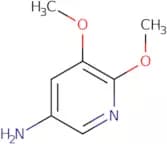
CAS:<p>1-(3-Trifluoromethoxy)phenyl)-2-nitroethene is a fluorinated aromatic compound that can be used as a building block for synthesis of pharmaceuticals, research chemicals, and other specialty chemicals. It is an intermediate that can be used in the production of other compounds. This compound may be used in pharmaceuticals to treat bacterial infections and inflammatory diseases. 1-(3-Trifluoromethoxy)phenyl)-2-nitroethene may also be utilized as a reaction component for synthesizing other organic compounds. It is soluble in solvents such as benzene, ether, chloroform, and acetone.</p>Formula:C9H6F3NO3Purity:Min. 95%Molecular weight:233.14 g/mol5,6-Dimethoxypyridin-3-amine
CAS:<p>5,6-Dimethoxypyridin-3-amine is an organic compound with the formula CHN. It is a versatile building block in organic chemistry. 5,6-Dimethoxypyridin-3-amine can be used as a reagent in the synthesis of other compounds or as a reactant to form new compounds. 5,6-Dimethoxypyridin-3-amine is soluble in organic solvents and reacts with most common electrophiles to give substituted products. 5,6-Dimethoxypyridin-3-amine has been found to be useful as an intermediate in the synthesis of a variety of natural products and pharmaceuticals.</p>Formula:C7H10N2O2Purity:Min. 95%Color and Shape:Purple PowderMolecular weight:154.17 g/mol4,4'-Bis(methoxycarbonyl)-2,2'-bipyridine
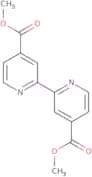
CAS:<p>4,4'-Bis(methoxycarbonyl)-2,2'-bipyridine is a ligand that can be used in cross-coupling reactions. It has been shown to bind to metal ions and form complexes with the ligands. 4,4'-Bis(methoxycarbonyl)-2,2'-bipyridine has a constant value for maximizing the yield of the reaction and is luminescent. This product also has photophysical properties that allow it to be utilized in voltammetry studies. The transfer of this product can be optimized by using chromophores or catalysis. 4,4'-Bis(methoxycarbonyl)-2,2'-bipyridine provides a means for cross-coupling reactions using electrochemical studies and dichroism.</p>Formula:C14H12N2O4Purity:Min. 95%Color and Shape:PowderMolecular weight:272.26 g/mol


![N-(Methoxymethyl)-N-[(trimethylsilyl)methyl]benzenemethanamine (>90%)](/_next/image/?url=https%3A%2Fstatic.cymitquimica.com%2Fproducts%2FTR%2Fthumb-webp%2FM264620.webp&w=3840&q=75)
![(2S)-2-[[(phenylmethoxy)carbonyl]amino]-4-Pentenoic acid](/_next/image/?url=https%3A%2Fstatic.cymitquimica.com%2Fproducts%2FTR%2Fthumb-webp%2FP228100.webp&w=3840&q=75)

![N-[2-[3,4-Bis(phenylmethoxy)phenyl]ethyl]-3,4,5-trimethoxybenzeneacetamide](/_next/image/?url=https%3A%2Fstatic.cymitquimica.com%2Fproducts%2FTR%2Fthumb-webp%2FB521325.webp&w=3840&q=75)