Ethers
Ethers are organic compounds containing an ether functional group, characterized by an oxygen atom bonded to two hydrocarbon radicals. These compounds are valuable in synthesis and serve as solvents in various chemical reactions. At CymitQuimica, we offer a selection of high-quality ethers to support your research and industrial applications, ensuring reliable and effective results. Our range of ethers meets diverse laboratory requirements, from routine experiments to advanced research.
Found 40729 products of "Ethers"
Sort by
Purity (%)
0
100
|
0
|
50
|
90
|
95
|
100
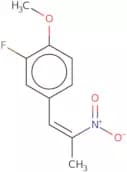
1-(3-Fluoro-4-methoxyphenyl)-2-nitropropene
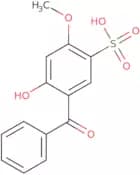
CAS:<p>1-(3-Fluoro-4-methoxyphenyl)-2-nitropropene is a chemical compound with the molecular formula CHNO. It is a high quality reagent that is useful for preparing complex compounds, scaffolds and building blocks for use in research and development. 1-(3-Fluoro-4-methoxyphenyl)-2-nitropropene is a fine chemical that can be used as a versatile building block in reactions.</p>Formula:C10H10FNO3Purity:Min. 95%Molecular weight:211.19 g/mol2-Hydroxy-4-methoxybenzophenone-5-sulfonic acid
CAS:<p>2-Hydroxy-4-methoxybenzophenone-5-sulfonic acid is a diazonium salt that can be used as a reference standard to measure the microbial metabolism of aromatic compounds. It is stable in air and light, but can undergo photolysis in solution. The monosodium salt form of 2-hydroxy-4-methoxybenzophenone-5-sulfonic acid has been shown to have acute toxicities for fish, rats and rabbits. This compound also has photochemical properties that make it useful for surface methodology, such as determining the degree of hydrophobicity of various types of surfaces. Hydrochloric acid is needed for the preparation of this compound.</p>Formula:C14H12O6SPurity:Min. 95%Color and Shape:White To Yellow SolidMolecular weight:308.31 g/mol5-Acetoxy-6-methoxyindole
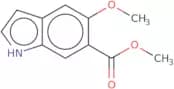
CAS:<p>5-Acetoxy-6-methoxyindole is a fine chemical, useful building block, and research chemical with CAS No. 112919-69-4. It is a versatile building block and reaction component that can be used as a reagent or speciality chemical in the synthesis of other complex compounds. 5-Acetoxy-6-methoxyindole is also used as an intermediate in the synthesis of drugs and pharmaceuticals. This compound has high purity, making it a high quality product with many uses.</p>Formula:C11H11NO3Purity:Min. 95%Molecular weight:205.21 g/molMethyl 2,6-dimethoxybenzoate
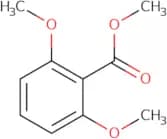
CAS:<p>Methyl 2,6-dimethoxybenzoate is a synthetic compound with a crystalline structure. It has been used as an antidepressant agent in clinical studies. Methyl 2,6-dimethoxybenzoate binds to the serotonin transporter and inhibits serotonin uptake. This molecule can also inhibit the reuptake of dopamine and norepinephrine by binding to their respective transporters. The compound has been shown to be effective in the treatment of depressive disorders in mice; however, it is not yet approved for use in humans.<br>Methyl 2,6-dimethoxybenzoate is a stereoselective biphenyl that can be oriented so that its methyl group is oriented towards two hydrogen atoms on the opposite side of the plane of symmetry. This asymmetric orientation allows methyl 2,6-dimethoxybenzoate to show different properties depending on which side of the molecule interacts with other molecules. For example, when methyl 2,6-dimeth</p>Formula:C10H12O4Purity:Min. 95%Molecular weight:196.2 g/molN-(4-Methoxyphenyl)ethane-1,2-diamine
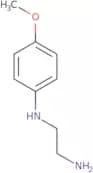
CAS:<p>N-(4-Methoxyphenyl)ethane-1,2-diamine is a synthetic compound that has been shown to inhibit the activity of cathepsins. It can be used in the treatment of diseases caused by these enzymes, such as osteoarthritis and Alzheimer's disease. N-(4-Methoxyphenyl)ethane-1,2-diamine has a pharmacokinetic profile that is favorable for oral administration. The drug is absorbed from the gastrointestinal tract readily and undergoes extensive metabolism in the liver. This process leads to the formation of active metabolites which are excreted in urine or bile. N-(4-Methoxyphenyl)ethane-1,2-diamine also inhibits nitroalkanes with activated aromatic rings, such as 4-nitrobenzaldehyde and 2,4,6-trinitrobenzene.</p>Formula:C9H14N2OPurity:Min. 95%Color and Shape:Slightly Yellow PowderMolecular weight:166.22 g/molN-Benzyl-N-(2-ethoxyphenoxy)ethylamine
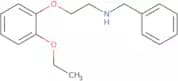
CAS:<p>N-Benzyl-N-(2-ethoxyphenoxy)ethylamine is a fine chemical that belongs to the category of building blocks and research chemicals. It is a versatile intermediate that can be used in the synthesis of a wide range of compounds. This compound has been shown to be useful as a reaction component and scaffold for the construction of complex organic molecules. It has also been used as an intermediate in the synthesis of high quality speciality chemicals.</p>Formula:C17H21NO2Purity:Min. 95%Color and Shape:PowderMolecular weight:271.35 g/mol4-Difluoromethoxyaniline
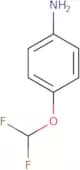
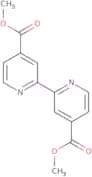
CAS:<p>4-Difluoromethoxyaniline is an allosteric modulator for glutamate receptors. It is a chemical compound that can be used to modify glutamate receptors to act as either metabotropic or ionotropic. 4-Difluoromethoxyaniline is used in the treatment of Parkinson's disease and other movement disorders, such as dyskinesia. It has been shown that 4-difluoromethoxyaniline increases the activity of activated glutamate receptors, which leads to increased levels of the neurotransmitter dopamine in the brain. This drug may also inhibit nitric oxide production and corticotropin-releasing hormone (CRH) synthesis.</p>Formula:C7H7F2NOPurity:Min. 95%Molecular weight:159.13 g/mol4,4'-Bis(methoxycarbonyl)-2,2'-bipyridine
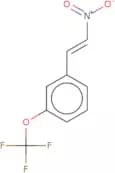
CAS:<p>4,4'-Bis(methoxycarbonyl)-2,2'-bipyridine is a ligand that can be used in cross-coupling reactions. It has been shown to bind to metal ions and form complexes with the ligands. 4,4'-Bis(methoxycarbonyl)-2,2'-bipyridine has a constant value for maximizing the yield of the reaction and is luminescent. This product also has photophysical properties that allow it to be utilized in voltammetry studies. The transfer of this product can be optimized by using chromophores or catalysis. 4,4'-Bis(methoxycarbonyl)-2,2'-bipyridine provides a means for cross-coupling reactions using electrochemical studies and dichroism.</p>Formula:C14H12N2O4Purity:Min. 95%Color and Shape:PowderMolecular weight:272.26 g/mol1-(3-(Trifluoromethoxy)phenyl)-2-nitroethene
CAS:<p>1-(3-Trifluoromethoxy)phenyl)-2-nitroethene is a fluorinated aromatic compound that can be used as a building block for synthesis of pharmaceuticals, research chemicals, and other specialty chemicals. It is an intermediate that can be used in the production of other compounds. This compound may be used in pharmaceuticals to treat bacterial infections and inflammatory diseases. 1-(3-Trifluoromethoxy)phenyl)-2-nitroethene may also be utilized as a reaction component for synthesizing other organic compounds. It is soluble in solvents such as benzene, ether, chloroform, and acetone.</p>Formula:C9H6F3NO3Purity:Min. 95%Molecular weight:233.14 g/mol[3-Methyl-4-(2,2,2-trifluoro-ethoxy)-pyridin-2-yl]-methanol
CAS:[3-Methyl-4-(2,2,2-trifluoro-ethoxy)-pyridin-2-yl]-methanol is a synthetic organic compound that is used in the synthesis of other organic compounds. It can be purified by filtration or gasification and recrystallization.Purity:Min. 95%Color and Shape:PowderEthoxydiphenylphosphine
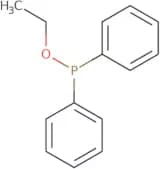
CAS:<p>Ethoxydiphenylphosphine is a synthetic compound that belongs to the group of phosphite compounds. It has been synthesized by reacting phenyl groups with trifluoroacetic acid, which gives unstable and reactive intermediate phosphonium salts. The more stable phenoxyethylphosphine can be obtained by reacting the hydroxyl group in the phosphonium salt with phosphorus pentoxide. Ethoxydiphenylphosphine has been used as a ligand for metal ions, such as copper and nickel. It also reacts with chloride to form a chelate ring, which makes it an excellent nucleophile.</p>Formula:C14H15OPPurity:Min. 95%Color and Shape:Colorless PowderMolecular weight:230.24 g/mol2-Chloro-4-(trifluoromethoxy)aniline
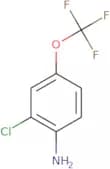
CAS:<p>2-Chloro-4-(trifluoromethoxy)aniline is a chemical reagent that is used in organic synthesis. It has a variety of uses including as a building block for complex compounds, an intermediate for the synthesis of other chemicals, and a reagent for the production of pharmaceuticals. 2-Chloro-4-(trifluoromethoxy)aniline is also useful in research to study the mechanism of certain reactions. The high quality and versatility of this compound make it a speciality chemical with many applications.</p>Formula:C7H5ClF3NOMolecular weight:211.57 g/mol7-Carbethoxyamino-4-methylcoumarin
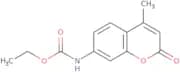
CAS:<p>7-Carbethoxyamido-4-methylcoumarin is a aminocoumarin that exhibits anticancer activity. It is able to inhibit the activity of DPP-IV, an enzyme that degrades insulin in the body.<br>7-Carbethoxyamido-4-methylcoumarin has been shown to inhibit cancer cells and lung cancer cell lines, as well as breast cancer cells and cells with diabetes. This compound has also been shown to have anticancer activity in vivo in rats.</p>Formula:C13H13NO4Purity:Min. 90%Color and Shape:PowderMolecular weight:247.25 g/mol(Z)-2-(5-Amino-1,2,4-thiadiazol-3-yl)-2-(ethoxyimino)acetic acid
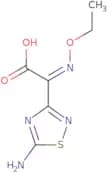
CAS:<p>(Z)-2-(5-Amino-1,2,4-thiadiazol-3-yl)-2-(ethoxyimino)acetic acid is a synthetic compound that can be used as an antibiotic. It is synthesized from acetonitrile and phosphorus oxychloride in the presence of hydroxyl groups. This reaction yields a mixture of amides and cyanoacetamide derivatives. The amides are then converted to their respective alkyl chlorides with methyl iodide, which are then reacted with dimethyl acetylenedicarboxylate to form the desired product. The final step is to hydrolyze the ester group with hydrochloric acid to yield (Z)-2-(5-amino-1,2,4-thiadiazol-3-yl)-2-(ethoxyimino)acetic acid. This chemical has been shown to have antibacterial properties against some strains of bacteria such as</p>Formula:C6H8N4O3SPurity:Min. 95%Color and Shape:PowderMolecular weight:216.22 g/molN-Ethyl-N-(2-hydroxy-3-sulfopropyl)-3,5-dimethoxyaniline sodium salt
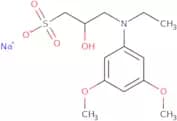
CAS:<p>N-Ethyl-N-(2-hydroxy-3-sulfopropyl)-3,5-dimethoxyaniline sodium salt is an antioxidant that has been shown to have antiviral properties. This drug has been found to be a potent inhibitor of HIV replication in wild type mice and was able to inhibit the virus in human serum. The mechanism by which this drug inhibits the virus is not known, but it may be due to its ability to scavenge free radicals and protect cells against oxidative stress. Studies have also shown that this drug can increase the activity of antioxidant enzymes such as superoxide dismutase, catalase, and glutathione reductase. It has also been found to decrease lipoprotein lipase activity in vitro. These effects are thought to be due to the ability of this drug to bind with proteins and lipids on cell membranes and prevent them from being oxidized. Clinical trials have shown that N-Ethyl-N-(2</p>Formula:C13H20NO6S·NaPurity:Min. 98 Area-%Color and Shape:White PowderMolecular weight:341.36 g/molEthyl 3,3-diethoxypropionate
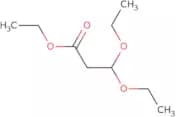
CAS:<p>Ethyl 3,3-diethoxypropionate is an organic compound that is synthesized from the reaction of diethyl malonate and chloroacetic acid in the presence of a base catalyst. This product has been shown to be an effective inhibitor of mitochondrial cytochrome c oxidase in vitro studies. Ethyl 3,3-diethoxypropionate also has been found to inhibit quinoline derivatives, such as erythromycin and tetracycline, which are involved in bacterial DNA synthesis. Furthermore, this product inhibits β-unsaturated aldehydes and allylation.</p>Formula:C9H18O4Purity:Min. 95%Color and Shape:Colorless Clear LiquidMolecular weight:190.24 g/molOctadecyl Vinyl Ether
CAS:Formula:C20H40OPurity:>85.0%(GC)Color and Shape:White to Almost white powder to lumpMolecular weight:296.541-Cyclopropyl-6,7-difluoro-1,4-dihydro-8-methoxy-4-oxo-3-quinolinecarboxylic acid
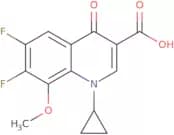
CAS:<p>Moxifloxacin is an analog of the antibiotic quinolone. It is a prodrug that is hydrolyzed in vivo to its active form, moxifloxacin. Moxifloxacin has been shown to be effective against a variety of bacteria, including methicillin-resistant Staphylococcus aureus (MRSA), Mycobacterium tuberculosis and Mycobacterium avium complex. The reaction yield for the synthesis of moxifloxacin is very high, with an industrial production capacity in excess of 500 tons per year. Impurities are not usually found in the final product due to the use of methyl alcohol as a solvent during the reaction process. The drug has discoloring properties and deuterium atoms are often substituted for hydrogen atoms on the molecule to make it more stable. Deuterium atoms can be easily identified by mass spectrometry analysis. Moxifloxac</p>Formula:C14H11F2NO4Purity:Min. 95%Color and Shape:PowderMolecular weight:295.24 g/molReserpiline
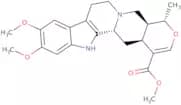
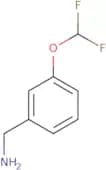
CAS:<p>Methyl (3beta,19alpha,20alpha)-16,17-didehydro-10,11-dimethoxy-19-methyloxayohimban-16-carboxylate is a trifluoroacetate ester of apocynin. It is used to treat bowel disease by reducing inflammation and stimulating the growth of new cells in the epithelium. Apocynin has been shown to inhibit the release of inflammatory cytokines such as epidermal growth factor (EGF) in vitro. In vivo studies have shown that it reduces symptoms of bowel disease and prevents ulceration. Apocynin has been shown to be a potent analog for EGF and has been studied for its potential use in the treatment of cancer. However, it has also been found to cause psychosis when administered at high doses. The toxicity studies on apocynin show that it is not toxic at lower doses but becomes more toxic at higher doses due</p>Formula:C23H28N2O5Purity:Min. 95%Color and Shape:PowderMolecular weight:412.48 g/mol3-(Difluoromethoxy)benzyl amine
CAS:<p>3-(Difluoromethoxy)benzyl amine is a high-quality reagent that is used as an intermediate in the synthesis of complex compounds. 3-(Difluoromethoxy)benzyl amine is also a useful building block for the synthesis of speciality chemicals and research chemicals. This compound can be used as a versatile building block, which can be used to synthesize different functional groups. 3-(Difluoromethoxy)benzyl amine is soluble in many organic solvents and has a boiling point of 193 °C.</p>Formula:C8H9F2NOPurity:Min. 95%Molecular weight:173.16 g/mol

![[3-Methyl-4-(2,2,2-trifluoro-ethoxy)-pyridin-2-yl]-methanol](/_next/image/?url=https%3A%2Fstatic.cymitquimica.com%2Fproducts%2F3D%2Fthumb-webp%2FFM38829.webp&w=3840&q=75)