Ethers
Ethers are organic compounds containing an ether functional group, characterized by an oxygen atom bonded to two hydrocarbon radicals. These compounds are valuable in synthesis and serve as solvents in various chemical reactions. At CymitQuimica, we offer a selection of high-quality ethers to support your research and industrial applications, ensuring reliable and effective results. Our range of ethers meets diverse laboratory requirements, from routine experiments to advanced research.
Found 40729 products of "Ethers"
Sort by
Purity (%)
0
100
|
0
|
50
|
90
|
95
|
100
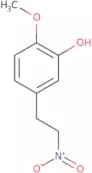
1-(3-Hydroxy-4-methoxyphenyl)-2-nitroethane
CAS:<p>1-(3-Hydroxy-4-methoxyphenyl)-2-nitroethane is a chemical intermediate that can be used in the synthesis of other compounds. It is a fine chemical with many potential uses, as well as being a versatile building block for organic synthesis. As an example, 1-(3-Hydroxy-4-methoxyphenyl)-2-nitroethane can be used to synthesize the drug erythromycin. This chemical has been shown to have antihistamine and antiinflammatory properties.</p>Formula:C9H11NO4Purity:Min. 95%Molecular weight:197.19 g/mol6-Amino-5(2,2-diethoxyethyl)-4-hydroxy pyrimidine
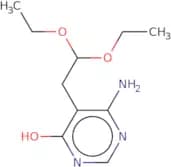
CAS:<p>6-Amino-5(2,2-diethoxyethyl)-4-hydroxy pyrimidine is a reagent that is used in the synthesis of various chemical substances. It is a versatile building block and can be used as an intermediate for the production of fine chemicals. 6-Amino-5(2,2-diethoxyethyl)-4-hydroxy pyrimidine has been shown to have high reactivity and selectivity, making it a useful scaffold for organic synthesis. This compound can be used as an intermediate for the production of complex compounds such as pharmaceuticals, agrochemicals, or perfumes. 6-Amino-5(2,2-diethoxyethyl)-4-hydroxy pyrimidine is also known to be useful in research fields such as biology and medicine.</p>Formula:C10H17N3O3Purity:Min. 95%Color and Shape:White PowderMolecular weight:227.26 g/mol6-Methoxy-1-methyl-1H-indole-3-carbaldehyde
CAS:6-Methoxy-1-methyl-1H-indole-3-carbaldehyde is a high quality chemical that is used as a reagent, complex compound, useful intermediate, and speciality chemical. It is a fine chemical that has been shown to be useful as a building block in the synthesis of many other compounds. 6-Methoxy-1-methyl-1H-indole-3-carbaldehyde is also versatile and can be used in reactions involving nucleophilic substitution, reductive amination, and oxidative coupling.Formula:C11H11NO2Purity:Min. 95%Color and Shape:White PowderMolecular weight:189.21 g/molMethyl 2,6-dimethoxybenzoate
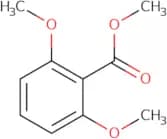
CAS:<p>Methyl 2,6-dimethoxybenzoate is a synthetic compound with a crystalline structure. It has been used as an antidepressant agent in clinical studies. Methyl 2,6-dimethoxybenzoate binds to the serotonin transporter and inhibits serotonin uptake. This molecule can also inhibit the reuptake of dopamine and norepinephrine by binding to their respective transporters. The compound has been shown to be effective in the treatment of depressive disorders in mice; however, it is not yet approved for use in humans.<br>Methyl 2,6-dimethoxybenzoate is a stereoselective biphenyl that can be oriented so that its methyl group is oriented towards two hydrogen atoms on the opposite side of the plane of symmetry. This asymmetric orientation allows methyl 2,6-dimethoxybenzoate to show different properties depending on which side of the molecule interacts with other molecules. For example, when methyl 2,6-dimeth</p>Formula:C10H12O4Purity:Min. 95%Molecular weight:196.2 g/mol2-(2-Methoxyphenoxy)Benzoic Acid
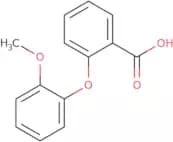
CAS:<p>2-(2-Methoxyphenoxy)benzoic acid is an organic compound that can be synthesized in the laboratory. It has been shown to dimerize spontaneously in aqueous solutions with the release of hydrogen peroxide and oxygen. The mechanism is thought to involve oxidative dimerization, which may lead to carboxylate bond cleavage, intramolecular radical formation, or mechanistically radical attack. This process also results in the formation of a 2-methoxyphenoxy radical.</p>Formula:C14H12O4Purity:Min. 95%Color and Shape:PowderMolecular weight:244.24 g/mol2-Bromo-3-methoxypyrazine
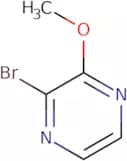
CAS:2-Bromo-3-methoxypyrazine is a chemical compound that is used as a precursor in the biosynthesis of geosmin. Geosmin, also known as 2-methylisoborneol or 2-MIB, is a volatile organic compound which has a musty or earthy smell. It is produced by some species of bacteria, including Myxobacterium and Chondromyces crocatus. It can be found in soil and water samples from areas with high levels of organic matter. 2-Bromo-3-methoxypyrazine was first isolated from cultures of M. crocatus in 1950. It can be synthesized from 3,4,5-trimethoxybenzaldehyde via bromination followed by reduction with sodium hydrosulfide. This process creates an intermediate called 2-(2'-bromoethyl)pyrazine, which undergoes methylation to create 2Formula:C5H5BrN2OPurity:Min. 95%Color and Shape:White Off-White PowderMolecular weight:189.01 g/mol8-Methoxycarbonyloctanol
CAS:<p>8-Methoxycarbonyloctanol (8MCO) is a fatty acid molecule that has been shown to have significant inhibitory activities against Streptococcus pneumoniae in human serum. 8MCO is a synthetic molecule that can be synthesized from galactose and chloride. It has been found to have a molecular weight of 190.08 g/mol, melting point of -2°C, and boiling point of 217°C at 1 mmHg. 8MCO is soluble in water, methanol, and ethanol. This molecule can be used as an analytical tool for the detection of fatty acids by gas chromatography-mass spectrometry (GC-MS). It also exhibits enzymatic activity when incorporated into enzyme preparations such as esterases and lipases. 8MCO contains functional groups such as carbonyl (-CO), hydroxyl (-OH), carboxylic acid (-COOH), ether (-O-) and alcohol (-</p>Formula:C10H20O3Purity:Min. 95%Color and Shape:Clear LiquidMolecular weight:188.26 g/mol3-Methacryloxypropyltrimethoxysilane
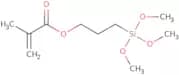
CAS:<p>3-Methacryloxypropyltrimethoxysilane is a silane that has been modified with an acrylic group. It is used as an additive for the production of coatings, adhesives, and sealants. 3-Methacryloxypropyltrimethoxysilane is resistant to hydrochloric acid and other chemicals. It is also stable in water and light exposure. This product has shown to have high adsorption properties, which may be due to its hydroxyl groups. 3-Methacryloxypropyltrimethoxysilane has also been shown to have coupling properties that are advantageous for use with polymers and plastics.</p>Formula:C10H20O5SiPurity:Min. 95%Color and Shape:Colorless Clear LiquidMolecular weight:248.35 g/mol2',4-Dihydroxy-3-methoxychalcone
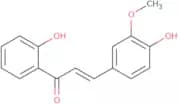
CAS:<p>2',4-Dihydroxy-3-methoxychalcone is a chalcone that has been shown to have reactive properties. The compound was found to be cytotoxic to cancer cells in the presence of neutrophils, and it has been shown to inhibit the growth of t47d cells in culture. There is also evidence that 2',4-Dihydroxy-3-methoxychalcone may help regulate the microflora in the gut, which may help prevent obesity and diabetes. In epidemiological studies, 2',4-Dihydroxy-3-methoxychalcone was found to be protective against cancer, but more research is required.</p>Formula:C16H14O4Purity:Min. 95%Color and Shape:PowderMolecular weight:270.28 g/mol4-Methyl-5,7-dimethoxycoumarin
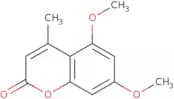
CAS:<p>4-Methyl-5,7-dimethoxycoumarin is a coumarin derivative that has been synthesized from acetonitrile and aluminium. It is used as an antiplatelet drug in the treatment of cardiovascular diseases such as unstable angina, myocardial infarction, and transient ischemic attack. 4-Methyl-5,7-dimethoxycoumarin reversibly inhibits platelet aggregation by blocking the platelet receptor P2Y12 on the surface of platelets. This drug also has antioxidant effects and can be used to identify markers associated with cardiovascular disease.</p>Formula:C12H12O4Purity:Min. 95%Molecular weight:220.22 g/mol6-Ethoxypurine
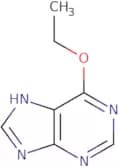
CAS:<p>6-Ethoxypurine is a nucleoside analog that inhibits the enzyme ribonucleotide reductase, which converts ribonucleotides to deoxyribonucleotides. It is used in cell culture to measure the effects of radiation and hydrochloric acid on the production of ATP. 6-Ethoxypurine has been shown to inhibit influenza virus replication with an IC50 of 10 μM. This compound has reactive hydroxyl groups that allow it to participate in hydrogen bonding, which can be beneficial for interactions with other molecules. 6-Ethoxypurine also exhibits nucleophilic properties, which allows it to react with other chemical species and can be useful for generating new chemical compounds.</p>Formula:C7H8N4OPurity:Min. 95%Color and Shape:PowderMolecular weight:164.16 g/mol4-Fluoro-3-methoxytoluene
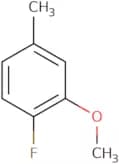
CAS:<p>4-Fluoro-3-methoxytoluene (4FMET) is a polymeric organic compound that has an index of refraction of 1.5. It is soluble in common solvents, such as chloroform, acetone and ethanol, but insoluble in water. 4FMET can be used as a copolymerization additive to improve the chemical stability of polymers and plastics. It also has antibacterial properties that are due to its ability to disrupt bacterial membranes and inhibit protein synthesis. 4FMET is FDA approved for use in ophthalmic solutions that transmit ultraviolet light, such as UV-A or UV-B radiation.</p>Formula:C8H9FOPurity:Min. 95%Color and Shape:Clear LiquidMolecular weight:140.15 g/mol2-Cyanoethyltriethoxysilane
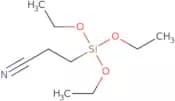
CAS:<p>2-Cyanoethyltriethoxysilane is a cross-linking agent that is used in coatings and adhesives. It has been shown to have an adsorption mechanism that is dependent on the pH of the solution, with a maximum adsorption at pH 3.2 and a minimum at pH 11. The rate of adsorption is also dependent on the concentration of 2-cyanoethyltriethoxysilane, with higher concentrations leading to faster adsorption rates. Kinetic data for 2-cyanoethyltriethoxysilane has been shown using gravimetric analysis to show that it has an adsorption rate constant of 1.0 × 10^4 s^(-1) at pH 3.2 and 6.5 × 10^4 s^(-1) at pH 11, which are independent of the concentration of this molecule in solution. Pluronic P123 was used as a model polymer</p>Formula:C9H19NO3SiPurity:Min. 97 Area-%Color and Shape:PowderMolecular weight:217.34 g/mol2-Amino-4,5-dimethoxybenzamide
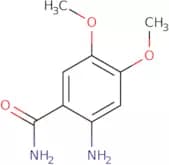
CAS:<p>2-Amino-4,5-dimethoxybenzamide is an anticancer agent that inhibits the epidermal growth factor receptor tyrosine kinase. It binds to the linker region of the epidermal growth factor receptor and prevents autophosphorylation. 2-Amino-4,5-dimethoxybenzamide has shown in vitro cytotoxic activity against testicular cancer cells and acute lymphoblastic leukemia cells. 2-Amino-4,5-dimethoxybenzamide is a synthetic compound that has been shown to have bioisosteric properties with other growth factors such as epidermal growth factor.</p>Formula:C9H12N2O3Purity:Min. 95%Color and Shape:PowderMolecular weight:196.2 g/mol1-Bromo-2-chloro-4-methoxybenzene
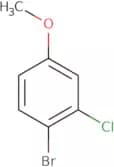
CAS:<p>1-Bromo-2-chloro-4-methoxybenzene is a polychlorinated bromoarene. It is used as a precursor to produce the hydroxamic acid, 1-bromo-2,4-dichlorobenzene. This compound has been shown to be a powerful inhibitor of bacterial growth in activated sludge and soil bacteria. It also inhibits plant growth and has been used as an herbicide. The synthesis of this compound starts with acetonitrile and phenol, which are heated together to produce the desired product in high yields. The solvents are then removed by vacuum distillation or crystallization.</p>Formula:C7H6BrClOPurity:Min. 95%Molecular weight:221.48 g/mol6-Methoxybenzothiazole-2-carboxylic acid
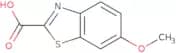
CAS:<p>6-Methoxybenzothiazole-2-carboxylic acid is a synthetic sulfur compound that is used in the synthesis of benzothiazines. It is also an intermediate in the biosynthesis of thiocyanate, a natural product that has been shown to have anti-inflammatory properties. 6-Methoxybenzothiazole-2-carboxylic acid has been shown to be highly efficient as a luciferin, and can be used in the production of bioluminescence. 6-Methoxybenzothiazole-2-carboxylic acid belongs to the family of benzothiazines, which are benzoquinones with two fused rings. Benzothiazines are found in marine natural products such as luciferins and some other nature products.</p>Formula:C9H7NO3SPurity:Min. 95%Color and Shape:PowderMolecular weight:209.22 g/mol2-Difluoromethoxyphenylboronic acid pinacol ester
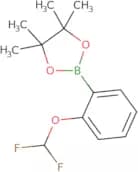
CAS:<p>2-Difluoromethoxyphenylboronic acid pinacol ester is a high quality reagent that can be used as a useful intermediate, fine chemical, or speciality chemical in reactions. This compound is an important building block for synthesizing other chemicals and can also be used to make novel compounds with pharmaceutical properties. 2-Difluoromethoxyphenylboronic acid pinacol ester is versatile and can be used in many different reactions. It has been reported to react with various other molecules to form new scaffolds and building blocks for use in organic synthesis.</p>Formula:C13H17BF2O3Purity:Min. 95%Color and Shape:PowderMolecular weight:270.08 g/mol2,4-Dimethoxy-5-methylbenzyl alcohol
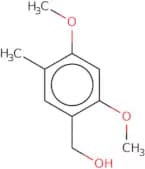
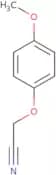
CAS:<p>2,4-Dimethoxy-5-methylbenzyl alcohol is a high quality chemical that is used as an intermediate for the synthesis of complex compounds. It has been used as a reagent and as a building block for the synthesis of other chemicals. This compound can be used to produce fine chemicals and research chemicals. 2,4-Dimethoxy-5-methylbenzyl alcohol has been shown to be useful in the production of versatile building blocks and reaction components.</p>Formula:C10H14O3Purity:Min. 95%Molecular weight:182.22 g/mol2-(4-Methoxyphenoxy)acetonitrile
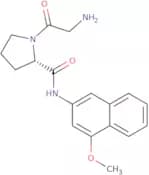
CAS:<p>2-(4-Methoxyphenoxy)acetonitrile is a chemical compound that is used to synthesize acetobromoglucose. It undergoes transformation and condensation reactions with acetobromoglucose to form 4-methoxyaceto bromoglucose.</p>Formula:C9H9NO2Purity:Min. 95%Molecular weight:163.17 g/molGly-pro-4-methoxy-beta-naphthylamide
CAS:<p>Gly-pro-4-methoxy-beta-naphthylamide is a synthetic substrate that is used to measure the activity of human plasma phosphatases. Gly-pro-4-methoxy-beta-naphthylamide is synthesized in an organic solvent and then reacted with diazonium salt to form a glycosylated aminophosphonic acid. The product is purified by chromatography and identified by mass spectrometry. Gly-pro-4-methoxy beta naphthylamide has been shown to inhibit the growth of cancer cells in vitro, as well as having antiinflammatory properties. This drug also has been shown to be effective in treating patients with severe hyperbilirubinemia who are undergoing hematopoietic stem cell transplantation.</p>Formula:C18H21N3O3Purity:Min. 95%Molecular weight:327.38 g/mol