Ethers
Ethers are organic compounds containing an ether functional group, characterized by an oxygen atom bonded to two hydrocarbon radicals. These compounds are valuable in synthesis and serve as solvents in various chemical reactions. At CymitQuimica, we offer a selection of high-quality ethers to support your research and industrial applications, ensuring reliable and effective results. Our range of ethers meets diverse laboratory requirements, from routine experiments to advanced research.
Found 40729 products of "Ethers"
Sort by
Purity (%)
0
100
|
0
|
50
|
90
|
95
|
100
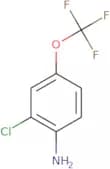
2-Chloro-4-(trifluoromethoxy)aniline
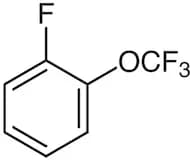
CAS:<p>2-Chloro-4-(trifluoromethoxy)aniline is a chemical reagent that is used in organic synthesis. It has a variety of uses including as a building block for complex compounds, an intermediate for the synthesis of other chemicals, and a reagent for the production of pharmaceuticals. 2-Chloro-4-(trifluoromethoxy)aniline is also useful in research to study the mechanism of certain reactions. The high quality and versatility of this compound make it a speciality chemical with many applications.</p>Formula:C7H5ClF3NOMolecular weight:211.57 g/mol1-Fluoro-2-(trifluoromethoxy)benzene
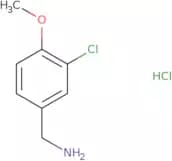
CAS:Formula:C7H4F4OPurity:>98.0%(GC)Color and Shape:Colorless to Almost colorless clear liquidMolecular weight:180.103-Chloro-4-methoxybenzylamine hydrochloride
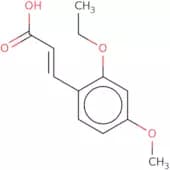
CAS:<p>3-Chloro-4-methoxybenzylamine hydrochloride is a quinoline derivative that inhibits the activity of phosphodiesterase 5, an enzyme that breaks down cGMP in the brain. This drug has been shown to increase levels of cGMP and decrease levels of low energy (i.e., low ATP) in synaptosomes. 3-Chloro-4-methoxybenzylamine hydrochloride may be useful for the treatment of Alzheimer's disease, as it has been shown to improve cognitive function and memory in animal models. The mechanism of action is not fully understood but may involve inhibition of cholinergic neurotransmission or activation of nitric oxide synthase.</p>Formula:C8H10ClNO•HClPurity:Min. 95%Color and Shape:PowderMolecular weight:208.08 g/mol2-Ethoxy-4-methoxycinnamic acid
CAS:<p>2-Ethoxy-4-methoxycinnamic acid is a synthetic chemical with the CAS number 1372859-34-1. It is a versatile building block that can be used for the synthesis of many complex compounds. 2-Ethoxy-4-methoxycinnamic acid is one of a number of scaffolds that are useful for creating fine chemicals and research chemicals. This compound is also an intermediate in many reactions and can be used as a reagent to produce other substances.</p>Formula:C12H14O4Purity:Min. 95%Molecular weight:222.24 g/mol4-Methoxy-2-methylphenylacetone
CAS:<p>4-Methoxy-2-methylphenylacetone (4MMPA) is a reagent that is used as an intermediate for the synthesis of high quality fine chemicals. It is also a useful scaffold and building block in organic synthesis. 4MMPA is a versatile building block, which can be used in the synthesis of speciality chemicals, research chemicals, and reaction components. 4MMPA has CAS number 16882-24-9.</p>Formula:C11H14O2Purity:Min. 95%Molecular weight:178.23 g/mol1-(5-Chloro-2-methoxyphenyl)piperazine HCl
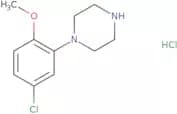
CAS:Controlled Product<p>1-(5-Chloro-2-methoxyphenyl)piperazine HCl is a fine chemical that belongs to the group of research chemicals. It is used as a reagent, speciality chemical and intermediate in organic synthesis. 1-(5-Chloro-2-methoxyphenyl)piperazine HCl is an effective building block for complex compounds, which can be used in reactions involving acetals, amides, nitriles, sulfones, sulfonamides and imines. This compound also has versatile building blocks and is a useful scaffold in organic synthesis.</p>Formula:C11H16Cl2N2OPurity:Min. 95%Color and Shape:Off-White PowderMolecular weight:263.16 g/molMethyl 3,5-dibromo-2-methoxybenzoate
CAS:<p>Methyl 3,5-dibromo-2-methoxybenzoate is a fine chemical that is useful as a scaffold for the preparation of a variety of compounds. It is also used as an intermediate in the synthesis of pharmaceuticals and research chemicals. Methyl 3,5-dibromo-2-methoxybenzoate can be used as a reaction component to generate complex compounds with high purity and quality. This compound has been classified as a speciality chemical and may be reclassified due to its usefulness in research.</p>Formula:C9H8Br2O3Purity:Min. 95%Molecular weight:323.97 g/mol5-Methoxy-3(2-aminopropyl)indole hydrochloride
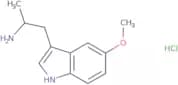
CAS:Controlled Product<p>5-Methoxy-3(2-aminopropyl)indole hydrochloride is a useful reagent for the synthesis of complex compounds and a versatile building block for the preparation of speciality chemicals. It is used in the production of fine chemicals, such as reagents and intermediates. This compound also has potential use as a research chemical or as a reaction component in organic syntheses.</p>Formula:C12H16N2O·HClPurity:Min. 95%Molecular weight:240.73 g/mol2-Bromo-N-(4-methoxyphenyl)-N-methylbenzamide
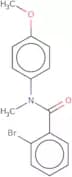
CAS:2-Bromo-N-(4-methoxyphenyl)-N-methylbenzamide is a fine chemical that is used in the synthesis of other chemicals. It is also a reagent and a speciality chemical, which can be used as a reaction component or as an intermediate in the synthesis of other compounds. 2-Bromo-N-(4-methoxyphenyl)-N-methylbenzamide can be used to make a wide variety of compounds, including polymers and pharmaceuticals. This compound has been shown to be useful for the synthesis of polycarbonates, polyurethanes, polyesters, polyamides, and polystyrenes.Formula:C15H14BrNO2Purity:Min. 95%Molecular weight:320.18 g/mol2-Methoxy-2-phenylethanol
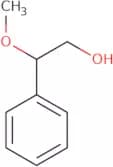
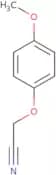
CAS:<p>2-Methoxy-2-phenylethanol is a molecule that has been found to be a good catalyst for the ring-opening of epoxides. It is also used as a solid catalyst in kinetic studies and as an additive in organic syntheses. 2-Methoxy-2-phenylethanol is soluble in water and reacts with fatty acids to form acetylated products. This molecule has been shown to have an inhibitory effect on human liver alcohol dehydrogenase, which may be due to it's ability to bind to the enzyme's active site.</p>Formula:C9H12O2Purity:Min. 95%Color and Shape:Colorless Clear LiquidMolecular weight:152.19 g/mol2-(4-Methoxyphenoxy)acetonitrile
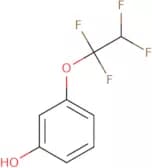
CAS:<p>2-(4-Methoxyphenoxy)acetonitrile is a chemical compound that is used to synthesize acetobromoglucose. It undergoes transformation and condensation reactions with acetobromoglucose to form 4-methoxyaceto bromoglucose.</p>Formula:C9H9NO2Purity:Min. 95%Molecular weight:163.17 g/mol3-(1,1,2,2-Tetrafluoroethoxy)phenol
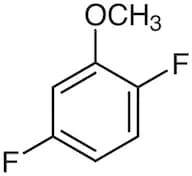
CAS:<p>3-(1,1,2,2-Tetrafluoroethoxy)phenol is a versatile building block that can be used in the synthesis of complex compounds. It is also a reagent and speciality chemical and has CAS No. 53997-99-2. 3-(1,1,2,2-Tetrafluoroethoxy)phenol is a useful building block for organic synthesis and has been used as a reaction component or scaffold.</p>Formula:C8H6F4O2Purity:Min. 95%Molecular weight:210.13 g/mol2,5-Difluoroanisole
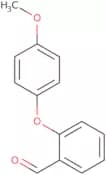
CAS:Formula:C7H6F2OPurity:>98.0%(GC)Color and Shape:Colorless to Almost colorless clear liquidMolecular weight:144.122-(4-Methoxyphenoxy)benzaldehyde
CAS:<p>2-(4-Methoxyphenoxy)benzaldehyde is a fine chemical that is used as a versatile building block in the synthesis of complex compounds and research chemicals. 2-(4-Methoxyphenoxy)benzaldehyde is also a reagent that can be used to synthesize speciality chemicals, useful building blocks, and reaction components. This chemical may be used as an intermediate for the synthesis of high-quality pharmaceuticals or other useful scaffolds. It has CAS number 19434-36-7.</p>Formula:C14H12O3Purity:Min. 95%Color and Shape:White To Brown SolidMolecular weight:228.24 g/mol4-Methoxydiphenyliodonium chloride
CAS:<p>4-Methoxydiphenyliodonium chloride is a versatile building block with many uses in research and industry. It is used as a reagent to synthesize organic compounds, as well as a speciality chemical and an intermediate. 4-Methoxydiphenyliodonium chloride has been shown to be useful in the synthesis of complex compounds, such as pharmaceuticals, agrochemicals, and pesticides. This compound can also be used in the preparation of high quality products, such as fine chemicals.</p>Formula:C13H12IO·ClPurity:Min. 95%Molecular weight:346.59 g/molEthyl 3,3-diethoxypropionate
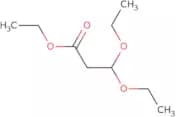
CAS:<p>Ethyl 3,3-diethoxypropionate is an organic compound that is synthesized from the reaction of diethyl malonate and chloroacetic acid in the presence of a base catalyst. This product has been shown to be an effective inhibitor of mitochondrial cytochrome c oxidase in vitro studies. Ethyl 3,3-diethoxypropionate also has been found to inhibit quinoline derivatives, such as erythromycin and tetracycline, which are involved in bacterial DNA synthesis. Furthermore, this product inhibits β-unsaturated aldehydes and allylation.</p>Formula:C9H18O4Purity:Min. 95%Color and Shape:Colorless Clear LiquidMolecular weight:190.24 g/mol2',4-Dihydroxy-3-methoxychalcone
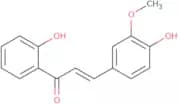
CAS:<p>2',4-Dihydroxy-3-methoxychalcone is a chalcone that has been shown to have reactive properties. The compound was found to be cytotoxic to cancer cells in the presence of neutrophils, and it has been shown to inhibit the growth of t47d cells in culture. There is also evidence that 2',4-Dihydroxy-3-methoxychalcone may help regulate the microflora in the gut, which may help prevent obesity and diabetes. In epidemiological studies, 2',4-Dihydroxy-3-methoxychalcone was found to be protective against cancer, but more research is required.</p>Formula:C16H14O4Purity:Min. 95%Color and Shape:PowderMolecular weight:270.28 g/mol4-Bromo-2-methoxytoluene
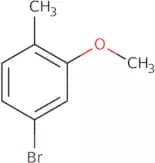
CAS:<p>4-Bromo-2-methoxytoluene is a lactone compound that has been shown to have bioactivities. It is also known as methoxy, an aromatic organic compound with one methyl substituent and two hydroxyl substituents on a benzene ring. 4-Bromo-2-methoxytoluene is found in the natural products cephalotaxaceae and cephalotaxus. This compound can be synthesized by reacting diisopropylamine with formylation of bromobenzene in the presence of acetic acid followed by treatment with sodium acetate. The chemical structure forms a skeleton containing four carbon atoms and six hydrogen atoms, which are arranged in three rings (a cyclic system). This compound exists as two isomers, namely cis and trans.</p>Formula:C8H9BrOPurity:Min. 95%Color and Shape:PowderMolecular weight:201.06 g/mol2,4-Dibromoanisole
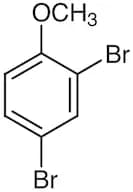
CAS:Formula:C7H6Br2OPurity:>98.0%(GC)Color and Shape:White to Light yellow to Light red powder to crystalMolecular weight:265.93Tris(2-methoxyphenyl)bismuth dichloride
CAS:<p>Tris(2-methoxyphenyl)bismuth dichloride is a coordination compound with the chemical formula BiCl(OMeCH). It crystallizes in the triclinic crystal system and its molecular structure is trigonal. Tris(2-methoxyphenyl)bismuth dichloride has been characterized by X-ray and infrared spectroscopy, as well as by analysis of the axial, apical, and trigonal coordinates. The compound has been shown to form perchlorate and diperchlorate salts. The presence of bismuth atoms in this molecule produces a bright yellow color.</p>Formula:C21H21BiCl2O3Purity:Min. 95%Color and Shape:Off-White PowderMolecular weight:601.28 g/mol