Ethers
Ethers are organic compounds containing an ether functional group, characterized by an oxygen atom bonded to two hydrocarbon radicals. These compounds are valuable in synthesis and serve as solvents in various chemical reactions. At CymitQuimica, we offer a selection of high-quality ethers to support your research and industrial applications, ensuring reliable and effective results. Our range of ethers meets diverse laboratory requirements, from routine experiments to advanced research.
Found 40729 products of "Ethers"
Sort by
Purity (%)
0
100
|
0
|
50
|
90
|
95
|
100
Bis(2-bromoethyl) Ether
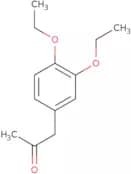
CAS:Formula:C4H8Br2OPurity:>98.0%(GC)Color and Shape:Colorless to Yellow clear liquidMolecular weight:231.923,4-Diethoxyphenylacetone
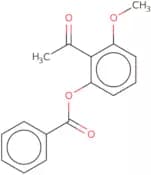
CAS:<p>3,4-Diethoxyphenylacetone is a chemical compound that is used as a building block for research and as an intermediate in the synthesis of other chemicals. This compound is also used as a reagent. 3,4-Diethoxyphenylacetone has CAS number 93635-48-4.</p>Formula:C13H18O3Purity:Min. 95%Molecular weight:222.28 g/mol2'-Benzoyloxy-6'-methoxyacetophenone
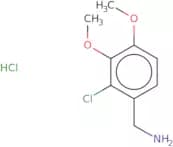
CAS:<p>2'-Benzoyloxy-6'-methoxyacetophenone is a fine chemical that is a useful building block for the synthesis of other chemicals. It has been used as a reagent and in the preparation of speciality chemicals, such as pyrazoles, pyridones, and carbamates. 2'-Benzoyloxy-6'-methoxyacetophenone is also an intermediate for the synthesis of complex compounds or scaffolds for use in drug design.</p>Formula:C16H14O4Purity:Min. 95%Molecular weight:270.28 g/mol2-Chloro-3,4-dimethoxybenzylamine HCl
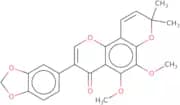
CAS:<p>2-Chloro-3,4-dimethoxybenzylamine HCl is a fine chemical that can be used as a building block to synthesize new compounds. It is also a useful intermediate in the production of pharmaceuticals and other organic chemicals. 2-Chloro-3,4-dimethoxybenzylamine HCl has been used as a reaction component for the synthesis of various complex compounds. This compound has been shown to have high purity and quality.</p>Formula:C9H12ClNO2·HClPurity:Min. 95%Molecular weight:238.11 g/mol5-Methoxydurmillone
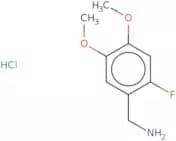
CAS:<p>5-Methoxydurmillone is a rotenoid that is found in many plants, including the seeds of the plant Ferruginea. 5-Methoxydurmillone has been shown to have anti-inflammatory properties and can be used to treat inflammatory diseases such as arthritis. It also inhibits the production of superoxide radicals and nitric oxide, which are important mediators of inflammation. 5-Methoxydurmillone has been shown to inhibit protein synthesis in bacteria, but not mammalian cells.</p>Formula:C23H20O7Purity:Min. 95%Molecular weight:408.4 g/mol4,5-Dimethoxy-2-fluorobenzylamine hydrochloride
CAS:<p>4,5-Dimethoxy-2-fluorobenzylamine hydrochloride is a fine chemical that is the building block for a variety of other compounds. It has been used as an intermediate in organic synthesis and as a research chemical. 4,5-Dimethoxy-2-fluorobenzylamine hydrochloride has also been used as a reaction component in the preparation of complex compounds with interesting physical and chemical properties. This compound is also used as a reagent in the production of high quality products.</p>Formula:C9H12FNO2·HClPurity:Min. 95%Molecular weight:221.66 g/mol3,6-Dimethoxyterephthaldicarboxaldehyde
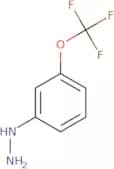
<p>3,6-Dimethoxyterephthaldicarboxaldehyde is a chemical compound that can be used in the synthesis of complex compounds. It has been shown to be an effective reagent for the synthesis of heterocycles and has also been used as a building block in the synthesis of pharmaceuticals and other organic compounds. 3,6-Dimethoxyterephthaldicarboxaldehyde is a versatile building block with many potential uses. It has also been identified as a useful scaffold for drug design and development.</p>Purity:Min. 95%1-(3-(Trifluoromethoxy)phenyl)hydrazine hydrochloride
CAS:<p>1-(3-(Trifluoromethoxy)phenyl)hydrazine hydrochloride is a reagent that can be used as a reaction component in organic synthesis. It is also a useful scaffold for the preparation of high-quality research chemicals and other versatile building blocks. 1-(3-(Trifluoromethoxy)phenyl)hydrazine hydrochloride is an intermediate in the synthesis of complex compounds, such as fine chemicals.</p>Formula:C7H7F3N2OPurity:Min. 95%Molecular weight:192.14 g/mol4-Methoxydiphenyliodonium chloride
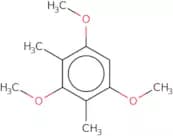
CAS:<p>4-Methoxydiphenyliodonium chloride is a versatile building block with many uses in research and industry. It is used as a reagent to synthesize organic compounds, as well as a speciality chemical and an intermediate. 4-Methoxydiphenyliodonium chloride has been shown to be useful in the synthesis of complex compounds, such as pharmaceuticals, agrochemicals, and pesticides. This compound can also be used in the preparation of high quality products, such as fine chemicals.</p>Formula:C13H12IO·ClPurity:Min. 95%Molecular weight:346.59 g/mol2,4,6-Trimethoxy-m-xylene
CAS:<p>2,4,6-Trimethoxy-m-xylene is a methylated aromatic hydrocarbon that can be found in coal tar and oil. It is a stable compound that can be protonated by superacids such as arenium ion (H2SO4). The protonation of 2,4,6-trimethoxy-m-xylene leads to the formation of carbocations, which are electron deficient species. This radical cation has a resonance structure with three double bonds between carbon atoms. The resonance structure of the radical cation is stabilized by hyperconjugative interactions between the electron pair on oxygen and the empty p orbital on carbon.</p>Formula:C11H16O3Purity:Min. 95%Molecular weight:196.24 g/mol5-Methoxy-3-(1,2,5,6-tetrahydro-4-pyridinyl)-1H-indole hemisuccinate
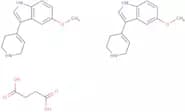
CAS:<p>5-Methoxy-3-(1,2,5,6-tetrahydro-4-pyridinyl)-1H-indole hemisuccinate is a serotonin receptor agonist that has been shown to stimulate the 5HT1A receptor. It stimulates insulin secretion and glucose uptake in rats and inhibits feeding behavior in mice. It has also been shown to have antihypertensive effects on rats by blocking the 5HT2 receptors. In addition, it stimulates regeneration of injured nerve cells. This drug has potential uses as a treatment for neurological diseases such as Parkinson's disease and depression.</p>Formula:C14H16N2O•(C4H6O4)0Purity:Min. 95%Color and Shape:Yellow solid.Molecular weight:287.33 g/molTributyl-(4-methoxy-phenyl)-stannane
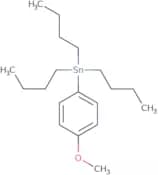
CAS:Controlled Product<p>Tributyl-(4-methoxy-phenyl)-stannane is a nucleophilic compound that can be used to synthesize 5-HT1A receptor agonists. It has been shown to have biochemical, positron and chloride properties. This chemical is synthesised by introducing a sulfur atom into the molecule. The sulfur atom reacts with the chlorine atom in chlorobenzene to form the sulfonation bond. This reaction is efficient and can be used as a method for cleaving bonds and cross-coupling carbon atoms.</p>Formula:C19H34OSnPurity:Min. 95%Color and Shape:PowderMolecular weight:397.18 g/mol3-Methoxy-4-(difluoromethoxy)benzaldehyde
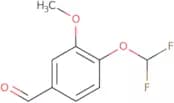
CAS:<p>3-Methoxy-4-(difluoromethoxy)benzaldehyde is a chemical compound that has been found to have anti-tumor properties. It inhibits tumor cells by inducing cell apoptosis. 3-Methoxy-4-(difluoromethoxy)benzaldehyde induces apoptosis in human carcinoma cells, with optimal activity at doses of 10 micromolar and higher. This chemical can be used as an anti-tumor agent because it shows no genotoxic effects, and has high yield with a low toxicity profile. When this compound is exposed to UV radiation, the formation of reactive oxygen species (ROS) increases the rate of cell death. 3-Methoxy-4-(difluoromethoxy)benzaldehyde also has anti-inflammatory properties, which may be due to its ability to inhibit prostaglandin synthesis.</p>Formula:C9H8F2O3Purity:Min. 95%Color and Shape:Colourless To Pale Yellow LiquidMolecular weight:202.15 g/mol3-(Trifluoromethoxy)iodobenzene
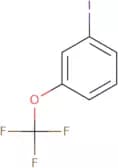
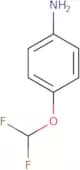
CAS:<p>3-(Trifluoromethoxy)iodobenzene is a reagent for organic synthesis that has a high quality and versatile reactivity. It can be used in the preparation of useful scaffolds, which are novel and useful building blocks. 3-(Trifluoromethoxy)iodobenzene is also a useful intermediate for the synthesis of complex compounds. 3-(Trifluoromethoxy)iodobenzene has been shown to have antioxidant properties and can be used as a fine chemical.</p>Formula:C7H4F3IOPurity:Min. 95%Color and Shape:Clear LiquidMolecular weight:288.01 g/mol4-Difluoromethoxyaniline
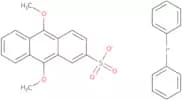
CAS:<p>4-Difluoromethoxyaniline is an allosteric modulator for glutamate receptors. It is a chemical compound that can be used to modify glutamate receptors to act as either metabotropic or ionotropic. 4-Difluoromethoxyaniline is used in the treatment of Parkinson's disease and other movement disorders, such as dyskinesia. It has been shown that 4-difluoromethoxyaniline increases the activity of activated glutamate receptors, which leads to increased levels of the neurotransmitter dopamine in the brain. This drug may also inhibit nitric oxide production and corticotropin-releasing hormone (CRH) synthesis.</p>Formula:C7H7F2NOPurity:Min. 95%Molecular weight:159.13 g/molDiphenyliodanium 9,10-dimethoxyanthracene-2-sulfonate
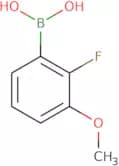
CAS:<p>Diphenyliodanium 9,10-dimethoxyanthracene-2-sulfonate is an organic compound that belongs to the class of vinyl ethers. It can be used as a photosensitive material in photolithography. The mechanism of the photoinduced crosslinking reaction has been studied by mechanistic study and shown to proceed through a Friedel-Crafts type reaction followed by a transfer mechanism. This compound can also be prepared by irradiating an ammonium formate solution with ultraviolet light. Diphenyliodanium 9,10-dimethoxyanthracene-2-sulfonate is soluble in hydroxide solution and reacts with uv irradiation to produce radicals at the carbonyl group.</p>Formula:C28H23IO5SPurity:Min. 95%Molecular weight:598.45 g/mol(2-Fluoro-3-methoxyphenyl)boronic acid
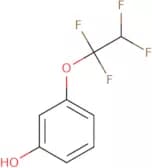
CAS:<p>2-Fluoro-3-methoxyphenylboronic acid is a boronic acid that has been shown to be orally activated. It is a potent inhibitor of the enzyme target, which is involved in the production of estradiol. 2-Fluoro-3-methoxyphenylboronic acid has been found to inhibit cellular growth and induce cancer cell death by targeting estrogen receptor β. This molecule also inhibits the growth factor, leading to inhibition of prostate cancer cells in vitro.</p>Formula:C7H8BFO3Purity:Min. 95%Color and Shape:White PowderMolecular weight:169.95 g/mol3-(1,1,2,2-Tetrafluoroethoxy)phenol
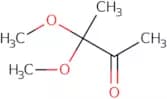
CAS:<p>3-(1,1,2,2-Tetrafluoroethoxy)phenol is a versatile building block that can be used in the synthesis of complex compounds. It is also a reagent and speciality chemical and has CAS No. 53997-99-2. 3-(1,1,2,2-Tetrafluoroethoxy)phenol is a useful building block for organic synthesis and has been used as a reaction component or scaffold.</p>Formula:C8H6F4O2Purity:Min. 95%Molecular weight:210.13 g/mol3,3-Dimethoxy-2-butanone
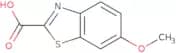
CAS:<p>3,3-Dimethoxy-2-butanone is a synthetic compound that is used as a biodiesel. It can be synthesized by the following synthetic scheme:</p>Formula:C6H12O3Purity:Min. 95%Color and Shape:Clear LiquidMolecular weight:132.16 g/mol6-Methoxybenzothiazole-2-carboxylic acid
CAS:<p>6-Methoxybenzothiazole-2-carboxylic acid is a synthetic sulfur compound that is used in the synthesis of benzothiazines. It is also an intermediate in the biosynthesis of thiocyanate, a natural product that has been shown to have anti-inflammatory properties. 6-Methoxybenzothiazole-2-carboxylic acid has been shown to be highly efficient as a luciferin, and can be used in the production of bioluminescence. 6-Methoxybenzothiazole-2-carboxylic acid belongs to the family of benzothiazines, which are benzoquinones with two fused rings. Benzothiazines are found in marine natural products such as luciferins and some other nature products.</p>Formula:C9H7NO3SPurity:Min. 95%Color and Shape:PowderMolecular weight:209.22 g/mol