Ethers
Ethers are organic compounds containing an ether functional group, characterized by an oxygen atom bonded to two hydrocarbon radicals. These compounds are valuable in synthesis and serve as solvents in various chemical reactions. At CymitQuimica, we offer a selection of high-quality ethers to support your research and industrial applications, ensuring reliable and effective results. Our range of ethers meets diverse laboratory requirements, from routine experiments to advanced research.
Found 40729 products of "Ethers"
Sort by
Purity (%)
0
100
|
0
|
50
|
90
|
95
|
100
N-[(1,1-Dimethylethoxy)carbonyl]-L-homoserine 1,1-Dimethylethyl Ester Methanesulfonate
CAS:Controlled Product<p>Applications N-[(1,1-Dimethylethoxy)carbonyl]-L-homoserine 1,1-Dimethylethyl Ester Methanesulfonate is an intermediate in synthesizing L-Methionine-34S (M260443). It is a labelled L-Methionine, an essential aminoacid for human development. Hepatoprotectant; antidote (acetominophen poisoning); urinary acidifier.<br>References Benevenga, N.J., et al.: J. Agric. Food Chem., 22, 2 (1974); Fleisher, L.D., et al.: Clin. Endocrinol. Metab., 3, 37 (1974); Meinnel, T., et al.: Biochimie, 75, 1061 (1993)<br></p>Formula:C14H27NO7SColor and Shape:NeatMolecular weight:353.43N-(Methoxymethyl)-N-[(trimethylsilyl)methyl]benzenemethanamine (>90%)
CAS:Controlled Product<p>Applications N-(Methoxymethyl)-N-[(trimethylsilyl)methyl]benzenemethanamine is used in the synthesis of pyrrolidine derivatives as novel sodium channel blockers used to treat ischemic related ailments.<br>References Seki, M. et al.: Bioorg. Med. Chem. Lett., 23, 4230 (2013);<br></p>Formula:C13H23NOSiPurity:>90%Color and Shape:NeatMolecular weight:237.412-(Cyclopropylmethoxy)-acetic Acid 1,1-Dimethyl-2-[4-(methylsulfonyl)phenyl]-2-oxoethyl Ester
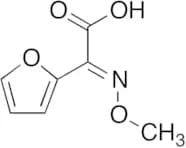
CAS:Controlled Product<p>Applications 2-(Cyclopropylmethoxy)-acetic Acid 1,1-Dimethyl-2-[4-(methylsulfonyl)phenyl]-2-oxoethyl Ester is a useful research chemical for organic synthesis and other chemical processes.<br>References Leblanc, Y., et al.: Bioorg. Med. Chem. Lett., 9, 2207 (1999)<br></p>Formula:C17H22O6SColor and Shape:NeatMolecular weight:354.42(E)-(2-(Furan-2-yl)-2-(methoxyimino)acetic Acid
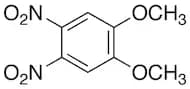
CAS:Controlled Product<p>Applications 2-(Furan-2-yl)-2-(methoxyimino)acetic Acid is an intermediate in the synthesis of Cephalosporin derivatives.<br>References Ger. Offen. (1978), DE 2731724 A1 19780119.<br></p>Formula:C15H10F3NOSColor and Shape:NeatMolecular weight:309.3061,2-Dimethoxy-4,5-dinitrobenzene
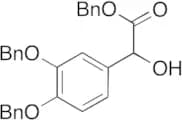
CAS:Controlled Product<p>Applications 1,2-Dimethoxy-4,5-dinitrobenzene (cas# 3395-03-7) is a compound useful in organic synthesis.<br> Not a dangerous good if item is equal to or less than 1g/ml and there is less than 100g/ml in the package<br></p>Formula:C8H8N2O6Color and Shape:NeatMolecular weight:228.16α-Hydroxy-3,4-bis(phenylmethoxy)benzeneacetic Acid Phenylmethyl Ester
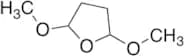
CAS:Controlled Product<p>Applications α-Hydroxy-3,4-bis(phenylmethoxy)benzeneacetic Acid Phenylmethyl Ester is an protected intermediate in the synthesis of metabolites of Catecholamines.<br></p>Formula:C29H26O5Color and Shape:NeatMolecular weight:454.512,5-Dimethoxytetrahydrofuran
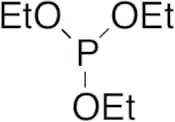
CAS:Controlled Product<p>Applications 2,5-DIMETHOXYTETRAHYDROFURAN (cas# 696-59-3) is a useful research chemical.<br> Not a dangerous good if item is equal to or less than 1g/ml and there is less than 100g/ml in the package<br></p>Formula:C6H12O3Color and Shape:NeatMolecular weight:132.16Triethyl Phosphite
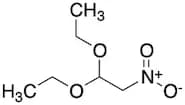
CAS:Controlled Product<p>Stability Air Sensitive, Moisture Sensitive<br>Applications Triethoxyphosphine is an common reagent used as a soft ligand in coordination chemistry and homogenous catalysis.<br> Not a dangerous good if item is equal to or less than 1g/ml and there is less than 100g/ml in the package<br>References Xiong, J.Y., et al.: Materials. Sci. Forum., 618 (2009); Mcpherson, A., et al. J. Structural. Biol., 156, 387 (2006);<br></p>Formula:C6H15O3PColor and Shape:NeatMolecular weight:166.161,1-Diethoxy-2-nitroethane
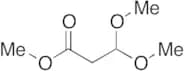
CAS:Controlled Product<p>Applications 1,1-diethoxy-2-nitroethane (cas# 34560-16-2) is a useful research chemical.<br></p>Formula:C6H13NO4Color and Shape:NeatMolecular weight:163.17Methyl β,β-Dimethoxypropionate
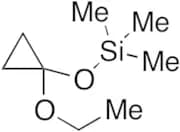
CAS:Controlled Product<p>Applications Methyl β,β-Dimethoxypropionate is used as a reactant in the preparation of tetrahydro-β-carboline derivatives as antitumor growth and metastasis agents.<br>References Zheng, C., et. al.: J. Med. Chem., 57, 600 (2014)<br></p>Formula:C6H12O4Color and Shape:NeatMolecular weight:148.16(1-Ethoxycyclopropoxy)trimethylsilane
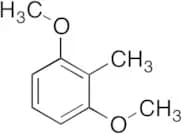
CAS:Controlled Product<p>Applications (1-Ethoxycyclopropoxy)trimethylsilane used as a reactant in the synthesis of di-, tri- and tetracyclopropylhydrazines. Also used as reagent in the synthesis of g elsemoxonine which is found in gelsemium plant species that is used in traditional asian medicine.<br> Not a dangerous good if item is equal to or less than 1g/ml and there is less than 100g/ml in the package<br>References Shestakov, A., et al.: Chem. Commun., 52, 2398 (2016); Diethelm, S., et al.: J. Am. Chem. Soc., 137, 6084 (2015);<br></p>Formula:C8H18O2SiColor and Shape:NeatMolecular weight:174.312,6-Dimethoxytoluene
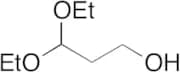
CAS:Controlled Product<p>Applications 2,6-Dimethoxytoluene is an organic synthesis intermediate.<br>References Liu, C., et al.: Bioorg. Med. Chem., 24, 4263 (2016); Della S., et al.: J. Org. Chem., 81, 5726 (2016); Zhang, M., et al.: Asian J. Org. Chem., 4, 1047 (2015); Peixoto, P. A., et al.: J. Am. Chem. Soc., 136, 15248 (2014)<br></p>Formula:C9H12O2Color and Shape:NeatMolecular weight:152.192,2-Diethoxyethanol
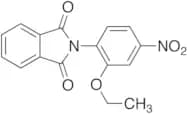
CAS:Controlled Product<p>Applications 2,2-Diethoxyethanol is used in the synthesis of neooxazolomycin, part of the oxazolomycin family of antibiotics. Also used in the synthesis of pyrimidine based inhibitors of phosphodiesterase 7 (PDE7).<br>References Onyango, E. et al.: Angew. Chem. Int. Ed., 46, 6703 (2007); Kempson, J. et al.: Bioorg. Med. Chem. Lett., 15, 1829 (2005);<br></p>Formula:C6H14O3Color and Shape:NeatMolecular weight:134.172-(4-Nitro-2-ethoxyphenyl)pthalimide
CAS:Controlled Product<p>Applications 2-(4-Nitro-2-ethoxyphenyl)pthalimide (cas# 106981-60-6) is a compound useful in organic synthesis.<br></p>Formula:C16H12N2O5Color and Shape:NeatMolecular weight:312.283,4-Dimethoxyphenol
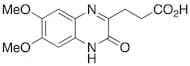
CAS:Controlled Product<p>Applications A substituted alkynyl phenoxy compound as new synergists in pesticidal compositions.<br>References Hefner,T., et al.: Bioorg. Med. Chem., 10, 1731 (2002),<br></p>Formula:C8H10O3Color and Shape:NeatMolecular weight:154.163,4-Dihydro-6,7-dimethoxy-3-oxo-2-quinoxalinepropanoic Acid
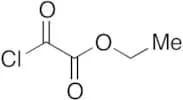
CAS:Controlled Product<p>Applications Intermediate in the production of DMEQ-TAD<br>References Shimizu, M., et al.: Anal. Biochem., 194, 77 (1991),<br></p>Formula:C13H14N2O5Color and Shape:NeatMolecular weight:278.26Ethoxyoxalyl Chloride
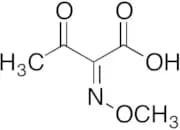
CAS:Controlled Product<p>Applications Ethoxyoxalyl Chloride has been used as a reactant in the preparation of oxyoxalamide derivatives as epoxide hydrolase inhibitors.<br> Not a dangerous good if item is equal to or less than 1g/ml and there is less than 100g/ml in the package<br>References Kim, I., et. al.: Bioorg. Med., 22, 1163 (2014)<br></p>Formula:C4H5ClO3Color and Shape:NeatMolecular weight:136.53(Z)-2-(Methoxyimino)-3-oxo-butanoic Acid
CAS:Controlled Product<p>Applications (Z)-2-(Methoxyimino)-3-oxo-butanoic Acid is an intermediate used in the synthesis of Cefotaxime Bromoacetyl Analogue (C242940), which is an impurity of Cefotaxime (C242950), a broad spectrum third generation cephalosporin antibiotic<br>References Wise, R., et al.: Antimicrob. Agents Chemother., 14, 807 (1978), Muhtadi, F.J., et al.: Anal. Profiles Drug Subs., 11, 139 (1982),<br></p>Formula:C5H7NO4Color and Shape:NeatMolecular weight:145.111,2-Dimethoxyethane
CAS:Controlled Product<p>Stability Hygroscopic<br>Applications 1,2-Dimethoxyethane is used in the synthesis of potent ligands for the central nicotinic acetylcholine receptor. Also used in the synthesis of new ruthenium sensitizers fo the production of highly efficient dye-sensitized solar cells.<br> Not a dangerous good if item is equal to or less than 1g/ml and there is less than 100g/ml in the package<br>References Nielsen, S. et al.: J. Med. Chem., 43, 2217, (2000); Shi, Y. et al.: ACS. App. Mat. Int., 5, 144 (2013);<br></p>Formula:C4H10O2Color and Shape:ColourlessMolecular weight:90.12Chlorotriethoxysilane
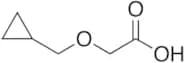
CAS:Controlled Product<p>Stability Moisture Sensitive<br>Applications Chlorotriethoxysilane (cas# 4667-99-6) is a useful research chemical.<br></p>Formula:C6H15ClO3SiColor and Shape:NeatMolecular weight:198.722-(Cyclopropylmethoxy)-acetic Acid
CAS:Controlled Product<p>Applications 2-(Cyclopropylmethoxy)-acetic Acid (cas# 246869-08-9) is a compound useful in organic synthesis.<br></p>Formula:C6H10O3Color and Shape:NeatMolecular weight:130.143-Ethoxypropionitrile
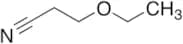
CAS:Controlled Product<p>Applications 3-Ethoxypropionitrile (cas# 2141-62-0) is a useful research chemical.<br></p>Formula:C5H9NOColor and Shape:NeatMolecular weight:99.13a-Hydroxy-4-(2-oxiranylmethoxy)-benzeneacetamide
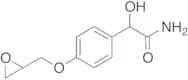
CAS:Controlled Product<p>Applications α-Hydroxy-4-(2-oxiranylmethoxy)-benzeneacetamide is an intermediate in the synthesis of hydroxyatenolol (H802480), which is a metabolite of Atenolol (A790075); a cardioselective β-adrenergic blocker, antihypertensive, antianginal, and antiarrhythmic (class II).<br>References Escher, B., et al.: Environ. Sci. Technol., 40, 7402 (2006); Caplar, V., et al.: Anal. Profiles Drug Subs., 13, 1 (1984)<br></p>Formula:C11H13NO4Color and Shape:Off-WhiteMolecular weight:223.23Chloromethoxysulfonyl Chloride
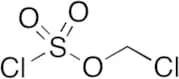
CAS:Controlled Product<p>Stability Moisture Sensitive<br>Applications Chloromethoxysulfonyl Chloride is a useful intermediate for organic synthesis. Chloromethoxysulfonyl Chloride is a useful reagent for the preparation of HIV-attachment inhibitor BMS-663068, and in the synthesis of water soluble benzimidazole derivatives useful for treatment of fasciolosis.<br>References Fox, R. J., et al.; Org. Process Res. Dev., 21, 1095 (2017); Flores-Ramos, M., et al.: Bioorg. Med. Chem. Lett., 24, 5814 (2014); Zheng, B., et al.: Org. Process Res. Dev., 16, 1827 (2012)<br></p>Formula:CH2Cl2O3SColor and Shape:NeatMolecular weight:164.996(E)-1-Ethoxy-1-penten-3-one (>90%)
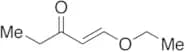
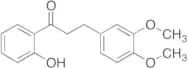
CAS:Controlled Product<p>Applications (E)-1-Ethoxy-1-penten-3-one (>90%) (cas# 79317-83-2) is a compound useful in organic synthesis.<br></p>Formula:C7H12O2Purity:>90%Color and Shape:NeatMolecular weight:128.173-(3,4-Dimethoxyphenyl)-1-(2-hydroxyphenyl)propan-1-one
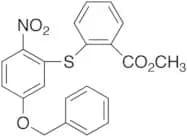
CAS:Controlled Product<p>Applications 3-(3,4-Dimethoxyphenyl)-1-(2-hydroxyphenyl)propan-1-one is an intermediate for the synthesis of dTAG-7 (D710015), which is a degradation tag, was tested for its efficiency at depleting FKBP12F36V -MELK(sg3R) and was found to have significantly degraded FKBP12F36V -MELK(sg3R) within 4 hours.Used in the study of cancer research.<br>References Hai-Tsang Huang., eLife, 1-29, (2017)<br></p>Formula:C17H18O4Color and Shape:NeatMolecular weight:286.324-Benzyloxy-2-(2’-carbomethoxy)thiophenylnitrobenzene
CAS:Controlled Product<p>Applications 4-Benzyloxy-2-(2’-carbomethoxy)thiophenylnitrobenzene (cas# 329217-03-0) is a compound useful in organic synthesis.<br></p>Formula:C21H17NO5SColor and Shape:YellowMolecular weight:395.432-Amino-6-methoxybenzoic acid
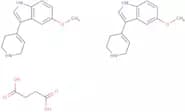
CAS:<p>2-Amino-6-methoxybenzoic acid is a monosubstituted amide, which is synthesized by the hydrolysis of 2-amino-5-methylbenzoic acid with hydrochloric acid in the presence of diacetate. This compound is formed as part of the biosynthesis of aminophenols and heterocycles. It can be used to adsorb metal ions and organic compounds, such as chloride and butyllithium. 2-Amino-6-methoxybenzoic acid is also found in aeruginosa infections due to its ability to inhibit bacterial growth by inhibiting protein synthesis. The synthesis of this compound requires shikimate pathway enzymes.</p>Formula:C8H9NO3Purity:Min. 95%Color and Shape:PowderMolecular weight:167.16 g/mol5-Methoxy-3-(1,2,5,6-tetrahydro-4-pyridinyl)-1H-indole hemisuccinate
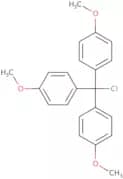
CAS:<p>5-Methoxy-3-(1,2,5,6-tetrahydro-4-pyridinyl)-1H-indole hemisuccinate is a serotonin receptor agonist that has been shown to stimulate the 5HT1A receptor. It stimulates insulin secretion and glucose uptake in rats and inhibits feeding behavior in mice. It has also been shown to have antihypertensive effects on rats by blocking the 5HT2 receptors. In addition, it stimulates regeneration of injured nerve cells. This drug has potential uses as a treatment for neurological diseases such as Parkinson's disease and depression.</p>Formula:C14H16N2O•(C4H6O4)0Purity:Min. 95%Color and Shape:Yellow solid.Molecular weight:287.33 g/mol4,4',4''-Trimethoxytrityl chloride
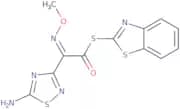
CAS:<p>4,4',4''-Trimethoxytrityl chloride is a carbonyl compound that reacts with alkenyloxy groups to form alkaloids. It also reacts with halogen atoms to form halogenated products. 4,4',4''-Trimethoxytrityl chloride is used in the synthesis of ecteinascidins and acyl group compounds. This chemical can be used in the synthesis of alkaloids and alkenyloxy compounds. It has a reactive carbon atom that can be substituted by other organic groups.</p>Formula:C22H21ClO3Purity:Min. 95%Color and Shape:Off-White PowderMolecular weight:368.85 g/molS-2-Benzothiazolyl (Z)-2-(5-amino-1,2,4-thiadiazol-3-yl)-2-methoxyiminothioacetate
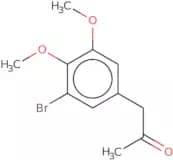
CAS:<p>S-2-Benzothiazolyl (Z)-2-(5-amino-1,2,4-thiadiazol-3-yl)-2-methoxyiminothioacetate is an experimental drug that has been studied in research, solvents and clinical data. It has a strong ability to disrupt the physiology of cells by inhibiting reactions that require S-adenosylmethionine. The reaction time is approximately 10 seconds, and human patients have been used for clinical development and translational research. This reducer is also able to produce high yield with a synthesis time of only 1 hour.</p>Formula:C12H9N5O2S3Purity:Min. 95%Color and Shape:White PowderMolecular weight:351.43 g/mol(3-Bromo-4,5-dimethoxyphenyl)acetone
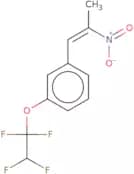
CAS:<p>(3-Bromo-4,5-dimethoxyphenyl)acetone is a reagent that is used as an intermediate in the synthesis of a variety of compounds. It also has potential use as a building block for the synthesis of a wide range of complex compounds. (3-Bromo-4,5-dimethoxyphenyl)acetone can be used as a building block for chemical reactions and research chemicals. This compound has been shown to have versatile applications and is useful in the synthesis of fine chemicals, speciality chemicals, and research chemicals.</p>Formula:C11H13BrO3Purity:Min. 95%Molecular weight:273.12 g/mol3'-(Tetrafluoroethoxy)-β-methyl-β-nitrostyrene
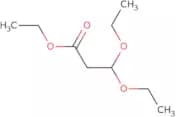
CAS:<p>3'-(Tetrafluoroethoxy)-beta-methyl-beta-nitrostyrene is a versatile building block that can be used as a reaction component for the synthesis of more complex compounds. This compound is also known to have speciality chemical and research chemical properties. 3'-(Tetrafluoroethoxy)-beta-methyl-beta-nitrostyrene has been shown to be an effective reagent for the synthesis of high quality complex compounds.</p>Formula:C11H9F4NO3Purity:Min. 95%Molecular weight:279.19 g/molEthyl 3,3-diethoxypropionate
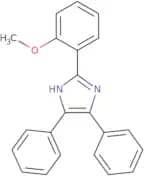
CAS:<p>Ethyl 3,3-diethoxypropionate is an organic compound that is synthesized from the reaction of diethyl malonate and chloroacetic acid in the presence of a base catalyst. This product has been shown to be an effective inhibitor of mitochondrial cytochrome c oxidase in vitro studies. Ethyl 3,3-diethoxypropionate also has been found to inhibit quinoline derivatives, such as erythromycin and tetracycline, which are involved in bacterial DNA synthesis. Furthermore, this product inhibits β-unsaturated aldehydes and allylation.</p>Formula:C9H18O4Purity:Min. 95%Color and Shape:Colorless Clear LiquidMolecular weight:190.24 g/mol2-(2-Methoxyphenyl)-4,5-diphenylimidazole
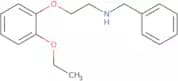
CAS:<p>2-(2-Methoxyphenyl)-4,5-diphenylimidazole is a molecule with a dihedral angle of -115.1° and an asymmetric synthesis. It has antimicrobial activity against Escherichia coli, Staphylococcus aureus, and Bacillus subtilis. This compound also inhibits the synthesis of thromboxane A2 by blocking the 5-azaindole binding site on platelets and prolongs bleeding time in rats. 2-(2-Methoxyphenyl)-4,5-diphenylimidazole has been shown to be an antiplatelet drug that blocks the binding site of rilmenidine and imidazoline on platelets and reduces platelet aggregation. It also binds to the pyrazole ring of tautomers as well as hydrogen bonds to carbonyl groups on phenyl groups.</p>Formula:C22H18N2OPurity:Min. 95%Color and Shape:PowderMolecular weight:326.39 g/molN-Benzyl-N-(2-ethoxyphenoxy)ethylamine
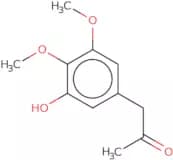
CAS:<p>N-Benzyl-N-(2-ethoxyphenoxy)ethylamine is a fine chemical that belongs to the category of building blocks and research chemicals. It is a versatile intermediate that can be used in the synthesis of a wide range of compounds. This compound has been shown to be useful as a reaction component and scaffold for the construction of complex organic molecules. It has also been used as an intermediate in the synthesis of high quality speciality chemicals.</p>Formula:C17H21NO2Purity:Min. 95%Color and Shape:PowderMolecular weight:271.35 g/mol(3,4-Dimethoxy-5-hydroxyphenyl)acetone
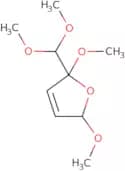
CAS:<p>(3,4-Dimethoxy-5-hydroxyphenyl)acetone is a fine chemical that belongs to the class of compounds known as reagents. It has been used in research and development as a building block or intermediate for the synthesis of other chemicals. It is also used as a versatile building block in complex organic syntheses, such as pharmaceuticals. The chemical is soluble in organic solvents and reacts with many other chemicals, making it useful for synthetic chemistry. This compound has been shown to be high quality and can be used to synthesize other chemicals with diverse properties.</p>Formula:C11H14O4Purity:Min. 95%Molecular weight:210.23 g/mol2,5-Dihydro-2,5-dimethoxy-2-dimethoxymethylfuran
CAS:<p>2,5-Dihydro-2,5-dimethoxy-2-dimethoxymethylfuran is a chemical compound that belongs to the group of reagents. It is used as a reaction component in organic synthesis and has been shown to be a useful scaffold for the development of new compounds. 2,5-Dihydro-2,5-dimethoxy-2-dimethoxymethylfuran is also a versatile building block for complex compounds and fine chemicals.</p>Formula:C9H16O5Purity:Min. 95%Molecular weight:204.22 g/mol4-[2-(3,4-Dimethoxyphenyl)-1,2-dibromoethyl]-1,2-dimethoxybenzene
CAS:<p>4-[2-(3,4-Dimethoxyphenyl)-1,2-dibromoethyl]-1,2-dimethoxybenzene is a high quality chemical that is an intermediate for the synthesis of other compounds. It has been used as a reagent in the synthesis of complex compounds and has been shown to be useful for the production of fine chemicals. This compound can also be used as a scaffold or building block in organic chemistry. The versatility of 4-[2-(3,4-Dimethoxyphenyl)-1,2-dibromoethyl]-1,2-dimethoxybenzene makes it an important reaction component in organic chemistry and research chemicals.</p>Formula:C18H20Br2O4Purity:Min. 95%Molecular weight:460.16 g/molMethyl 3,5-dibromo-2-methoxybenzoate
CAS:<p>Methyl 3,5-dibromo-2-methoxybenzoate is a fine chemical that is useful as a scaffold for the preparation of a variety of compounds. It is also used as an intermediate in the synthesis of pharmaceuticals and research chemicals. Methyl 3,5-dibromo-2-methoxybenzoate can be used as a reaction component to generate complex compounds with high purity and quality. This compound has been classified as a speciality chemical and may be reclassified due to its usefulness in research.</p>Formula:C9H8Br2O3Purity:Min. 95%Molecular weight:323.97 g/mol4,5-Dimethoxy-2-(trimethylsilyl)phenyl trifluoromethanesulfonate
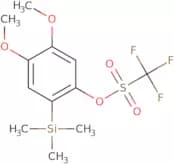
CAS:<p>4,5-Dimethoxy-2-(trimethylsilyl)phenyl trifluoromethanesulfonate is a reagent for the synthesis of propiolates. It is prepared by reacting methyl propiolate with tetrachloride, hexachloroethane, or tetrabromide in acetonitrile. The reactants are heated to reflux under argon and then cooled to room temperature. This product is an ionic liquid that can be used as a solvent. 4,5-Dimethoxy-2-(trimethylsilyl)phenyl trifluoromethanesulfonate is a zwitterion and reacts with amines to form quaternary ammonium salts. It can also be used for the synthesis of unactivated transition metal complexes by reacting it with palladium and amines.</p>Formula:C12H17F3O5SSiPurity:Min. 95%Color and Shape:Colorless PowderMolecular weight:358.41 g/mol3-(Trifluoromethoxy)iodobenzene
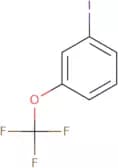
CAS:<p>3-(Trifluoromethoxy)iodobenzene is a reagent for organic synthesis that has a high quality and versatile reactivity. It can be used in the preparation of useful scaffolds, which are novel and useful building blocks. 3-(Trifluoromethoxy)iodobenzene is also a useful intermediate for the synthesis of complex compounds. 3-(Trifluoromethoxy)iodobenzene has been shown to have antioxidant properties and can be used as a fine chemical.</p>Formula:C7H4F3IOPurity:Min. 95%Color and Shape:Clear LiquidMolecular weight:288.01 g/mol3-Methacryloxypropyltrimethoxysilane
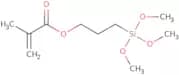
CAS:<p>3-Methacryloxypropyltrimethoxysilane is a silane that has been modified with an acrylic group. It is used as an additive for the production of coatings, adhesives, and sealants. 3-Methacryloxypropyltrimethoxysilane is resistant to hydrochloric acid and other chemicals. It is also stable in water and light exposure. This product has shown to have high adsorption properties, which may be due to its hydroxyl groups. 3-Methacryloxypropyltrimethoxysilane has also been shown to have coupling properties that are advantageous for use with polymers and plastics.</p>Formula:C10H20O5SiPurity:Min. 95%Color and Shape:Colorless Clear LiquidMolecular weight:248.35 g/mol3-Methoxy-4-(difluoromethoxy)benzaldehyde
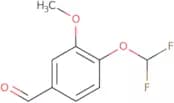
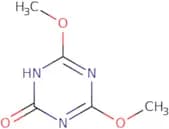
CAS:<p>3-Methoxy-4-(difluoromethoxy)benzaldehyde is a chemical compound that has been found to have anti-tumor properties. It inhibits tumor cells by inducing cell apoptosis. 3-Methoxy-4-(difluoromethoxy)benzaldehyde induces apoptosis in human carcinoma cells, with optimal activity at doses of 10 micromolar and higher. This chemical can be used as an anti-tumor agent because it shows no genotoxic effects, and has high yield with a low toxicity profile. When this compound is exposed to UV radiation, the formation of reactive oxygen species (ROS) increases the rate of cell death. 3-Methoxy-4-(difluoromethoxy)benzaldehyde also has anti-inflammatory properties, which may be due to its ability to inhibit prostaglandin synthesis.</p>Formula:C9H8F2O3Purity:Min. 95%Color and Shape:Colourless To Pale Yellow LiquidMolecular weight:202.15 g/mol4,6-Dimethoxy-1H-1,3,5-triazin-2-one
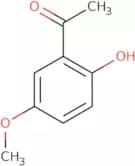
CAS:<p>4,6-Dimethoxy-1H-1,3,5-triazin-2-one is a conjugate of pyridinium with an amide. The compound has been used as a disinfectant for surfaces and in the treatment of wounds. It is also used as a biocide in water treatment. This compound has shown to be effective against Staphylococcus aureus and other bacteria, as well as some fungi. 4,6-Dimethoxy-1H-1,3,5-triazin-2-one can be synthesized from 2-(4'-methoxyphenyl)acetonitrile and chloral hydrate. The compound contains functionalities such as amines and oligosaccharides that are important for its antimicrobial activity.</p>Formula:C5H7N3O3Purity:Min. 95%Color and Shape:PowderMolecular weight:157.13 g/mol2'-Hydroxy-5'-methoxyacetophenone
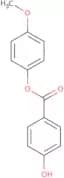
CAS:<p>2'-Hydroxy-5'-methoxyacetophenone is a molecule that has been shown to have anticancer activity. It inhibits the production of molecules in cancer cells, such as carbonic anhydrase and nitric oxide synthase. This molecule also binds to DNA and prevents the transcription of genes involved in cell proliferation, including NF-κB DNA. 2'-Hydroxy-5'-methoxyacetophenone also has inhibitory properties on the growth of cancer cells, including MCF-7 cells.</p>Formula:C9H10O3Purity:Min. 95%Color and Shape:Off-White PowderMolecular weight:166.17 g/mol4-Methoxyphenyl 4-Hydroxybenzoate
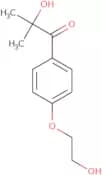
CAS:<p>4-Methoxyphenyl 4-hydroxybenzoate is a thermodynamic monomer with the molecular formula CHCOOH. It is a colorless to white solid that is soluble in water, methanol, and acetone. 4-Methoxyphenyl 4-hydroxybenzoate polymerizes under high pressure and temperature to form homopolymers and copolymers with phenoxy, trifluoromethyl, and amide groups. This compound has been used to make polyoxyethylene surfactants with a variety of properties including surface tension, viscosity, and efficiency.</p>Formula:C14H12O4Purity:Min. 95%Molecular weight:244.24 g/mol2-Hydroxy-4'-(2-hydroxyethoxy) -2-methylpropiophenone
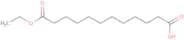
CAS:<p>2-Hydroxy-4'-(2-hydroxyethoxy)-2-methylpropiophenone is a reactive chemical substance that has been shown to have significant cytotoxicity and biological properties. It is used in the treatment of cervical cancer and has been shown to inhibit the growth of cancer cells. This compound is found in a number of commercial products, including sunscreens and hair dyes, but its use may be limited due to its photochemical reactivity. The structure of 2HEPP was determined using nuclear magnetic resonance (NMR) spectroscopy and mass spectrometry. The chemical formula for 2HEPP is C10H14O3. It has a molecular weight of 192.22 g/mol and an empirical formula of C10H14O3. 2HEPP is soluble in methanol, acetone, ether, chloroform, benzene, ethanol, ethyl acetate, diethyl ether, and aceton</p>Formula:C12H16O4Purity:Min. 95%Color and Shape:White PowderMolecular weight:224.25 g/mol11-Ethoxycarbonyldodecanoic acid
CAS:<p>11-Ethoxycarbonyldodecanoic acid is a high quality, useful intermediate, and versatile building block. It has been shown to be an efficient reagent for the synthesis of complex compounds. 11-Ethoxycarbonyldodecanoic acid can be used as a speciality chemical or research chemical in the production of fine chemicals, as well as in the synthesis of useful scaffolds and building blocks. This compound is also a reaction component that can be used in the production of many different types of products.</p>Formula:C14H26O4Purity:Min. 95%Color and Shape:PowderMolecular weight:258.35 g/mol6-Methoxy-1H-indol-5-ol
CAS:<p>6-Methoxy-1H-indol-5-ol, also known as 5-hydroxytryptophan (5HTP) is a natural amino acid that is found in the human body. It is converted into serotonin by the enzyme tryptophan hydroxylase and becomes an intermediate in the metabolic pathway of serotonin (5HT). Serotonin affects mood and behavior and is used to treat depression. 6-Methoxy-1H-indol-5-ol has been shown to be effective in treating depression and obesity. This drug has a number of side effects, including nausea, vomiting, diarrhea, dizziness, anxiety, agitation, headache, insomnia, tachycardia (fast heartbeat), high blood pressure, mania or psychosis.</p>Formula:C9H9NO2Purity:Min. 95%Molecular weight:163.17 g/mol
![N-[(1,1-Dimethylethoxy)carbonyl]-L-homoserine 1,1-Dimethylethyl Ester Methanesulfonate](/_next/image/?url=https%3A%2Fstatic.cymitquimica.com%2Fproducts%2FTR%2Fthumb-webp%2FD679508.webp&w=3840&q=75)

![N-(Methoxymethyl)-N-[(trimethylsilyl)methyl]benzenemethanamine (>90%)](/_next/image/?url=https%3A%2Fstatic.cymitquimica.com%2Fproducts%2FTR%2Fthumb-webp%2FM264620.webp&w=3840&q=75)
![2-(Cyclopropylmethoxy)-acetic Acid 1,1-Dimethyl-2-[4-(methylsulfonyl)phenyl]-2-oxoethyl Ester](/_next/image/?url=https%3A%2Fstatic.cymitquimica.com%2Fproducts%2FTR%2Fthumb-webp%2FC988675.webp&w=3840&q=75)





![4-[2-(3,4-Dimethoxyphenyl)-1,2-dibromoethyl]-1,2-dimethoxybenzene](/_next/image/?url=https%3A%2Fstatic.cymitquimica.com%2Fproducts%2F3D%2Fthumb-webp%2FFD66282.webp&w=3840&q=75)