Ethers
Ethers are organic compounds containing an ether functional group, characterized by an oxygen atom bonded to two hydrocarbon radicals. These compounds are valuable in synthesis and serve as solvents in various chemical reactions. At CymitQuimica, we offer a selection of high-quality ethers to support your research and industrial applications, ensuring reliable and effective results. Our range of ethers meets diverse laboratory requirements, from routine experiments to advanced research.
Found 40729 products of "Ethers"
Sort by
Purity (%)
0
100
|
0
|
50
|
90
|
95
|
100
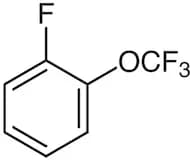
1-Fluoro-2-(trifluoromethoxy)benzene
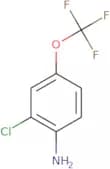
CAS:Formula:C7H4F4OPurity:>98.0%(GC)Color and Shape:Colorless to Almost colorless clear liquidMolecular weight:180.102-Chloro-4-(trifluoromethoxy)aniline
CAS:<p>2-Chloro-4-(trifluoromethoxy)aniline is a chemical reagent that is used in organic synthesis. It has a variety of uses including as a building block for complex compounds, an intermediate for the synthesis of other chemicals, and a reagent for the production of pharmaceuticals. 2-Chloro-4-(trifluoromethoxy)aniline is also useful in research to study the mechanism of certain reactions. The high quality and versatility of this compound make it a speciality chemical with many applications.</p>Formula:C7H5ClF3NOMolecular weight:211.57 g/mol7-Carbethoxyamino-4-methylcoumarin
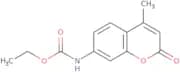
CAS:<p>7-Carbethoxyamido-4-methylcoumarin is a aminocoumarin that exhibits anticancer activity. It is able to inhibit the activity of DPP-IV, an enzyme that degrades insulin in the body.<br>7-Carbethoxyamido-4-methylcoumarin has been shown to inhibit cancer cells and lung cancer cell lines, as well as breast cancer cells and cells with diabetes. This compound has also been shown to have anticancer activity in vivo in rats.</p>Formula:C13H13NO4Purity:Min. 90%Color and Shape:PowderMolecular weight:247.25 g/mol6-Methoxy-1H-indol-5-ol
CAS:<p>6-Methoxy-1H-indol-5-ol, also known as 5-hydroxytryptophan (5HTP) is a natural amino acid that is found in the human body. It is converted into serotonin by the enzyme tryptophan hydroxylase and becomes an intermediate in the metabolic pathway of serotonin (5HT). Serotonin affects mood and behavior and is used to treat depression. 6-Methoxy-1H-indol-5-ol has been shown to be effective in treating depression and obesity. This drug has a number of side effects, including nausea, vomiting, diarrhea, dizziness, anxiety, agitation, headache, insomnia, tachycardia (fast heartbeat), high blood pressure, mania or psychosis.</p>Formula:C9H9NO2Purity:Min. 95%Molecular weight:163.17 g/mol2,4,6-Trimethoxybenzoic acid methyl ester
CAS:<p>2,4,6-Trimethoxybenzoic acid methyl ester is a yellow crystalline solid that can be dissolved in acetone, chloroform, ether, and benzene. It has a molecular weight of 164.3 g/mol and its chemical name is 2,4,6-trimethoxybenzoic acid methyl ester. It has a melting point of 144 °C and can be found in the hexanones group. This product is manufactured in Australia and its registry number is 135949-06-8.</p>Formula:C11H14O5Purity:Min. 95%Molecular weight:226.23 g/mol2-Chloro-3,4-dimethoxy-6-nitrobenzaldehyde
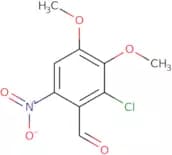
CAS:<p>2-Chloro-3,4-dimethoxy-6-nitrobenzaldehyde is a fine chemical with a CAS number of 82330-54-9. It is a versatile building block that can be used as a reagent or intermediate for the production of other chemicals. This product has been shown to have many different reactions. It is useful in the synthesis of complex compounds and offers high quality and purity.</p>Formula:C9H8ClNO5Purity:Min. 95%Color and Shape:PowderMolecular weight:245.62 g/mol3-(5-Iodo-4-hydroxy-3-methoxy)cinnamic acid
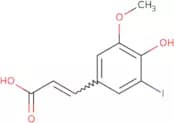
CAS:<p>3-(5-Iodo-4-hydroxy-3-methoxy)cinnamic acid is a chemical compound that can be used as a starting material for synthesis of complex compounds. It is a white solid with a melting point of about 100°C, and it is soluble in water. This product is an excellent reagent for the synthesis of new chemicals, and it has been widely used as a reaction component in organic syntheses. 3-(5-Iodo-4-hydroxy-3-methoxy)cinnamic acid also has antibacterial properties.</p>Formula:C10H9IO4Purity:Min. 95%Molecular weight:320.08 g/mol4-Methoxy-3,5-dimethyl-pyridin-2-yl)methyl acetate
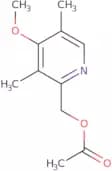
CAS:<p>4-Methoxy-3,5-dimethyl-pyridin-2-yl)methyl acetate is a chemical intermediate that is used in the manufacture of pharmaceuticals and other fine chemicals. It has been found to be a useful scaffold for the synthesis of other compounds. This compound may also be used as a building block or reaction component in research. 4-Methoxy-3,5-dimethyl-pyridin-2-yl)methyl acetate has a CAS number of 91219-90-8 and can be purchased from suppliers such as TCI America.</p>Formula:C11H15NO3Purity:Min. 95%Color and Shape:White PowderMolecular weight:209.24 g/mol3-(Ethoxycarbonylamino)phenothiazine
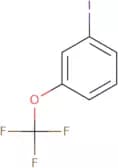
CAS:<p>3-(Ethoxycarbonylamino)phenothiazine is a chemical compound that belongs to the group of speciality chemicals. It is an intermediate for the synthesis of other compounds and can be used in the production of fine chemicals, reagents, and complex compounds. 3-(Ethoxycarbonylamino)phenothiazine has been shown to have a high reactivity and is useful as a building block in organic chemistry. This product also has versatile uses in research, which includes drug discovery and development.</p>Purity:Min. 95%3-(Trifluoromethoxy)iodobenzene
CAS:<p>3-(Trifluoromethoxy)iodobenzene is a reagent for organic synthesis that has a high quality and versatile reactivity. It can be used in the preparation of useful scaffolds, which are novel and useful building blocks. 3-(Trifluoromethoxy)iodobenzene is also a useful intermediate for the synthesis of complex compounds. 3-(Trifluoromethoxy)iodobenzene has been shown to have antioxidant properties and can be used as a fine chemical.</p>Formula:C7H4F3IOPurity:Min. 95%Color and Shape:Clear LiquidMolecular weight:288.01 g/mol3-Ethoxy-4-hydroxyphenylnitroethene
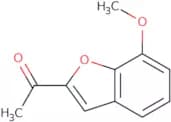
CAS:<p>3-Ethoxy-4-hydroxyphenylnitroethene is a fine chemical with the CAS number 90922-85-3. It is a versatile building block that can be used for research, as a reagent, or as a speciality chemical. This compound has many applications in synthesis due to its high quality and complex nature. It is also an intermediate in the production of other compounds.</p>Formula:C10H11NO4Purity:Min. 95%Color and Shape:PowderMolecular weight:209.2 g/mol2-Acetyl-7-methoxybenzofuran
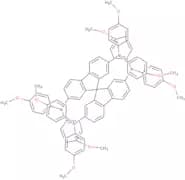
CAS:<p>2-Acetyl-7-methoxybenzofuran is an antibacterial agent that has potent inhibitory activity against methicillin-resistant Staphylococcus aureus and other bacterial species. It also inhibits the growth of endophytic fungus in plants. 2-Acetyl-7-methoxybenzofuran is synthesized by the fungus Cereus, which is used in traditional medicine to treat various ailments. This compound binds to the 16S ribosomal RNA, which inhibits protein synthesis and cell division. 2-Acetyl-7-methoxybenzofuran also shows potent inhibitory activity against methicillin-resistant Staphylococcus aureus, as well as other bacterial species. This antibiotic binds to the 16S ribosomal RNA, inhibiting protein synthesis and cell division.</p>Purity:Min. 95%Color and Shape:PowderMolecular weight:190.2 g/mol2,2',7,7'-Tetrakis-(N,N-di-4-methoxyphenylamino)-9,9'-spirobifluorene - Sublimed grade
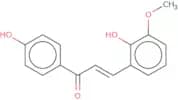
CAS:<p>2,2',7,7'-Tetrakis-(N,N-di-4-methoxyphenylamino)-9,9'-spirobifluorene (TPB) is a model system for investigating the transport of light signal in polymers. TPB can be used as a component in solar cells to increase their efficiency and improve their resistance to heat. TPB has shown high resistance to hydrochloric acid and other aggressive chemicals. TPB has been shown to be an effective photoelectron donor with a redox potential that is close to the one of copper; this property can be used for electrochemical impedance spectroscopy.</p>Formula:C81H68N4O8Purity:Min. 95%Color and Shape:Off-white to yellow solid.Molecular weight:1,225.43 g/mol4',2-Dihydroxy-3-methoxychalcone
CAS:<p>4,2-Dihydroxy-3-methoxychalcone is a fine chemical that is useful in the synthesis of various pharmaceuticals and other chemicals. It is a versatile building block that can be used as a reaction component or intermediate in the synthesis of complex compounds. 4,2-Dihydroxy-3-methoxychalcone has been shown to be a high quality reagent for use in the synthesis of speciality chemicals and research chemicals. This compound is also useful as a scaffold for the development of new drugs.</p>Formula:C16H14O4Purity:Min. 95%Molecular weight:270.28 g/molTris(2-methoxyphenyl)bismuth dichloride
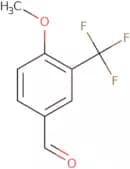
CAS:<p>Tris(2-methoxyphenyl)bismuth dichloride is a coordination compound with the chemical formula BiCl(OMeCH). It crystallizes in the triclinic crystal system and its molecular structure is trigonal. Tris(2-methoxyphenyl)bismuth dichloride has been characterized by X-ray and infrared spectroscopy, as well as by analysis of the axial, apical, and trigonal coordinates. The compound has been shown to form perchlorate and diperchlorate salts. The presence of bismuth atoms in this molecule produces a bright yellow color.</p>Formula:C21H21BiCl2O3Purity:Min. 95%Color and Shape:Off-White PowderMolecular weight:601.28 g/mol4-Methoxy-3-(trifluoromethyl)benzaldehyde
CAS:<p>4-Methoxy-3-(trifluoromethyl)benzaldehyde is a fine chemical that can be used as a building block for pharmaceuticals and other organic compounds. It is also used in research for the synthesis of complex compounds. This chemical has been reported to be a useful intermediate or scaffold for organic syntheses. 4-Methoxy-3-(trifluoromethyl)benzaldehyde is soluble in water and ethanol, and insoluble in ether. It has a melting point of 140°C, boiling point of 249°C, density 1.096 g/cm³, and refractive index (20°C) 1.567.</p>Formula:C9H7F3O2Purity:Min. 95%Molecular weight:204.15 g/mol2-(1-Ethoxyethoxy)ethyl)benzene
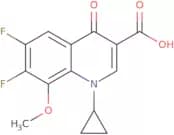
CAS:<p>2-(1-Ethoxyethoxy)ethyl)benzene is a versatile building block that is used in the synthesis of many organic compounds. It can be used as a reagent, speciality chemical, and research chemical for making new substances. 2-(1-Ethoxyethoxy)ethyl)benzene is also useful as an intermediate for other reactions or as a scaffold for complex molecules. It is soluble in most solvents and has a high purity level.</p>Formula:C12H18O2Purity:Min. 95%Color and Shape:Colorless PowderMolecular weight:194.27 g/mol1-Cyclopropyl-6,7-difluoro-1,4-dihydro-8-methoxy-4-oxo-3-quinolinecarboxylic acid
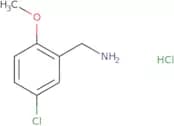
CAS:<p>Moxifloxacin is an analog of the antibiotic quinolone. It is a prodrug that is hydrolyzed in vivo to its active form, moxifloxacin. Moxifloxacin has been shown to be effective against a variety of bacteria, including methicillin-resistant Staphylococcus aureus (MRSA), Mycobacterium tuberculosis and Mycobacterium avium complex. The reaction yield for the synthesis of moxifloxacin is very high, with an industrial production capacity in excess of 500 tons per year. Impurities are not usually found in the final product due to the use of methyl alcohol as a solvent during the reaction process. The drug has discoloring properties and deuterium atoms are often substituted for hydrogen atoms on the molecule to make it more stable. Deuterium atoms can be easily identified by mass spectrometry analysis. Moxifloxac</p>Formula:C14H11F2NO4Purity:Min. 95%Color and Shape:PowderMolecular weight:295.24 g/mol5-Chloro-2-methoxybenzylamine hydrochloride
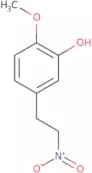
CAS:<p>5-Chloro-2-methoxybenzylamine hydrochloride is a chemical substance that is used as an intermediate in the synthesis of pharmaceuticals and other chemicals. It can be used as a building block to create complex compounds, or it can be used in reactions to produce speciality chemicals. 5-Chloro-2-methoxybenzylamine hydrochloride is a high quality reagent that can be used as a reaction component in research and development.<br>A fine chemical, 5-Chloro-2-methoxybenzylamine hydrochloride has many uses as a versatile building block for organic synthesis. It is also useful for generating research chemicals and complex compounds for use in medicines and other products.</p>Formula:C8H10ClNO·(HCl)Purity:Min. 95%Color and Shape:PowderMolecular weight:208.08 g/mol1-(3-Hydroxy-4-methoxyphenyl)-2-nitroethane
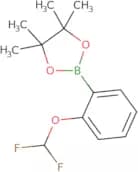
CAS:<p>1-(3-Hydroxy-4-methoxyphenyl)-2-nitroethane is a chemical intermediate that can be used in the synthesis of other compounds. It is a fine chemical with many potential uses, as well as being a versatile building block for organic synthesis. As an example, 1-(3-Hydroxy-4-methoxyphenyl)-2-nitroethane can be used to synthesize the drug erythromycin. This chemical has been shown to have antihistamine and antiinflammatory properties.</p>Formula:C9H11NO4Purity:Min. 95%Molecular weight:197.19 g/mol2-Difluoromethoxyphenylboronic acid pinacol ester
CAS:<p>2-Difluoromethoxyphenylboronic acid pinacol ester is a high quality reagent that can be used as a useful intermediate, fine chemical, or speciality chemical in reactions. This compound is an important building block for synthesizing other chemicals and can also be used to make novel compounds with pharmaceutical properties. 2-Difluoromethoxyphenylboronic acid pinacol ester is versatile and can be used in many different reactions. It has been reported to react with various other molecules to form new scaffolds and building blocks for use in organic synthesis.</p>Formula:C13H17BF2O3Purity:Min. 95%Color and Shape:PowderMolecular weight:270.08 g/mol4-Methoxydiphenyliodonium chloride
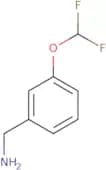
CAS:<p>4-Methoxydiphenyliodonium chloride is a versatile building block with many uses in research and industry. It is used as a reagent to synthesize organic compounds, as well as a speciality chemical and an intermediate. 4-Methoxydiphenyliodonium chloride has been shown to be useful in the synthesis of complex compounds, such as pharmaceuticals, agrochemicals, and pesticides. This compound can also be used in the preparation of high quality products, such as fine chemicals.</p>Formula:C13H12IO·ClPurity:Min. 95%Molecular weight:346.59 g/mol3-(Difluoromethoxy)benzyl amine
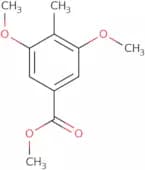
CAS:<p>3-(Difluoromethoxy)benzyl amine is a high-quality reagent that is used as an intermediate in the synthesis of complex compounds. 3-(Difluoromethoxy)benzyl amine is also a useful building block for the synthesis of speciality chemicals and research chemicals. This compound can be used as a versatile building block, which can be used to synthesize different functional groups. 3-(Difluoromethoxy)benzyl amine is soluble in many organic solvents and has a boiling point of 193 °C.</p>Formula:C8H9F2NOPurity:Min. 95%Molecular weight:173.16 g/mol3,5-Dimethoxy-4-methylbenzoic acid methyl ester
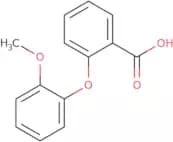
CAS:<p>3,5-Dimethoxy-4-methylbenzoic acid methyl ester (DMMBME) is a synthetic compound that is used as an immunogen to generate antibodies against fungal proteins. DMMBME is specifically used to identify the presence of bryoria and australian fungi in plants. The chemical structure of DMMBME can be oxidized by depsidones, which leads to the production of reactive oxygen species that are believed to be responsible for the oxidative coupling of target proteins. This reaction can be catalyzed by a number of enzymes such as nidulin, which is found in plant roots.</p>Formula:C11H14O4Purity:Min. 95%Color and Shape:PowderMolecular weight:210.23 g/mol2-(2-Methoxyphenoxy)Benzoic Acid
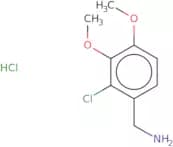
CAS:<p>2-(2-Methoxyphenoxy)benzoic acid is an organic compound that can be synthesized in the laboratory. It has been shown to dimerize spontaneously in aqueous solutions with the release of hydrogen peroxide and oxygen. The mechanism is thought to involve oxidative dimerization, which may lead to carboxylate bond cleavage, intramolecular radical formation, or mechanistically radical attack. This process also results in the formation of a 2-methoxyphenoxy radical.</p>Formula:C14H12O4Purity:Min. 95%Color and Shape:PowderMolecular weight:244.24 g/mol2-Chloro-3,4-dimethoxybenzylamine HCl
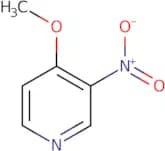
CAS:<p>2-Chloro-3,4-dimethoxybenzylamine HCl is a fine chemical that can be used as a building block to synthesize new compounds. It is also a useful intermediate in the production of pharmaceuticals and other organic chemicals. 2-Chloro-3,4-dimethoxybenzylamine HCl has been used as a reaction component for the synthesis of various complex compounds. This compound has been shown to have high purity and quality.</p>Formula:C9H12ClNO2·HClPurity:Min. 95%Molecular weight:238.11 g/mol4-Methoxy-3-nitropyridine
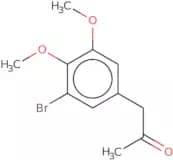
CAS:<p>4-Methoxy-3-nitropyridine (4MNOP) is an organic compound that is a white solid at room temperature. 4MNOP has been shown to interact with alkali metals and can be used in the preparation of emulsifying agents. It also has been found to have pharmacokinetic properties, including a low molecular weight, good solubility in water, and a high degree of absorption. The imidazopyridine ring system is susceptible to reductive amination reactions, which may lead to the formation of amine or surfactant residues.</p>Formula:C6H6N2O3Purity:Min. 95%Color and Shape:PowderMolecular weight:154.13 g/mol(3-Bromo-4,5-dimethoxyphenyl)acetone
CAS:<p>(3-Bromo-4,5-dimethoxyphenyl)acetone is a reagent that is used as an intermediate in the synthesis of a variety of compounds. It also has potential use as a building block for the synthesis of a wide range of complex compounds. (3-Bromo-4,5-dimethoxyphenyl)acetone can be used as a building block for chemical reactions and research chemicals. This compound has been shown to have versatile applications and is useful in the synthesis of fine chemicals, speciality chemicals, and research chemicals.</p>Formula:C11H13BrO3Purity:Min. 95%Molecular weight:273.12 g/mol4-[2-(3,4-Dimethoxyphenyl)-1,2-dibromoethyl]-1,2-dimethoxybenzene
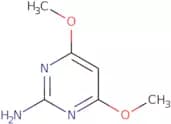
CAS:<p>4-[2-(3,4-Dimethoxyphenyl)-1,2-dibromoethyl]-1,2-dimethoxybenzene is a high quality chemical that is an intermediate for the synthesis of other compounds. It has been used as a reagent in the synthesis of complex compounds and has been shown to be useful for the production of fine chemicals. This compound can also be used as a scaffold or building block in organic chemistry. The versatility of 4-[2-(3,4-Dimethoxyphenyl)-1,2-dibromoethyl]-1,2-dimethoxybenzene makes it an important reaction component in organic chemistry and research chemicals.</p>Formula:C18H20Br2O4Purity:Min. 95%Molecular weight:460.16 g/mol4,6-Dimethoxypyrimidin-2-amine
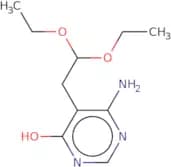
CAS:<p>4,6-Dimethoxypyrimidin-2-amine is a pyrimidine compound with the molecular formula C5H4N4O2. It can be prepared from the reaction of 2,4,6-trichloropyrimidine with formaldehyde and sodium cyanide in an organic solution. The properties of 4,6-Dimethoxypyrimidin-2-amine were studied on bacterial strain and human urine samples. This molecule is soluble in water and reacts with carboxylic acid to form a hydrogen bond. The nitrogen atoms show some reactivity towards copper chloride and hydrogen chloride.</p>Formula:C6H9N3O2Purity:Min. 95%Color and Shape:White PowderMolecular weight:155.15 g/mol6-Amino-5(2,2-diethoxyethyl)-4-hydroxy pyrimidine
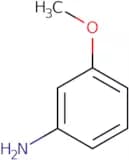
CAS:<p>6-Amino-5(2,2-diethoxyethyl)-4-hydroxy pyrimidine is a reagent that is used in the synthesis of various chemical substances. It is a versatile building block and can be used as an intermediate for the production of fine chemicals. 6-Amino-5(2,2-diethoxyethyl)-4-hydroxy pyrimidine has been shown to have high reactivity and selectivity, making it a useful scaffold for organic synthesis. This compound can be used as an intermediate for the production of complex compounds such as pharmaceuticals, agrochemicals, or perfumes. 6-Amino-5(2,2-diethoxyethyl)-4-hydroxy pyrimidine is also known to be useful in research fields such as biology and medicine.</p>Formula:C10H17N3O3Purity:Min. 95%Color and Shape:White PowderMolecular weight:227.26 g/mol3-Methoxybenzenamine
CAS:<p>3-Methoxybenzenamine is a molecule that can be synthesized by an asymmetric reaction. It has carcinogenic potential and is classified as a chemical substance. 3-Methoxybenzenamine reacts with hydrochloric acid to form hydrogen chloride gas and methoxybenzene. The hydroxyl group on the molecule reacts with l-tartaric acid to form an ester, which then undergoes hydrolysis to produce 3-hydroxybutanoic acid. This reaction also produces water, which may result in a decrease of the concentration of the reactants. 3-Methoxybenzenamine can also react with amines to form quaternary ammonium salts, which are highly soluble in water and have a high detection sensitivity.</p>Formula:C7H9NOPurity:Min. 95%Color and Shape:Clear LiquidMolecular weight:123.15 g/mol2-[(Acetyloxy)methoxy]ethyl acetate
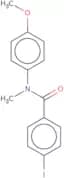
CAS:<p>2-[(Acetyloxy)methoxy]ethyl acetate is a drug that inhibits the enzyme orotidine 5′-monophosphate decarboxylase, which is responsible for the conversion of uridine to orotic acid. This inhibition prevents the synthesis of RNA and DNA and leads to cell death by inhibiting protein synthesis. 2-[(Acetyloxy)methoxy]ethyl acetate has shown tuberculostatic activity in leukemic mice, with an inhibition constant of 3.2 × 10 M. The compound also inhibits diphenolase activity, which is important in the production of uridine phosphorylase, an enzyme that produces uridine from orotic acid. 2-[(Acetyloxy)methoxy]ethyl acetate has been tested for its ability to inhibit herpes simplex virus (HSV) in vitro and in vivo and has been shown to be effective against HSV type 1 and HSV</p>Formula:C7H12O5Purity:Min. 95%Color and Shape:Colorless Clear LiquidMolecular weight:176.17 g/mol4-Iodo-N-(4-methoxyphenyl)-N-methylbenzamide
CAS:<p>4-Iodo-N-(4-methoxyphenyl)-N-methylbenzamide is a useful scaffold that can be used in the synthesis of complex compounds. It is also a versatile building block and has been found to be useful as an intermediate and building block. 4-Iodo-N-(4-methoxyphenyl)-N-methylbenzamide is a fine chemical with CAS No. 320734-40-5. This reagent is high quality, research chemicals, and can be used in the synthesis of speciality chemicals.</p>Formula:C15H14INO2Purity:Min. 95%Molecular weight:367.18 g/mol2-[2-[4-[Bis(4-fluorophenyl)methyl]piperazin-1-yl]ethoxy]acetic acid HCl
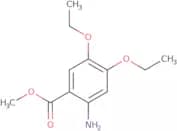
CAS:<p>2-[2-[4-[Bis(4-fluorophenyl)methyl]piperazin-1-yl]ethoxy]acetic acid HCl (BAY-85788) is a drug which acts as a histamine receptor antagonist. It has been shown to be effective in the treatment of idiopathic urticaria. BAY-85788 has also been found to have less potential for drug interactions than other histamine receptor antagonists, and does not cause an increase in blood pressure, unlike other compounds with this activity. This compound is metabolized by cytochrome P450 enzymes and does not contain nitrogen atoms or heterocyclic rings. Experimental studies have shown that orally administered BAY-85788 is absorbed from the GI tract and eliminated unchanged in urine. Studies have also shown that BAY-85788 is active against inflammatory diseases such as atopic dermatitis, asthma, and chronic obstructive pulmonary disease (COPD</p>Formula:C21H24F2N2O3·xHClPurity:Min. 95%Color and Shape:PowderMolecular weight:390.42 g/mol2-Amino-4,5-diethoxy-benzoic acid methyl ester
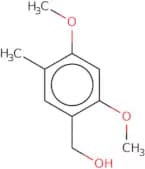
CAS:<p>2-Amino-4,5-diethoxy-benzoic acid methyl ester is a fine chemical that is used as a building block in the synthesis of complex compounds. It is a versatile building block with many possible reactions and can be used as a reagent or speciality chemical. 2-Amino-4,5-diethoxy-benzoic acid methyl ester can be used in the synthesis of diverse scaffolds for use in research chemicals, pharmaceuticals and agrochemicals.</p>Formula:C12H17NO4Purity:Min. 95%Molecular weight:239.27 g/mol2,4-Dimethoxy-5-methylbenzyl alcohol
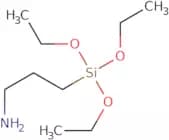
CAS:<p>2,4-Dimethoxy-5-methylbenzyl alcohol is a high quality chemical that is used as an intermediate for the synthesis of complex compounds. It has been used as a reagent and as a building block for the synthesis of other chemicals. This compound can be used to produce fine chemicals and research chemicals. 2,4-Dimethoxy-5-methylbenzyl alcohol has been shown to be useful in the production of versatile building blocks and reaction components.</p>Formula:C10H14O3Purity:Min. 95%Molecular weight:182.22 g/mol3-Aminopropyltriethoxysilane
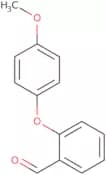
CAS:<p>3-Aminopropyltriethoxysilane is a liquid that has a phase transition temperature of -88.3°C. It is soluble in water at 1 g/L and in ethanol at 0.1 g/L. 3-Aminopropyltriethoxysilane has been shown to inhibit the production of prostaglandin E2 and leukotrienes by inhibiting cyclooxygenase activity in red blood cells, which may be due to its ability to chelate metal ions such as iron or copper. 3-Aminopropyltriethoxysilane also inhibits the production of prostaglandin E2 and leukotrienes by inhibiting cyclooxygenase activity in red blood cells, which may be due to its ability to chelate metal ions such as iron or copper. The compound also inhibits the production of prostaglandin E2 and leukotrienes by inhibiting</p>Formula:C9H23NO3SiPurity:Min. 97 Area-%Color and Shape:Colorless Clear LiquidMolecular weight:221.37 g/mol2-(4-Methoxyphenoxy)benzaldehyde
CAS:<p>2-(4-Methoxyphenoxy)benzaldehyde is a fine chemical that is used as a versatile building block in the synthesis of complex compounds and research chemicals. 2-(4-Methoxyphenoxy)benzaldehyde is also a reagent that can be used to synthesize speciality chemicals, useful building blocks, and reaction components. This chemical may be used as an intermediate for the synthesis of high-quality pharmaceuticals or other useful scaffolds. It has CAS number 19434-36-7.</p>Formula:C14H12O3Purity:Min. 95%Color and Shape:White To Brown SolidMolecular weight:228.24 g/mol2,4,6-Trimethoxy-m-xylene
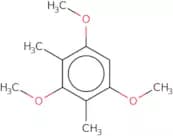
CAS:<p>2,4,6-Trimethoxy-m-xylene is a methylated aromatic hydrocarbon that can be found in coal tar and oil. It is a stable compound that can be protonated by superacids such as arenium ion (H2SO4). The protonation of 2,4,6-trimethoxy-m-xylene leads to the formation of carbocations, which are electron deficient species. This radical cation has a resonance structure with three double bonds between carbon atoms. The resonance structure of the radical cation is stabilized by hyperconjugative interactions between the electron pair on oxygen and the empty p orbital on carbon.</p>Formula:C11H16O3Purity:Min. 95%Molecular weight:196.24 g/mol2-Chloro-7-methoxyquinazoline
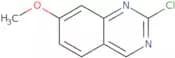
CAS:<p>2-Chloro-7-methoxyquinazoline is a useful chemical that is used in the production of other compounds. It can be used as a building block for the synthesis of various organic compounds, such as pharmaceuticals and pesticides. This compound has been shown to have useful properties, such as high purity and low cost.</p>Formula:C9H7ClN2OPurity:Min. 95%Color and Shape:Yellow PowderMolecular weight:194.62 g/mol2,5-Difluoroanisole
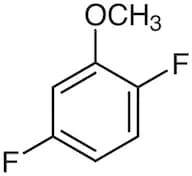
CAS:Formula:C7H6F2OPurity:>98.0%(GC)Color and Shape:Colorless to Almost colorless clear liquidMolecular weight:144.124-Methoxybenzyl chloride - stabilised with potassium carbonate
CAS:<p>4-Methoxybenzyl chloride is a chemotherapeutic agent that inhibits the binding of inhibitor molecules to their target proteins. It has been shown to inhibit the binding of uridine and methanol solvent to their targets, which are enzymes in the synthesis of nucleic acids. The inhibition of these enzymes prevents DNA replication and protein synthesis, leading to cell death. 4-Methoxybenzyl chloride has been found to be effective in treating autoimmune diseases and solid tumours, as well as being an antimicrobial treatment for microbial infections. 4-Methoxybenzyl chloride is also used in chemical syntheses for its ability to undergo cationic polymerization and asymmetric synthesis.</p>Formula:C8H9ClOPurity:Min. 95%Color and Shape:Colorless Clear LiquidMolecular weight:156.61 g/molHoechst 33342
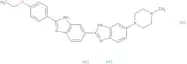
CAS:<p>2'-(4-Ethoxyphenyl)-5-(4-methyl-1-piperazinyl)-2,5'-bi-1H-benzimidazole trihydrochloride (EPMB) is a DNA binding agent that is used in tumor detection and research into apoptosis. It has been shown to inhibit the activity of p-glycoprotein, which is an efflux pump protein, and Bcl-2 protein. EPMB has also been shown to cause apoptosis in human squamous cell carcinoma cells in a concentration dependent manner. This compound has shown potential as a treatment for cancer because it inhibits the ability of cancer cells to proliferate by binding to the NMDA receptor.</p>Formula:C27H28N6O·3HCl·xH2OPurity:Min. 95%Color and Shape:Yellow PowderMolecular weight:561.93 g/molN-Benzyl-N-(2-ethoxyphenoxy)ethylamine
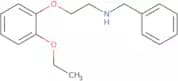
CAS:<p>N-Benzyl-N-(2-ethoxyphenoxy)ethylamine is a fine chemical that belongs to the category of building blocks and research chemicals. It is a versatile intermediate that can be used in the synthesis of a wide range of compounds. This compound has been shown to be useful as a reaction component and scaffold for the construction of complex organic molecules. It has also been used as an intermediate in the synthesis of high quality speciality chemicals.</p>Formula:C17H21NO2Purity:Min. 95%Color and Shape:PowderMolecular weight:271.35 g/mol6-Ethoxypurine
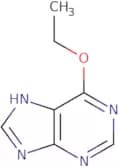
CAS:<p>6-Ethoxypurine is a nucleoside analog that inhibits the enzyme ribonucleotide reductase, which converts ribonucleotides to deoxyribonucleotides. It is used in cell culture to measure the effects of radiation and hydrochloric acid on the production of ATP. 6-Ethoxypurine has been shown to inhibit influenza virus replication with an IC50 of 10 μM. This compound has reactive hydroxyl groups that allow it to participate in hydrogen bonding, which can be beneficial for interactions with other molecules. 6-Ethoxypurine also exhibits nucleophilic properties, which allows it to react with other chemical species and can be useful for generating new chemical compounds.</p>Formula:C7H8N4OPurity:Min. 95%Color and Shape:PowderMolecular weight:164.16 g/mol4-Difluoromethoxyaniline
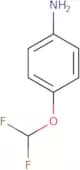
CAS:<p>4-Difluoromethoxyaniline is an allosteric modulator for glutamate receptors. It is a chemical compound that can be used to modify glutamate receptors to act as either metabotropic or ionotropic. 4-Difluoromethoxyaniline is used in the treatment of Parkinson's disease and other movement disorders, such as dyskinesia. It has been shown that 4-difluoromethoxyaniline increases the activity of activated glutamate receptors, which leads to increased levels of the neurotransmitter dopamine in the brain. This drug may also inhibit nitric oxide production and corticotropin-releasing hormone (CRH) synthesis.</p>Formula:C7H7F2NOPurity:Min. 95%Molecular weight:159.13 g/molEthyl 3,3-diethoxypropionate
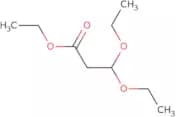
CAS:<p>Ethyl 3,3-diethoxypropionate is an organic compound that is synthesized from the reaction of diethyl malonate and chloroacetic acid in the presence of a base catalyst. This product has been shown to be an effective inhibitor of mitochondrial cytochrome c oxidase in vitro studies. Ethyl 3,3-diethoxypropionate also has been found to inhibit quinoline derivatives, such as erythromycin and tetracycline, which are involved in bacterial DNA synthesis. Furthermore, this product inhibits β-unsaturated aldehydes and allylation.</p>Formula:C9H18O4Purity:Min. 95%Color and Shape:Colorless Clear LiquidMolecular weight:190.24 g/mol3,6-Dimethoxyterephthaldicarboxaldehyde
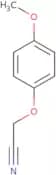
<p>3,6-Dimethoxyterephthaldicarboxaldehyde is a chemical compound that can be used in the synthesis of complex compounds. It has been shown to be an effective reagent for the synthesis of heterocycles and has also been used as a building block in the synthesis of pharmaceuticals and other organic compounds. 3,6-Dimethoxyterephthaldicarboxaldehyde is a versatile building block with many potential uses. It has also been identified as a useful scaffold for drug design and development.</p>Purity:Min. 95%2-(4-Methoxyphenoxy)acetonitrile
CAS:<p>2-(4-Methoxyphenoxy)acetonitrile is a chemical compound that is used to synthesize acetobromoglucose. It undergoes transformation and condensation reactions with acetobromoglucose to form 4-methoxyaceto bromoglucose.</p>Formula:C9H9NO2Purity:Min. 95%Molecular weight:163.17 g/mol








![4-[2-(3,4-Dimethoxyphenyl)-1,2-dibromoethyl]-1,2-dimethoxybenzene](/_next/image/?url=https%3A%2Fstatic.cymitquimica.com%2Fproducts%2F3D%2Fthumb-webp%2FFD66282.webp&w=3840&q=75)
![2-[(Acetyloxy)methoxy]ethyl acetate](/_next/image/?url=https%3A%2Fstatic.cymitquimica.com%2Fproducts%2F3D%2Fthumb-webp%2FFA64791.webp&w=3840&q=75)
![2-[2-[4-[Bis(4-fluorophenyl)methyl]piperazin-1-yl]ethoxy]acetic acid HCl](/_next/image/?url=https%3A%2Fstatic.cymitquimica.com%2Fproducts%2F3D%2Fthumb-webp%2FFB98570.webp&w=3840&q=75)