Ethers
Ethers are organic compounds containing an ether functional group, characterized by an oxygen atom bonded to two hydrocarbon radicals. These compounds are valuable in synthesis and serve as solvents in various chemical reactions. At CymitQuimica, we offer a selection of high-quality ethers to support your research and industrial applications, ensuring reliable and effective results. Our range of ethers meets diverse laboratory requirements, from routine experiments to advanced research.
Found 40712 products of "Ethers"
Sort by
Purity (%)
0
100
|
0
|
50
|
90
|
95
|
100
Methoxypropoxypropanol
CAS:<p>Methoxypropoxypropanol (MPP) is a highly selective inhibitor of the enzyme picolinic acid carboxylase, which converts L-pyridoxal 5'-phosphate to picolinic acid. MPP has shown good efficacy in reducing disease activity in animal models and is being developed for the treatment of rheumatoid arthritis. This drug also has been shown to be toxicologically safe in both acute and chronic toxicity studies. Methoxypropoxypropanol has also been used as an analytical reagent for the qualitative detection of picolinic acid in urine and blood samples. The use of this compound as a wastewater treatment agent for removal of organic acids from industrial effluents is well studied. MPP has been found to have some beneficial effects on congestive heart failure in rats by lowering their blood pressure and cholesterol levels.</p>Formula:C7H16O3Purity:Min. 95%Color and Shape:Clear LiquidMolecular weight:148.2 g/mol2,3,4-Trimethoxyaniline
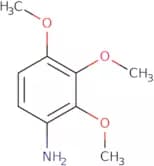
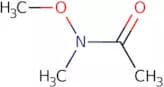
CAS:<p>2,3,4-Trimethoxyaniline (2,3,4-TMXA) is a methoxylated monophenolic compound. It has been shown to be effective at disrupting the microtubules in cancer cells and is believed to work by inhibiting the enzyme topoisomerase II. 2,3,4-TMXA also inhibits dopamine synthesis and blocks the amine uptake system in cancer cells. This agent has been shown to be an effective anticancer drug for human serum at nanomolar concentrations.</p>Formula:C9H13NO3Purity:Min. 95%Molecular weight:183.2 g/molN-Methoxy-N-methylacetamide
CAS:<p>N-Methoxy-N-methylacetamide is a nucleophilic amide that can be synthesized by the reaction of acetamide with methylmagnesium chloride. It has been used to synthesize an enantiopure derivative of 2-aminopropanol, which is used in the synthesis of potent antitumor agents. N-Methoxy-N-methylacetamide has shown potent anticancer activity in mice and rats. This molecule exhibits a carbonyl group that can act as an enolate, which is a reactive intermediate within chemical reactions. The nucleophilic attack on this carbonyl group leads to intramolecular hydrogen transfer, producing a more stable product.</p>Formula:C4H9NO2Purity:Min. 95%Molecular weight:103.12 g/mol4-Formyl-3-methoxy-phenyloxymethyl polystyrene resin (200-400 mesh)
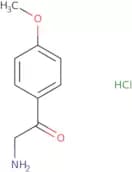
<p>Please enquire for more information about 4-Formyl-3-methoxy-phenyloxymethyl polystyrene resin (200-400 mesh) including the price, delivery time and more detailed product information at the technical inquiry form on this page</p>Purity:Min. 95%2-Amino-4'-methoxyacetophenone hydrochloride
CAS:Controlled Product<p>Please enquire for more information about 2-Amino-4'-methoxyacetophenone hydrochloride including the price, delivery time and more detailed product information at the technical inquiry form on this page</p>Formula:C9H11NO2·HClPurity:Min. 95%Color and Shape:PowderMolecular weight:201.65 g/mol[4-[2-(Diethylamino)ethoxy]-3-iodophenyl][2-(1-hydroxybutyl)-3-benzofuranyl]-methanone
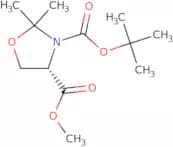
CAS:Controlled Product<p>Please enquire for more information about [4-[2-(Diethylamino)ethoxy]-3-iodophenyl][2-(1-hydroxybutyl)-3-benzofuranyl]-methanone including the price, delivery time and more detailed product information at the technical inquiry form on this page</p>Formula:C25H30INO4Purity:Min. 95%Molecular weight:535.41 g/mol(S)-(-)-3-tert-Butoxycarbonyl-4-methoxycarbonyl-2,2-dimethyl-1,3-oxazolidine
CAS:<p>Please enquire for more information about (S)-(-)-3-tert-Butoxycarbonyl-4-methoxycarbonyl-2,2-dimethyl-1,3-oxazolidine including the price, delivery time and more detailed product information at the technical inquiry form on this page</p>Formula:C12H21NO5Purity:Min. 95%Molecular weight:259.3 g/mol2-(Phenylmethoxy)-acetic acid hydrazide
CAS:<p>2-(Phenylmethoxy)-acetic acid hydrazide is a synthetic depressant that belongs to the group of phthalimides. It is an orally active drug with a triazolo structure and has been used in the treatment of psychoneurosis and anxiety, but it has also been found to be effective in treating reflexes and diazepine-induced psychosomatic disorders. 2-(Phenylmethoxy)-acetic acid hydrazide may also act as a prodrug for other agents, such as azides or phenylureas.</p>Formula:C9H12N2O2Purity:Min. 95%Molecular weight:180.2 g/mol7-[(4Methoxyphenyl)methyl]-5-methyl-2H-pyrazolo[3,4-d]pyrimidine-4,6(5H,7H)-dione
CAS:Controlled Product<p>Please enquire for more information about 7-[(4Methoxyphenyl)methyl]-5-methyl-2H-pyrazolo[3,4-d]pyrimidine-4,6(5H,7H)-dione including the price, delivery time and more detailed product information at the technical inquiry form on this page</p>Formula:C14H14N4O3Purity:Min. 95%Molecular weight:286.29 g/molTrimethylolpropane ethoxylate - average Mn ~170
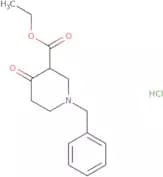
CAS:<p>Please enquire for more information about Trimethylolpropane ethoxylate - average Mn ~170 including the price, delivery time and more detailed product information at the technical inquiry form on this page</p>Formula:(C2H4O)n•(C2H4O)n•(C2H4O)n•C6H14O3Purity:Min. 95%1-Benzyl-3-carbethoxy-4-piperidone hydrochloride
CAS:<p>1-Benzyl-3-carbethoxy-4-piperidone hydrochloride is a carboxylic acid that is used as a waterproofing agent in cyclohexane. It is absorbed by the skin and other tissues, which may lead to adverse effects on the body. Exposure to this compound has been shown to result in irritation of the skin, eyes, and respiratory tract, as well as changes in heart rate and blood pressure.</p>Formula:C15H19NO3•HClPurity:Min. 95%Molecular weight:297.78 g/mol(2-{2-[2-(2-Aminoethyl)-4,5-dimethoxybenzyl]-4,5-dimethoxyphenyl}ethyl)amine dihydrochloride
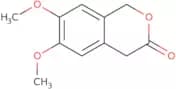
CAS:Controlled Product<p>Please enquire for more information about (2-{2-[2-(2-Aminoethyl)-4,5-dimethoxybenzyl]-4,5-dimethoxyphenyl}ethyl)amine dihydrochloride including the price, delivery time and more detailed product information at the technical inquiry form on this page</p>Formula:C21H30N2O4Purity:Min. 95%Molecular weight:374.47 g/mol6,7-Dimethoxy-1,4-dihydro-3H-isochromen-3-one
CAS:<p>6,7-Dimethoxy-1,4-dihydro-3H-isochromen-3-one is a hydrazide with the chemical formula C8H8N2O3. It belongs to the family of natural products and has the molecular weight of 172.15. 6,7-Dimethoxy-1,4-dihydro-3H-isochromen-3-one is an isoquinolone derivative that contains two methyl groups on carbons 6 and 7. The compound is a symmetric molecule that can be found as a hydroxy or methoxy derivative. It reacts with 3,4 dimethoxyphenylacetic acid to form yohimbane in the presence of an oxidizing agent such as electrochemical oxidation or maldi tof. 6,7 Dimethoxy 1,4 dihydro 3H isochromen 3 one was obtained from endohedral metalloful</p>Formula:C11H12O4Purity:Min. 95%Molecular weight:208.21 g/mol3-Methoxy methamphetamine hydrochloride
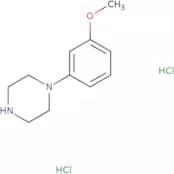
CAS:Controlled Product<p>Please enquire for more information about 3-Methoxy methamphetamine hydrochloride including the price, delivery time and more detailed product information at the technical inquiry form on this page</p>Formula:C11H18ClNOPurity:Min. 95%Molecular weight:215.72 g/mol1-(3-Methoxyphenyl)piperazine dihydrochloride
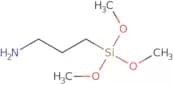
CAS:Controlled Product<p>Please enquire for more information about 1-(3-Methoxyphenyl)piperazine dihydrochloride including the price, delivery time and more detailed product information at the technical inquiry form on this page</p>Formula:C11H18Cl2N2OPurity:Min. 95%Color and Shape:PowderMolecular weight:265.18 g/mol3-Aminopropyltrimethoxysilane
CAS:<p>3-Aminopropyltrimethoxysilane is a chemical that belongs to the group of aminopropyltriethoxysilanes. It is a reactive substance and is commonly used as an additive in adhesives and sealants. 3-Aminopropyltrimethoxysilane has been shown to be an efficient coupling agent for the formation of hydroxyl groups on nanoparticles, which are then used as drug carriers. The optimum concentration of 3-aminopropyltrimethoxysilane lies between 0.01 and 0.1 M, with a pH range of 6 and 8. This chemical can react with hydrochloric acid, resulting in the production of hydrogen gas; with cervical cancer cells in culture, leading to cell death; or with skin cells, causing damage to their transport properties.</p>Formula:C6H17NO3SiPurity:Min. 95%Color and Shape:Clear LiquidMolecular weight:179.29 g/molrac-3-hexadecanamido-2-methoxypropan-1-ol phosphocholine monohydrate
CAS:<p>Please enquire for more information about rac-3-hexadecanamido-2-methoxypropan-1-ol phosphocholine monohydrate including the price, delivery time and more detailed product information at the technical inquiry form on this page</p>Formula:C25H55N2O7PPurity:Min. 95%Molecular weight:526.69 g/mol4-Benzyloxy-3-methoxy-N-methylphenethylamine hydrochloride
CAS:Controlled Product<p>Please enquire for more information about 4-Benzyloxy-3-methoxy-N-methylphenethylamine hydrochloride including the price, delivery time and more detailed product information at the technical inquiry form on this page</p>Formula:C17H22ClNO2Purity:Min. 95%Molecular weight:307.81 g/mol3,4-Dimethoxy-Benzamidine HCl
CAS:<p>Please enquire for more information about 3,4-Dimethoxy-Benzamidine HCl including the price, delivery time and more detailed product information at the technical inquiry form on this page</p>Formula:C9H12N2O2·HClPurity:Min. 95%Molecular weight:216.66 g/mol2-Methoxy-4-methylbenzenethiol
CAS:<p>Please enquire for more information about 2-Methoxy-4-methylbenzenethiol including the price, delivery time and more detailed product information at the technical inquiry form on this page</p>Formula:C8H10OSPurity:Min. 95%Molecular weight:154.23 g/mol(±)-N-Methyl-p-methoxyamphetamine
CAS:Controlled Product<p>(±)-N-Methyl-p-methoxyamphetamine (MEM) is a synthetic cannabinoid that is used as an ingredient in the manufacture of designer drugs. MEM can be detected by gas chromatography and mass spectrometry, although it is not possible to distinguish MEM from other synthetic cannabinoids by these methods. MEM produces no significant adverse effects on human liver, but may have serious adverse effects on the heart and blood vessels. The drug can be found in urine samples with a chemical ionization detector or electrochemical detector. <br>The analytical method for MEM detection is based on liquid chromatography-tandem mass spectrometry (LC/MS/MS). The LC/MS/MS technique separates and identifies compounds by creating ions through the use of an electric field. This method has been shown to accurately detect MEM, while also eliminating false positives due to its specificity.</p>Formula:C11H17NOPurity:Min. 95%Molecular weight:179.26 g/mol5-Ethoxy-2-mercaptobenzimidazole
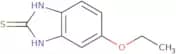
CAS:<p>5-Ethoxy-2-mercaptobenzimidazole is a corrosion inhibitor that has been shown to inhibit the growth of cancer cells by causing them to undergo apoptotic cell death. It also has a protective effect on nerve cells, as evidenced by its ability to prevent the neurotoxic effects of hydrochloric acid. 5-Ethoxy-2-mercaptobenzimidazole is synthesized from 2-(2'-hydroxyethoxy)benzaldehyde and ethyl chloroformate in the presence of sodium chloride and hydrochloric acid. It is then converted into 5-ethoxy-2-mercaptobenzimidazole with sodium hydroxide.</p>Formula:C9H10N2OSPurity:Min. 95%Color and Shape:PowderMolecular weight:194.25 g/mol2-((3-Amino-4-methoxyphenyl)amino)ethanol sulfate
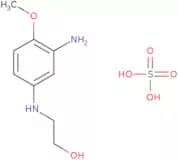
CAS:<p>2-((3-Amino-4-methoxyphenyl)amino)ethanol sulfate is a potent antibacterial agent that inhibits the growth of bacteria by binding to the 50S ribosomal subunit. It is also used in dermatology, as an aminophenol, and as an ingredient in cosmetics. 2-((3-Amino-4-methoxyphenyl)amino)ethanol sulfate has been shown to be efficacious against bacterial infections caused by methicillin resistant Staphylococcus aureus (MRSA), Pseudomonas aeruginosa, Proteus mirabilis, and Klebsiella pneumoniae. This compound also has antihistamine properties.</p>Formula:C9H16N2O6SPurity:Min. 95%Molecular weight:280.3 g/molNω-(4-Methoxy-2,3,6-trimethylbenzenesulfonyl)-L-arginine tert-butyl ester
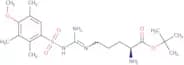
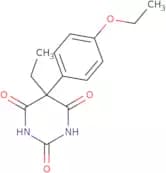
CAS:<p>Please enquire for more information about Nomega-(4-Methoxy-2,3,6-trimethylbenzenesulfonyl)-L-arginine tert-butyl ester including the price, delivery time and more detailed product information at the technical inquiry form on this page</p>Formula:C20H34N4O5SPurity:Min. 95%Molecular weight:442.57 g/mol5-(4-Ethoxyphenyl)-5-ethylbarbituric acid
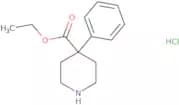
CAS:Controlled Product<p>Please enquire for more information about 5-(4-Ethoxyphenyl)-5-ethylbarbituric acid including the price, delivery time and more detailed product information at the technical inquiry form on this page</p>Formula:C14H16N2O4Purity:Min. 95%Molecular weight:276.29 g/mol4-Phenyl-4-carbethoxy piperidineHCl
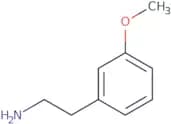
CAS:Controlled Product<p>4-Phenyl-4-carbethoxy piperidineHCl is a germanium compound that can be used as a diagnostic agent to detect the presence of magnesium in the blood. It has been shown to bind to acidic and basic sites on the brain, regulating the functions of these regions. The drug has also been shown to have analgesic properties, as it activates opioid receptors in the brain. 4-Phenyl-4-carbethoxy piperidineHCl binds with high affinity to meperidine and naloxone, which are opioid receptor agonists. It is also able to bind to pentazocine, an opioid receptor antagonist. This drug is not active against molybdenum or thebaine.</p>Formula:C14H20ClNO2Purity:Min. 95%Molecular weight:269.77 g/mol3-Methoxyphenethylamine
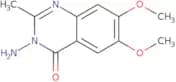
CAS:Controlled Product<p>3-Methoxyphenethylamine is a naturally occurring phenethylamine that is found in the human body. It is produced by the enzyme phenylethanolamine N-methyltransferase from dopamine and 3-methoxytyramine. 3-Methoxyphenethylamine can be found in the saliva, but also in the brain, muscle and kidneys. Its presence has been detected in women's breast milk. This compound has been shown to have a significant effect on chloride ion absorption and renal blood flow, as well as on 5-hydroxyindoleacetic acid levels in the urine of patients with Parkinson's disease. The predominant metabolite of 3-methoxyphenethylamine is 3-hydroxymethylphenethylamine (3HMPEA).</p>Formula:C9H13NOPurity:Min. 95%Color and Shape:Colorless Clear LiquidMolecular weight:151.21 g/mol3-Amino-6,7-dimethoxy-2-methylquinazolin-4(3H)-one
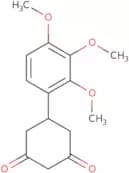
CAS:Controlled Product<p>Please enquire for more information about 3-Amino-6,7-dimethoxy-2-methylquinazolin-4(3H)-one including the price, delivery time and more detailed product information at the technical inquiry form on this page</p>Formula:C11H13N3O3Purity:Min. 95%Molecular weight:235.24 g/mol5-(2,3,4-Trimethoxyphenyl)cyclohexane-1,3-dione
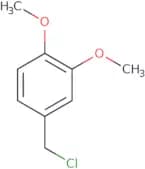
CAS:Controlled Product<p>Please enquire for more information about 5-(2,3,4-Trimethoxyphenyl)cyclohexane-1,3-dione including the price, delivery time and more detailed product information at the technical inquiry form on this page</p>Formula:C15H18O5Purity:Min. 95%Molecular weight:278.3 g/mol3,4-Dimethoxybenzyl chloride
CAS:<p>3,4-Dimethoxybenzyl chloride is an acetate extract that has been shown to have anticancer properties. It is also a corrosion inhibitor with the ability to inhibit fatty acid demethylation and antimicrobial agents. It has been used in pharmaceutical preparations for treating high blood pressure, as well as in the production of eugenol, papaverine and other drugs.</p>Formula:C9H11ClO2Purity:Min. 95%Molecular weight:186.64 g/mol2-[(2S,3S,4S)-3-Formyl-5-Methoxycarbonyl-2-Methyl-3,4-Dihydro-2H-Pyran-4-Yl]Acetic Acid
CAS:<p>2-[(2S,3S,4S)-3-Formyl-5-Methoxycarbonyl-2-Methyl-3,4-Dihydro-2H-Pyran-4-Yl]Acetic Acid (PCA) is a natural phenolic compound that is found in olive oil. PCA has been shown to possess antioxidant and antiinflammatory properties. It also has minimal toxicity, with no adverse effects on the liver or kidney. PCA is metabolized by hydrolysis to form hydroxytyrosol and tyrosol. Hydroxytyrosol can be further metabolized to produce the aglycon 2-[(2S,3S,4S)-3-(acetyloxy)-5-(hydroxymethyl)oxolan-4-yl]acetic acid (OHA). OHA is an intermediate in the biosynthesis of erythromycin and other macrolide antibiotics such as</p>Formula:C11H14O6Purity:90%MinMolecular weight:242.23 g/mol1-(3-Methoxybenzyl)-1H-indole-3-carbaldehyde
CAS:Controlled Product<p>Please enquire for more information about 1-(3-Methoxybenzyl)-1H-indole-3-carbaldehyde including the price, delivery time and more detailed product information at the technical inquiry form on this page</p>Formula:C17H15NO2Purity:Min. 95%Molecular weight:265.31 g/mol4-Methoxybenzylamine
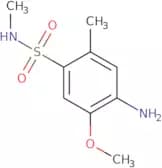
CAS:<p>4-Methoxybenzylamine is an organic amine that has a redox potential of -0.14 V (vs. SHE) and a pK a of 10.5. It is used in the synthesis of trifluoroacetic acid esters, which are used as pharmaceutical intermediates. 4-Methoxybenzylamine has been shown to be effective in alleviating pain in animal models, and its mechanism of action may be due to inhibition of the enzyme cyclooxygenase. The kinetic data for this reaction were obtained by studying the deuterium isotope effect, which is characterized by a low energy barrier and rapid reaction rate. The hydrolysis step is also important for the reaction mechanism, with protocatechuic acid being an intermediate product. Hydrochloric acid is needed for dehydration of the reactants, while an aryl halide can be used instead in some cases. In these reactions, there are many possible reaction</p>Formula:C8H11NOPurity:Min. 95%Molecular weight:137.18 g/mol4-Amino-5-methoxy-2-methyl-N-methylbenzenesulfonamide
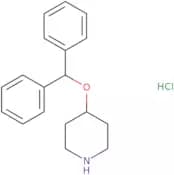
CAS:<p>4-Amino-5-methoxy-2-methyl-N-methylbenzenesulfonamide is a surfactant that is used in the chemical industry to dissolve diazotized aromatic amines. It is also used in the preparation of coupling agents, such as naphthol, and hydrochloric acid. 4-Amino-5-methoxy-2-methylbenzenesulfonamide can be prepared by the diazotization of aniline followed by coupling with hydrochloric acid and sodium phosphate. The product can then be purified by recrystallization from a salt solution containing sodium acetate.</p>Formula:C9H14N2O3SPurity:Min. 95%Molecular weight:230.29 g/mol4-(Diphenylmethoxy)piperidinium chloride
CAS:<p>Please enquire for more information about 4-(Diphenylmethoxy)piperidinium chloride including the price, delivery time and more detailed product information at the technical inquiry form on this page</p>Purity:Min. 95%(9Z)-N-[(3-Methoxyphenyl)methyl]-9-octadecenamide
CAS:<p>Please enquire for more information about (9Z)-N-[(3-Methoxyphenyl)methyl]-9-octadecenamide including the price, delivery time and more detailed product information at the technical inquiry form on this page</p>Formula:C26H43NO2Purity:Min. 95%Molecular weight:401.63 g/mol3-Desmethoxy-3-bromo Trimethoprim
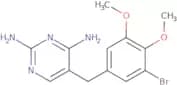
CAS:<p>Please enquire for more information about 3-Desmethoxy-3-bromo Trimethoprim including the price, delivery time and more detailed product information at the technical inquiry form on this page</p>Formula:C13H15BrN4O2Purity:Min. 95%Molecular weight:339.19 g/mol1-(4-Methoxy-pyridin-2-yl)-ethanone
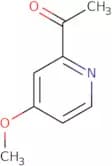
CAS:<p>Please enquire for more information about 1-(4-Methoxy-pyridin-2-yl)-ethanone including the price, delivery time and more detailed product information at the technical inquiry form on this page</p>Formula:C8H9NO2Purity:Min. 95%Molecular weight:151.16 g/mol4-Methoxy-N-methylbenzylamine
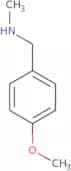
CAS:<p>4-Methoxy-N-methylbenzylamine is a synthesized compound that is structurally similar to piperazine. It has been synthesized using the Chloramine T method and has been shown to be active as an amine receptor ligand. This molecule binds to the amine receptor site of the GABAA receptor with high affinity, inhibiting chloride ion flow. The functional groups on this molecule are likely responsible for its binding activity. 4-Methoxy-N-methylbenzylamine may be useful in the treatment of scopolamine-induced amnesia, due to its ability to bind to specific receptors in the brain.</p>Formula:C9H13NOPurity:Min. 95%Color and Shape:Clear LiquidMolecular weight:151.21 g/mol1-(4-Methoxybenzyl)piperidine-2,4-dione
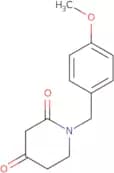
CAS:<p>Please enquire for more information about 1-(4-Methoxybenzyl)piperidine-2,4-dione including the price, delivery time and more detailed product information at the technical inquiry form on this page</p>Formula:C13H15NO3Purity:Min. 95%Molecular weight:233.26 g/mol2-[(Dimethylamino)methylene]-5-(2,3,4-trimethoxyphenyl)cyclohexane-1,3-dione
CAS:Controlled Product<p>Please enquire for more information about 2-[(Dimethylamino)methylene]-5-(2,3,4-trimethoxyphenyl)cyclohexane-1,3-dione including the price, delivery time and more detailed product information at the technical inquiry form on this page</p>Formula:C18H23NO5Purity:Min. 95%Molecular weight:333.38 g/molN-(1,2,3,4-Tetrahydro-7-methoxy-1-oxo-2-naphthalenyl)propanamide
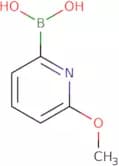
CAS:Controlled Product<p>Please enquire for more information about N-(1,2,3,4-Tetrahydro-7-methoxy-1-oxo-2-naphthalenyl)propanamide including the price, delivery time and more detailed product information at the technical inquiry form on this page</p>Formula:C14H17NO3Purity:Min. 95%Molecular weight:247.29 g/mol6-Methoxypyridine-2-boronic acid
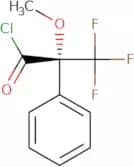
CAS:<p>6-Methoxypyridine-2-boronic acid is a boronate ligand that can be used to form coordination complexes with metals. It has been shown to interact with silver ions, which are the most effective ligands for enhancing the fluorescence of organic dyes. 6-Methoxypyridine-2-boronic acid is able to rigidify organic molecules by binding to their steric and electronic properties, making them more resistant to photodegradation. This property makes it an excellent candidate for the use in the development of fluorescent labels in analytical chemistry.</p>Formula:C6H8BNO3Purity:Min. 95%Molecular weight:152.94 g/molS-(+)-α-Methoxy-α-(trifluoromethyl)phenylacetic acid chloride
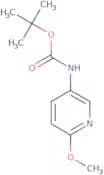
CAS:<p>S-(+)-alpha-Methoxy-alpha-(trifluoromethyl)phenylacetic acid chloride is an optical, amide, and epoxidation derivatizing agent that is used to chiralify amines. It is a liquid at room temperature with a molecular weight of 123.87 g/mol. This chemical reacts with alcohols to form esters, which can be identified by their different retention times in chromatography. It also reacts with hydroxyl groups to form ethers and esters, as well as hydroxyls on other molecules such as amino acids, peptides, and proteins. S-(+)-alpha-Methoxy-alpha-(trifluoromethyl)phenylacetic acid chloride has been used for the synthesis of bisoprolol from metoprolol and triethylphosphite.</p>Formula:C10H8ClF3O2Purity:Min. 95%Molecular weight:252.62 g/moltert-Butyl-n-(6-methoxy-3-pyridyl)carbamate
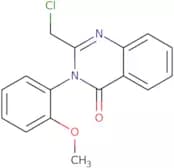
CAS:<p>Please enquire for more information about tert-Butyl-n-(6-methoxy-3-pyridyl)carbamate including the price, delivery time and more detailed product information at the technical inquiry form on this page</p>Formula:C11H16N2O3Purity:Min. 95%Molecular weight:224.26 g/mol2-(Chloromethyl)-3-(2-methoxyphenyl)quinazolin-4(3H)-one
CAS:Controlled Product<p>Please enquire for more information about 2-(Chloromethyl)-3-(2-methoxyphenyl)quinazolin-4(3H)-one including the price, delivery time and more detailed product information at the technical inquiry form on this page</p>Formula:C16H13ClN2O2Purity:Min. 95%Molecular weight:300.74 g/mol[2-(3,4-Dimethoxyphenyl)-1,3-thiazol-4-yl]acetic acid
CAS:<p>Please enquire for more information about [2-(3,4-Dimethoxyphenyl)-1,3-thiazol-4-yl]acetic acid including the price, delivery time and more detailed product information at the technical inquiry form on this page</p>Formula:C13H13NO4SPurity:Min. 95%Molecular weight:279.31 g/mol(2-Bromoethoxy)-tert-butyldimethylsilane
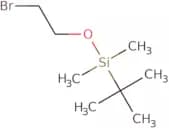
CAS:<p>2-Bromoethoxy-tert-butyldimethylsilane is a conjugate that has been shown to have anticancer efficacy in vivo. It is a pyrimidine derivative and inhibits the viral enzyme RNA polymerase, thereby inhibiting viral replication. 2-Bromoethoxy-tert-butyldimethylsilane also inhibits glyceraldehyde 3-phosphate dehydrogenase, which is an enzyme that catalyzes the conversion of glucose into glyceraldehyde 3-phosphate and plays an important role in glycolysis. The compound has been shown to be active against mouse tumors, which are associated with endogenous retroviruses. The compound has also been shown to inhibit gapdh, an enzyme involved in energy metabolism and cancer therapy.</p>Formula:C8H19BrOSiPurity:Min. 95%Color and Shape:Colorless Clear LiquidMolecular weight:239.23 g/mol3,4-Dimethoxythiophenol
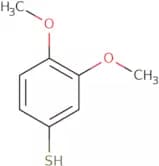
CAS:<p>3,4-Dimethoxythiophenol is a chemical compound that is used as a fluorescence probe to study biological functions in cells. It reacts with hydroxyl groups and other reactive sites on proteins, including sulfhydryl groups, thiols, and amines. 3,4-Dimethoxythiophenol has been shown to inhibit the viability of cancer cells (e.g., prostate cancer cells) by interfering with the function of dehydrogenase enzymes. 3,4-Dimethoxythiophenol also inhibits growth of microglia (cells that protect neurons) in vitro. This inhibition is due to the production of reactive oxygen species by the microglial cells. The chemical structure of this compound includes a hydroxyl group and two methoxy groups.</p>Formula:C8H10O2SPurity:Min. 95%Color and Shape:Clear LiquidMolecular weight:170.23 g/mol2-Amino-3-(4-hydroxy-3-methoxyphenyl)propanoic acid
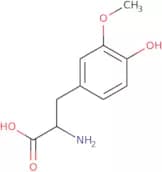
CAS:Controlled Product<p>2-Amino-3-(4-hydroxy-3-methoxyphenyl)propanoic acid is a metabolite of levodopa in the body. It is formed by oxidation of levodopa via the enzyme catechol-O-methyltransferase (COMT). This compound is used as an analytical reagent to measure levels of levodopa and its metabolites in biological samples. 2-Amino-3-(4-hydroxy-3-methoxyphenyl)propanoic acid can also be used to diagnose Parkinson’s disease, since it is produced in excess when dopamine production decreases due to the degeneration of dopaminergic neurons. The concentration–time curve for this compound can be used to calculate the clearance rate of levodopa from the blood plasma.</p>Formula:C10H13NO4Purity:Min. 95 Area-%Color and Shape:PowderMolecular weight:211.21 g/mol


![[4-[2-(Diethylamino)ethoxy]-3-iodophenyl][2-(1-hydroxybutyl)-3-benzofuranyl]-methanone](/_next/image/?url=https%3A%2Fstatic.cymitquimica.com%2Fproducts%2F3D%2Fthumb-webp%2FFD150040.webp&w=3840&q=75)

![7-[(4Methoxyphenyl)methyl]-5-methyl-2H-pyrazolo[3,4-d]pyrimidine-4,6(5H,7H)-dione](/_next/image/?url=https%3A%2Fstatic.cymitquimica.com%2Fproducts%2F3D%2Fthumb-webp%2FFM168534.webp&w=3840&q=75)

![(2-{2-[2-(2-Aminoethyl)-4,5-dimethoxybenzyl]-4,5-dimethoxyphenyl}ethyl)amine dihydrochloride](/_next/image/?url=https%3A%2Fstatic.cymitquimica.com%2Fproducts%2F3D%2Fthumb-webp%2FFA135464.webp&w=3840&q=75)





![2-[(2S,3S,4S)-3-Formyl-5-Methoxycarbonyl-2-Methyl-3,4-Dihydro-2H-Pyran-4-Yl]Acetic Acid](/_next/image/?url=https%3A%2Fstatic.cymitquimica.com%2Fproducts%2F3D%2Fthumb-webp%2FFF71925.webp&w=3840&q=75)


![(9Z)-N-[(3-Methoxyphenyl)methyl]-9-octadecenamide](/_next/image/?url=https%3A%2Fstatic.cymitquimica.com%2Fproducts%2F3D%2Fthumb-webp%2FFN165022.webp&w=3840&q=75)
![2-[(Dimethylamino)methylene]-5-(2,3,4-trimethoxyphenyl)cyclohexane-1,3-dione](/_next/image/?url=https%3A%2Fstatic.cymitquimica.com%2Fproducts%2F3D%2Fthumb-webp%2FFD134779.webp&w=3840&q=75)

![[2-(3,4-Dimethoxyphenyl)-1,3-thiazol-4-yl]acetic acid](/_next/image/?url=https%3A%2Fstatic.cymitquimica.com%2Fproducts%2F3D%2Fthumb-webp%2FFD124430.webp&w=3840&q=75)