Ethers
Ethers are organic compounds containing an ether functional group, characterized by an oxygen atom bonded to two hydrocarbon radicals. These compounds are valuable in synthesis and serve as solvents in various chemical reactions. At CymitQuimica, we offer a selection of high-quality ethers to support your research and industrial applications, ensuring reliable and effective results. Our range of ethers meets diverse laboratory requirements, from routine experiments to advanced research.
Found 40902 products of "Ethers"
Sort by
Purity (%)
0
100
|
0
|
50
|
90
|
95
|
100
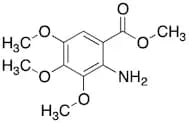
Methyl 2-Amino-3,4,5-trimethoxybenzoate
CAS:Controlled Product<p>Applications Methyl 2-Amino-3,4,5-trimethoxybenzoate could be a constituent contributing to the aroma of green tea leaves.<br>References Hasegawa, T., et al.: J. Food Eng., 4, 10 (2014)<br></p>Formula:C11H15NO5Color and Shape:NeatMolecular weight:241.245-Bromo-2-ethoxy-benzenesulfonyl chloride
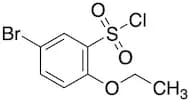
CAS:Controlled Product<p>Applications 5-Bromo-2-ethoxy-benzenesulfonyl chloride<br></p>Formula:C8H8BrClO3SColor and Shape:NeatMolecular weight:299.57Ethyl(methoxy)amine Hydrochloride
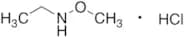
CAS:Controlled Product<p>Stability Hygroscopic<br></p>Formula:C3H9NO·HClColor and Shape:NeatMolecular weight:111.57Cis-1-Bromo-2-ethoxyethylene
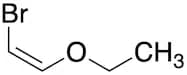
CAS:Controlled Product<p>Stability Light Sensitive<br>Applications Cis-1-Bromo-2-ethoxyethylene<br></p>Formula:C4H7BrOColor and Shape:NeatMolecular weight:151.00Methoxytrimethylsilane
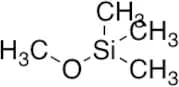
CAS:Controlled Product<p>Stability Volatile<br>Applications Methoxytrimethylsilane (cas# 1825-61-2) is a useful research chemical.<br> Not a dangerous good if item is equal to or less than 1g/ml and there is less than 100g/ml in the package<br></p>Formula:C4H12OSiColor and Shape:NeatMolecular weight:104.2233-Ethoxy-2-cyclohexen-1-one
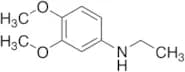
CAS:Controlled Product<p>Applications 3-ETHOXY-2-CYCLOHEXEN-1-ONE (cas# 5323-87-5) is a useful research chemical.<br></p>Formula:C8H12O2Color and Shape:NeatMolecular weight:140.17N-ethyl-3,4-dimethoxyaniline
CAS:Controlled Product<p>Applications N-ethyl-3,4-dimethoxyaniline (cas# 32953-13-2) is a useful research chemical.<br></p>Formula:C10H15NO2Color and Shape:NeatMolecular weight:181.232,4,5-Trimethoxybenzoic Acid
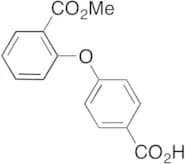
CAS:Controlled Product<p>Applications 2,4,5-TRIMETHOXYBENZOIC ACID (cas# 490-64-2) is a useful research chemical.<br></p>Formula:C10H12O5Color and Shape:NeatMolecular weight:212.24-(2-(Methoxycarbonyl)phenoxy)benzoic Acid
Controlled Product<p>Applications 4-(2-(Methoxycarbonyl)phenoxy)benzoic Acid is an intermediate in the synthesis of Balsalazide (B116300) related compounds.<br></p>Formula:C15H12O5Color and Shape:NeatMolecular weight:272.2531,5-Anhydro-2,3,4-trideoxy-2-[[(1,1-dimethylethoxy)carbonyl]amino]-D-erythrohexitol
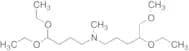
CAS:Controlled ProductFormula:C11H21NO4Color and Shape:NeatMolecular weight:231.289Bis(4,4-Diethoxybutyl)methylamine
Controlled ProductFormula:C17H37NO4Color and Shape:NeatMolecular weight:319.48Methyl Methoxyacetate
CAS:Controlled Product<p>Applications Methyl Methoxyacetate is a reagent used in the synthesis of diphenylamine-terepthalaldehyde resins which maybe be used as a catalyst for tetrahydropyranylation.<br>References Tanemura, K. et al.: Org. Prep. Proc. Int., 48, 72 (2016); By: Robiette, R. et al.: J. Am. Chem. Soc., 138, 737 (2016);<br></p>Formula:C4H8O3Color and Shape:NeatMolecular weight:104.16-[4-(Trifluoromethoxy)phenyl]-3-morpholinone
CAS:Controlled ProductFormula:C11H10F3NO3Color and Shape:NeatMolecular weight:261.22,5-Dimethoxythiophenol
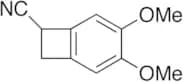
CAS:Controlled Product<p>Applications 2,5-Dimethoxythiophenol is a thiophenol derivative used in the preparation of dihydrofolate reductase inhibitors and potential antitumor agents.<br>References Gangjee, A. et al.: J. Med. Chem., 52, 4892 (2009); Gangjee, A. et al.: Biiorg. Med. Chem., 18, 953 (2010);<br></p>Formula:C8H10O2SColor and Shape:NeatMolecular weight:170.234,5-Dimethoxy-1-benzocyclobutenecarbonitrile
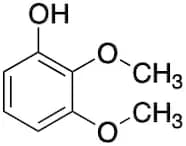
CAS:Controlled Product<p>Applications 4,5-Dimethoxy-1-benzocyclobutenecarbonitrile is used in the preparation of selective bradycardic agents.<br>References Ye, X. et al.: Zhong. Yao. Xuax. Zaz., 20, 106 (2010);<br></p>Formula:C11H11NO2Color and Shape:NeatMolecular weight:189.212,3-Dimethoxyphenol
CAS:Controlled Product<p>Applications 2,3-Dimethoxyphenol (cas# 5150-42-5) is a useful research chemical.<br></p>Formula:C8H10O3Color and Shape:NeatMolecular weight:154.16B-[3-[[2-Hydroxy-3-[3-(triethoxysilyl)propoxy]propyl]amino]phenyl]boronic acid
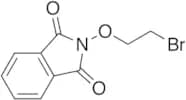
CAS:Controlled Product<p>Applications B-[3-[[2-Hydroxy-3-[3-(triethoxysilyl)propoxy]propyl]amino]phenyl]boronic acid was prepared for the use as porous polymeric monolith for the specific capture of cis-diol-containing flavone under neutral condition.<br>References Pan, J., et al.: Chem. Eng. J., 317, 317-330 (2017);<br></p>Formula:C18H34BNO7SiColor and Shape:NeatMolecular weight:415.36N-(2-Bromoethoxy)phthalimide
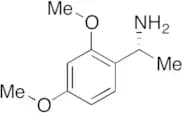
CAS:Controlled Product<p>Applications Reagent used in Phthalimidooxy alylation.<br>References Yoda, R., et al.: Chem. Pharm. Bull., 42, 686 (1994), Kim, M., et al.: Bioorg. Med. Chem. Lett., 6, 2077 (1996),<br></p>Formula:C10H8BrNO3Color and Shape:NeatMolecular weight:270.08(R)-1-(2,4-Dimethoxyphenyl)ethanamine
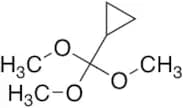
CAS:Controlled ProductFormula:C10H15NO2Color and Shape:NeatMolecular weight:181.23(Trimethoxymethyl)cyclopropane
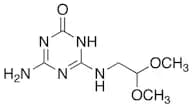
CAS:Controlled ProductFormula:C7H14O3Color and Shape:NeatMolecular weight:146.184N-(2,2-Dimethoxyethyl)ammeline
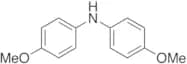
CAS:Controlled Product<p>Applications Intermediate in the production of modified guanine derivatives<br>References Kim, S., et al.: J. Med. Chem., 21, 883 (1978),<br></p>Formula:C7H13N5O3Color and Shape:NeatMolecular weight:215.214,4'-Dimethoxydiphenylamine
CAS:Controlled Product<p>Applications 4,4'-Dimethoxydiphenylamine is a diphenylamine derivative used as a chemical additive for cured rubber. 4,4'-Dimethoxydiphenylamine is highly toxic and may potentially induce chromosome abberation.<br>References Kel'man, G.Y. et al.: Kauch. Rez., 26, 28 (1967); Sofuni, T. et al.: Mutat. res. Gen. Toxicol. Test., 24, 175 (1990);<br></p>Formula:C14H15NO2Color and Shape:NeatMolecular weight:229.27[(Methoxy)methyl]triphenylphosphonium Chloride
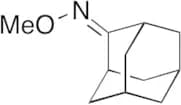
CAS:<p>Applications [(Methoxy)methyl]triphenylphosphonium Chloride is used in the synthesis of Cephalotaxine (C261050), an antiviral and antitumor agent. Also used in the synthesis of Taxol A fragment.<br>References Sells, M., et al.: J. Virol., 62, 2836 (1988), Kaneko, S., et al.: J. Clin. Microbiol., 27, 1930 (1989), Baba, Y., et al.: Bioorg. Med. Chem., 13, 5164 (2005), Romero, M., et al.: Antiviral Res., 68, 75 (2005); Hirai, S. et al.: Tetrahedron Lett., 54, 1888 (2013); Xing, P. et al.: Synth., 45, 596 (2013);<br></p>Formula:C20H20OP·ClColor and Shape:NeatMolecular weight:342.80N-Methoxyadamantan-2-imine
CAS:Controlled ProductFormula:C11H17NOColor and Shape:NeatMolecular weight:179.259Methoxy4-[[(1,1-dimethylethyl)dimethylsilyl]oxy]-3-benzenemethanol
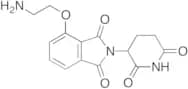
CAS:Controlled Product<p>Applications Methoxy4-[[(1,1-dimethylethyl)dimethylsilyl]oxy]-3-benzenemethanol, is prepared synthetically from vanillin (V097500) with an intermediate of methoxy-4-[[(1,1-dimethylethyl)dimethylsilyl]oxy]-3-benzaldehyde (M269710).<br>References Gowravarm, S. et al.: Adv. Synth. Catal., 343, 169 (2001)<br></p>Formula:C14H24O3SiColor and Shape:NeatMolecular weight:268.433-(2-Aminoethoxy) Thalidomide
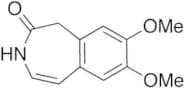
CAS:Controlled ProductFormula:C15H15N3O5Color and Shape:NeatMolecular weight:317.307,8-Dimethoxy-1,3-dihydro-2H-3-benzazepin-2-one
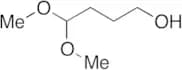
CAS:Controlled Product<p>Applications 7,8-Dimethoxy-1,3-dihydro-2H-3-benzazepin-2-one is a substituted benzazepinonee derivative used in the preparation of bradycardic agents as well as isoform-selective f-current blockers.<br>References Liang, H.-Y. et al.: Arch. Pharm., 343, 114 (2010); Reiffen, M. et al.: J. Med. Chem., 33, 1496 (1990); Melchiorre, M. et al.: J. Med. Chem., 53, 6773 (2010);<br></p>Formula:C12H13NO3Color and Shape:Off-WhiteMolecular weight:219.244,4-Dimethoxybutan-1-ol
CAS:Controlled Product<p>Applications 4,4-Dimethoxybutan-1-ol is a reactant used in the preparation of tetrahydropyranols and hydropyranooxepans.<br>References Hoffmann, R.W., et. al.: New J. Chem., 25, 102 (2001)<br></p>Formula:C6H14O3Color and Shape:NeatMolecular weight:134.1743-Ethoxyspiro[3.5]nonan-1-amine
CAS:Controlled ProductFormula:C11H21NOColor and Shape:NeatMolecular weight:183.294-(Trifluoromethoxy)phenylboronic Acid (contains varying amounts of Anhydride)
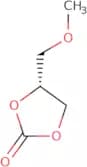
CAS:<p>4-(Trifluoromethoxy)phenylboronic acid is a boron-containing compound that has been shown to be a potent inhibitor of the histone deacetylase (HDAC) enzyme. It also has surfactant properties and can be used as a photochemical reagent. 4-(Trifluoromethoxy)phenylboronic acid is orally bioavailable and may have therapeutic potential for neurodegenerative diseases, such as Alzheimer's disease, Parkinson's disease, and Huntington's disease. It also has the ability to inhibit cancer cell growth by inhibiting HDAC activity. This drug has been found to cross-couple with organosilicon compounds in order to form new compounds with potent inhibitory activity against HDAC enzymes.</p>Formula:C7H6BF3O3Purity:Min. 95%Molecular weight:205.93 g/mol(R)-(+)-4-(Methoxymethyl)-1,3-dioxolan-2-one
CAS:<p>Please enquire for more information about (R)-(+)-4-(Methoxymethyl)-1,3-dioxolan-2-one including the price, delivery time and more detailed product information at the technical inquiry form on this page</p>Formula:C5H8O4Purity:Min. 95%Molecular weight:132.11 g/mol2-[(Dimethylamino)methylene]-5-(2,3,4-trimethoxyphenyl)cyclohexane-1,3-dione
CAS:Controlled Product<p>Please enquire for more information about 2-[(Dimethylamino)methylene]-5-(2,3,4-trimethoxyphenyl)cyclohexane-1,3-dione including the price, delivery time and more detailed product information at the technical inquiry form on this page</p>Formula:C18H23NO5Purity:Min. 95%Molecular weight:333.38 g/mol2-Chloro-3,4-dimethoxyphenethylamine HCl
CAS:Controlled Product<p>2-Chloro-3,4-dimethoxyphenethylamine is an intermediate in the synthesis of zepines. It can be synthesized by reduction of borohydride with 2-chloro-1,2,3,4-tetrahydrobenzaldehyde.</p>Purity:Min. 95%4-Methoxy-3-(trifluoromethyl)aniline
CAS:4-Methoxy-3-(trifluoromethyl)aniline is a benzene derivative that is stabilized by the methoxy and trifluoromethyl groups. The crystal structure of 4-methoxy-3-(trifluoromethyl)aniline has been determined to be orthorhombic, with space group Pbca and lattice constants a=6.541(2), b=8.829(2), c=5.744(1) Å at 100 K. This compound has a benzene ring with four methyl substituents on the phenyl ring, two of which are located on the para position. The molecule also contains two O atoms in positions 1 and 2, as well as two F atoms in positions 3 and 4.Formula:C8H8F3NOPurity:Min. 95%Molecular weight:191.15 g/mol7-[(4Methoxyphenyl)methyl]-5-methyl-2H-pyrazolo[3,4-d]pyrimidine-4,6(5H,7H)-dione
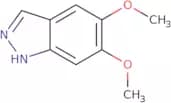
CAS:Controlled Product<p>Please enquire for more information about 7-[(4Methoxyphenyl)methyl]-5-methyl-2H-pyrazolo[3,4-d]pyrimidine-4,6(5H,7H)-dione including the price, delivery time and more detailed product information at the technical inquiry form on this page</p>Formula:C14H14N4O3Purity:Min. 95%Molecular weight:286.29 g/mol5,6-Dimethoxy-1H-indazole
CAS:<p>5,6-Dimethoxy-1H-indazole is a phosphite that has been used as an intermediate in the synthesis of some pharmaceuticals. It has been shown to have hypotensive effects in rats and depressant effects in mice. The nitro group on 5,6-dimethoxy-1H-indazole can be reduced to an aminopropyl group by reaction with chloride and methyl alcohol or piperazine. This reaction produces two products: 1) a chloro compound that is not pharmacologically active and 2) a methylated product that retains all the original activity of 5,6-dimethoxy-1H-indazole. 5,6-Dimethoxy-1H-indazole also interacts with DNA by binding to nitrous oxide (N2O), which is present at high levels in clinical settings such as dentists' offices. Nitrous oxide reacts with 5,6-dimethoxy-1H</p>Formula:C9H10N2O2Purity:Min. 95%Color and Shape:PowderMolecular weight:178.19 g/mol4-Bromo-7-methoxy-1H-pyrrolo[2,3-c]pyridine
CAS:<p>Please enquire for more information about 4-Bromo-7-methoxy-1H-pyrrolo[2,3-c]pyridine including the price, delivery time and more detailed product information at the technical inquiry form on this page</p>Purity:Min. 95%N-(2-Aminoethyl)-3-aminopropylmethyldimethoxysilane
CAS:<p>N-(2-Aminoethyl)-3-aminopropylmethyldimethoxysilane is an antibacterial agent that inhibits the growth of bacteria by binding to the cell wall, thereby preventing the synthesis of proteins. It is used in dentistry and medicine as a coating for metal surfaces. This compound has been shown to be effective against Escherichia coli and Enterococcus faecalis. The optimum concentration for this compound is 1 mg/mL.</p>Formula:C8H22N2O2SiPurity:Min. 95%Molecular weight:206.36 g/mol3,7,4'-Trihydroxy-5-methoxy-8-prenylflavanone, (2R,3S)-
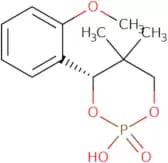
<p>3,7,4'-Trihydroxy-5-methoxy-8-prenylflavanone, (2R,3S)- is a naturally occurring prenylated flavanone, which is primarily sourced from various plant species. This compound is part of the larger flavonoid family and is often found in certain medicinal plants known for their wide range of therapeutic properties. Its structure comprises a flavanone backbone, modified by hydroxyl, methoxy, and prenyl groups that contribute to its distinctive chemical profile.</p>Purity:Min. 95%(S)-(-)-2-Hydroxy-4-(2-methoxyphenyl)-5,5-dimethyl-1,3,2-dioxaphosphorinane 2-oxide
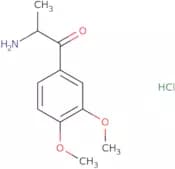
CAS:<p>(S)-(-)-2-Hydroxy-4-(2-methoxyphenyl)-5,5-dimethyl-1,3,2-dioxaphosphorinane 2-oxide is a crystallization inhibitor. It can be used in the treatment of osteoporosis and to prevent the calcification of prostate tissue. (S)-(-)-2-Hydroxy-4-(2-methoxyphenyl)-5,5-dimethyl-1,3,2-dioxaphosphorinane 2-oxide has been shown to inhibit nucleation and crystal growth by adsorbing to the surfaces of nuclei and inhibiting inhibitor molecules from diffusing into the nucleus. This compound also inhibits the crystallization process by binding to one molecule of phosphate on each phosphate site on a crystal surface. The result is that there are fewer sites available for other molecules to bind, preventing crystal growth.</p>Formula:C12H17O5PPurity:Min. 95%Color and Shape:Slightly Yellow PowderMolecular weight:272.23 g/mol2-Amino-3',4'-dimethoxypropiophenone hydrochloride
CAS:Controlled ProductPlease enquire for more information about 2-Amino-3',4'-dimethoxypropiophenone hydrochloride including the price, delivery time and more detailed product information at the technical inquiry form on this pageFormula:C11H16ClNO3Purity:Min. 95%Molecular weight:245.7 g/mol4-Methoxybenzene-1,3-diamine sulfate
CAS:Controlled Product<p>4-Methoxybenzene-1,3-diamine sulfate (4MBD) is a chemical substance that inhibits the activity of cytochrome P450 enzymes. It has been shown to inhibit the activity of rat liver microsomal p-450 enzymes, and is used in studies on the effects of chemicals on protein synthesis. When 4MBD is administered to rats at dietary concentrations, it causes an increase in thyroid hormone levels and a decrease in renal function. The enzyme inhibition caused by 4MBD may be due to its ability to acylate amines, which are located near the active site of the enzyme. Linear regression analysis showed that there was a strong correlation between dietary concentrations and the inhibition of protein synthesis caused by 4MBD.</p>Formula:C7H12N2O5SPurity:Min. 95%Molecular weight:236.25 g/mol(7S)-7-Amino-1,2,3,10-tetramethoxy-6,7-dihydro-5H-benzo[g]heptalen-9-one
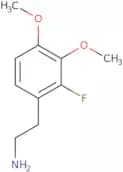
CAS:(7S)-7-Amino-1,2,3,10-tetramethoxy-6,7-dihydro-5H-benzo[g]heptalen-9-one is a hydroxylated analog of demecolcine. It has been shown to be an effective antimicrobial agent with proteolytic and hypoglycemic effects in mice. 7SATM is able to inhibit the activity of human macrophages. This drug has also been shown to have diagnostic potential by binding to a monoclonal antibody that recognizes the myeloperoxidase enzyme on the surface of neutrophils.Formula:C20H23NO5Purity:Min. 95 Area-%Color and Shape:Slightly Yellow PowderMolecular weight:357.4 g/mol2-(2-Fluoro-3,4-dimethoxyphenyl)ethanamine
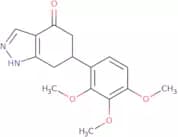
CAS:Controlled Product<p>Please enquire for more information about 2-(2-Fluoro-3,4-dimethoxyphenyl)ethanamine including the price, delivery time and more detailed product information at the technical inquiry form on this page</p>Formula:C10H14FNO2Purity:Min. 95%Molecular weight:199.22 g/mol6-(2,3,4-Trimethoxyphenyl)-1,5,6,7-tetrahydro-4H-indazol-4-one
CAS:Controlled Product<p>Please enquire for more information about 6-(2,3,4-Trimethoxyphenyl)-1,5,6,7-tetrahydro-4H-indazol-4-one including the price, delivery time and more detailed product information at the technical inquiry form on this page</p>Formula:C16H18N2O4Purity:Min. 95%Molecular weight:302.33 g/mol(-)-N-[1-(R)-Ethoxycarbonxyl-3-phenylpropyl]-L-alanine
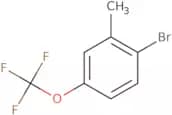
CAS:<p>Please enquire for more information about (-)-N-[1-(R)-Ethoxycarbonxyl-3-phenylpropyl]-L-alanine including the price, delivery time and more detailed product information at the technical inquiry form on this page</p>Formula:C15H21NO4Purity:Min. 95%Molecular weight:279.33 g/mol2-Methyl-4-(trifluoromethoxy)bromobenzene
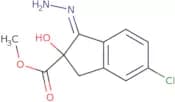
CAS:Please enquire for more information about 2-Methyl-4-(trifluoromethoxy)bromobenzene including the price, delivery time and more detailed product information at the technical inquiry form on this pageFormula:C8H6BrF3OPurity:Min. 95%Color and Shape:Clear LiquidMolecular weight:255.03 g/mol5-Chloro-2-hydroxy-2-methoxycarbonyl-1-indanone
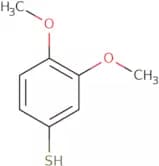
CAS:<p>Please enquire for more information about 5-Chloro-2-hydroxy-2-methoxycarbonyl-1-indanone including the price, delivery time and more detailed product information at the technical inquiry form on this page</p>Formula:C11H9ClO4Purity:Min. 95%Molecular weight:240.64 g/mol3,4-Dimethoxythiophenol
CAS:<p>3,4-Dimethoxythiophenol is a chemical compound that is used as a fluorescence probe to study biological functions in cells. It reacts with hydroxyl groups and other reactive sites on proteins, including sulfhydryl groups, thiols, and amines. 3,4-Dimethoxythiophenol has been shown to inhibit the viability of cancer cells (e.g., prostate cancer cells) by interfering with the function of dehydrogenase enzymes. 3,4-Dimethoxythiophenol also inhibits growth of microglia (cells that protect neurons) in vitro. This inhibition is due to the production of reactive oxygen species by the microglial cells. The chemical structure of this compound includes a hydroxyl group and two methoxy groups.</p>Formula:C8H10O2SPurity:Min. 95%Color and Shape:Clear LiquidMolecular weight:170.23 g/mol7-(2-Carbomethoxyethyl)-5-(2-chlorophenyl)-thieno-1,4-diazepin-2-one
CAS:Controlled Product<p>Please enquire for more information about 7-(2-Carbomethoxyethyl)-5-(2-chlorophenyl)-thieno-1,4-diazepin-2-one including the price, delivery time and more detailed product information at the technical inquiry form on this page</p>Formula:C17H15ClN2O3SPurity:Min. 95%Molecular weight:362.83 g/mol


![1,5-Anhydro-2,3,4-trideoxy-2-[[(1,1-dimethylethoxy)carbonyl]amino]-D-erythrohexitol](/_next/image/?url=https%3A%2Fstatic.cymitquimica.com%2Fproducts%2FTR%2Fthumb-webp%2FA656085.webp&w=3840&q=75)

![6-[4-(Trifluoromethoxy)phenyl]-3-morpholinone](/_next/image/?url=https%3A%2Fstatic.cymitquimica.com%2Fproducts%2FTR%2Fthumb-webp%2FT790950.webp&w=3840&q=75)

![B-[3-[[2-Hydroxy-3-[3-(triethoxysilyl)propoxy]propyl]amino]phenyl]boronic acid](/_next/image/?url=https%3A%2Fstatic.cymitquimica.com%2Fproducts%2FTR%2Fthumb-webp%2FH971470.webp&w=3840&q=75)
![[(Methoxy)methyl]triphenylphosphonium Chloride](/_next/image/?url=https%3A%2Fstatic.cymitquimica.com%2Fproducts%2FTR%2Fthumb-webp%2FM264680.webp&w=3840&q=75)
![Methoxy4-[[(1,1-dimethylethyl)dimethylsilyl]oxy]-3-benzenemethanol](/_next/image/?url=https%3A%2Fstatic.cymitquimica.com%2Fproducts%2FTR%2Fthumb-webp%2FM269715.webp&w=3840&q=75)
![3-Ethoxyspiro[3.5]nonan-1-amine](/_next/image/?url=https%3A%2Fstatic.cymitquimica.com%2Fproducts%2FTR%2Fthumb-webp%2FE676988.webp&w=3840&q=75)


![2-[(Dimethylamino)methylene]-5-(2,3,4-trimethoxyphenyl)cyclohexane-1,3-dione](/_next/image/?url=https%3A%2Fstatic.cymitquimica.com%2Fproducts%2F3D%2Fthumb-webp%2FFD134779.webp&w=3840&q=75)


![7-[(4Methoxyphenyl)methyl]-5-methyl-2H-pyrazolo[3,4-d]pyrimidine-4,6(5H,7H)-dione](/_next/image/?url=https%3A%2Fstatic.cymitquimica.com%2Fproducts%2F3D%2Fthumb-webp%2FFM168534.webp&w=3840&q=75)
![4-Bromo-7-methoxy-1H-pyrrolo[2,3-c]pyridine](/_next/image/?url=https%3A%2Fstatic.cymitquimica.com%2Fproducts%2F3D%2Fthumb-webp%2FFB141995.webp&w=3840&q=75)



![(7S)-7-Amino-1,2,3,10-tetramethoxy-6,7-dihydro-5H-benzo[g]heptalen-9-one](/_next/image/?url=https%3A%2Fstatic.cymitquimica.com%2Fproducts%2F3D%2Fthumb-webp%2FFA20821.webp&w=3840&q=75)
![(-)-N-[1-(R)-Ethoxycarbonxyl-3-phenylpropyl]-L-alanine](/_next/image/?url=https%3A%2Fstatic.cymitquimica.com%2Fproducts%2F3D%2Fthumb-webp%2FFE22879.webp&w=3840&q=75)