


Ethers
Found 40941 products of "Ethers"
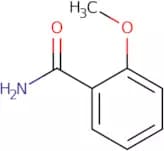
2-Methoxybenzamide
CAS:2-Methoxybenzamide is an amide with a p-hydroxybenzoic acid moiety. It has been shown to be an effective inhibitor of the enzyme histone deacetylase, which is involved in the regulation of gene expression. 2-Methoxybenzamide also has antiinflammatory activity and has minimal toxicity. This drug is used as a research tool for studying the immune system and its effects on hyperproliferative diseases such as cancer and autoimmune diseases. 2-Methoxybenzamide can also be used to treat metabolic disorders and physiological effects. The drug binds to intracellular targets through intermolecular hydrogen bonds that are mainly found in protein structures, including cytochrome P450s, protein kinases, DNA polymerases, transcription factors, and proteases.
Formula:C8H9NO2Purity:Min. 95%Color and Shape:PowderMolecular weight:151.16 g/molRef: 3D-FM70638
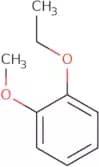
Discontinued product1-Ethoxy-2-methoxybenzene
CAS:1-Ethoxy-2-methoxybenzene is an organic compound that belongs to the class of phenols. It has been used as a solvent for pharmaceutical formulations, as an extractant for human serum, and as a demethylating agent in analytical chemistry. 1-Ethoxy-2-methoxybenzene is used in the presence of hydrochloric acid and morpholine to produce dibutyl ether from diethyl ether. This reaction is catalyzed by chloride ions, which are present at high concentrations in the solution. The linear response of this analytical method can be attributed to its acidic properties. The use of microwaves during this reaction allows for increased chemical yields and decreased time needed for the reaction to occur.
Formula:C9H12O2Purity:Min. 95%Color and Shape:Clear LiquidMolecular weight:152.19 g/molRef: 3D-FE70943
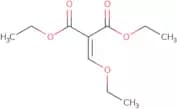
Discontinued productDiethyl ethoxymethylidenemalonate
CAS:Diethyl ethoxymethylidenemalonate is a matrix effect reagent used in analytical chemistry. It is often used as a substrate for the cycloaddition process, which produces malondialdehyde and hydrochloric acid. The UV-absorption of the malondialdehyde can be measured to determine the concentration of the sample. Diethyl ethoxymethylidenemalonate is also used as a dna template in binding constants, where it binds with amines to form complexes that are then analyzed by light emission. It has been shown to have an inhibitory effect on gyrase and trifluoroacetic acid, both enzymes involved in DNA replication.
Formula:C10H16O5Purity:Min. 95%Color and Shape:Colorless Clear LiquidMolecular weight:216.23 g/molRef: 3D-FD21796
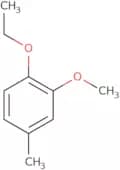
Discontinued product4-Ethoxy-3-methoxytoluene
CAS:4-Ethoxy-3-methoxytoluene is a fine chemical that has been used as a building block in the synthesis of other chemicals. It is also used as a research chemical and a reagent. 4-Ethoxy-3-methoxytoluene can be used to form various compounds with different functional groups. It can be used as an intermediate for the synthesis of drugs or polymers, or as a reaction component in organic reactions. The CAS number for 4-Ethoxy-3-methoxytoluene is 33963-27-8.
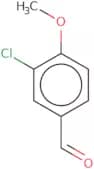
Formula:C10H14O2Purity:Min. 95%Color and Shape:PowderMolecular weight:166.22 g/mol3-Chloro-4-methoxybenzaldehyde
CAS:3-Chloro-4-methoxybenzaldehyde is a chemical compound that belongs to the class of aromatic compounds. It is synthesized by reacting 3-chlorobenzaldehyde with methoxyacetone in a hydroxylation reaction. The asymmetric synthesis of 3-chloro-4-methoxybenzaldehyde was achieved by using a chiral auxiliary, which is an organic molecule that can be used to control the stereochemistry of other reactions. This product has high cytotoxicity and is able to cause melanogenesis (production of melanin) when applied to rat striatal membranes.
Formula:C8H7ClO2Purity:Min. 95%Color and Shape:PowderMolecular weight:170.59 g/molRef: 3D-FC70306
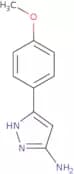
Discontinued product5-Amino-3-(4-methoxyphenyl)pyrazole
CAS:5-Amino-3-(4-methoxyphenyl)pyrazole (5AMPAP) is an anti-cancer agent that is effective against a number of different cancers, including breast, lung, and prostate. It selectively inhibits the growth of cancer cells by targeting enzymes in the mitochondria that are required for ATP production. 5AMPAP binds to the enzyme pyruvate dehydrogenase kinase, which has been shown to be involved in regulating cell proliferation and apoptosis. In addition, it has been demonstrated that this compound has anti-inflammatory properties. The regioselectivity of 5AMPAP was determined by x-ray crystallography and was found to form a pyrazolopyrimidine ring with two nitrogens on opposite sides of the ring. This regioselectivity is necessary for its anti-cancer activity.
Formula:C10H11N3OPurity:Min. 95%Molecular weight:189.21 g/molRef: 3D-FA50829
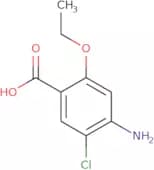
Discontinued product4-Amino-5-chloro-2-ethoxybenzoic acid
CAS:4-Amino-5-chloro-2-ethoxybenzoic acid is a phenoxy compound that is synthesized in the laboratory. The chemical structure of this compound has been studied using high performance liquid chromatography and it was found to have pharmacokinetic properties that are consistent with those of other drugs in its class. This drug is being developed as an anti-depressant, targeting the 5HT4 receptor. The bioactive metabolite of 4-amino-5-chloro-2-ethoxybenzoic acid is 4-(4′ hydroxybutyl)phenol, which has been shown to be a potent inhibitor of phosphodiesterase activity.
Formula:C9H10ClNO3Purity:Min. 95%Color and Shape:White Off-White PowderMolecular weight:215.63 g/molRef: 3D-FA71234
Discontinued product3,4-Dimethoxybenzyl bromide
CAS:3,4-Dimethoxybenzyl bromide is an organic compound that is used in the synthesis of isoquinoline alkaloids. This chemical has been found to have anticancer activity against human colon cancer cells (HCT116) and low energy properties. The asymmetric synthesis of 3,4-dimethoxybenzyl bromide can be achieved through a Grignard reaction with phenylmagnesium bromide. A linker can be used to attach 3,4-dimethoxybenzyl bromide to other chemicals such as biphenyls or amines.
Formula:C9H11BrO2Purity:Min. 95 Area-%Color and Shape:White PowderMolecular weight:231.09 g/molRef: 3D-FD22198
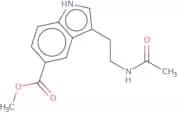
Discontinued productN-Acetyl-5-carboxymethoxy tryptamine
CAS:N-Acetyl-5-carboxymethoxy tryptamine is a versatile building block that is used as a reagent and in the synthesis of complex compounds. It can also be used as an intermediate or a reaction component in the synthesis of other compounds. This compound has been shown to have high quality and, when used as an intermediate, can serve as a useful scaffold for the synthesis of new molecules. N-Acetyl-5-carboxymethoxy tryptamine belongs to CAS No. 1397243-36-5, which is a speciality chemical that is not regulated by law.
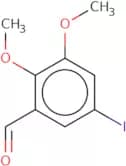
Formula:C14H16N2O3Purity:Min. 95%Molecular weight:260.29 g/mol5-Iodo-2,3-dimethoxybenzaldehyde
CAS:5-Iodo-2,3-dimethoxybenzaldehyde is a fine chemical that is useful as a scaffold for the synthesis of other compounds. It can be used as an intermediate for research chemicals or as a reaction component in the synthesis of complex compounds. 5-Iodo-2,3-dimethoxybenzaldehyde is used for the manufacture of high quality reagents and building blocks.
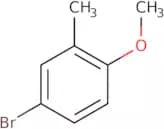
Formula:C9H9IO3Purity:Min. 95%Color and Shape:PowderMolecular weight:292.07 g/mol5-Bromo-2-methoxytoluene
CAS:5-Bromo-2-methoxytoluene is a bromoarene that reacts to form aziridines and phosphotungstic acid. It is used in the synthesis of polyaromatic compounds with steric interactions. 5-Bromo-2-methoxytoluene is also a functional group that can be used as an allosteric modulator. This compound also has stereoisomers that are chiral, meaning they have different structures despite being mirror images of each other. The carbonyl group on the 5-bromo compound is polar, which means it has a charge. The hydrogen bonds between this compound and other molecules are nonpolar, which means they do not have a charge and are more likely to form in a nonpolar solvent.
Formula:C8H9BrOPurity:Min. 95%Color and Shape:PowderMolecular weight:201.06 g/molRef: 3D-FB71172
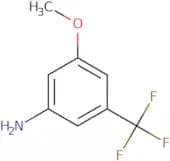
Discontinued product3-Methoxy-5-(trifluoromethyl)aniline
CAS:3-Methoxy-5-(trifluoromethyl)aniline is a chemical building block that is used in the preparation of pharmaceuticals, agrochemicals, dyes, and other chemicals. 3-Methoxy-5-(trifluoromethyl)aniline is also a versatile intermediate that can be used to produce heterocyclic compounds. 3-Methoxy-5-(trifluoromethyl)aniline has been found to be high quality and useful for many reactions. It is an important compound for research use because it can be used as a reagent or scaffold for complex compounds.
Formula:C8H8F3NOPurity:Min. 95%Color and Shape:PowderMolecular weight:191.15 g/molRef: 3D-FM70659
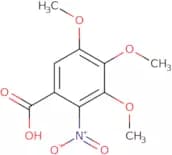
Discontinued product2-Nitro-3,4,5-trimethoxybenzoic acid
CAS:2-Nitro-3,4,5-trimethoxybenzoic acid (2-NTMB) is a potent anticancer agent that has shown cytotoxic effects in human epidermoid carcinoma cells. It inhibits the growth of cancer cells by interfering with their DNA synthesis and repair. 2-NTMB binds to DNA and blocks the action of enzymes involved in DNA synthesis and repair. This binding leads to cancer cell death through irradiation or by blocking the production of new proteins vital for cell division. 2-NTMB is bioisosteric with combretastatin A4, which means it can be substituted for this drug without significant loss of potency. It also has been shown to be an effective chemotherapeutic agent against breast cancer in mice.
Formula:C10H11NO7Purity:Min. 95%Color and Shape:PowderMolecular weight:257.2 g/molRef: 3D-FN70167
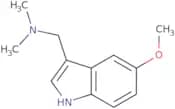
Discontinued product5-Methoxygramine
CAS:Controlled Product5-Methoxygramine is a metabolic intermediate which is an analog of 5-hydroxytryptamine (5-HT). It has been shown to increase blood pressure and reduce the activity of the 5-HT2C receptor. This drug also has been found to inhibit the growth of some cancer cells in vitro, but it does not affect normal cells. It can be used as a tool for identifying compounds that may have similar effects. The binding affinity of 5-methoxygramine for the 5-HT2C receptor was measured by displacement experiments with 3H-spiperone. The effect of this compound on dopamine release from rat striatal slices was studied by measuring electrical activity in isolated heart preparations. The effect of this compound on leishmania infection was studied using infected mice and isolated heart preparations.
Formula:C12H16N2OPurity:Min. 95%Color and Shape:PowderMolecular weight:204.27 g/mol2-[4-(4-Chloro-a-phenylbenzyl)-1-piperazinyl]-ethoxyacetic acid hydrochloride
CAS:2-[4-(4-Chloro-a-phenylbenzyl)-1-piperazinyl]-ethoxyacetic acid hydrochloride is a chemical compound that has been used to investigate the possible neuroprotective effects of cetirizine, an antihistamine. This drug was developed as a prodrug of cetirizine, which is converted in vivo to its active form. The main mechanism of action for this drug is inhibition of histamine release from mast cells and basophils by blocking H1 receptors. 2-[4-(4-Chloro-a-phenylbenzyl)-1-piperazinyl]-ethoxyacetic acid hydrochloride has also been shown to have beneficial effects on allergic symptoms and bowel disease in experimental models and clinical properties.Formula:C21H25ClN2O3·HClPurity:Min. 95%Color and Shape:PowderMolecular weight:425.35 g/molRef: 3D-FC33467
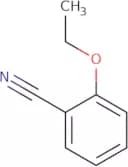
Discontinued product2-Ethoxybenzonitrile
CAS:2-Ethoxybenzonitrile is a non-natural molecule that is synthesized from the reaction of aniline and ethyl bromide. The reactants are heated together in the presence of an acid catalyst to form 2-ethoxybenzonitrile. 2-Ethoxybenzonitrile has been used as a research chemical in pharmaceutical research because it can be substituted for other molecules, such as benzene or nitro compounds, with similar physical properties. This synthetic compound has been shown to have a constant boiling point and melting point, which is desirable for use in molecular modeling studies. The molecule also has two isosteres that can be used in its place: dimethoxybenzene and diphenyl ether. 2-Ethoxybenzonitrile has been shown to react with purines by forming a C(2)-N bond. These reactions are catalyzed by nitro compounds, which act as electron donors. The mechanism of these reactions is
Formula:C9H9NOPurity:Min. 95%Color and Shape:Clear LiquidMolecular weight:147.17 g/molRef: 3D-FE36952
Discontinued product4-Amino-2-methoxypyridine
CAS:4-Amino-2-methoxypyridine is an antiviral agent that inhibits the activity of the NS5B polymerase, a key enzyme in the replication of the hepatitis C virus. It is a potent inhibitor with a wide range of activity and can be used for treatment and prevention of infection. 4-Amino-2-methoxypyridine has been shown to inhibit replication of hepatitis C virus in cell culture. This compound is stable in vivo and can be administered orally, making it an attractive candidate for oral prophylaxis against hepatitis C. 4-Amino-2-methoxypyridine also exhibits good pharmacokinetic properties, including a low clearance rate and high volume of distribution, which makes it suitable for chronic administration.
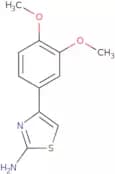
Formula:C6H8N2OPurity:Min. 95%Color and Shape:White To Light (Or Pale) Orange SolidMolecular weight:124.14 g/mol4-(3,4-Dimethoxyphenyl)-1,3-thiazol-2-amine
CAS:Please enquire for more information about 4-(3,4-Dimethoxyphenyl)-1,3-thiazol-2-amine including the price, delivery time and more detailed product information at the technical inquiry form on this page
Formula:C11H12N2O2SPurity:Min. 95%Molecular weight:236.29 g/molRef: 3D-FD122217
Discontinued product(2-Aminophenyl)-N-((3,4-dimethoxyphenyl)methyl)formamide
CAS:Please enquire for more information about (2-Aminophenyl)-N-((3,4-dimethoxyphenyl)methyl)formamide including the price, delivery time and more detailed product information at the technical inquiry form on this pageFormula:C16H18N2O3Purity:Min. 95%Color and Shape:PowderMolecular weight:286.33 g/molRef: 3D-FA169455
Discontinued productN-[6-Chloro-5-(2-methoxyphenoxy)-(2,2-bipyrimidine)4-4-yl]-(1,1-dimethylethyl)-benzenesulfonamide
CAS:N-[6-Chloro-5-(2-methoxyphenoxy)-(2,2-bipyrimidine)4-4-yl]-(1,1-dimethylethyl)-benzenesulfonamide is a reagent that can be used as a reaction component in the synthesis of complex compounds. It has high quality and is a versatile building block for the synthesis of speciality chemicals. N-[6-Chloro-5-(2-methoxyphenoxy)-(2,2-bipyrimidine)4-4-yl]-(1,1-dimethylethyl)-benzenesulfonamide is also a useful intermediate in the synthesis of fine chemicals.
Formula:C25H24ClN5O4SPurity:Min. 95%Color and Shape:White PowderMolecular weight:526.01 g/molRef: 3D-FC20113
Discontinued product


![2-[4-(4-Chloro-a-phenylbenzyl)-1-piperazinyl]-ethoxyacetic acid hydrochloride](/_next/image/?url=https%3A%2Fstatic.cymitquimica.com%2Fproducts%2F3D%2Fthumb-webp%2FFC33467.webp&w=3840&q=75)


![N-[6-Chloro-5-(2-methoxyphenoxy)-(2,2-bipyrimidine)4-4-yl]-(1,1-dimethylethyl)-benzenesulfonamide](/_next/image/?url=https%3A%2Fstatic.cymitquimica.com%2Fproducts%2F3D%2Fthumb-webp%2FFC20113.webp&w=3840&q=75)