Ethers
Ethers are organic compounds containing an ether functional group, characterized by an oxygen atom bonded to two hydrocarbon radicals. These compounds are valuable in synthesis and serve as solvents in various chemical reactions. At CymitQuimica, we offer a selection of high-quality ethers to support your research and industrial applications, ensuring reliable and effective results. Our range of ethers meets diverse laboratory requirements, from routine experiments to advanced research.
Found 40729 products of "Ethers"
Sort by
Purity (%)
0
100
|
0
|
50
|
90
|
95
|
100
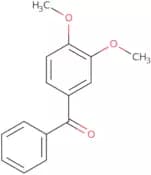
3,4-Dimethoxybenzophenone
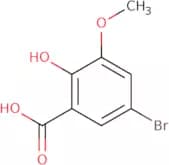
CAS:<p>The synthesis of 3,4-dimethoxybenzophenone is carried out by the reaction of benzoyl chloride with 2-methoxy-5-methylbenzophenone. The reaction is catalyzed by phosphotungstic acid or zirconium. This method provides a high yield of product and has been used to synthesize 3,4-dimethoxybenzophenone for industrial purposes. The monomers are converted into polymers through acetoxylation and carbonyl group reactions. This process can be carried out in homogeneous solvents at temperatures between 100°C and 200°C.</p>Formula:C15H14O3Purity:Min. 95%Color and Shape:PowderMolecular weight:242.27 g/mol5-Bromo-2-hydroxy-3-methoxybenzoic acid
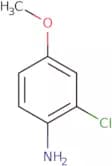
CAS:<p>5-Bromo-2-hydroxy-3-methoxybenzoic acid (5BHB) is a phenolic compound that has been shown to have fungicidal properties. The uptake of 5BHB in the brain was studied using positron emission tomography and computerized tomography scans in monkeys. The affinity of 5BHB for the dopamine D2 receptor, and its ability to inhibit methylation reactions, were also investigated. The results show that 5BHB is able to cross the blood-brain barrier and bind with high affinity to the dopamine D2 receptor. These findings suggest that 5BHB may be used as a therapeutic agent for Parkinson's disease.</p>Formula:C8H7BrO4Purity:Min. 95%Color and Shape:PowderMolecular weight:247.04 g/mol2-Chloro-4-methoxyaniline
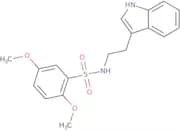
CAS:<p>2-Chloro-4-methoxyaniline is a primary amine that has been used in the synthesis of polychlorinated and chlorinated amines. It is an important precursor for the manufacture of herbicides, insecticides, and pharmaceuticals. 2-Chloro-4-methoxyaniline reacts with hydrogen chloride to form chloroacetanilide, which can be hydrolysed to aniline. This reaction proceeds at room temperature and does not require catalysts. The reactivity of this compound is due to its nucleophilic substitutions in the presence of ketocarboxylic acids or vinyl ethers. 2-Chloro-4-methoxyaniline has also been used as a dehydrating reagent in organic synthesis reactions.br>br><br>2-Chloro-4-methoxyaniline is highly reactive because it contains two primary amines (NH2) that</p>Formula:C7H8ClNOPurity:Min. 95%Molecular weight:157.6 g/mol((2,5-dimethoxyphenyl)sulfonyl)(2-indol-3-ylethyl)amine
CAS:<p>Please enquire for more information about ((2,5-dimethoxyphenyl)sulfonyl)(2-indol-3-ylethyl)amine including the price, delivery time and more detailed product information at the technical inquiry form on this page</p>Purity:Min. 95%1-Fluoro-3-methoxy-2-nitrobenzene
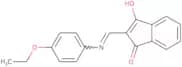
CAS:<p>1-Fluoro-3-methoxy-2-nitrobenzene is a versatile building block that can be used as a scaffold for the synthesis of complex compounds. It is also used as a reaction component in research and development, especially in the production of pharmaceuticals, pesticides and other chemicals. 1-Fluoro-3-methoxy-2-nitrobenzene has many uses in the production of high quality reagents, such as pharmaceutical intermediates, dyes, and explosives.</p>Formula:C7H6FNO3Purity:Min. 95%Molecular weight:171.13 g/mol2-(((4-ethoxyphenyl)amino)methylene)indane-1,3-dione
CAS:<p>Please enquire for more information about 2-(((4-ethoxyphenyl)amino)methylene)indane-1,3-dione including the price, delivery time and more detailed product information at the technical inquiry form on this page</p>Purity:Min. 95%[4-(2-Aminoethoxy)phenyl](phenyl)methanone HCl
CAS:<p>[4-(2-Aminoethoxy)phenyl](phenyl)methanone HCl is a fine chemical that belongs to the group of versatile building blocks. It can be used as a reagent, speciality chemical, useful building block, high quality research chemical, or useful intermediate. The CAS registry number is 1185504-45-3.</p>Formula:C15H15NO2·HClPurity:Min. 95%Color and Shape:White PowderMolecular weight:277.75 g/mol3,5-Dimethoxyiodobenzene
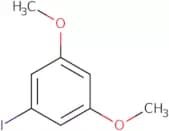
CAS:<p>3,5-Dimethoxyiodobenzene is an organic molecule that is structurally similar to biphenyl. It has been shown to inhibit the growth of cancer cells by flipping the mcf-7 protein and cross-coupling with pterostilbene. 3,5-Dimethoxyiodobenzene can be used as a substitute for biphenyl in some reactions because it has a similar structure but does not have halogen groups. 3,5-Dimethoxyiodobenzene also inhibits the production of chloride ions in bacteria and causes accumulation of phosphane, which is an enzyme inhibitor. This compound has also been shown to act as a stereoselective inhibitor of enzymes that catalyze the synthesis of phytoalexins, which are plant secondary metabolites produced under biotic stress conditions (e.g., bacterial infection).</p>Formula:C8H9IO2Purity:Min. 95%Color and Shape:Light Brown To Brown SolidMolecular weight:264.06 g/mol4-Carbethoxyaminothiazole
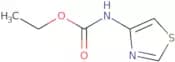
CAS:<p>4-Carbethoxyaminothiazole is a versatile building block for the synthesis of many fine chemicals and complex compounds. It is a reagent that can be used in research, as a speciality chemical, or as an intermediate to produce other useful compounds. 4-Carbethoxyaminothiazole is also a useful scaffold for the synthesis of organic molecules with interesting biological properties.</p>Formula:C6H8N2O2SPurity:Min. 95%Color and Shape:White solid.Molecular weight:172.21 g/mol6-Methoxypyrimidine-2,4(1H,3H)-dione
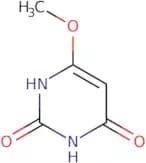
CAS:Controlled Product<p>6-Methoxypyrimidine-2,4(1H,3H)-dione is a nucleophilic compound that is formed by the reaction of an electron with a carbon atom in an organic molecule. It is used as a reagent in organic synthesis. 6-Methoxypyrimidine-2,4(1H,3H)-dione can be synthesized from 2-amino-5-methoxybenzaldehyde and chloroacetic acid in three steps. The chloride ion reacts with the 6-methoxypyridine to form the desired product. 6-Methoxypyrimidine-2,4(1H,3H)-dione can also be used as a reagent to catalyze chemical reactions such as alkylation and allylation reactions. 6-Methoxypyrimidine-2,4(1H,3H)-dione has been shown to have barbiturate activity</p>Formula:C5H6N2O3Purity:Min. 95%Molecular weight:142.11 g/mol2,4-Dimethoxy-3-methylbenzyl alcohol
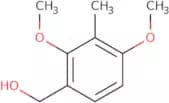
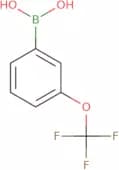
CAS:<p>2,4-Dimethoxy-3-methylbenzyl alcohol is a syntheses and deuterium analogue of orsellinic acid. It has been shown to inhibit bacterial growth in the presence of an oxygen atmosphere.</p>Formula:C10H14O3Purity:Min. 95%Molecular weight:182.22 g/mol3-Trifluoromethoxyphenylboronic acid
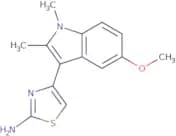
CAS:<p>3-Trifluoromethoxyphenylboronic acid is a lead compound that has the potential to be an efficient and water-soluble inhibitor of protein kinases. It has been shown to have a significant inhibitory effect on vismodegib transport. This compound may also have anticancer properties. 3-Trifluoromethoxyphenylboronic acid binds to the active site of protein kinases, blocking their catalytic activity and inhibiting cell proliferation by interfering with the signaling pathway that regulates cancer cells.</p>Formula:C7H6BF3O3Purity:Min. 90%Color and Shape:PowderMolecular weight:205.93 g/mol4-(5-Methoxy-1,2-dimethyl-1H-indol-3-yl)-1,3-thiazol-2-amine
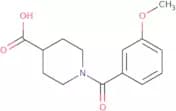
CAS:<p>Please enquire for more information about 4-(5-Methoxy-1,2-dimethyl-1H-indol-3-yl)-1,3-thiazol-2-amine including the price, delivery time and more detailed product information at the technical inquiry form on this page</p>Formula:C14H15N3OSPurity:Min. 95%Color and Shape:PowderMolecular weight:273.35 g/mol1-(3-Methoxybenzoyl)piperidine-4-carboxylic acid
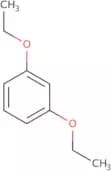
CAS:<p>1-(3-Methoxybenzoyl)piperidine-4-carboxylic acid is a fine chemical that can be used as a building block in organic synthesis. It has CAS No. 353465-22-2 and is also known as P1. This compound is useful in the preparation of a variety of complex compounds, including pharmaceuticals, agrochemicals, and other specialty chemicals. The compound can be used as a reagent or intermediate for reactions such as Friedel-Crafts acylation, carbonylation, and sulfonylation. 1-(3-Methoxybenzoyl)piperidine-4-carboxylic acid is also an excellent scaffold for the synthesis of complex molecules with versatile functional groups.</p>Formula:C14H17NO4Purity:Min. 98 Area-%Color and Shape:PowderMolecular weight:263.29 g/mol1,3-Diethoxybenzene
CAS:<p>1,3-Diethoxybenzene is an equimolecular alkylation product that is prepared by the reaction of chloride and diethyl ether. The analysis technique used to identify this compound is GC-MS. This product has been shown to be resistant to vinyl acetate copolymerization with styrene and nitrocellulose polymerization with cyclohexenyl methoxy.</p>Formula:C10H14O2Purity:Min. 94.0 Area-%Color and Shape:Clear LiquidMolecular weight:166.22 g/mol3'-Fluoro-4'-methoxyacetophenone
CAS:<p>3'-Fluoro-4'-methoxyacetophenone is a chalcone that has been shown to have vibrational frequencies of 3.1, 3.2, and 3.3 cm-1. The conformation of this molecule is in the cis form with a 2,6-diisopropylphenyl group on the cyclohexane ring. This molecule has two functional groups: a hydroxyl and a methoxy group. These molecules are soluble in organic solvents such as benzene and chloroform, but not in water or ethanol due to their high polarity. The crystal structure of this molecule was determined by x-ray diffraction experiments at room temperature and found to be monoclinic with space group C2/c with lattice constants a = 5.853 Å, b = 12.638 Å, c = 6.225 Å and β = 120° ± 10° at 25 °C</p>Formula:C9H9FO2Purity:Min. 95%Color and Shape:PowderMolecular weight:168.16 g/mol2-Hydroxy-3-methoxybenzyl alcohol
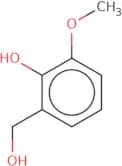
CAS:<p>2-Hydroxy-3-methoxybenzyl alcohol is a phenolic compound that belongs to the class of mandelonitrile. It is an envenomation agent that has been shown to have a molecular weight of 146, and is synthesized by reacting 2-hydroxy-4-methoxybenzaldehyde with formic acid. This drug also has been shown to have high binding affinity for the androgen receptor, which allows it to be used as an antihormone therapy. 2-Hydroxyl-3-methoxybenzyl alcohol binds to hormone receptors in cells and prevents them from binding with the hormones needed for transcription. The hydroxyl group on this molecule allows it to act as an acceptor for other molecules in reactions involving formylation and hydroxylation reactions.</p>Formula:C8H10O3Purity:Min. 95%Color and Shape:PowderMolecular weight:154.16 g/mol3-Methoxybenzamidine hydrochloride
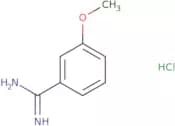
CAS:<p>3-Methoxybenzamidine hydrochloride is a chemical that belongs to the group of acid chlorides. It is used in organic synthesis as an intermediate for the production of triazines, which are used as herbicides and insecticides. 3-Methoxybenzamidine hydrochloride is usually prepared by reacting methylamine with nitrous acid. The use of 3-methoxybenzamidine hydrochloride in organic synthesis has been shown to be highly efficient, with yields up to 95%. This chemical also exhibits fluorescence at low temperatures.</p>Formula:C8H10N2O·HClPurity:Min. 95%Color and Shape:PowderMolecular weight:186.64 g/mol4-Methoxybenzoin
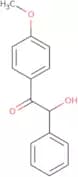
CAS:<p>4-Methoxybenzoin is a phenolic compound that belongs to the carbinols. It is an aromatic hydrocarbon that can be synthesized by heating benzaldehyde with methanol and sodium carbonate in ethanol. 4-Methoxybenzoin is used as a chemical intermediate for the synthesis of other chemicals, such as quinidine, anisole, thiosemicarbazide and hydrochloric acid. 4-Methoxybenzoin has been shown to react with cellulose acetate to form an acidic photodegradation product. This reaction can be suppressed by adding sulfuric acid or sodium sulfite.</p>Formula:C15H14O3Purity:Min. 95%Color and Shape:White PowderMolecular weight:242.27 g/mol2,6-Dimethoxy-4-methylphenol
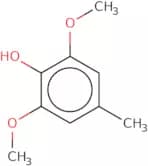
CAS:<p>2,6-dimethoxy-4-methylphenol is a synthetic chemical with potential use as an insecticide. It is a cholinesterase inhibitor that inhibits the action of acetylcholinesterase, an enzyme that breaks down acetylcholine, which is a neurotransmitter important for cognitive function and muscle control. 2,6-dimethoxy-4-methylphenol has been shown to be toxic to insects in a sensitivity test and has also shown some toxicity to rats when administered orally at high doses. This chemical has been shown to inhibit the production of fatty acids in plants and can be used as a potential insecticide for human food crops.</p>Formula:C9H12O3Purity:Min. 97.0%Color and Shape:White Yellow PowderMolecular weight:168.19 g/mol


methanone HCl](/_next/image/?url=https%3A%2Fstatic.cymitquimica.com%2Fproducts%2F3D%2Fthumb-webp%2FFA133569.webp&w=3840&q=75)