Ethers
Ethers are organic compounds containing an ether functional group, characterized by an oxygen atom bonded to two hydrocarbon radicals. These compounds are valuable in synthesis and serve as solvents in various chemical reactions. At CymitQuimica, we offer a selection of high-quality ethers to support your research and industrial applications, ensuring reliable and effective results. Our range of ethers meets diverse laboratory requirements, from routine experiments to advanced research.
Found 40712 products of "Ethers"
Sort by
Purity (%)
0
100
|
0
|
50
|
90
|
95
|
100
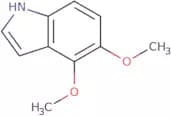
4,5-Dimethoxyindole
CAS:<p>4,5-Dimethoxyindole is a chemical compound that has been shown to exhibit radical scavenging activity. It is an inhibitor of integrase, which are enzymes involved in the integration of viral DNA into host cell chromosomes. This compound has been synthesized and its optical properties have been studied. The synthesis of 4,5-dimethoxyindole derivatives has also been investigated using molecular modeling. Schrodinger software was used to predict the geometry of these synthesized derivatives. These studies suggest that 4,5-dimethoxyindole may be a potential anti-cancer agent due to its ability to inhibit cancer cell growth and induce apoptosis.</p>Formula:C10H11NO2Purity:Min. 95%Color and Shape:SolidMolecular weight:177.2 g/mol3-(4-Methoxyphenoxy)-1,2-propanediol
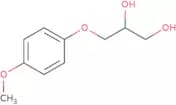
CAS:<p>3-(4-Methoxyphenoxy)-1,2-propanediol is a chiral molecule that can be found in various products. It has been used in the synthesis of a variety of drugs and other organic compounds. 3-(4-Methoxyphenoxy)-1,2-propanediol is an intermediate for the synthesis of natural products such as benzofuran and benzothiophene. This compound is also used as a reagent in the asymmetric dihydroxylation of epoxides. The rate at which this reaction proceeds depends on the kinetic parameters, such as the concentration of reactant and transition state analogues, and on the reaction conditions, such as temperature and pH. The product of this reaction is an epoxide hydrolase inhibitor with a reactive anion that can be used to synthesize pharmaceuticals.</p>Formula:C10H14O4Purity:Min. 95%Color and Shape:White PowderMolecular weight:198.22 g/mol3,4-Dimethoxy-2-hydroxyacetophenone
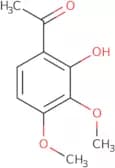
CAS:<p>3,4-Dimethoxy-2-hydroxyacetophenone is a natural product that has been shown to have significant activity against epidermoid carcinoma. The mechanism of action of 3,4-dimethoxy-2-hydroxyacetophenone is not fully understood but it has been shown to inhibit the growth of cancer cells through an unknown mechanism. This compound can be synthesized from coumarin derivatives and its fluorescence and cellular uptake are due to its flavonoid structure. 3,4-Dimethoxy-2-hydroxyacetophenone has also been shown to increase cisplatin sensitivity in nerve cells and has been used as a fluorescent probe for microscopy and magnetic resonance imaging (MRI).</p>Formula:C10H12O4Purity:Min. 98 Area-%Color and Shape:PowderMolecular weight:196.2 g/mol2-(2,4-dichlorophenoxy)-N-(6-methoxy(3-pyridyl))ethanamide
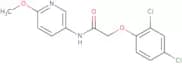
CAS:<p>Please enquire for more information about 2-(2,4-dichlorophenoxy)-N-(6-methoxy(3-pyridyl))ethanamide including the price, delivery time and more detailed product information at the technical inquiry form on this page</p>Purity:Min. 95%2-[2-(2-t-Boc-aminoethoxy)ethoxy]ethanol
CAS:<p>2-[2-(2-t-Boc-aminoethoxy)ethoxy]ethanol is a versatile chemical building block that can be used to synthesize a variety of compounds. It has been shown to be useful as a reaction component in the synthesis of pharmaceuticals and agrochemicals. The compound is also used as an intermediate for the preparation of other compounds. 2-[2-(2-t-Boc-aminoethoxy)ethoxy]ethanol is soluble in organic solvents, such as chloroform, ethanol, or acetone. It has a CAS number of 139115-92-7 and is relatively easy to purify by recrystallization from methanol.</p>Formula:C11H23NO5Purity:Min. 95%Color and Shape:Clear LiquidMolecular weight:249.3 g/mol3-Methoxybenzamidine hydrochloride
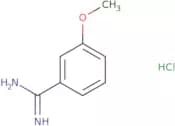
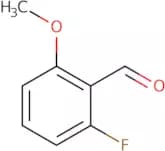
CAS:<p>3-Methoxybenzamidine hydrochloride is a chemical that belongs to the group of acid chlorides. It is used in organic synthesis as an intermediate for the production of triazines, which are used as herbicides and insecticides. 3-Methoxybenzamidine hydrochloride is usually prepared by reacting methylamine with nitrous acid. The use of 3-methoxybenzamidine hydrochloride in organic synthesis has been shown to be highly efficient, with yields up to 95%. This chemical also exhibits fluorescence at low temperatures.</p>Formula:C8H10N2O·HClPurity:Min. 95%Color and Shape:PowderMolecular weight:186.64 g/mol2-Fluoro-6-methoxybenzaldehyde
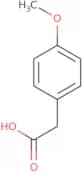
CAS:<p>2-Fluoro-6-methoxybenzaldehyde is a quinone that is used as an intermediate in the synthesis of other organic compounds. It has been shown to be a competitive inhibitor of malonate-induced fibrillation in heart muscle and also slows the reaction time. The pharmacokinetic properties of 2-fluoro-6-methoxybenzaldehyde have been evaluated in dogs, rats, and rabbits. In all three species, 2-fluoro-6-methoxybenzaldehyde showed no significant accumulation in any tissue after intravenous injection and was rapidly excreted unchanged in urine. 2-Fluoro-6-methoxybenzaldehyde may have some potential as an antihypertensive agent due to its ability to reduce blood pressure in rabbits.</p>Formula:C8H7FO2Purity:Min. 95%Color and Shape:PowderMolecular weight:154.14 g/mol(4-Methoxyphenyl)acetic acid
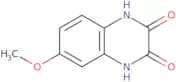
CAS:<p>4-Methoxybenzoic acid is a chemical compound that belongs to the group of phenylacetic acids. It is an organic acid with a carboxylic acid group and a hydroxyl group. 4-Methoxybenzoic acid is used as an intermediate in the synthesis of other compounds, such as 3-methoxyphenylacetic acid and dihydroconiferyl alcohol. 4-Methoxybenzoic acid has been shown to inhibit the growth of breast cancer cells by inducing apoptosis. This effect was found to be increased when combined with tamoxifen (a drug used for the treatment of breast cancer). The mechanism of action is not clear but may involve hydrogen bond formation between 4-methoxybenzoic acid and tamoxifen, leading to increased uptake into cells.</p>Formula:C9H10O3Purity:Min. 95%Color and Shape:White PowderMolecular weight:166.17 g/mol6-Methoxy-1,4-dihydroquinoxaline-2,3-dione
CAS:<p>6-Methoxy-1,4-dihydroquinoxaline-2,3-dione is a nitrile that is generated by the catalytic oxidation of quinoxaline. It is a colorless to yellow solid with a melting point of about 155°C. 6-Methoxy-1,4-dihydroquinoxaline-2,3-dione has been shown to be an effective nitrile for the synthesis of diketene. 6-Methoxy-1,4-dihydroquinoxaline-2,3-dione can be converted into hydrochloric acid and ethanol through hydrolysis with hydrochloric acid or ethanol in the presence of heat. This reaction will proceed more quickly at higher temperatures. The filtration method can be used to remove any unwanted solids from the reaction mixture.</p>Formula:C9H8N2O3Purity:Min. 95%Color and Shape:PowderMolecular weight:192.17 g/molN-Ethylheptadecafluoro-N-[3-(Trimethoxysilyl)Propyl]Octanesulphonamide
CAS:Controlled Product<p>N-Ethylheptadecafluoro-N-[3-(Trimethoxysilyl)Propyl]Octanesulphonamide is a membrane filtration technology that is used to remove all organic and inorganic pollutants from water. It is effective for the removal of oils, pesticides, herbicides, detergents, antibiotics, and heavy metals. N-Ethylheptadecafluoro-N-[3-(Trimethoxysilyl)Propyl]Octanesulphonamide is also used to treat wastewater and surface water. This process can be used on large quantities of water with high efficiency. The use of this process can be beneficial for the health of humans, animals, and the environment.</p>Formula:C16H20F17NO5SSiPurity:Min. 95%Molecular weight:689.46 g/mol2,4,6-Trimethoxybenzamide
CAS:<p>2,4,6-Trimethoxybenzamide is a triggered compound that reacts with lithium to form an efficient regiospecific lithium 2,4,6-trimethoxybenzamide complex. This reaction occurs at low temperatures and has been shown to be more efficient than other methods for the synthesis of acridones. The reaction has not been shown to be reversible and requires the use of a strong base such as lithium.</p>Formula:C10H13NO4Purity:Min. 95%Color and Shape:PowderMolecular weight:211.21 g/mol3-(3,5-Dimethoxy-4-hydroxyphenyl)-propionic acid
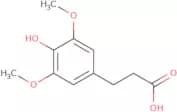
CAS:<p>3-(3,5-dimethoxy-4-hydroxyphenyl)-propionic acid (3DMP) is a phenolic compound that is the major metabolite of sinalbin. It has been shown to be a bioactive compound with anti-inflammatory and antiatherosclerotic properties. 3DMP has also been found to have anti-cancer and anti-microbial activities. 3DMP is catabolized in the liver by cytochrome P450. This process produces metabolites including 3,5-dimethoxybenzoic acid, which can be excreted in urine samples. The physiological effects of 3DMP are mediated through binding to ABC transporters as well as G protein coupled receptors on cells such as BV2 microglial cells.</p>Formula:C11H14O5Purity:Min. 95%Color and Shape:White PowderMolecular weight:226.23 g/mol2'-Ethoxyacetophenone
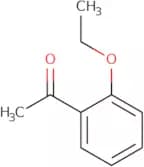
CAS:<p>2'-Ethoxyacetophenone is a Friedel-Crafts acylation agent. It reacts with nucleophilic groups, such as alcohols and amines, to form an acylated product. 2'-Ethoxyacetophenone has been shown to be a useful tool for the synthesis of chiral compounds with high yields and good enantiomeric excesses. This compound can also be used as a precursor in the synthesis of polyaromatic molecules containing a chiral center. The reaction requires low substrate concentrations and short reaction times, making it advantageous for some reactions that are sensitive to these parameters.</p>Formula:C10H12O2Purity:Min. 95%Color and Shape:PowderMolecular weight:164.2 g/mol2-Fluoro-3-methoxyaniline
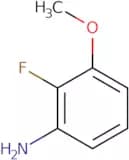
CAS:<p>2-Fluoro-3-methoxyaniline is a high quality chemical that can be used as an intermediate in the synthesis of complex compounds. It is a reagent and useful building block, with a CAS number of 801282-00-8. 2-Fluoro-3-methoxyaniline can be used to make speciality chemicals and research chemicals, as well as versatile building blocks for reactions. This compound is also a reaction component for the synthesis of other compounds.</p>Formula:C7H8FNOPurity:Min. 95%Color and Shape:Clear LiquidMolecular weight:141.14 g/mol3,5,7,4'-Tetramethoxyflavone
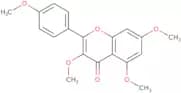
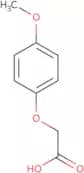
CAS:<p>3,5,7,4'-Tetramethoxyflavone is a flavonoid that has been shown to have antidiabetic effects in animal studies. The mechanism of action of 3,5,7,4'-tetramethoxyflavone is not clear; however it is thought to involve the regulation of insulin sensitivity and energy metabolism. This compound has also been shown to inhibit the growth of Mycobacterium tuberculosis and other bacteria by interacting with their adenosine receptors. 3,5,7,4'-Tetramethoxyflavone binds to the basophilic leukemia cell line and inhibits its uptake of adenosine through the ccaat/enhancer-binding protein complex.</p>Formula:C19H18O6Purity:Min. 95%Molecular weight:342.34 g/mol4-Methoxyphenoxyacetic acid
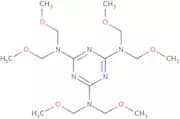
CAS:<p>4-Methoxyphenoxyacetic acid is a chemical compound with molecular formula C10H12O4. It is an alpha-hydroxy acid and is also known as 4-methoxybenzoic acid. 4-Methoxyphenoxyacetic acid has been shown to have reactive properties and can be used as a reagent in organic synthesis. A molecular modeling study of 4-methoxyphenoxyacetic acid has revealed that it could form hydrogen bonding interactions with the hydroxyl group of coumarin derivatives, which may lead to irreversible oxidation reactions. The human serum contains high affinity binding sites for this chemical compound, which is detected by the mefexamide test.</p>Formula:C9H10O4Purity:Min. 95%Color and Shape:PowderMolecular weight:182.17 g/molN,N,N',N',N'',N''-Hexamethoxymethylmelamine
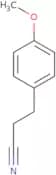
CAS:<p>Hexamethoxymethylmelamine (HMMM) is a polyvinyl-based polymer that can be synthesized by the cationic polymerization of hexamethoxymethylmelamine. HMMM has been shown to have a high water permeability, making it an excellent candidate for use in wastewater treatment. It also has biocompatible properties and can be chemically stable under harsh conditions, making it suitable for use in various applications.</p>Formula:C15H30N6O6Purity:Min. 95%Color and Shape:PowderMolecular weight:390.44 g/molβ-(p-Methoxyphenyl)propionitrile
CAS:<p>The synthesis of beta-(p-methoxyphenyl)propionitrile is a sustainable process that can be carried out in the laboratory. The reaction requires no catalysts or solvents and can be completed within an hour, with yields of up to 99%. This compound can be used as a precursor for other organic compounds, such as pharmaceuticals.</p>Formula:C10H11NOPurity:Min. 95%Color and Shape:Clear LiquidMolecular weight:161.2 g/mol3,4-Dimethoxybenzyl bromide
CAS:<p>3,4-Dimethoxybenzyl bromide is an organic compound that is used in the synthesis of isoquinoline alkaloids. This chemical has been found to have anticancer activity against human colon cancer cells (HCT116) and low energy properties. The asymmetric synthesis of 3,4-dimethoxybenzyl bromide can be achieved through a Grignard reaction with phenylmagnesium bromide. A linker can be used to attach 3,4-dimethoxybenzyl bromide to other chemicals such as biphenyls or amines.</p>Formula:C9H11BrO2Purity:Min. 95 Area-%Color and Shape:White PowderMolecular weight:231.09 g/mol(4-Hydroxy-3-methoxyphenyl)acetonitrile
CAS:<p>Lobetyolin is a phenolic compound that has been found to be an inhibitor of monoamine oxidase. Lobetyolin is an acetylated derivative of 4-hydroxy-3-methoxyphenylacetonitrile. It has been shown to inhibit bacterial growth in vitro, with the exception of Mycobacterium tuberculosis and Mycobacterium avium complex. The optimal reaction time for lobetyolin is 3 hours at a pH between 7 and 8, with a yield of 66% at room temperature. Lobetyolin reacts rapidly with amines, alkylating them as it undergoes oxidation by hydrogen peroxide. Lobetyolin also reacts slowly with dopamine and aldehydes, but more readily with chlorides, yielding lobetyrine and chloroacetaldehyde respectively.</p>Formula:C9H9NO2Purity:Min. 95%Color and Shape:PowderMolecular weight:163.17 g/mol

![2-[2-(2-t-Boc-aminoethoxy)ethoxy]ethanol](/_next/image/?url=https%3A%2Fstatic.cymitquimica.com%2Fproducts%2F3D%2Fthumb-webp%2FFB18924.webp&w=3840&q=75)
![N-Ethylheptadecafluoro-N-[3-(Trimethoxysilyl)Propyl]Octanesulphonamide](/_next/image/?url=https%3A%2Fstatic.cymitquimica.com%2Fproducts%2F3D%2Fthumb-webp%2FFE98932.webp&w=3840&q=75)