Organoboranes
Organoboranes are organic compounds characterized by the presence of boron atoms bonded to carbon. These compounds are derivatives of the BH3 molecule and play animportant role in various chemical reactions, including as intermediates in organic synthesis. At CymitQuimica, we offer a wide range of organoboranes to support your research and industrial needs. Our products are designed to deliver high performance and reliability in your synthetic processes.
Found 6101 products of "Organoboranes"
Sort by
Purity (%)
0
100
|
0
|
50
|
90
|
95
|
100
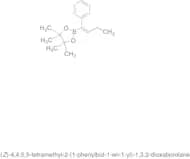
(Z)-4,4,5,5-Tetramethyl-2-(1-phenylbut-1-en-1-yl)-1,3,2-dioxaborolane
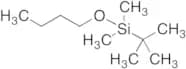
CAS:Controlled ProductFormula:C16H23BO2Color and Shape:NeatMolecular weight:258.164Butoxy(tert-butyl)dimethylsilane
CAS:Controlled ProductFormula:C10H24OSiColor and Shape:NeatMolecular weight:188.3824-(tert-Butoxy)phenylboronic Acid
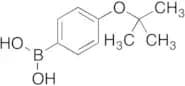
CAS:Controlled Product<p>Applications 4-tert-Butoxyphenylboronic Acid is a compound used in the preparation of nitrophenylphenol via cross-coupling reaction of nitrohalobenzenes with phenylboronic acids and deprotection.<br>References Kumamoto, N., et al.: Preparation of nitrophenylphenol, JP 2001055360 (2001);<br></p>Formula:C10H15BO3Color and Shape:NeatMolecular weight:194.044-Carboxyphenylboronic acid
CAS:<p>Applications 4-Carboxyphenylboronic acid is a reagent used in suzuki coupling reactions.<br>References Hu, Z., et al.: Wuji Huaxue Xuebao, 34, 387 (2018); Ibrahim, M., et al.: J. Organomet. Chem., 859, 44 (2018); Erami, R. S., et al.: Catalysts, 7, 76 (2017)<br></p>Formula:C7H7BO4Color and Shape:NeatMolecular weight:165.942-Aminobenzeneboronic acid pinacol ester
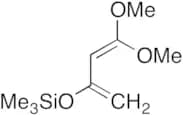
CAS:Controlled Product<p>Applications 2-Aminobenzeneboronic acid pinacol ester is a reagent used to synthesize regiospecific quinolines. It can also be used to synthesize (±)-Epimeloscine and (±)-Meloscine.<br>References Zhang, H., et al.: J. Am. Chem. Soc. 133, 10376 (2011); Horn, J., et al.: Org. Lett 10, 4117 (2008)<br></p>Formula:C12H20BNO3Color and Shape:NeatMolecular weight:237.1031,1-Dimethoxy-3-(trimethylsiloxy)-1,3-butadiene
CAS:Controlled ProductFormula:C9H18O3SiColor and Shape:NeatMolecular weight:202.3235-Formylfuran-2-boronic Acid Neopentyl Glycol Ester
CAS:Controlled Product<p>Applications 5-Formylfuran-2-boronic Acid Neopentyl Glycol Ester is a useful reagent in lapatinib synthesis.<br>References Radl, S., et al.: PCT Int. Appl. (2014), WO 2014059956 A1<br></p>Formula:C20H26B2O8Color and Shape:NeatMolecular weight:416.0382-Phenyl-2-[(trimethylsilyl)oxy]acetonitrile (90%)
CAS:Controlled Product<p>Stability Moisture Sensitive<br>Applications 2-phenyl-2-[(trimethylsilyl)oxy]acetonitrile (cas# 25438-37-3) is a useful research chemical.<br></p>Formula:C11H15NOSiPurity:90%Color and Shape:NeatMolecular weight:205.331(E)-Butenylboronic Acid
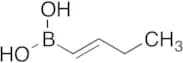
CAS:Controlled Product<p>Applications 1-Butenylboronic Acid is a reagent used in the synthesis of polyene natural products.<br>References Lee, S. J., et al.: J. Am. Chem. Soc., 130, 466-468 (2008)<br></p>Formula:C4H9BO2Color and Shape:NeatMolecular weight:99.925-Aminoboronphthalide
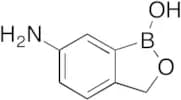
CAS:Controlled Product<p>Applications 5-Aminoboronphthalide is used as a reactant in the preparation of 2,1-benzoxaborole peptide isoquinoline derivatives as HCV NS3 protease inhibitors. It is also used as reactant in the synthesis of nanocarrier for chemomechanically driven guest delivery fueled by intracellular ATP.<br>References Li, X., et al.: Bioorg. Med. Chem. Lett., 21, 2048 (2011); Biswas, S., et al.: Nat. Chem., 5, 613 (2013);<br></p>Formula:C7H8BNO2Color and Shape:NeatMolecular weight:148.955(2,3,4-Trimethoxyphenyl)boronic Acid
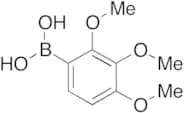
CAS:Controlled Product<p>Applications (2,3,4-Trimethoxyphenyl)boronic Acid is a reagent used in the synthesis of heteroaryl, mono and bicyclic compounds which may be used as inhibitors for EGF and PDGF receptor tyrosine kinases. Also used in the synthesis of non-steroidal CYP 17 inhibitors in the treatment of prostate cancer<br>References Hutschenreuter, T. et al.: J. Enz. Inhib. Med. Chem., 19, 17 (2004);<br></p>Formula:C9H13BO5Color and Shape:NeatMolecular weight:212.01Bis(trimethylsilyl)bromomethane
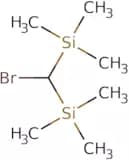
CAS:<p>Bis(trimethylsilyl)bromomethane is an alkali metal compound that is a multinuclear, crystalline solid. It has an x-ray diffraction pattern with peaks at 30, 39, and 44 degrees. The elemental analysis of the compound shows it to be composed of carbon and hydrogen. Bis(trimethylsilyl)bromomethane is a tetrahydrofuran derivative that can be alkylated or silylated with metal compounds. This compound has been shown to have coordination properties when combined with potassium. The molecular structure of bis(trimethylsilyl)bromomethane is composed of two trimethylsiloxy groups linked together by one bromine atom.</p>Formula:C7H19BrSi2Purity:Min. 95%Color and Shape:Clear LiquidMolecular weight:239.3 g/molE-Hexen-1-ylboronic acid
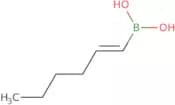
CAS:<p>E-Hexen-1-ylboronic acid is a reactive, boron-containing compound that can be used for Suzuki coupling reactions and metathesis reactions. It is also useful in the analysis of organic compounds, due to its ability to form brightly coloured complexes with metal ions. E-Hexen-1-ylboronic acid has been shown to react with chloride, reoxidant and hexane. This compound can be used as an analytical reagent for the detection of stereoselectively in a stepwise reaction. E-Hexen-1-ylboronic acid forms crystals x-ray diffraction patterns that are characteristic of a chair conformation.</p>Formula:C6H13BO2Purity:Min. 95%Molecular weight:127.98 g/mol(1-Fluorovinyl)methyldiphenylsilane
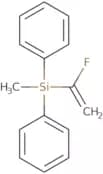
CAS:<p>1-Fluorovinylmethyldiphenylsilane is a reactive, cross-coupling reagent that is used to synthesize organofluorine compounds. It reacts with nucleophiles such as sulfoxides, peroxides, halides, and amines to form an organofluorine compound. The nucleophile can be either in the presence or absence of hydrogen peroxide as a catalyst. The product of this reaction can be a sulfoxide, peroxide, or amine. 1-Fluorovinylmethyldiphenylsilane has been shown to react with nitro groups and iodides to form organofluorine compounds. 1-Fluorovinylmethyldiphenylsilane is soluble in organic solvents such as hexane and chloroform. This reagent should not be stored in metal containers because it will react with them spontaneously.</p>Formula:C15H15FSiPurity:Min. 95%Molecular weight:242.36 g/molO-Benzyl psilocybin
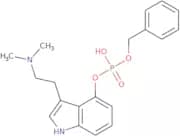
CAS:Controlled Product<p>O-Benzyl psilocybin is a hydrophobic molecule with an affinity for lipase. It has been shown to exhibit growth inhibition on malignant cells in tissue culture, and has been investigated as a potential anticancer agent. O-Benzyl psilocybin is also able to inhibit the activity of plasminogen activator inhibitor-1 (PAI-1), which is involved in cancer progression and metastasis. This compound may be used as an anticancer drug or as a prophylactic agent against cancer. It may also be useful in treating other conditions such as atherosclerosis and restenosis, where PAI-1 plays a significant role. O-Benzyl psilocybin has been found to have anti-inflammatory properties that may be due to its ability to inhibit the production of prostaglandin E2 from arachidonic acid.</p>Formula:C19H23N2O4PPurity:Min. 95%Molecular weight:374.37 g/molm-Carborane
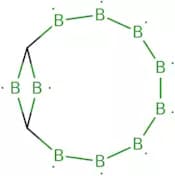
CAS:Controlled Product<p>m-Carborane is a molecule that is composed of a chlorine atom and an aromatic hydrocarbon. m-Carborane has been shown to be an estrogen receptor modulator, which may have potential as a drug for the prevention or treatment of hormone-related diseases. This compound has also been shown to act as a fluorophore and to have high melting points. It forms hydrogen bonds with other molecules and can bind to progesterone receptors, which are found in breast cancer cells. These interactions have been studied using x-ray crystal structures and microscopy studies on MCF-7 cells.</p>Formula:C2H12B10Purity:Min. 95%Color and Shape:White powder(solid)Molecular weight:144.23 g/molPhenyl-1,2-carborane
CAS:Controlled Product<p>Please enquire for more information about Phenyl-1,2-carborane including the price, delivery time and more detailed product information at the technical inquiry form on this page</p>Formula:C8H16B10Purity:Min. 95%Color and Shape:Colourless Or White To Off-White Solid Or Liquid (May Vary)Molecular weight:220.32 g/molTrichlorooctadecylsilane
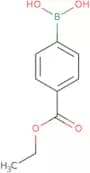
CAS:<p>Trichlorooctadecylsilane is a model system that consists of a monolayer of octadecyltrichlorosilane particles. The dispersive solid-phase extraction technique can be used to extract analytes from the surface of this particle. This technique involves removing the solvent from a sample by passing it through an adsorbent. The hydrophobic effect, which is the phenomenon that a nonpolar substance is dissolved in a nonpolar solvent, will cause analytes to bind to the hydrophobic surface of octadecyltrichlorosilane particles because they are hydrophobic.</p>Purity:Min. 95%4-(Ethoxycarbonyl)phenylboronic acid
CAS:<p>4-(Ethoxycarbonyl)phenylboronic acid is a potential use for picric acid detection. It has been shown to be a chemosensor with an electrochemical impedance spectroscopy response that is sensitive to chloride ions. 4-(Ethoxycarbonyl)phenylboronic acid can be used as a linker in multigram-scale synthesis of aryl halides, and its reaction mechanism has been elucidated by crystal x-ray diffraction. The synthesis of this compound is scalable and involves the formation of an apical carboxylate from ethoxycarbonyl phenyl boronic acid and an aryl halide.</p>Formula:C9H11BO4Purity:Min. 95%Color and Shape:PowderMolecular weight:193.99 g/molIron bis(tetrafluoroborate) hexahydrate
CAS:<p>Iron bis(tetrafluoroborate) hexahydrate is a ferrimagnetic, thermally stable coordination compound that has been shown to interact with bidentate ligands. Iron bis(tetrafluoroborate) hexahydrate can be used as a mononuclear section in analogy to the octahedral section of nickel bis(tetrafluoroborate) hexahydrate. The ligands are methyl groups, which are diffracted at 2θ values of 12.8° and 18.3°. The compound is stable in solvents such as dimethylsulfoxide and tetrahydrofuran. It also has chelate ligand transfer properties, which are due to the presence of two hydroxyl groups on each iron atom.</p>Formula:Fe(BF4)2•(H2O)6Purity:Min. 95%Color and Shape:SolidMolecular weight:337.55 g/mol




![2-Phenyl-2-[(trimethylsilyl)oxy]acetonitrile (90%)](/_next/image/?url=https%3A%2Fstatic.cymitquimica.com%2Fproducts%2FTR%2Fthumb-webp%2FP321065.webp&w=3840&q=75)