


Organoboranes
Organoboranes are organic compounds characterized by the presence of boron atoms bonded to carbon. These compounds are derivatives of the BH3 molecule and play animportant role in various chemical reactions, including as intermediates in organic synthesis. At CymitQuimica, we offer a wide range of organoboranes to support your research and industrial needs. Our products are designed to deliver high performance and reliability in your synthetic processes.
Found 6101 products of "Organoboranes"
Sort by
Purity (%)
0
100
|
0
|
50
|
90
|
95
|
100
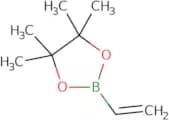
Pinacol vinylboronate
CAS:<p>Pinacol vinylboronate is an anticancer agent that has been shown to inhibit the growth of cancer cells. Pinacol vinylboronate inhibits the activity of cellular targets and generates reactive oxygen species through a hydrogen-bond-mediated mechanism, which eventually leads to cell death. This drug has also been shown to have functional groups that act as pharmacophores for cancer, which may be due to its ability to form hydrogen bonds with the hydroxyl group in DNA.</p>Formula:C8H15BO2Purity:Min. 95%Color and Shape:Clear LiquidMolecular weight:154.01 g/molTetrahydropyran-4-boronicacid
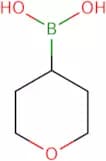
CAS:<p>Please enquire for more information about Tetrahydropyran-4-boronicacid including the price, delivery time and more detailed product information at the technical inquiry form on this page</p>Formula:C5H11BO3Purity:Min. 95%Molecular weight:129.95 g/molDiethylsilane
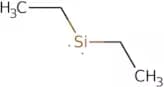
CAS:<p>Diethylsilane is a chemical species that has a high value. It is an inorganic compound that contains silicon and boron, which are both chemical elements. Diethylsilane has been shown to react with hydroxy groups on the surface of many different materials, such as aluminum oxide or steel. The reaction between diethylsilane and the hydroxyl group results in the formation of silicon-hydrogen bonds, which are strong and stable. This reaction mechanism can be used for synthesizing solids with high values, such as boron nitride.</p>Formula:C4H12SiPurity:Min. 95%Color and Shape:Clear LiquidMolecular weight:88.22 g/molTrimethylsilyl isocyanate
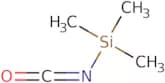
CAS:<p>Trimethylsilyl isocyanate (TMISC) is a 5-membered heteroaryl. It has been shown to bind to the receptor and shows activity in vitro. TMISC has been reported as a potential drug for bowel disease, congestive heart, and inflammatory bowel disease. TMISC binds to the protein receptor with high affinity, but its binding affinity decreases when it is combined with trifluoroacetic acid or palladium-catalyzed coupling. TMISC can be used to synthesize degarelix acetate, which is an anti-androgen drug that is used in the treatment of prostate cancer.</p>Formula:C4H9NOSiPurity:Min. 95%Molecular weight:115.21 g/molChlorodimethyl(3,3,4,4,5,5,6,6,7,7,8,8,8-Tridecafluorooctyl)-Silane
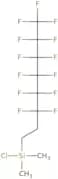
CAS:<p>Chlorodimethyl(3,3,4,4,5,5,6,6,7,7,8,8,8-Tridecafluorooctyl)-Silane is an organic solvent that can be used as a component in the synthesis of synaptic membranes. It has been shown to inhibit spontaneous activity in rat brain slices and exhibits high hydrophobicity. Chlorodimethyl(3,3,4,4,5,5,6,6) - Silane has been used for the patch-clamp technique on human erythrocytes and the immunostaining of proteins. This compound is also useful for the optimization of organic reactions and asymmetric synthesis.</p>Formula:C10H10ClF13SiPurity:Min. 95%Molecular weight:440.7 g/mol(1H-Benzo[d][1,2,3]triazol-5-yl)boronic acid
CAS:<p>Please enquire for more information about (1H-Benzo[d][1,2,3]triazol-5-yl)boronic acid including the price, delivery time and more detailed product information at the technical inquiry form on this page</p>Formula:C6H6BN3O2Purity:Min. 95%Molecular weight:162.94 g/molN,N-Dimethyl 4-boronobenzenesulfonamide
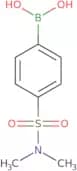
CAS:<p>Please enquire for more information about N,N-Dimethyl 4-boronobenzenesulfonamide including the price, delivery time and more detailed product information at the technical inquiry form on this page</p>Formula:C8H12BNO4SPurity:Min. 95%Molecular weight:229.06 g/mol1-BOC-2,3-Dihydropyrrole-4-boronic acid, pinacol ester
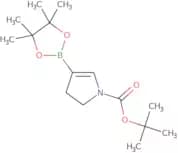
CAS:<p>Please enquire for more information about 1-BOC-2,3-Dihydropyrrole-4-boronic acid, pinacol ester including the price, delivery time and more detailed product information at the technical inquiry form on this page</p>Formula:C15H26BNO4Purity:Min. 95%Molecular weight:295.18 g/mol4-(Hydroxymethyl)phenylboronic acid
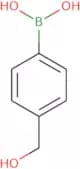
CAS:<p>4-(Hydroxymethyl)phenylboronic acid is an organic compound that has been identified as a reactive, fatty acid. It has shown antibacterial efficacy against gram-positive and gram-negative bacteria in the presence of nanogels. 4-(Hydroxymethyl)phenylboronic acid is also a cross-linking agent that can be used to form hydrogels for tissue engineering applications. This chemical is being studied as a potential treatment for inflammatory bowel disease and diabetes mellitus. 4-(Hydroxymethyl)phenylboronic acid has been shown to have anti-cancer properties by inhibiting the proliferation of cancer cells and inducing apoptosis. The molecule also undergoes structural analysis using confocal microscopy.</p>Formula:C7H9BO3Molecular weight:151.96 g/mol(3-Mercaptopropyl)trimethoxysilane
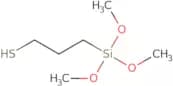
CAS:<p>3-Mercaptopropyl)trimethoxysilane is a molecule made up of three parts: a trimethoxysilane group, a trimethylsilyl group, and a mercapto group. The trimethoxysilane group is hydrophilic in nature and has an electron withdrawing effect on the molecule. The trimethylsilyl group is hydrophobic in nature and has an electron donating effect on the molecule. The mercapto group is reactive in nature and has a high redox potential. 3-Mercaptopropyl)trimethoxysilane can be used as a chemical additive to increase the stability of hydrochloric acid in water vapor by reacting with the hydroxyl groups to form stable compounds. This compound also reacts with hydrogen gas to produce methane gas, which can be used as fuel or as an alternative energy source. 3-Mercaptopropyl)trimethoxysilane also has synergistic</p>Formula:C6H16O3SSiPurity:Min. 98 Area-%Color and Shape:Colorless Clear LiquidMolecular weight:196.34 g/molPhenyl-1,2-carborane
CAS:Controlled Product<p>Please enquire for more information about Phenyl-1,2-carborane including the price, delivery time and more detailed product information at the technical inquiry form on this page</p>Formula:C8H16B10Purity:Min. 95%Color and Shape:Colourless Or White To Off-White Solid Or Liquid (May Vary)Molecular weight:220.32 g/mol1-Hexyl-o-carborane
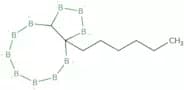
CAS:Controlled Product<p>1-Hexyl-o-carborane is a human bioassay that has shown carcinogenic activity. It has been observed to cause cancer in humans through its ability to bind to DNA and alter the cell cycle. 1-Hexyl-o-carborane is an organometallic compound that binds to ferrocene and other organometallic compounds, preventing their use as anticancer drugs. 1-Hexyl-o-carborane can be synthesized by reacting hexylmagnesium bromide with ammonium carbonyl chloride in a one pot reaction.</p>Formula:C8B10H24Purity:Min. 95%Molecular weight:228.39 g/mol1-Methylindole-3-boronic acid pinacol ester
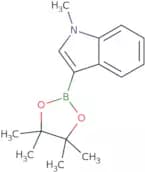
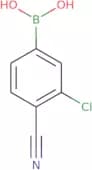
CAS:<p>Please enquire for more information about 1-Methylindole-3-boronic acid pinacol ester including the price, delivery time and more detailed product information at the technical inquiry form on this page</p>Formula:C15H20BNO2Purity:Min. 95%Molecular weight:257.14 g/mol3-Chloro-4-cyanophenylboronic acid
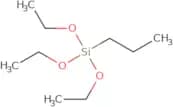
CAS:Controlled Product<p>Please enquire for more information about 3-Chloro-4-cyanophenylboronic acid including the price, delivery time and more detailed product information at the technical inquiry form on this page</p>Formula:C7H5BClNO2Purity:Min. 95%Molecular weight:181.38 g/molTriethoxy(propyl)silane
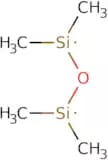
CAS:<p>Triethoxy(propyl)silane is an organosilicon compound that has reactive properties. It is a polymeric material that can be used as a component in paints, coatings, and sealants. The reaction of triethoxy(propyl)silane with sodium hydroxide solution yields hydrogen fluoride, water vapor, and hydrochloric acid. Triethoxy(propyl)silane has been shown to react with hydroxide solution to form polycarboxylic acids. The hydroxyl group on the triethoxy(propyl)silane molecule is responsible for the transport properties of this compound.</p>Formula:C9H22O3SiPurity:Min. 95%Molecular weight:206.35 g/mol1,1,3,3-Tetramethyldisiloxane
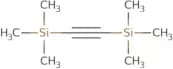
CAS:<p>1,1,3,3-Tetramethyldisiloxane is a chemical compound that belongs to the group of functional groups. It can be isolated from hydrolysis of methyltrichlorosilane with sodium hydroxide and cellulose acetate. 1,1,3,3-Tetramethyldisiloxane has two isomers with different properties: 3-methylsilsesquioxane and 3-ethylsilsesquioxane. The former has an ethyl group at the end of its molecule and the latter has an ethyl group in the middle. The two isomers are not interchangeable because they have different physical properties. The 3-methylsilsesquioxane isomer reacts with aluminium to form a metathesis reaction product containing silanol groups on one side of the aluminum molecule and hydroxy groups on the other side. This product can be used as a catalyst for subsequent reactions in organic synthesis reactions involving</p>Formula:C4H14OSi2Purity:Min. 95%Color and Shape:Clear LiquidMolecular weight:134.32 g/molBis(trimethylsilyl)acetylene
CAS:<p>Bis(trimethylsilyl)acetylene (bis-TMS) is a reactive ancillary that can be used in polymerization reactions as an initiator. The bis-TMS is prepared by reaction of trimethylsilyl chloride with acetylene to form the trimethylsilyl acetylene, which is then reacted with copper to generate the bis-TMS. Bis-TMS reacts with nucleophiles such as alcohols and amines to produce polymers through a nucleophilic attack. It also has been used for sample preparation for NMR spectra. Bis-TMS is a synthetic compound that has been characterized using nmr spectroscopy and analytical methods. The molecular formula of bis-TMS is C8H16Si2 and its molecular weight is 196.13 g/mol. The chemical structure of bis-TMS consists of two benzyl groups connected by a single carbon bond at the 3 o'clock position on the central</p>Formula:C8H18Si2Purity:Min. 95%Color and Shape:Clear LiquidMolecular weight:170.4 g/molSodium triacetoxyborohydride
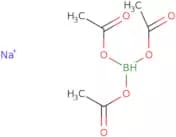
CAS:<p>Sodium triacetoxyborohydride is an oxidizing agent that is used in organic synthesis as a reagent for the reduction of esters and nitriles to alcohols and amines, respectively. This compound has been shown to be effective in reducing the activity of ccr5 receptors, which are important in HIV infection. Sodium triacetoxyborohydride can also be used to reduce antibodies, such as monoclonal antibodies, that have been conjugated with drugs or toxins to produce immunotoxins. Sodium triacetoxyborohydride has also been shown to be an effective agent for the treatment of inflammatory bowel disease and cancer therapy. It has been found to be toxic to some bacteria, fungi, and protozoa.</p>Formula:C6H10BNaO6Color and Shape:White PowderMolecular weight:211.94 g/molTrimethylchlorosilane
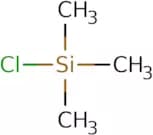
CAS:<p>Trimethylchlorosilane is a model system for the study of chloride ion transport across lipid membranes. It has been shown that this molecule can form a disulfide bond with glutathione and may have synergistic effects with other drugs, such as metronidazole, to treat bowel disease. Trimethylchlorosilane can also be used in analytical methods for measuring chloride ions in wastewater and other samples. The x-ray crystal structures of trimethylchlorosilane anhydrous sodium salt have been determined at room temperature. The hydrogen fluoride molecule binds to the pyrazole ring and the chlorine atom forms a covalent bond with the hydroxyl group on one of the water molecules. The reaction solution is heated to produce trimethylchlorosilane, which is then cooled to room temperature again, during which time it crystallizes out of solution.</p>Formula:C3H9ClSiPurity:Min. 95%Color and Shape:Clear LiquidMolecular weight:108.64 g/mol1H-Benzo[d]imidazol-6-ylboronic acid
CAS:<p>Please enquire for more information about 1H-Benzo[d]imidazol-6-ylboronic acid including the price, delivery time and more detailed product information at the technical inquiry form on this page</p>Formula:C7H7BN2O2Purity:Min. 95%Molecular weight:161.95 g/mol

![(1H-Benzo[d][1,2,3]triazol-5-yl)boronic acid](/_next/image/?url=https%3A%2Fstatic.cymitquimica.com%2Fproducts%2F3D%2Fthumb-webp%2FFB141627.webp&w=3840&q=75)
![1H-Benzo[d]imidazol-6-ylboronic acid](/_next/image/?url=https%3A%2Fstatic.cymitquimica.com%2Fproducts%2F3D%2Fthumb-webp%2FFH160014.webp&w=3840&q=75)