Organoboranes
Organoboranes are organic compounds characterized by the presence of boron atoms bonded to carbon. These compounds are derivatives of the BH3 molecule and play animportant role in various chemical reactions, including as intermediates in organic synthesis. At CymitQuimica, we offer a wide range of organoboranes to support your research and industrial needs. Our products are designed to deliver high performance and reliability in your synthetic processes.
Found 6101 products of "Organoboranes"
Sort by
Purity (%)
0
100
|
0
|
50
|
90
|
95
|
100
2-(4-(4,4,5,5-Tetramethyl-l.3,2-dioxaborolan-2-yl)phenyl)ethanol
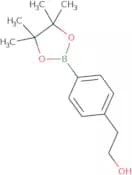
CAS:<p>2-(4-(4,4,5,5-Tetramethyl-l,3,2-dioxaborolan-2-yl)phenyl)ethanol is a fine chemical that has been used as a reagent and as a building block for the synthesis of complex compounds. It is also an intermediate in organic reactions and has been used as a reaction component in the synthesis of various drugs and agrochemicals. 2-(4-(4,4,5,5-Tetramethyl-l,3,2-dioxaborolan-2-yl)phenyl)ethanol is useful as a scaffold in organic synthesis. This compound can be converted to other useful chemicals such as tetrahydropyranones and dibenzalacetone derivatives. 2-(4-(4,4,5,5-Tetramethyl-l,3,2-dioxaborolan-2-yl)phenyl)ethanol</p>Formula:C14H21BO3Purity:Min. 95%Color and Shape:White PowderMolecular weight:248.13 g/molε-Carotene
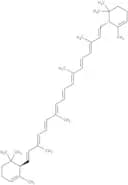
CAS:<p>Epsilon-Carotene is a carotenoid that is found in plants. It is synthesized from beta-carotene through the action of enzymes called beta-carotene ketolases. Epsilon-Carotene can be cleaved by enzymes to produce lycopene and beta-cryptoxanthin. The biosynthesis of Epsilon-Carotene has been studied in a number of clinical studies, including the effect on human tissues and the prevention of cancer. Epsilon-Carotene has also been shown to have anti-inflammatory properties, which may be due to its ability to inhibit prostaglandin synthesis.</p>Formula:C40H56Purity:Min. 95%Molecular weight:536.87 g/mol5-Fluoropyridine-2-boronic acid
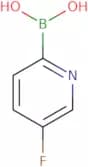
CAS:<p>Please enquire for more information about 5-Fluoropyridine-2-boronic acid including the price, delivery time and more detailed product information at the technical inquiry form on this page</p>Formula:C5H5BFNO2Purity:Min. 95%Molecular weight:140.91 g/mol1-(4-Fluorophenyl)pyrazole-4-boronic acid
CAS:<p>Please enquire for more information about 1-(4-Fluorophenyl)pyrazole-4-boronic acid including the price, delivery time and more detailed product information at the technical inquiry form on this page</p>Formula:C9H8BFN2O2Purity:Min. 95%Molecular weight:205.98 g/mol(3-IMidazol-1-yl-propyl)-[4-(4,4,5,5-tetraMethyl-[1,3,2]dioxaborolan-2-yl)-benzyl]aMine
CAS:<p>Please enquire for more information about (3-IMidazol-1-yl-propyl)-[4-(4,4,5,5-tetraMethyl-[1,3,2]dioxaborolan-2-yl)-benzyl]aMine including the price, delivery time and more detailed product information at the technical inquiry form on this page</p>Purity:Min. 95%Bis(trimethylsilyl)acetylene
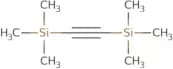
CAS:<p>Bis(trimethylsilyl)acetylene (bis-TMS) is a reactive ancillary that can be used in polymerization reactions as an initiator. The bis-TMS is prepared by reaction of trimethylsilyl chloride with acetylene to form the trimethylsilyl acetylene, which is then reacted with copper to generate the bis-TMS. Bis-TMS reacts with nucleophiles such as alcohols and amines to produce polymers through a nucleophilic attack. It also has been used for sample preparation for NMR spectra. Bis-TMS is a synthetic compound that has been characterized using nmr spectroscopy and analytical methods. The molecular formula of bis-TMS is C8H16Si2 and its molecular weight is 196.13 g/mol. The chemical structure of bis-TMS consists of two benzyl groups connected by a single carbon bond at the 3 o'clock position on the central</p>Formula:C8H18Si2Purity:Min. 95%Color and Shape:Clear LiquidMolecular weight:170.4 g/mol6-Methoxypyridine-2-boronic acid
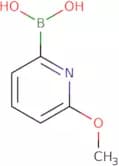
CAS:<p>6-Methoxypyridine-2-boronic acid is a boronate ligand that can be used to form coordination complexes with metals. It has been shown to interact with silver ions, which are the most effective ligands for enhancing the fluorescence of organic dyes. 6-Methoxypyridine-2-boronic acid is able to rigidify organic molecules by binding to their steric and electronic properties, making them more resistant to photodegradation. This property makes it an excellent candidate for the use in the development of fluorescent labels in analytical chemistry.</p>Formula:C6H8BNO3Purity:Min. 95%Molecular weight:152.94 g/mol9,9-Bis(2-ethylhexyl)fluorene-2,7-bis(boronic acidpinacolester)
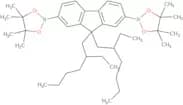
CAS:<p>Please enquire for more information about 9,9-Bis(2-ethylhexyl)fluorene-2,7-bis(boronic acidpinacolester) including the price, delivery time and more detailed product information at the technical inquiry form on this page</p>Formula:C41H64B2O4Purity:Min. 95%Molecular weight:642.57 g/mol1H-Benzo[d]imidazol-6-ylboronic acid
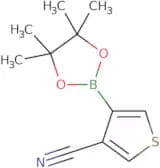
CAS:<p>Please enquire for more information about 1H-Benzo[d]imidazol-6-ylboronic acid including the price, delivery time and more detailed product information at the technical inquiry form on this page</p>Formula:C7H7BN2O2Purity:Min. 95%Molecular weight:161.95 g/mol3-Cyanothiophene-4-boronic acid pinacol ester
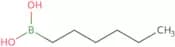
CAS:<p>Please enquire for more information about 3-Cyanothiophene-4-boronic acid pinacol ester including the price, delivery time and more detailed product information at the technical inquiry form on this page</p>Formula:C11H14BNO2SPurity:Min. 95%Molecular weight:235.11 g/molN-Hexylboronic acid
CAS:<p>N-Hexylboronic acid is an organometallic compound that has been used as a model system to study the catalytic mechanism of the Suzuki coupling reaction. It has also been shown to be a substrate film for use in the suzuki coupling reaction when combined with Raney nickel, which can be used to synthesize organic compounds. N-Hexylboronic acid has been shown to inhibit the activity of pancreatic lipase, but not cholesterol esterase or cholesterol ester hydrolase. The skeleton of this molecule is made up of six carbon atoms and one boron atom. Hydrogen chloride and aliphatic hydrocarbons are inhibitors of N-hexylboronic acid.</p>Formula:C6H15BO2Purity:Min. 95%Molecular weight:129.99 g/molIron bis(tetrafluoroborate) hexahydrate
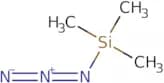
CAS:<p>Iron bis(tetrafluoroborate) hexahydrate is a ferrimagnetic, thermally stable coordination compound that has been shown to interact with bidentate ligands. Iron bis(tetrafluoroborate) hexahydrate can be used as a mononuclear section in analogy to the octahedral section of nickel bis(tetrafluoroborate) hexahydrate. The ligands are methyl groups, which are diffracted at 2θ values of 12.8° and 18.3°. The compound is stable in solvents such as dimethylsulfoxide and tetrahydrofuran. It also has chelate ligand transfer properties, which are due to the presence of two hydroxyl groups on each iron atom.</p>Formula:Fe(BF4)2•(H2O)6Purity:Min. 95%Color and Shape:SolidMolecular weight:337.55 g/molAzidotrimethylsilane
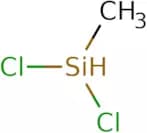
CAS:<p>Azidotrimethylsilane is a chemical compound that can be used in various reactions. It is an unsymmetrical compound with the molecular formula of CH3SiN3, and has an asymmetric carbon atom with four different substituents. Azidotrimethylsilane reacts with nucleophiles to form azides, which can be used as antiviral agents or to synthesize other compounds. It also participates in transfer reactions, such as the reaction of trifluoroacetic acid and fatty acids to form esters. The hydroxyl group on the silicon atom increases its reactivity because it can act as a nucleophile in addition to its electrophilic properties. !-- -->Azidotrimethylsilane is an unsymmetrical compound with the molecular formula CH3SiN3, and has an asymmetric carbon atom with four different substituents. Azidotrimethylsilane reacts with nucleophiles to form az</p>Formula:C3H9N3SiPurity:Min. 95%Molecular weight:115.21 g/molDichloromethylsilane
CAS:<p>Dichloromethylsilane (DCS) is a chemical compound that is used in the synthesis of silicone rubber, silicone elastomers, and silicone sealants. It can also be used as a cross-linking agent for polymers such as polyurethane, epoxy resin, and silicone. The synthesis of DCS is achieved by reacting chlorosilanes with methyl alcohol or methyl chloride in the presence of an acid catalyst. DCS exhibits high chemical stability and can be activated at room temperature. This product has been shown to be useful for fabricating medical devices that are implanted into the human body because it does not react with water or blood.</p>Formula:CH4Cl2SiPurity:Min. 95%Molecular weight:115.03 g/mol6-(4,4,5,5-Tetramethyl-1,3,2-dioxaborolan-2-yl)-2,3-dihydrobenzo-1,4-dioxoline
CAS:<p>Please enquire for more information about 6-(4,4,5,5-Tetramethyl-1,3,2-dioxaborolan-2-yl)-2,3-dihydrobenzo-1,4-dioxoline including the price, delivery time and more detailed product information at the technical inquiry form on this page</p>Formula:C14H19BO4Purity:Min. 95%Molecular weight:262.11 g/molTrimethylsilyl isocyanate
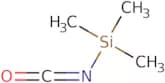
CAS:<p>Trimethylsilyl isocyanate (TMISC) is a 5-membered heteroaryl. It has been shown to bind to the receptor and shows activity in vitro. TMISC has been reported as a potential drug for bowel disease, congestive heart, and inflammatory bowel disease. TMISC binds to the protein receptor with high affinity, but its binding affinity decreases when it is combined with trifluoroacetic acid or palladium-catalyzed coupling. TMISC can be used to synthesize degarelix acetate, which is an anti-androgen drug that is used in the treatment of prostate cancer.</p>Formula:C4H9NOSiPurity:Min. 95%Molecular weight:115.21 g/molN,N-Dimethyl 4-boronobenzenesulfonamide
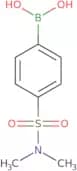
CAS:<p>Please enquire for more information about N,N-Dimethyl 4-boronobenzenesulfonamide including the price, delivery time and more detailed product information at the technical inquiry form on this page</p>Formula:C8H12BNO4SPurity:Min. 95%Molecular weight:229.06 g/molBoron carbide - 10um particle size
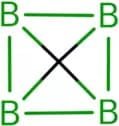
CAS:Controlled Product<p>Boron carbide is a hard, refractory material with high melting point. It is used in the production of ceramic and as a catalyst. Boron carbide has been shown to be effective in the treatment of wastewater due to its ability to adsorb organic matter and heavy metals. Boron carbide also has thermal expansion properties that make it suitable for use in various engineering applications. Boron carbide is composed of boron and carbon atoms, which interact through steric effects. The nitrogen atoms on the surface of boron carbide particles are responsible for its reactivity with other materials, such as silicon or zirconium oxide. The kinetic energy of the reaction mechanism can be determined by examining the surface methodology of boron carbide particles with a microscope.</p>Formula:B4CPurity:Min. 95%Molecular weight:55.25 g/molε caprolactam
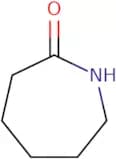
CAS:<p>Epsilon caprolactam is a poly-functional compound that can be used as a monomer for the production of polyamides. It is produced from lysine and caproic acid in the presence of copper chloride by oxidative decarboxylation. Epsilon caprolactam has been shown to have synergistic effects with other compounds, such as toxicity studies on rats and mice. This compound also has an acidic nature due to its carboxylic acid group. Plasma mass spectrometry has shown that there are high values of epsilon caprolactam in the plasma of bacterial strains and it is rapidly metabolized to l-lysine. Epsilon caprolactam is also a solid catalyst for organic reactions, which causes phase transition temperature to increase and promotes reaction mechanisms.</p>Formula:C6H11NOPurity:Min. 95%Color and Shape:White To Off-White SolidMolecular weight:113.16 g/molO-Benzyl psilocin
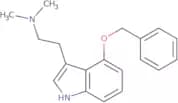
CAS:Controlled Product<p>O-Benzyl psilocin is a form of the hallucinogenic drug psilocybin. Psilocybin and other related substances are classified as indole alkaloids, which are synthesised by the enzyme tryptophan decarboxylase. O-Benzyl psilocin is synthesised in a two-step reaction that involves catalytic hydrogenation of 4-hydroxyindole to 4-hydroxyphenylacetaldehyde followed by formylation of the latter with formic acid or paraformaldehyde. It was first isolated from sheep's blood serum in 1958 and has been used as an immunogen to produce antisera against cocaine and serotonin. This substance also utilizes a number of endogenous substances for its metabolism, including dopamine, serotonin, noradrenaline, and adrenaline.</p>Formula:C19H22N2OPurity:Min. 95%Molecular weight:294.39 g/mol


![(3-IMidazol-1-yl-propyl)-[4-(4,4,5,5-tetraMethyl-[1,3,2]dioxaborolan-2-yl)-benzyl]aMine](/_next/image/?url=https%3A%2Fstatic.cymitquimica.com%2Fproducts%2F3D%2Fthumb-webp%2FFI39774.webp&w=3840&q=75)
![1H-Benzo[d]imidazol-6-ylboronic acid](/_next/image/?url=https%3A%2Fstatic.cymitquimica.com%2Fproducts%2F3D%2Fthumb-webp%2FFH160014.webp&w=3840&q=75)