


Organoboranes
Organoboranes are organic compounds characterized by the presence of boron atoms bonded to carbon. These compounds are derivatives of the BH3 molecule and play animportant role in various chemical reactions, including as intermediates in organic synthesis. At CymitQuimica, we offer a wide range of organoboranes to support your research and industrial needs. Our products are designed to deliver high performance and reliability in your synthetic processes.
Found 6101 products of "Organoboranes"
Sort by
Purity (%)
0
100
|
0
|
50
|
90
|
95
|
100
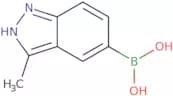
3-Methyl-1H-indazol-5-yl-5-boronic acid
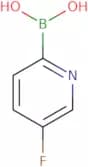
CAS:<p>Please enquire for more information about 3-Methyl-1H-indazol-5-yl-5-boronic acid including the price, delivery time and more detailed product information at the technical inquiry form on this page</p>Formula:C8H9BN2O2Purity:Min. 95%Molecular weight:175.98 g/mol5-Fluoropyridine-2-boronic acid
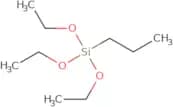
CAS:<p>Please enquire for more information about 5-Fluoropyridine-2-boronic acid including the price, delivery time and more detailed product information at the technical inquiry form on this page</p>Formula:C5H5BFNO2Purity:Min. 95%Molecular weight:140.91 g/molTriethoxy(propyl)silane
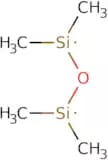
CAS:<p>Triethoxy(propyl)silane is an organosilicon compound that has reactive properties. It is a polymeric material that can be used as a component in paints, coatings, and sealants. The reaction of triethoxy(propyl)silane with sodium hydroxide solution yields hydrogen fluoride, water vapor, and hydrochloric acid. Triethoxy(propyl)silane has been shown to react with hydroxide solution to form polycarboxylic acids. The hydroxyl group on the triethoxy(propyl)silane molecule is responsible for the transport properties of this compound.</p>Formula:C9H22O3SiPurity:Min. 95%Molecular weight:206.35 g/mol1,1,3,3-Tetramethyldisiloxane
CAS:<p>1,1,3,3-Tetramethyldisiloxane is a chemical compound that belongs to the group of functional groups. It can be isolated from hydrolysis of methyltrichlorosilane with sodium hydroxide and cellulose acetate. 1,1,3,3-Tetramethyldisiloxane has two isomers with different properties: 3-methylsilsesquioxane and 3-ethylsilsesquioxane. The former has an ethyl group at the end of its molecule and the latter has an ethyl group in the middle. The two isomers are not interchangeable because they have different physical properties. The 3-methylsilsesquioxane isomer reacts with aluminium to form a metathesis reaction product containing silanol groups on one side of the aluminum molecule and hydroxy groups on the other side. This product can be used as a catalyst for subsequent reactions in organic synthesis reactions involving</p>Formula:C4H14OSi2Purity:Min. 95%Color and Shape:Clear LiquidMolecular weight:134.32 g/mol1-Hexyl-o-carborane
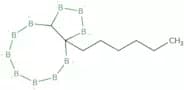
CAS:Controlled Product<p>1-Hexyl-o-carborane is a human bioassay that has shown carcinogenic activity. It has been observed to cause cancer in humans through its ability to bind to DNA and alter the cell cycle. 1-Hexyl-o-carborane is an organometallic compound that binds to ferrocene and other organometallic compounds, preventing their use as anticancer drugs. 1-Hexyl-o-carborane can be synthesized by reacting hexylmagnesium bromide with ammonium carbonyl chloride in a one pot reaction.</p>Formula:C8B10H24Purity:Min. 95%Molecular weight:228.39 g/mol(trans)-2-Cyclopropylvinylboronic acid pinacol ester
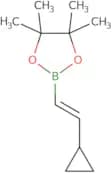
CAS:<p>Please enquire for more information about (trans)-2-Cyclopropylvinylboronic acid pinacol ester including the price, delivery time and more detailed product information at the technical inquiry form on this page</p>Formula:C11H19BO2Purity:Min. 95%Molecular weight:194.08 g/molBis(trimethylsilyl)bromomethane
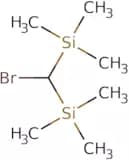
CAS:<p>Bis(trimethylsilyl)bromomethane is an alkali metal compound that is a multinuclear, crystalline solid. It has an x-ray diffraction pattern with peaks at 30, 39, and 44 degrees. The elemental analysis of the compound shows it to be composed of carbon and hydrogen. Bis(trimethylsilyl)bromomethane is a tetrahydrofuran derivative that can be alkylated or silylated with metal compounds. This compound has been shown to have coordination properties when combined with potassium. The molecular structure of bis(trimethylsilyl)bromomethane is composed of two trimethylsiloxy groups linked together by one bromine atom.</p>Formula:C7H19BrSi2Purity:Min. 95%Color and Shape:Clear LiquidMolecular weight:239.3 g/mol(4-Aminophenyl)boronic acid pinacol ester
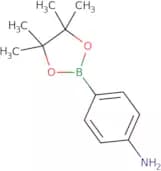
CAS:<p>(4-Aminophenyl)boronic acid pinacol ester is a semiconducting material that can be used in thin film devices. It has been shown to be a good candidate for transistor and device applications due to its high yield, low cost, and high stability. This compound can also be used to modify the structure of other compounds through substitution reactions. (4-Aminophenyl)boronic acid pinacol ester has been synthesized from inexpensive starting materials, such as triphenylamine and amines.</p>Formula:C12H18BNO2Purity:Min. 95%Color and Shape:White PowderMolecular weight:219.09 g/mol2-Ethoxyphenylboronic acid
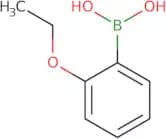
CAS:<p>Ethoxyphenylboronic acid is a triazine compound which inhibits inflammation by inhibiting the kinase that catalyzes the phosphorylation of arachidonic acid. It also inhibits lipid kinase, which is involved in the metabolism of lipids, and it has been shown to inhibit cancer cell growth through hydrogen bond interactions with DNA. Ethoxyphenylboronic acid has been shown to have anti-inflammatory properties and may be useful for the treatment of inflammatory diseases such as arthritis. The compound can also inhibit hydrogen peroxide-induced oxidative damage in cells, due to its ability to release intracellular glutathione.</p>Formula:C8H11BO3Purity:Min. 95%Molecular weight:165.98 g/mol2-(Chloromethoxyethyl)trimethyl silane - stabilized with ca. 0.1% Diisopropylethylamine
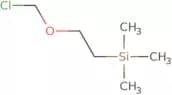
CAS:<p>Silyl protecting group for alcohols; reagent for introducing protected C atom</p>Formula:C6H15ClOSiPurity:Min. 95%Color and Shape:Colorless Clear LiquidMolecular weight:166.72 g/molIron bis(tetrafluoroborate) hexahydrate
CAS:<p>Iron bis(tetrafluoroborate) hexahydrate is a ferrimagnetic, thermally stable coordination compound that has been shown to interact with bidentate ligands. Iron bis(tetrafluoroborate) hexahydrate can be used as a mononuclear section in analogy to the octahedral section of nickel bis(tetrafluoroborate) hexahydrate. The ligands are methyl groups, which are diffracted at 2θ values of 12.8° and 18.3°. The compound is stable in solvents such as dimethylsulfoxide and tetrahydrofuran. It also has chelate ligand transfer properties, which are due to the presence of two hydroxyl groups on each iron atom.</p>Formula:Fe(BF4)2•(H2O)6Purity:Min. 95%Color and Shape:SolidMolecular weight:337.55 g/molTriethyl borate
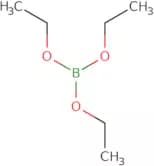
CAS:<p>Triethyl borate is an inorganic acid that is used as a catalyst. It has been shown to react with hydrochloric acid and orthoboric acid to form hydrogen boron hydride (H3BO3) and water. It also reacts with hydrogen chloride, forming hydrogen boron chloride, which can be used to prepare the active form of boric acid. This reaction is reversible and the equilibrium can be shifted by adding a base such as sodium hydroxide or ammonia. Triethyl borate is reactive, so it should only be handled in well-ventilated areas. The structural analysis of this compound reveals that it contains two hydroxyl groups that are involved in intramolecular hydrogen bonding, which helps stabilize its structure. Triethyl borate has been shown to have anti-infectious properties, inhibiting the growth of infectious bacteria such as Staphylococcus aureus and Streptococcus pneumoniae.</p>Formula:C6H15BO3Purity:Min. 95%Molecular weight:145.99 g/molDichlorodiisopropylsilane
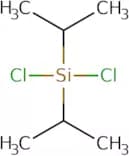
CAS:<p>Dichlorodiisopropylsilane is a cycloaddition process, which is the addition of two molecules to create a new ring. It reacts with an unsaturated organic compound, such as an alkene or alkyne, to produce a reactive functional group. Dichlorodiisopropylsilane has been used in chemistry as a cross-linking agent for proteins and as a solid catalyst. The chemical stability of dichlorodiisopropylsilane makes it useful in the synthesis of model proteins. This compound also has low bioavailability due to its high reactivity with hydrochloric acid found in the stomach.</p>Formula:C6H14Cl2SiPurity:Min. 95%Color and Shape:Clear LiquidMolecular weight:185.17 g/molAzidotrimethylsilane
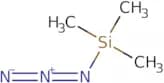
CAS:<p>Azidotrimethylsilane is a chemical compound that can be used in various reactions. It is an unsymmetrical compound with the molecular formula of CH3SiN3, and has an asymmetric carbon atom with four different substituents. Azidotrimethylsilane reacts with nucleophiles to form azides, which can be used as antiviral agents or to synthesize other compounds. It also participates in transfer reactions, such as the reaction of trifluoroacetic acid and fatty acids to form esters. The hydroxyl group on the silicon atom increases its reactivity because it can act as a nucleophile in addition to its electrophilic properties. !-- -->Azidotrimethylsilane is an unsymmetrical compound with the molecular formula CH3SiN3, and has an asymmetric carbon atom with four different substituents. Azidotrimethylsilane reacts with nucleophiles to form az</p>Formula:C3H9N3SiPurity:Min. 95%Molecular weight:115.21 g/molcis-1-Propene-1-boronicacid
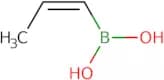
CAS:<p>cis-1-Propene-1-boronicacid is a chiral, pyranoside compound that can be synthesized from the reaction of 2,3,4,5-tetrahydropyran with boron trichloride. cis-1-Propene-1-boronicacid has been shown to be useful for the palladium catalyzed cross coupling reactions. cis-1-Propene-1-boronicacid has been shown to react with cyclopentenone and alkylate different functional groups such as amines and alcohols. cis-1 -Propene 1 boronic acid has been used in peptidomimetics as well as in nature.</p>Formula:C3H7BO2Purity:Min. 95%Molecular weight:85.9 g/mol2-(4-(4,4,5,5-Tetramethyl-l.3,2-dioxaborolan-2-yl)phenyl)ethanol
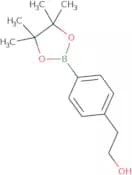
CAS:<p>2-(4-(4,4,5,5-Tetramethyl-l,3,2-dioxaborolan-2-yl)phenyl)ethanol is a fine chemical that has been used as a reagent and as a building block for the synthesis of complex compounds. It is also an intermediate in organic reactions and has been used as a reaction component in the synthesis of various drugs and agrochemicals. 2-(4-(4,4,5,5-Tetramethyl-l,3,2-dioxaborolan-2-yl)phenyl)ethanol is useful as a scaffold in organic synthesis. This compound can be converted to other useful chemicals such as tetrahydropyranones and dibenzalacetone derivatives. 2-(4-(4,4,5,5-Tetramethyl-l,3,2-dioxaborolan-2-yl)phenyl)ethanol</p>Formula:C14H21BO3Purity:Min. 95%Color and Shape:White PowderMolecular weight:248.13 g/molε caprolactam
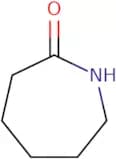
CAS:<p>Epsilon caprolactam is a poly-functional compound that can be used as a monomer for the production of polyamides. It is produced from lysine and caproic acid in the presence of copper chloride by oxidative decarboxylation. Epsilon caprolactam has been shown to have synergistic effects with other compounds, such as toxicity studies on rats and mice. This compound also has an acidic nature due to its carboxylic acid group. Plasma mass spectrometry has shown that there are high values of epsilon caprolactam in the plasma of bacterial strains and it is rapidly metabolized to l-lysine. Epsilon caprolactam is also a solid catalyst for organic reactions, which causes phase transition temperature to increase and promotes reaction mechanisms.</p>Formula:C6H11NOPurity:Min. 95%Color and Shape:White To Off-White SolidMolecular weight:113.16 g/mol2-Chloro-3-ethylbenzoxazolium tetrafluoroborate
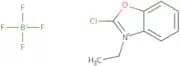
CAS:<p>2-Chloro-3-ethylbenzoxazolium tetrafluoroborate is a synthetic compound that inhibits the enzyme maltase. This compound is used in the treatment of diabetic patients with intestinal maltase deficiency and has been shown to be effective in clinical studies. 2-Chloro-3-ethylbenzoxazolium tetrafluoroborate has also been shown to inhibit other enzymes, such as thiocarbamate synthetase and aminooxazoline synthetase, which are involved in the biosynthesis of chlorinated pesticides and herbicides. The chloride ion is necessary for this inhibition activity. The compound can be prepared by a preparative method that involves hexaacetate and chloride ion or by using an aglycone, trehalamine, or stereospecific method.</p>Formula:C9H9BClF4NOPurity:Min. 95%Color and Shape:PowderMolecular weight:269.43 g/molDichloromethylsilane
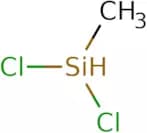
CAS:<p>Dichloromethylsilane (DCS) is a chemical compound that is used in the synthesis of silicone rubber, silicone elastomers, and silicone sealants. It can also be used as a cross-linking agent for polymers such as polyurethane, epoxy resin, and silicone. The synthesis of DCS is achieved by reacting chlorosilanes with methyl alcohol or methyl chloride in the presence of an acid catalyst. DCS exhibits high chemical stability and can be activated at room temperature. This product has been shown to be useful for fabricating medical devices that are implanted into the human body because it does not react with water or blood.</p>Formula:CH4Cl2SiPurity:Min. 95%Molecular weight:115.03 g/mol2-[4-(tert-Butyldimethylsilyloxymethyl)-2-nitrophenoxy]acetic Acid
CAS:<p>Please enquire for more information about 2-[4-(tert-Butyldimethylsilyloxymethyl)-2-nitrophenoxy]acetic Acid including the price, delivery time and more detailed product information at the technical inquiry form on this page</p>Formula:C15H23NO6SiPurity:Min. 95%Molecular weight:341.43 g/mol


![2-[4-(tert-Butyldimethylsilyloxymethyl)-2-nitrophenoxy]acetic Acid](/_next/image/?url=https%3A%2Fstatic.cymitquimica.com%2Fproducts%2F3D%2Fthumb-webp%2FFB60313.webp&w=3840&q=75)