Organoboranes
Found 6122 products of "Organoboranes"
4-(Methoxycarbonyl)phenylboronic Acid
CAS:Controlled ProductApplications 4-(Methoxycarbonyl)phenylboronic Acid is used in the synthesis and evaluation of several organic compounds including that of 4-Cyclohexylbutyl-N-[(S)-2-oxoazetidin-3-yl]carbamate which is a potent inhibitor of intracellular NAAA activity. Also used in the design and synthesis of BMS-955176 which is a potent, orally active second generation HIV-1 maturation inhibitor.
References Nuzzi, A., et al.: Eur. J. Med. Chem., 111, 138 (2016); Rogueiro-Ren, A., et al.: ACS Med. Chem. Lett., 7, 568 (2016);Formula:C8H9BO4Color and Shape:NeatMolecular weight:179.97(4-Ethynylphenyl)trimethylsilane
CAS:Applications (4-Ethynylphenyl)trimethylsilane (cas# 16116-92-0) is a useful research chemical.
Formula:C11H14SiColor and Shape:Colourless OilMolecular weight:174.325-Formylfuran-2-boronic Acid Neopentyl Glycol Ester
CAS:Controlled ProductApplications 5-Formylfuran-2-boronic Acid Neopentyl Glycol Ester is a useful reagent in lapatinib synthesis.
References Radl, S., et al.: PCT Int. Appl. (2014), WO 2014059956 A1Formula:C20H26B2O8Color and Shape:NeatMolecular weight:416.038Nitro(trimethylsilyl)acetylene
CAS:Controlled ProductApplications Nitro(trimethylsilyl)acetylene acts as a reagent in the synthesis, reactions, complexes, and properties of nitroalkynes as a unique class of energetic materials. Synthesis of nitro(trimethylsilyl)acetylene.
References Windler, G. K., et al.: Synthesis, 46, 2383 (2014); Schmitt, R. J., et al.: Synthesis, 2, 123 (1986)Formula:C5H9NO2SiColor and Shape:NeatMolecular weight:143.2164-[[[(1,1-Dimethylethyl)diphenylsilyl]oxy]methyl]-2,2-dimethyl-1,3-dioxolane
CAS:Controlled ProductApplications 4-[[[(1,1-Dimethylethyl)diphenylsilyl]oxy]methyl]-2,2-dimethyl-1,3-dioxolane is an intermediate in the synthesis of 1,2-Dioleoyl-rac-glycerol (D482175), which is an analog of 1,3-Dioleoylglycerol (D484210) which is used in the synthesis of amphiphilic gadolinium complexes as MRI contrast agents.
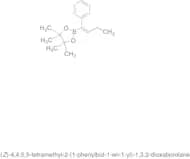
References Accardo, A., et. al.: J. Mater. Chem. B., 1, 617 (2013)Formula:C22H30O3SiColor and Shape:NeatMolecular weight:370.557(Z)-4,4,5,5-Tetramethyl-2-(1-phenylbut-1-en-1-yl)-1,3,2-dioxaborolane
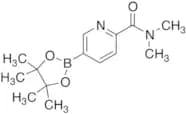
CAS:Controlled ProductFormula:C16H23BO2Color and Shape:NeatMolecular weight:258.164N,N-Dimethyl-5-(4,4,5,5-tetramethyl-1,3,2-dioxaborolan-2-yl)picolinamide
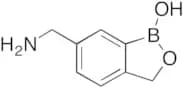
CAS:Controlled ProductFormula:C14H21BN2O3Color and Shape:NeatMolecular weight:276.1396-(Aminomethyl)-1,3-dihydro-2,1-benzoxaborol-1-ol
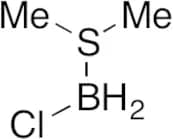
CAS:Controlled ProductFormula:C8H10BNO2Color and Shape:NeatMolecular weight:162.982Chloroborane Methyl Sulfide Complex (Technical Grade)
CAS:Controlled ProductStability Moisture Sensitive
Applications Chloroborane Methyl Sulfide Complex is a reagent in the synthesis of 3,4-Dimethyl-5-pentyl-2-furanundecanoic Acid (D477535); a furan fatty acid known to exhibit radical-scavenging ability and having anti-inflammatory properties.
Not a dangerous good if item is equal to or less than 1g/ml and there is less than 100g/ml in the package
References Grahl, N., et al.: Marine. Biol., 157, 1567 (2010); Spiteller, G., et al.: Lipids., 40, 75 (2005); Wakimoto, T., et al.: PNSA., 108, 17533 (2011)Formula:C2H8BClSColor and Shape:NeatMolecular weight:110.41Stigmasteryl-O-tert-butyldimethylsilane Ferulate
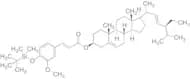
Controlled ProductApplications Stigmasteryl-O-tert-butyldimethylsilane Ferulate is an intermediate used in the synthesis of Stigmasteryl Ferulate (S686768), which is used for purification and identification of components of γ-oryzanol in rice bran oil.
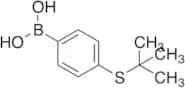
References Xu, Z., et al.: J. Agric. Food Chem., 47, 2724 (1999);Formula:C45H70O4SiColor and Shape:NeatMolecular weight:703.124-(tert-Butylthio)phenylboronic Acid
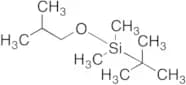
CAS:Controlled ProductFormula:C10H15BO2SColor and Shape:NeatMolecular weight:210.101tert-Butyl(isobutoxy)dimethylsilane
CAS:Controlled ProductFormula:C10H24OSiColor and Shape:NeatMolecular weight:188.382m-Carborane
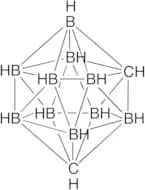
CAS:Controlled ProductApplications m-Carborane, 98% (cas# 16986-24-6) is a useful research chemical.
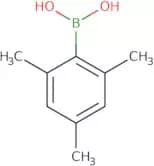
Formula:C2B10Color and Shape:NeatMolecular weight:132.131Mesitylboronic acid
CAS:Mesitylboronic acid is a divalent organoboron compound with the molecular formula CHB(O)OH. It is a white solid that is soluble in organic solvents, but not water. Mesitylboronic acid has been used for the palladium-catalyzed cross-coupling of aryl halides and vinylogous esters, yielding substituted pyridines. Mesitylboronic acid also catalyzes the Suzuki coupling reaction of aryl boronic acids and alkenes, producing substituted indoles. This compound has diagnostic applications due to its ability to form a fluorescent complex with certain metal ions. It also plays an important role in insulin resistance due to its ability to form cross-couplings with unsymmetrical boron compounds.
Formula:C9H13BO2Purity:Min. 95%Molecular weight:164.01 g/molDimethylphenylsilane
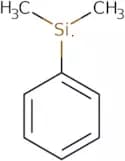
CAS:Dimethylphenylsilane is a chemical compound that belongs to the group of trifluoroacetic acid derivatives. It is used as an antimicrobial agent and has been shown to be effective against Gram-positive bacteria, Gram-negative bacteria, and yeast. Dimethylphenylsilane has been shown to inhibit the proliferation of microorganisms by binding to the hydroxyl group in methacrylates and irreversible oxidation of unsaturated alkyl compounds. The reaction mechanism for this process is still unclear but it is thought that it may involve a transfer reaction or a reaction intermediate. Dimethylphenylsilane can be used as a solid catalyst in reactions involving unsaturated alkyl compounds.
Formula:C8H12SiPurity:Min. 95%Color and Shape:Clear LiquidMolecular weight:136.27 g/mol(1H-Benzo[d][1,2,3]triazol-5-yl)boronic acid
CAS:Please enquire for more information about (1H-Benzo[d][1,2,3]triazol-5-yl)boronic acid including the price, delivery time and more detailed product information at the technical inquiry form on this page
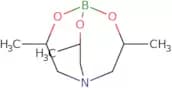
Formula:C6H6BN3O2Purity:Min. 95%Molecular weight:162.94 g/molTriisopropanolamine Borate
CAS:Triisopropanolamine borate is an organic compound with the formula (CH3)3N(CH2)3OH. It is a colorless liquid with a sweet, amine-like odor. Triisopropanolamine borate is widely used as a cross-linking agent in coatings, and as a reactive functional group in polycarboxylic acid synthesis and cationic polymerization. It also has been used as a blood pressure lowering agent and to treat high calcium levels in the blood. The chemical structure of triisopropanolamine borate can be seen below: Triisopropanolamine Borate, Chemical Structure The chemical formula for triisopropanolamine borate is CH3N(CH2)3OH. Triisopropanolamine borate has many applications due to its reactive functional groups, including cross-linking agents for coatings and polycarboxylic acid synthesis
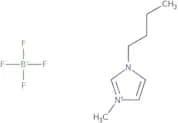
Formula:C9H18BNO3Purity:Min. 95%Molecular weight:199.06 g/mol1-Butyl-3-methylimidazolium terafluoroborate
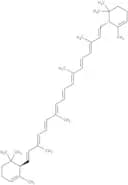
CAS:1-Butyl-3-methylimidazolium terafluoroborate is an ionic liquid that has been used in a number of research applications.Formula:C8H15N2·BF4Purity:Min. 95%Color and Shape:Colorless PowderMolecular weight:226.02 g/molEpsilon-Carotene
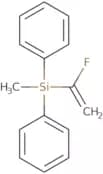
CAS:Epsilon-Carotene is a carotenoid that is found in plants. It is synthesized from beta-carotene through the action of enzymes called beta-carotene ketolases. Epsilon-Carotene can be cleaved by enzymes to produce lycopene and beta-cryptoxanthin. The biosynthesis of Epsilon-Carotene has been studied in a number of clinical studies, including the effect on human tissues and the prevention of cancer. Epsilon-Carotene has also been shown to have anti-inflammatory properties, which may be due to its ability to inhibit prostaglandin synthesis.Formula:C40H56Purity:Min. 95%Molecular weight:536.87 g/mol(1-Fluorovinyl)methyldiphenylsilane
CAS:1-Fluorovinylmethyldiphenylsilane is a reactive, cross-coupling reagent that is used to synthesize organofluorine compounds. It reacts with nucleophiles such as sulfoxides, peroxides, halides, and amines to form an organofluorine compound. The nucleophile can be either in the presence or absence of hydrogen peroxide as a catalyst. The product of this reaction can be a sulfoxide, peroxide, or amine. 1-Fluorovinylmethyldiphenylsilane has been shown to react with nitro groups and iodides to form organofluorine compounds. 1-Fluorovinylmethyldiphenylsilane is soluble in organic solvents such as hexane and chloroform. This reagent should not be stored in metal containers because it will react with them spontaneously.Formula:C15H15FSiPurity:Min. 95%Molecular weight:242.36 g/mol


![4-[[[(1,1-Dimethylethyl)diphenylsilyl]oxy]methyl]-2,2-dimethyl-1,3-dioxolane](/_next/image/?url=https%3A%2Fstatic.cymitquimica.com%2Fproducts%2FTR%2Fthumb-webp%2FD118215.webp&w=3840&q=75)

![(1H-Benzo[d][1,2,3]triazol-5-yl)boronic acid](/_next/image/?url=https%3A%2Fstatic.cymitquimica.com%2Fproducts%2F3D%2Fthumb-webp%2FFB141627.webp&w=3840&q=75)