Organoboranes
Found 6123 products of "Organoboranes"
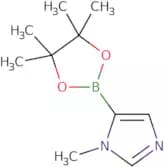
1-Methyl-1H-imidazole-5-boronic acid pinacol ester
CAS:Please enquire for more information about 1-Methyl-1H-imidazole-5-boronic acid pinacol ester including the price, delivery time and more detailed product information at the technical inquiry form on this page
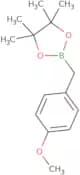
Formula:C10H17BN2O2Purity:Min. 95%Molecular weight:208.07 g/mol4-Methoxybenzylboronic acid pinacolester
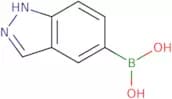
CAS:Please enquire for more information about 4-Methoxybenzylboronic acid pinacolester including the price, delivery time and more detailed product information at the technical inquiry form on this pageFormula:C14H21BO3Purity:Min. 95%Molecular weight:248.13 g/mol1H-Indazole-5-boronic acid
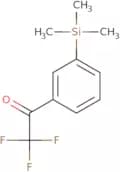
CAS:1H-Indazole-5-boronic acid is a potent compound that belongs to the class of indazole compounds. It has been shown to inhibit protein phosphorylation and induce morphological changes in cells. This compound also inhibits the activity of a number of different cellular enzymes, including protein phosphatases, protein kinases, and protein tyrosine phosphatases. 1H-Indazole-5-boronic acid has been shown to be a promising lead compound for the discovery of novel inhibitors of these enzymes.Formula:C7H7BN2O2Purity:Min. 95%Molecular weight:161.95 g/mol2,2,2-Trifluoro-1-(3-Trimethylsilylphenyl)Ethanone
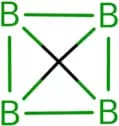
CAS:2,2,2-Trifluoro-1-(3-trimethylsilylphenyl)ethanone is a chemical that can be used as an acetylcholinesterase inhibitor. This agent is designed to inhibit the enzyme that breaks down acetylcholine, which is responsible for transmitting nerve impulses and controlling muscle contractions. The activity of 2,2,2-Trifluoro-1-(3-trimethylsilylphenyl)ethanone is reversible by hydrolysis and it has a low bioavailability due to its high lipophilicity. Acetylcholinesterase inhibitors are mainly used for the treatment of inflammatory diseases such as rheumatoid arthritis. br> The pharmacodynamics of 2,2,2-Trifluoro-1-(3-trimethylsilylphenyl)ethanone are not well understood. This drug also has side effect profilesFormula:C11H13F3OSiPurity:Min. 95%Molecular weight:246.3 g/molBoron carbide
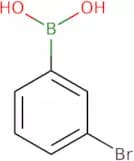
CAS:Controlled ProductBoron carbide is a chemical compound that belongs to the group of borides. It is used as a solid catalyst in wastewater treatment, which can remove organic contaminants and heavy metals from water. Boron carbide has shown chemical stability when exposed to sodium citrate and it has a low thermal expansion coefficient. The surface properties of this material are characterized by high surface area and high reactivity, which make it suitable for sample preparation and transport. Boron carbide is also resistant to radiation and exhibits good structural stability in particle form. This material has been shown to catalyze reactions with zirconium oxide, but its reaction mechanism is not yet well understood.Formula:B4CPurity:Min. 95%Molecular weight:55.25 g/mol3-Bromophenyl boronic acid
CAS:3-Bromophenyl boronic acid is a group P2 molecule with functional groups of vibrational and cross-coupling. It has been shown to inhibit the activity of aryl boronic acids, which are commonly used in analytical methods. 3-Bromophenyl boronic acid is also capable of inhibiting the production of alizarin, which is a dye that is used for staining biological tissue. The molecular modeling study revealed that this molecule has an atomic orbital with electron density distribution around the central carbon atom. This distribution indicates that it is more stable than other molecules with similar structures.Formula:C6H6BBrO2Purity:Min. 95%Color and Shape:PowderMolecular weight:200.83 g/molFmoc-epsilon-aminocaproic acid-Wang resin (200-400 mesh)
Please enquire for more information about Fmoc-epsilon-aminocaproic acid-Wang resin (200-400 mesh) including the price, delivery time and more detailed product information at the technical inquiry form on this pagePurity:Min. 95%4-tert-Butylphenylboronic acid
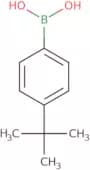
CAS:4-tert-Butylphenylboronic acid is an aromatic hydrocarbon that belongs to the class of phenoxy. It is a molecule with nitrogen atoms and a molecular weight of 144.17 g/mol. 4-tert-Butylphenylboronic acid has been shown to form a copper complex in the presence of sodium trifluoroacetate, which is used for cross-coupling reactions. This compound also reacts with hydrochloric acid to form 4-methoxyphenylboronic acid and trimethyl boronate, which can be used as reaction products in organic synthesis. The stability of this compound has been studied using electrochemical impedance spectroscopy (EIS) on thin films.
Formula:C10H15BO2Purity:Min. 95%Color and Shape:White PowderMolecular weight:178.04 g/mol4-Difluoromethoxyphenylboronic acid pinacol ester
CAS:Please enquire for more information about 4-Difluoromethoxyphenylboronic acid pinacol ester including the price, delivery time and more detailed product information at the technical inquiry form on this page
Formula:C13H17BF2O3Purity:Min. 95%Molecular weight:270.08 g/molChloromethyl(dichloro)methylsilane
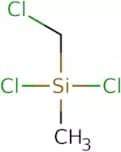
CAS:Chloromethyl(dichloro)methylsilane is a diphenyl ether that can be generated by the reaction of chloromethylchlorosilane with sodium in liquid ammonia. Chloromethyl(dichloro)methylsilane is used to prepare Grignard reagents and coatings. It reacts with benzyl groups in the presence of base to form phenyldichlorosilanes, which are used as thermally stable coatings. Chloromethyl(dichloro)methylsilane has been shown to undergo bond cleavage under thermal conditions, forming a molecule with a hydroxyl group and chloride functional group. Gel permeation chromatography has revealed that this substance contains no reactive functional groups other than the chloromethoxy group.
Formula:C2H5Cl3SiPurity:Min. 95%Color and Shape:Clear LiquidMolecular weight:163.5 g/mol4-Methoxyphenyl boronic acid
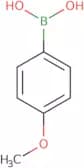
CAS:4-Methoxyphenyl boronic acid is a molecule with a hydroxyl group and a boronic acid. It is synthesized by reacting biphenyl with trifluoroacetic acid in the presence of sodium carbonate and palladium-catalyzed coupling. 4-Methoxyphenyl boronic acid has shown to bind to the receptor for fatty acids, which may be due to its structural similarity to p-hydroxybenzoic acid. The protonated form of this molecule has been shown to react with an electrophilic carbon atom and an electron-deficient alkyl or vinyl halide, resulting in ring formation. This reaction is known as the Suzuki coupling reaction.Formula:C7H9BO3Purity:Min. 95%Color and Shape:PowderMolecular weight:151.96 g/mol[4-(1-Cyano-1-methylethyl)phenyl]boronic acid
CAS:Please enquire for more information about [4-(1-Cyano-1-methylethyl)phenyl]boronic acid including the price, delivery time and more detailed product information at the technical inquiry form on this pageFormula:C10H12BNO2Purity:Min. 95%Molecular weight:189.02 g/mol1-Methyl-4-(4,4,5,5-tetramethyl-[1,3,2]dioxaborolan-2-yl)-1h-imidazole
CAS:Please enquire for more information about 1-Methyl-4-(4,4,5,5-tetramethyl-[1,3,2]dioxaborolan-2-yl)-1h-imidazole including the price, delivery time and more detailed product information at the technical inquiry form on this pageFormula:C10H17BN2O2Purity:Min. 95%Color and Shape:PowderMolecular weight:208.07 g/molDi-tert-butyldichlorosilane
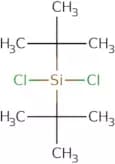
CAS:Di-tert-butyldichlorosilane is a silicon compound that has been used to silylate amines and primary alcohols. It is a sterically hindered molecule with two chloro groups at the same position on one of the silicon atoms, which prevents or limits steric interactions with other molecules. Covid-19 Pandemic is the name given to a new strain of influenza virus that was discovered in 2009. The new strain contains some genetic material from bird flu, which makes it resistant to oseltamivir and zanamivir, drugs commonly used to fight against influenza infection.
Formula:C8H18Cl2SiPurity:Min. 95%Color and Shape:Clear LiquidMolecular weight:213.22 g/mol2,6-Dimethyl-4-phenylpyronium tetrafluoroborate
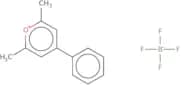
CAS:2,6-Dimethyl-4-phenylpyronium tetrafluoroborate is a high quality reagent that is useful for the preparation of complex compounds. It is also a useful intermediate and building block. The CAS No. 97606-13-8, 2,6-Dimethyl-4-phenylpyronium tetrafluoroborate has been used in research chemicals and as a versatile building block for the synthesis of speciality chemicals. This reagent can be used in reactions to form many organic molecules that are not commercially available or difficult to synthesize.Formula:C13H13O·BF4Purity:Min. 95%Color and Shape:PowderMolecular weight:272.05 g/mol1-Phenyl-4-[4-(4,4,5,5-tetramethyl-[1,3,2]dioxaborolan-2-yl)-benzyl]piperazine
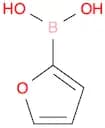
CAS:Please enquire for more information about 1-Phenyl-4-[4-(4,4,5,5-tetramethyl-[1,3,2]dioxaborolan-2-yl)-benzyl]piperazine including the price, delivery time and more detailed product information at the technical inquiry form on this pageFormula:C23H31BN2O2Purity:Min. 95%Color and Shape:PowderMolecular weight:378.32 g/molBoronic acid, B-2-furanyl-
CAS:Formula:C4H5BO3Purity:97%Color and Shape:SolidMolecular weight:111.8917Ref: 4Z-B-164012
Discontinued product


![[4-(1-Cyano-1-methylethyl)phenyl]boronic acid](/_next/image/?url=https%3A%2Fstatic.cymitquimica.com%2Fproducts%2F3D%2Fthumb-webp%2FFC121870.webp&w=3840&q=75)
![1-Methyl-4-(4,4,5,5-tetramethyl-[1,3,2]dioxaborolan-2-yl)-1h-imidazole](/_next/image/?url=https%3A%2Fstatic.cymitquimica.com%2Fproducts%2F3D%2Fthumb-webp%2FFM166321.webp&w=3840&q=75)
![1-Phenyl-4-[4-(4,4,5,5-tetramethyl-[1,3,2]dioxaborolan-2-yl)-benzyl]piperazine](/_next/image/?url=https%3A%2Fstatic.cymitquimica.com%2Fproducts%2F3D%2Fthumb-webp%2FFP33228.webp&w=3840&q=75)