Organoboranes
Found 6123 products of "Organoboranes"
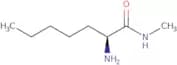
Poly ε L-lysine HCl - Average MW 2000~4700Da
CAS:Antimicrobial cationic peptide; used for microscopy glass slides coating
Formula:(C6H12N2O•HCl)nPurity:Min. 95 Area-%Color and Shape:White Yellow PowderRef: 3D-FP159079
Discontinued product2-Cyanoethyltriethoxysilane
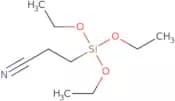
CAS:2-Cyanoethyltriethoxysilane is a cross-linking agent that is used in coatings and adhesives. It has been shown to have an adsorption mechanism that is dependent on the pH of the solution, with a maximum adsorption at pH 3.2 and a minimum at pH 11. The rate of adsorption is also dependent on the concentration of 2-cyanoethyltriethoxysilane, with higher concentrations leading to faster adsorption rates. Kinetic data for 2-cyanoethyltriethoxysilane has been shown using gravimetric analysis to show that it has an adsorption rate constant of 1.0 × 10^4 s^(-1) at pH 3.2 and 6.5 × 10^4 s^(-1) at pH 11, which are independent of the concentration of this molecule in solution. Pluronic P123 was used as a model polymer
Formula:C9H19NO3SiPurity:Min. 97 Area-%Color and Shape:PowderMolecular weight:217.34 g/molRef: 3D-FC62904
Discontinued product(-)-Bis(pinanediolato)diboron
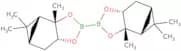
CAS:(-)-Bis(pinanediolato)diboron is a reactive component that can be used as a reagent. It reacts with alkenes to form pinacolboronates, which are useful for the synthesis of complex compounds. (-)-Bis(pinanediolato)diboron is also an intermediate in the synthesis of diboronic acid and pinacolborane. This compound has broad utility as a building block, scaffold, or intermediate in organic synthesis.
-Pinanediolato boron is also a versatile building block that can be used to synthesize many other chemical compounds. For example, it can be used as an intermediate to synthesize (-)-pinanediol and 3-hydroxy-1-methylpyridinium iodide (3HMPI), which are speciality chemicals.
-Pinanediolato boron is also an excellent building block for organic synthesis due to its abilityFormula:C20H32B2O4Purity:Min. 95%Color and Shape:White SolidMolecular weight:358.09 g/mol1-(Trimethylsilyl)-2-naphthyl Trifluoromethanesulfonate
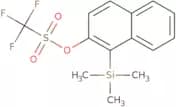
CAS:1-(Trimethylsilyl)-2-naphthyl Trifluoromethanesulfonate is a solvent that has been used for the synthesis of oxygen heterocycles. It is also used as a reagent to cleave bonds in organic molecules, such as alkene, solvents, aldehydes and activated esters. This compound is an unsymmetrical nucleophile that reacts with electron-poor alkenes to generate an unsaturated bond between two carbons. Mechanistic studies have shown that the reaction proceeds through a concerted mechanism involving the formation of a covalent phosphine intermediate.
Formula:C14H15F3O3SSiPurity:Min. 95%Color and Shape:PowderMolecular weight:348.41 g/molRef: 3D-FT60048
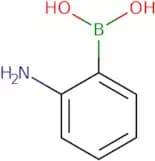
Discontinued product2-Aminophenylboronic acid
CAS:2-Aminophenylboronic acid is an organic compound that can be used as a cross-coupling agent in the Suzuki coupling reaction. It has been used to synthesize amides and β-unsaturated ketones. It has also been used to prepare fluorescent molecules for use in clinical diagnostics. The phase transition temperature of 2-aminophenylboronic acid is approximately -6°C, which makes it useful for the synthesis of amides and β-unsaturated ketones at low temperatures. This compound is not reactive towards nucleophiles due to its acidic character, but it can undergo a nucleophilic attack when protonated. Its fluorescence assay can be used to detect the presence of low concentrations of hydrogen sulfide gas in natural gas pipelines.
Formula:C6H8BNO2Purity:Min. 95%Color and Shape:PowderMolecular weight:136.94 g/molRef: 3D-FA10483
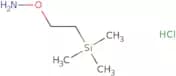
Discontinued productO-(2-Trimethylsilylethyl)hydroxylamine HCl
CAS:O-(2-Trimethylsilylethyl)hydroxylamine HCl is a fine chemical that can be used as a versatile building block in the synthesis of complex compounds. It is also an intermediate for research chemicals, reagents, and speciality chemicals. O-(2-Trimethylsilylethyl)hydroxylamine HCl can be used as a reaction component in organic synthesis and has been shown to be useful in the synthesis of new scaffolds.
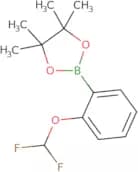
Formula:C5H15NOSi·HClPurity:Min. 95%Color and Shape:White PowderMolecular weight:169.72 g/mol2-Difluoromethoxyphenylboronic acid pinacol ester
CAS:2-Difluoromethoxyphenylboronic acid pinacol ester is a high quality reagent that can be used as a useful intermediate, fine chemical, or speciality chemical in reactions. This compound is an important building block for synthesizing other chemicals and can also be used to make novel compounds with pharmaceutical properties. 2-Difluoromethoxyphenylboronic acid pinacol ester is versatile and can be used in many different reactions. It has been reported to react with various other molecules to form new scaffolds and building blocks for use in organic synthesis.
Formula:C13H17BF2O3Purity:Min. 95%Color and Shape:PowderMolecular weight:270.08 g/molRef: 3D-FD103354
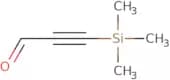
Discontinued product3-(Trimethylsilyl)-2-propynal
CAS:3-(Trimethylsilyl)-2-propynal is a molecule that has been studied for its potential use as a vitamin D3 analog. It contains a hydroxy group and an asymmetric carbon atom that could allow it to bind to the vitamin D receptor. 3-(Trimethylsilyl)-2-propynal is also an intramolecular hydrogen bond donor, which may play a role in receptor binding. This compound has shown promising results in animal models of inflammatory diseases, such as asthma and arthritis. The compound binds to the receptor with low energy and has a stereoselective orientation of the benzimidazole ring, which may give it an advantage over other compounds that have similar activity.
Formula:C6H10OSiPurity:Min. 95%Color and Shape:Colorless Clear LiquidMolecular weight:126.23 g/molRef: 3D-FT165825
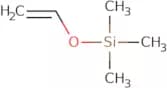
Discontinued productVinyloxytrimethylsilane
CAS:Controlled ProductVinyloxytrimethylsilane is an organosilicon compound that is used as a polymerization initiator. It reacts with cyclobutanone to form a ruthenium complex, which can be used to coat surfaces and produce polymers. The use of this compound has been shown to increase the reaction yield and decrease the amount of by-products in the polymerization process. Vinyloxytrimethylsilane is biodegradable, making it an environmentally friendly alternative for coating surfaces or producing polymers.
Formula:C5H12OSiPurity:Min. 95%Molecular weight:116.23 g/molRef: 3D-FV153134
Discontinued productTrichlorooctadecylsilane
CAS:Trichlorooctadecylsilane is a model system that consists of a monolayer of octadecyltrichlorosilane particles. The dispersive solid-phase extraction technique can be used to extract analytes from the surface of this particle. This technique involves removing the solvent from a sample by passing it through an adsorbent. The hydrophobic effect, which is the phenomenon that a nonpolar substance is dissolved in a nonpolar solvent, will cause analytes to bind to the hydrophobic surface of octadecyltrichlorosilane particles because they are hydrophobic.
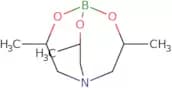
Purity:Min. 95%Triisopropanolamine Borate
CAS:Triisopropanolamine borate is an organic compound with the formula (CH3)3N(CH2)3OH. It is a colorless liquid with a sweet, amine-like odor. Triisopropanolamine borate is widely used as a cross-linking agent in coatings, and as a reactive functional group in polycarboxylic acid synthesis and cationic polymerization. It also has been used as a blood pressure lowering agent and to treat high calcium levels in the blood. The chemical structure of triisopropanolamine borate can be seen below: Triisopropanolamine Borate, Chemical Structure The chemical formula for triisopropanolamine borate is CH3N(CH2)3OH. Triisopropanolamine borate has many applications due to its reactive functional groups, including cross-linking agents for coatings and polycarboxylic acid synthesis
Formula:C9H18BNO3Purity:Min. 95%Molecular weight:199.06 g/molRef: 3D-FT159810
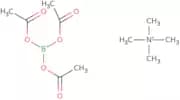
Discontinued productTetramethylammonium triacetoxyborohydride
CAS:Tetramethylammonium triacetoxyborohydride is a potent antagonist that binds to the active site of hydrogen-bond forming enzymes. It is used in the treatment of bowel disease, as well as other diseases such as cancer, diabetic neuropathy and inflammatory bowel disease. Tetramethylammonium triacetoxyborohydride has been shown to inhibit the growth of certain bacteria by inhibiting their ability to form hydrogen bonds. This chemical can also be used in asymmetric synthesis, which is the process of synthesizing only one enantiomer from a racemic mixture. Tetramethylammonium triacetoxyborohydride can function as an organocatalyst for this process by activating achiral substrates into chiral ones.
Formula:C10H22BNO6Purity:Min. 95%Color and Shape:White PowderMolecular weight:263.1 g/molRef: 3D-FT61137
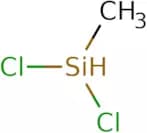
Discontinued productDichloromethylsilane
CAS:Dichloromethylsilane (DCS) is a chemical compound that is used in the synthesis of silicone rubber, silicone elastomers, and silicone sealants. It can also be used as a cross-linking agent for polymers such as polyurethane, epoxy resin, and silicone. The synthesis of DCS is achieved by reacting chlorosilanes with methyl alcohol or methyl chloride in the presence of an acid catalyst. DCS exhibits high chemical stability and can be activated at room temperature. This product has been shown to be useful for fabricating medical devices that are implanted into the human body because it does not react with water or blood.
Formula:CH4Cl2SiPurity:Min. 95%Molecular weight:115.03 g/mol(+)-B-Chlorodiisopinocampheylborane - 60-65% in Hexane
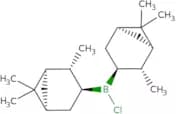
CAS:(+)-B-Chlorodiisopinocampheylborane is a chiral organoboron reagent that can be used for the enantioselective synthesis of amines. It is prepared from the reaction of chlorodiphenyl borane with (+)-diaminobenzene in hexane. The product can be purified by column chromatography or recrystallization. (+)-B-Chlorodiisopinocampheylborane can also be used in the synthesis of other compounds, such as pyrroles and pantolactones. It is an excellent catalyst for the dehydration of primary amines to give unsymmetrical ketones. This reagent has been shown to be effective in asymmetric hydrogenation reactions, such as the reduction of chiral secondary alcohols, and is also capable of catalyzing aldol reactions.Formula:C20H34BClPurity:Min. 95%Color and Shape:Clear LiquidMolecular weight:320.75 g/molBis(trimethylsilyl)acetylene
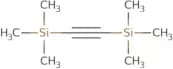
CAS:Bis(trimethylsilyl)acetylene (bis-TMS) is a reactive ancillary that can be used in polymerization reactions as an initiator. The bis-TMS is prepared by reaction of trimethylsilyl chloride with acetylene to form the trimethylsilyl acetylene, which is then reacted with copper to generate the bis-TMS. Bis-TMS reacts with nucleophiles such as alcohols and amines to produce polymers through a nucleophilic attack. It also has been used for sample preparation for NMR spectra. Bis-TMS is a synthetic compound that has been characterized using nmr spectroscopy and analytical methods. The molecular formula of bis-TMS is C8H16Si2 and its molecular weight is 196.13 g/mol. The chemical structure of bis-TMS consists of two benzyl groups connected by a single carbon bond at the 3 o'clock position on the central
Formula:C8H18Si2Purity:Min. 95%Color and Shape:Clear LiquidMolecular weight:170.4 g/mol(2-Bromoethoxy)-tert-butyldimethylsilane
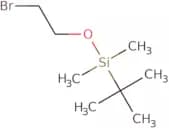
CAS:2-Bromoethoxy-tert-butyldimethylsilane is a conjugate that has been shown to have anticancer efficacy in vivo. It is a pyrimidine derivative and inhibits the viral enzyme RNA polymerase, thereby inhibiting viral replication. 2-Bromoethoxy-tert-butyldimethylsilane also inhibits glyceraldehyde 3-phosphate dehydrogenase, which is an enzyme that catalyzes the conversion of glucose into glyceraldehyde 3-phosphate and plays an important role in glycolysis. The compound has been shown to be active against mouse tumors, which are associated with endogenous retroviruses. The compound has also been shown to inhibit gapdh, an enzyme involved in energy metabolism and cancer therapy.Formula:C8H19BrOSiPurity:Min. 95%Color and Shape:Colorless Clear LiquidMolecular weight:239.23 g/mol2-Aminopyrimidine-5-boronic acid pinacol ester
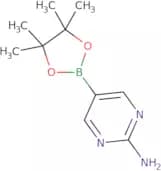
CAS:2-Aminopyrimidine-5-boronic acid pinacol ester is a boronic acid derivative that has been shown to inhibit the activity of protein kinase C. This compound is also an effective linker for cross-coupling reactions and has a low reactivity with nucleophiles, which makes it safer than other boronic acids. 2-Aminopyrimidine-5-boronic acid pinacol ester has been shown to be potent against cancer cells in vitro and in vivo and synthetic cells. 2-Aminopyrimidine-5-boronic acid pinacol ester inhibits the growth of cancer cells by binding to the ATP site on protein kinase C, thereby inhibiting its function.
Formula:C10H16BN3O2Purity:Min. 95 Area-%Color and Shape:PowderMolecular weight:221.06 g/molRef: 3D-FA33574
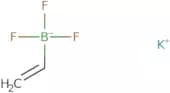
Discontinued productPotassium vinyltrifluoroborate
CAS:Potassium vinyltrifluoroborate is a salt that contains the inorganic anion potassium and the organic ligand vinyltrifluoroborate. It is used as an electrolyte in electrochemical cells, such as fuel cells, to increase power output by increasing the conductivity of the electrolyte. This compound has been shown to be effective against chronic kidney disease and infectious diseases such as HIV and malaria. Potassium vinyltrifluoroborate also has anti-cancer properties due to its ability to inhibit cellular proliferation and induce apoptosis in cancer cells. The mechanism of action of this drug is still unclear but may be due to its ability to inhibit proteases, such as ns3 protease found in human erythrocytes.
Formula:C2H3BF3KPurity:Min. 95%Color and Shape:PowderMolecular weight:133.95 g/molN-(2-Aminoethyl)-3-aminopropylmethyldimethoxysilane
CAS:N-(2-Aminoethyl)-3-aminopropylmethyldimethoxysilane is an antibacterial agent that inhibits the growth of bacteria by binding to the cell wall, thereby preventing the synthesis of proteins. It is used in dentistry and medicine as a coating for metal surfaces. This compound has been shown to be effective against Escherichia coli and Enterococcus faecalis. The optimum concentration for this compound is 1 mg/mL.
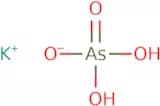
Formula:C8H22N2O2SiPurity:Min. 95%Molecular weight:206.36 g/molPotassium dihydrogen arsenate
CAS:Potassium dihydrogen arsenate is an inorganic chemical that is used as a pesticide. It prevents the synthesis of proteins by inhibiting soybean trypsin. The optimum concentration for chrysoperla is 1.6 mg/L, which has been shown to be sublethal at levels below 5 mg/L. This chemical has also been shown to have effects on light exposure and thermal expansion. Potassium dihydrogen arsenate belongs to the ferroelectric class of compounds and has a hydrogen bond with water, which may explain its uptake into plants.
Formula:H2AsKO4Purity:Min. 95%Molecular weight:180.04 g/mol