Organoboranes
Found 6123 products of "Organoboranes"
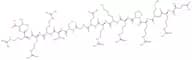
Peptide epsilon
CAS:Peptide epsilon is a diacylglycerol that inhibits protein synthesis. It binds to the cytosolic protein and inhibits the activity of the cytosolic protein, which is required for cell proliferation. Activated cells are then killed by apoptosis. Peptide epsilon has been shown to inhibit tubule cells by binding with the basic protein in the tubule cells and inhibiting cell proliferation. Peptide epsilon also binds with cytosolic protein and inhibits its activity, leading to inhibition of cell proliferation. This drug has been shown to be a potent inhibitor of cell proliferation in fetal bovine kidney cells and human lung cancer cells.
Formula:C83H155N39O21SPurity:Min. 95%Molecular weight:2,067.44 g/molRef: 3D-FP108937
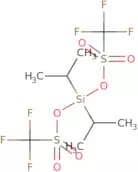
Discontinued productDiisopropylsilyl Bis(Trifluoromethanesulfonate)
CAS:Diisopropylsilyl bis(trifluoromethanesulfonate) is a bifunctional reagent that can be used to prepare the trifluoromethanesulfonic acid. It reacts with an alcohol in the presence of base to generate an ester, and then hydrolyzes the ester in the presence of water to generate the desired acid. Diisopropylsilyl bis(trifluoromethanesulfonate) is pale yellow and soluble in argon, nitrogen, and solvents such as ethyl acetate.
Formula:C8H14F6O6S2SiPurity:Min. 95%Molecular weight:412.4 g/molRef: 3D-FD90402
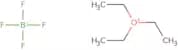
Discontinued productTriethyloxonium tetrafluoroborate
CAS:Triethyloxonium tetrafluoroborate is an antimicrobial agent that inhibits the transfer of electrons from one molecule to another. It has been shown to be effective against methicillin-resistant Staphylococcus aureus and Mycobacterium tuberculosis. Triethyloxonium tetrafluoroborate binds to the bacterial enzyme, Jak1, which is involved in the formation of cytokines and interleukins. This binding inhibits the production of these molecules, leading to cell death by apoptosis. The use of triethyloxonium tetrafluoroborate as a research tool has facilitated its discovery as a potential anti-inflammatory drug for autoimmune diseases such as type 1 diabetes mellitus and rheumatoid arthritis. Triethyloxonium tetrafluoroborate can be used to inhibit amide synthesis, which may have applications in the study of carbohydrate chemistry and nitrogen atoms in biological systems. This compound has also been used
Formula:C6H15BF4OPurity:Min. 95%Color and Shape:PowderMolecular weight:189.99 g/mol