Nitro
Found 2518 products of "Nitro"
2-(2-Nitroanilino)-5-methylthiophene-3-carbonitrile
CAS:2-(2-Nitroanilino)-5-methylthiophene-3-carbonitrile is a crystalline compound that belongs to the group of small molecules. It has a molecular weight of 153.2 g/mol and a melting point of 281 °C. The compound has three different crystalline forms, including a monoclinic form, which is thermodynamically stable at room temperature. 2-(2-Nitroanilino)-5-methylthiophene-3-carbonitrile can be used as a model system for studying influenza virus and as an inhibitor of influenza virus replication. 2-(2-Nitroanilino)-5-methylthiophene-3-carbonitrile also inhibits the activity of carbamazepine, which is an anti epileptic drug, by binding to its active site on the molecule.Formula:C12H9N3O2SPurity:Min. 95%Color and Shape:PowderMolecular weight:259.29 g/mol3-Nitro-benzene-1,2-diol
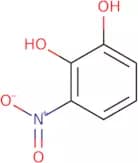
CAS:3-Nitro-benzene-1,2-diol is an inhibitor of catechol-o-methyltransferase (COMT), which catalyzes the transfer of a methyl group from S-adenosyl methionine to dopamine. This results in the formation of 3-O-(methylamino) catechol. COMT inhibitors are used as pharmaceutical preparations for the treatment of Parkinson's disease and other diseases involving dopamine. 3-Nitro-benzene-1,2-diol has been shown to inhibit COMT and prevent the breakdown of dopamine in the brain, which may be beneficial for treating Parkinson's disease and other nervous system diseases.Formula:C6H5NO4Purity:Min. 95%Molecular weight:155.11 g/mol2-Bromo-4'-nitroacetophenone
CAS:2-Bromo-4'-nitroacetophenone is a chemical compound that has been shown to be active in enzyme inhibition experiments. It has been found to inhibit the activity of histidine decarboxylase, which catalyzes the conversion of histidine to histamine, and uv absorption. 2-Bromo-4'-nitroacetophenone binds to the active site of P450 enzymes, inhibiting their catalytic activity. This compound also inhibits fatty acid oxidation by binding to fatty acid hydroxylase and hydrogen bonds with tyrosine residues in proteins. 2-Bromo-4'-nitroacetophenone is structurally similar to 2-bromoacetophenone, which has been shown to have antihistaminic properties.Formula:C8H6BrNO3Purity:Min. 95%Color and Shape:PowderMolecular weight:244.04 g/molFmoc-3-nitro-L-phenylalanine
CAS:Please enquire for more information about Fmoc-3-nitro-L-phenylalanine including the price, delivery time and more detailed product information at the technical inquiry form on this pageFormula:C24H20N2O6Purity:Min. 98 Area-%Color and Shape:White PowderMolecular weight:432.43 g/molN-α-Z-L-lysine 4-nitrophenyl ester hydrochloride
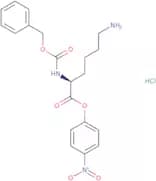
CAS:N-alpha-Z-L-lysine 4-nitrophenyl ester hydrochloride is a protease that belongs to the family of serine proteases. It is produced by the biotechnological process of enzymatic extraction from the natural polysaccharide carrageenan. This product has been used in the production of high yield and purified enzymes for industrial applications. The enzyme has been shown to have cysteine and hydrolytic activity, as well as being able to break peptidic bonds in peptides. N-alpha-Z-L-lysine 4-nitrophenyl ester hydrochloride also has a high specificity for proteolytic cleavage of proteins at their carboxy terminal end.Formula:C20H23N3O6•HClPurity:Min. 95%Molecular weight:437.87 g/mol1-Nitro-Cyclohexene
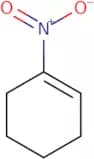
CAS:1-Nitro-cyclohexene is an aromatic compound that reacts with nitric oxide to form a nitroso. 1-Nitro-cyclohexene has been shown to be a reactive intermediate in the Covid-19 pandemic, catalyzing the formation of covidimycin from dimethoxymethylpenicillin. 1-Nitro-cyclohexene also has been found to react with hydrogen peroxide and flavin mononucleotide to form hydroxyl radicals, which are highly reactive chemical species capable of damaging DNA and other cellular components. The toxicity of 1-nitrocyclohexene is related to its ability to form nitrosamines and nitrophenols, which are both carcinogenic. 1-Nitro-cyclohexene can also react with protonated amines or amides to form imines or imides, which are chemically stable species that can persist in the environment.Formula:C6H9NO2Purity:Min. 95%Molecular weight:127.14 g/mol2,4-Difluoro-5-nitrobenzonitrile
CAS:2,4-Difluoro-5-nitrobenzonitrile is a chemical that has been found to have affinity for the central nervous system. It inhibits the reuptake of monoamines such as dopamine and serotonin. This chemical has been shown to be endogenously produced in humans and animals. 2,4-Difluoro-5-nitrobenzonitrile also inhibits the uptake of amines by blocking the activity of their respective transporters. The compound is an isomeric mixture of two possible structures, which differ in their position on the benzene ring. The first form is characterized by a low affinity for neurotransmitter receptors and therefore has low inhibitory properties on monoamine uptake. The second form has greater affinity for neurotransmitter receptors and therefore has greater inhibitory properties on monoamine uptake, although at higher concentrations it may lead to adverse effects on muscle tissue.
Formula:C7H2F2N2O2Purity:Min. 95%Color and Shape:PowderMolecular weight:184.1 g/mol4-(4-Nitrophenoxy)butanoic acid
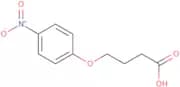
CAS:Controlled ProductPlease enquire for more information about 4-(4-Nitrophenoxy)butanoic acid including the price, delivery time and more detailed product information at the technical inquiry form on this page
Formula:C10H11NO5Purity:Min. 95%Molecular weight:225.2 g/mol4-Nitrobenzyl bromide
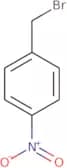
CAS:4-Nitrobenzyl bromide is a reactive compound that reacts with the hydroxyl group of phenols to form 4-nitrophenols. It has been shown to react with congestive heart failure (CHF) patients' sera and bind to receptors on the surface of red blood cells, thereby inhibiting their ability to carry oxygen. The reaction mechanism for this process is unclear, but it is thought that it may involve a nucleophilic attack on the double bond in the phenol by a hydroxyl radical. This chemical can also be used as an analytical method for determining organic acids in natural compounds. Monoclonal antibodies are used for this purpose because they are specific for certain organic acids and thus will only react with them.Formula:C7H6BrNO2Purity:Min. 95%Color and Shape:PowderMolecular weight:216.03 g/mol4-Fluoro-3-nitropyridine
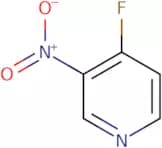
CAS:4-Fluoro-3-nitropyridine is a reactive chemical that can react with alcohols, amines, and amino acids. It has been shown to have absorption spectra in the ultraviolet region of the light spectrum. 4-Fluoro-3-nitropyridine is also a pyridine derivative.Formula:C5H3FN2O2Purity:Min. 95%Color and Shape:Off-White PowderMolecular weight:142.09 g/mol4-Amino-1,3-dimethyl-2,6-dioxo-5-nitrosopyrimidine
CAS:4-Amino-1,3-dimethyl-2,6-dioxo-5-nitrosopyrimidine is a monoclonal antibody that binds to cancer cells. It has been shown to be effective in the treatment of leukemia, Hodgkin's disease, and non-Hodgkin's lymphoma. The binding of 4-Amino-1,3-dimethyl-2,6-dioxo-5-nitrosopyrimidine to cancer cells is due to the formation of a coordination geometry between the copper complex and the nitrogen atoms on the amino group. This drug has been shown to inhibit tumor growth by blocking the synthesis of DNA and RNA, which are key components in cell division. 4AADNP also inhibits cancer cells' ability to uptake glucose by inhibiting cellular glucose transporters. The binding affinity of 4AADNP for cancer cells is higher than for normal cells because cancer cells have more receptors for this drugFormula:C6H8N4O3Purity:Min. 95%Molecular weight:184.15 g/mol2-Bromo-3-nitrobenzoic acid
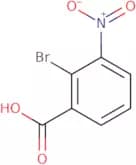
CAS:2-Bromo-3-nitrobenzoic acid is a reactive chemical used as an antibacterial agent. It inhibits the growth of staphylococcus by inhibiting the synthesis of DNA and protein, which are required for cell division. 2-Bromo-3-nitrobenzoic acid is also effective against mammalian cells, but not against bacteria that grow in a thionyl environment. The chemical reacts with chloride to form 2-bromo-3-chlorobenzoic acid, which can be converted to mercaptoacetic acid by means of reduction with sodium dithionite. Mercaptoacetic acid inhibits bacterial growth by blocking the synthesis of proteins necessary for cell division. 2-Bromo-3-nitrobenzoic acid is synthesized from bromine and nitric acid, while mercaptoacetic acid is synthesized from bromine and acetic anhydride.
Formula:C7H4BrNO4Purity:Min. 95%Color and Shape:PowderMolecular weight:246.02 g/molN-Nitrosodicyclohexylamine
CAS:N-Nitrosodicyclohexylamine (NDCA) is a chemical that is used as a corrosion inhibitor. The stability of NDCA in the environment has been studied extensively and found to be resistant to many conditions including heat, light, and pH. NDCA is absorbed by the skin or ingested and has been shown to cause genotoxic effects in human lymphocytes. The genotoxic potential of NDCA has also been demonstrated in V79 cells. NDCA reacts with amines to form an intermediate that spontaneously decomposes into nitrosamines, which are carcinogenic. This reaction mechanism was confirmed using analytical methods such as gas chromatography-mass spectrometry (GC-MS).Formula:C12H22N2OPurity:Min. 95%Molecular weight:210.32 g/mol4-Nitrophenol
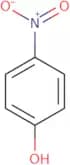
CAS:4-Nitrophenol is a chemical compound that is used in wastewater treatment to remove iron and copper ions. 4-Nitrophenol has been shown to catalyze the oxidation of picolinic acid by copper chloride, forming oxalic acid. The redox potential of 4-nitrophenol is -0.53 V, which makes it a suitable electron acceptor for the reaction. The reaction mechanism of this process involves the formation of a nitroso radical intermediate, which reacts with copper ions to form copper nitroso complexes and then reacts with oxygen to form hydroxylamine radicals. This reaction can also be followed using fluorescence probe measurements or electrochemical impedance spectroscopy (EIS).Formula:C6H5NO3Purity:Min. 95%Color and Shape:PowderMolecular weight:139.11 g/mol3-Chloro-2-nitropyridine
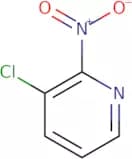
CAS:3-Chloro-2-nitropyridine is a chemical compound that has been shown to have anticancer activity. It is a structural analog of the nucleophilic piperazine, which can react with hydrogen fluoride in an electrophilic substitution reaction to form 3-chloro-2-nitropyridine oxide. The anticancer activity of this compound may be due to its ability to inhibit the growth of tumor cells by binding to the d4 receptor, inhibiting the production of inflammatory cytokines and growth factors. 3-Chloro-2-nitropyridine has also been shown to have antiinflammatory activities, which may be due to its inhibition of nitric oxide synthesis and 5'-lipoxygenase.Formula:C5H3N2O2ClPurity:Min. 95%Color and Shape:PowderMolecular weight:158.54 g/mol2,4,6-Trichloro-5-nitropyrimidine
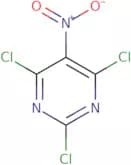
CAS:2,4,6-Trichloro-5-nitropyrimidine is a purine derivative that inhibits the cell proliferation of cancer cells. It has been shown to inhibit the activity of kinases and to induce apoptosis in human cancer cells in vitro. This drug also has antiproliferative potential against erythrocytes and is being investigated as a treatment for renal disease. 2,4,6-Trichloro-5-nitropyrimidine shows inhibitory effects on the phosphorylation of roscovitine by ATP and may be used to treat patients with glomerulonephritis. 2,4,6-Trichloro-5-nitropyrimidine can be synthesized from 2,4,6-trichloropyrimidinethiol and nitric acid according to the following equation: CClNO + HNO → CClNOH + NO 2 Cl + 3 HNO
Formula:C4Cl3N3O2Purity:Min. 97 Area-%Molecular weight:228.42 g/mol2-Methyl-5-nitropyridin-3-amine
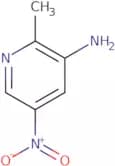
CAS:2-Methyl-5-nitropyridin-3-amine is a heterocyclic compound that is synthesized by the cyclization of 2-methylpyridine with sodium nitrite. The reaction product is hydrolyzed to yield the desired compound, 5-nitropyridine. The synthesis of this compound can be used as a target for organic synthesis.Formula:C6H7N3O2Purity:Min. 95%Molecular weight:153.14 g/mol5-Nitrothiophene-2-carboxaldehyde
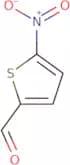
CAS:5-Nitrothiophene-2-carboxaldehyde (5NT) is a chemical compound that belongs to the class of dihedral molecules. It is commonly used as an antimicrobial agent and has been shown to have amoebicidal activity in tissue culture. 5NT also inhibits cell growth and proliferation in certain bacteria, such as Staphylococcus aureus strains, by interfering with DNA replication and protein synthesis. Although 5NT is not active against other types of bacteria, it has been shown to be effective against MRSA in laboratory studies. The biological properties of 5NT are still being studied.
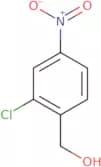
Formula:C5H3NO3SPurity:Min. 95%Molecular weight:157.15 g/mol(2-Chloro-4-nitrophenyl)methanol
CAS:Please enquire for more information about (2-Chloro-4-nitrophenyl)methanol including the price, delivery time and more detailed product information at the technical inquiry form on this pageFormula:C7H6ClNO3Purity:Min. 95%Color and Shape:PowderMolecular weight:187.58 g/molN,N-Dimethyl-2-nitroaniline
CAS:N,N-Dimethyl-2-nitroaniline is a colorless liquid with a characteristic odor. It has a boiling point of 170 degrees Celsius and a melting point of -10 degrees Celsius. The molecule is composed of two nitro groups and one methyl group, which are in an ionic bond. N,N-Dimethyl-2-nitroaniline can be found in solvents such as hexane or benzene and has an intramolecular hydrogen bonding frequency of 3.4 GHz. This compound is soluble in water and ethanol, but insoluble in ether.Formula:C8H10N2O2Purity:Min. 95%Molecular weight:166.18 g/mol