Nitro
Nitro compounds are organic molecules containing one or more nitro groups (NO2). These compounds are widely used in the synthesis of explosives, pharmaceuticals, and dyes. At CymitQuimica, we offer a wide range of high-quality nitro compounds to support your research and industrial applications, ensuring safe and effective results. Our selection includes a variety of nitro compounds suitable for different chemical syntheses and applications.
Found 2518 products of "Nitro"
Sort by
Purity (%)
0
100
|
0
|
50
|
90
|
95
|
100
(alphaR)-alpha-[[[2-(4-Nitrophenyl)ethyl]amino]methyl]benzenemethanol hydrochloride
CAS:Intermediate in the synthesis of mirabegron
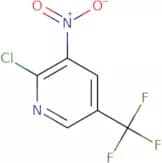
Formula:C16H18N2O3·HClPurity:Min. 95%Molecular weight:322.79 g/mol2-chloro-3-nitro-5-(trifluoromethyl)pyridine
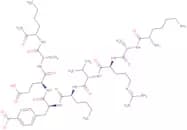
CAS:Please enquire for more information about 2-chloro-3-nitro-5-(trifluoromethyl)pyridine including the price, delivery time and more detailed product information at the technical inquiry form on this pageFormula:C6H2ClF3N2O2Purity:Min. 95%Molecular weight:226.54 g/molHIV Protease Substrate IV
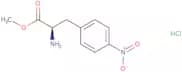
CAS:Please enquire for more information about HIV Protease Substrate IV including the price, delivery time and more detailed product information at the technical inquiry form on this pageFormula:C49H83N15O13Purity:Min. 95%Molecular weight:1,090.28 g/mol4-Nitro-D-phenylalanine methyl ester hydrochloride
CAS:Please enquire for more information about 4-Nitro-D-phenylalanine methyl ester hydrochloride including the price, delivery time and more detailed product information at the technical inquiry form on this pageFormula:C10H14N2O4·HClPurity:Min. 95%Molecular weight:262.69 g/mol2-Nitro-9H-carbazole
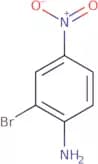
CAS:2-Nitro-9H-carbazole is a nitro aromatic compound that is used in the synthesis of other organic compounds. It has shown mutagenic and carcinogenic properties, as well as toxicity to the liver and kidney. 2-Nitro-9H-carbazole is metabolized by a number of metabolic transformations, including activation by cytochrome P450 enzymes and conjugation with glucuronic acid. The liver enzyme S9 also catalyzes the conversion of 2-nitro-9H-carbazole to its ultimate metabolite, 3-methylcholanthrene, which is cytotoxic to both cultured hepatocytes and lung cells.Formula:C12H8N2O2Purity:Min. 95%Color and Shape:PowderMolecular weight:212.2 g/mol2-Bromo-4-nitroaniline
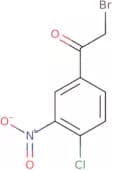
CAS:2-Bromo-4-nitroaniline is a chemical compound that belongs to the group of amines. It has been shown to inhibit the activity of insulin and epidermal growth factor (EGF) receptors. This inhibition leads to decreased insulin sensitivity and reduced EGF receptor activation, respectively. 2-Bromo-4-nitroaniline has also been shown to have growth factor activity in a mouse model for wound healing, which may be due to its ability to inhibit the tyrosine kinase domain of epidermal growth factor. The irreversible inhibition of this enzyme by 2-bromo-4-nitroaniline prevents downstream signaling pathways that regulate cell proliferation and differentiation.Formula:C6H5BrN2O2Purity:Min. 95%Color and Shape:PowderMolecular weight:217.02 g/mol4-Chloro-3-nitrophenacylbromide
CAS:4-Chloro-3-nitrophenacylbromide is a synthetic compound that has been shown to be effective against cancer cells in vitro. In the presence of light, this substance emits a bright green fluorescence, which is useful for imaging. The synthesis of 4-Chloro-3-nitrophenacylbromide can be achieved by solid phase methods and chemosynthesis. Spirocyclic amines are used as building blocks for the synthesis of this product. This process leads to functionalization strategies with high levels of chirality and drug development.
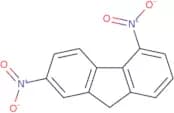
Formula:C8H5BrClNO3Purity:Min. 95%Color and Shape:PowderMolecular weight:278.49 g/mol2,5-Dinitrofluorene
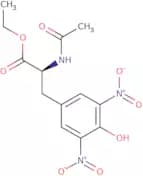
CAS:2,5-Dinitrofluorene is a carcinogenic compound that has been shown to cause cancer in laboratory animals. It can be found in high concentrations in tissues of rats and other animals. 2,5-Dinitrofluorene is metabolized by nitroreductase to the amide form. This compound has been shown to cause cancer in rats and mice when administered intramammary or topically. The tumorigenicity of 2,5-dinitrofluorene is significant at high doses, but it does not show significant effects at low doses. This agent also causes tumours on the skin of mice when applied topically. 2,5-Dinitrofluorene is an environmental pollutant that may be found in air emissions from coal burning power plants and vehicle exhausts, as well as in the soil near these facilities.Formula:C13H8N2O4Purity:Min. 95%Color and Shape:PowderMolecular weight:256.21 g/molAc-3,5-dinitro-Tyr-OEt
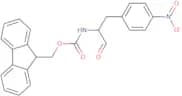
CAS:Please enquire for more information about Ac-3,5-dinitro-Tyr-OEt including the price, delivery time and more detailed product information at the technical inquiry form on this pageFormula:C13H15N3O8Purity:Min. 95%Molecular weight:341.27 g/molFmoc-p-nitro-Phe-Wang resin (200-400 mesh)
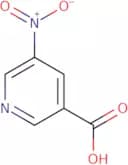
Please enquire for more information about Fmoc-p-nitro-Phe-Wang resin (200-400 mesh) including the price, delivery time and more detailed product information at the technical inquiry form on this pagePurity:Min. 95%5-Nitro nicotinic acid
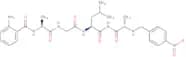
CAS:5-Nitro nicotinic acid is a drug that has been synthesized in the laboratory. It is a white crystalline solid with a molecular weight of 201.18, and it has the chemical formula of C6H5NO2. 5-Nitro nicotinic acid is an antitubercular drug that inhibits Mycobacterium tuberculosis and Mycobacterium avium complex without inhibiting other human cells. It also inhibits the growth of bacteria that are resistant to aminoglycosides (e.g., Pbtz169). This drug binds to the enzyme NADH dehydrogenase, which leads to inhibition of bacterial respiration and ATP synthesis. 5-Nitro nicotinic acid also has antimycobacterial activity against mycobacteria by forming nitric oxide radicals (NO) through hydrogen peroxide oxidation, which react with cellular components such as DNA and proteins.Formula:C6H4N2O4Purity:Min. 95%Molecular weight:168.11 g/molAbz-Ala-Gly-Leu-Ala-p-nitrobenzylamide
CAS:Benzamidine is a benzamidase inhibitor that competitively binds to bacterial enzymes such as metalloendopeptidases and matrix metalloproteinases. It inhibits the degradation of collagen, resulting in a higher concentration of soluble extract. This drug also has an effect on spermatozoa, which may be due to its ability to inhibit bacterial enzymes that are involved with uptake and preload. Benzamidine has been shown to have a pH optimum of 8-9 and is most active at this pH range.Formula:C28H37N7O7Purity:Min. 95%Molecular weight:583.64 g/mol4-Nitro-Z-Gly-Cys(7-nitro-benzo[2,1,3]oxadiazol-4-yl)-Gly-OH
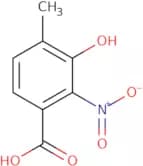
CAS:Please enquire for more information about 4-Nitro-Z-Gly-Cys(7-nitro-benzo[2,1,3]oxadiazol-4-yl)-Gly-OH including the price, delivery time and more detailed product information at the technical inquiry form on this pageFormula:C21H19N7O11SPurity:Min. 95%Molecular weight:577.48 g/mol3-Hydroxy-4-methyl-2-nitro-benzoic acid
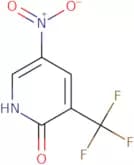
CAS:3-Hydroxy-4-methyl-2-nitrobenzoic acid is an analog of the natural substrate for the enzyme nitroreductase. It can be used in oxidative coupling reactions to generate a covalently bonded product, which is immobilized on sepharose. 3-Hydroxy-4-methyl-2-nitrobenzoic acid has a high affinity for nucleic acids and can be used in biospecific assays. The chromophore of 3-hydroxy-4-methyl-2-nitrobenzoic acid is easily oxidized, leading to its use in nitroreduction reactions in which a nitro group is reduced to an amino group.Purity:Min. 95%2-Hydroxy-5-nitro-3-(trifluoromethyl)pyridine
CAS:Please enquire for more information about 2-Hydroxy-5-nitro-3-(trifluoromethyl)pyridine including the price, delivery time and more detailed product information at the technical inquiry form on this pageFormula:C6H3F3N2O3Purity:Min. 99.00 Area-%Molecular weight:208.09 g/molAnthranilyl-HIV Protease Substrate trifluoroacetate salt
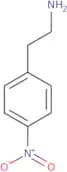
CAS:Please enquire for more information about Anthranilyl-HIV Protease Substrate trifluoroacetate salt including the price, delivery time and more detailed product information at the technical inquiry form on this pageFormula:C43H65N13O11Purity:Min. 95%Molecular weight:940.06 g/mol4-Nitrophenethylamine
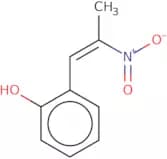
CAS:Controlled Product4-Nitrophenethylamine is a synthetic chemical that is used as an antigen to raise antibodies. It is used in the detection of chemical substances that are associated with the production of histamine and acetylcholine. This chemical has been shown to inhibit the reaction between nitro and acylation, which can lead to the formation of carcinogenic nitrosamines. 4-Nitrophenethylamine also has an inhibitory effect on oxidases and amines, which are enzymes found in cells. This chemical binds to amide groups in proteins and inhibits their activity.Formula:C8H10N2O2Purity:Min. 95%Color and Shape:LiquidMolecular weight:166.18 g/mol1-(2-Hydroxyphenyl)-2-nitropropene
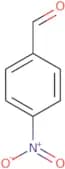
CAS:Please enquire for more information about 1-(2-Hydroxyphenyl)-2-nitropropene including the price, delivery time and more detailed product information at the technical inquiry form on this pageFormula:C9H9NO3Purity:Min. 95%Color and Shape:PowderMolecular weight:179.17 g/mol4-Nitrobenzaldehyde
CAS:4-Nitrobenzaldehyde is a reactive compound that has been shown to have antimicrobial activity. It is used in the synthesis of antibiotics and other pharmaceuticals. 4-Nitrobenzaldehyde binds to the mitochondrial membrane potential, which leads to the disruption of aerobic respiration. This compound has also been shown to bind to human serum proteins, such as albumin. The mechanism of this binding is through hydrogen bonding interactions with the amine groups on the protein surface. The reaction of 4-nitrobenzaldehyde with sodium carbonate results in an equilibrium between nitrobenzene and 4-nitrophenol. The equilibrium constant for this reaction can be determined experimentally by measuring the solubility of these compounds at different concentrations. 4-Nitrobenzaldehyde can be used as a model system for studying electron transfer reactions in electrochemistry through its interaction with methyl ethyl ketone (MEK) and pyridine (PYR). MEKFormula:C7H5NO3Purity:Min. 92%Color and Shape:Slightly Yellow PowderMolecular weight:151.12 g/mol4-Fluoro-2-methoxy-5-nitroaniline
CAS:Intermediate in the synthesis of osimertinib (AZD9291)Formula:C7H7FN2O3Purity:Min. 95%Molecular weight:186.14 g/mol
![(alphaR)-alpha-[[[2-(4-Nitrophenyl)ethyl]amino]methyl]benzenemethanol hydrochloride](/_next/image/?url=https%3A%2Fstatic.cymitquimica.com%2Fproducts%2F3D%2Fthumb-webp%2FFN156825.webp&w=3840&q=75)


![4-Nitro-Z-Gly-Cys(7-nitro-benzo[2,1,3]oxadiazol-4-yl)-Gly-OH](/_next/image/?url=https%3A%2Fstatic.cymitquimica.com%2Fproducts%2F3D%2Fthumb-webp%2FFN110874.webp&w=3840&q=75)