Nitro
Nitro compounds are organic molecules containing one or more nitro groups (NO2). These compounds are widely used in the synthesis of explosives, pharmaceuticals, and dyes. At CymitQuimica, we offer a wide range of high-quality nitro compounds to support your research and industrial applications, ensuring safe and effective results. Our selection includes a variety of nitro compounds suitable for different chemical syntheses and applications.
Found 2518 products of "Nitro"
Sort by
Purity (%)
0
100
|
0
|
50
|
90
|
95
|
100
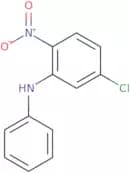
5-Chloro-2-nitrodiphenylamine
CAS:5-Chloro-2-nitrodiphenylamine is a synthetic dyestuff that belongs to the class of acridones. It can be used as an anti-epileptic drug, although it has not been approved for this use in any country. 5-Chloro-2-nitrodiphenylamine is manufactured by reacting a 6-carboxylic acid with an organic solvent and ammonolysis. This chemical is also known as 6'-chloroacridone and is used in the production of dyes and pigments. The manufacturing process produces impurities such as chloride, which must be removed by evaporation. Nitro groups are introduced during the manufacturing process to improve the dye's stability and color fastness under light exposure.Formula:C12H9ClN2O2Purity:Min. 95%Color and Shape:Orange To Red SolidMolecular weight:248.66 g/mol4-Chloro-3-nitrobenzenesulfonamide
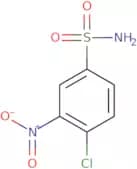
CAS:4-Chloro-3-nitrobenzenesulfonamide is a fluorogenic probe that can be used in the diagnosis of cancer. It inhibits the activity of MCL-1, which is an antiapoptotic protein. The skeleton of 4-Chloro-3-nitrobenzenesulfonamide has been shown to have carbonic and fluorescence properties. This chemical compound is also metabolized by azobenzene to form a fluorescent derivative that can be used for optical imaging in vivo.Formula:C6H5ClN2O4SPurity:Min. 95%Molecular weight:236.63 g/mol4-Nitrophenethylamine
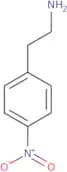
CAS:Controlled Product4-Nitrophenethylamine is a synthetic chemical that is used as an antigen to raise antibodies. It is used in the detection of chemical substances that are associated with the production of histamine and acetylcholine. This chemical has been shown to inhibit the reaction between nitro and acylation, which can lead to the formation of carcinogenic nitrosamines. 4-Nitrophenethylamine also has an inhibitory effect on oxidases and amines, which are enzymes found in cells. This chemical binds to amide groups in proteins and inhibits their activity.Formula:C8H10N2O2Purity:Min. 95%Color and Shape:LiquidMolecular weight:166.18 g/mol(3-Methyl-2-nitro-3H-imidazol-4-yl)methanol
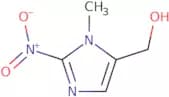
CAS:3-Methyl-2-nitro-3H-imidazol-4-yl)methanol is a fluorescent probe that can be used to detect hypoxic tumor cells. It has been shown to selectively react with the methylethyl group in Trichomonas vaginalis. 3-Methyl-2-nitro-3H-imidazol-4-yl)methanol is bioreductive and can be activated by nitro groups in proteins, which are found in the active site of enzymes such as bacterial dna gyrase. This probe has been shown to bind to the sn38 position of bacterial DNA, but not mammalian DNA.Formula:C5H7N3O3Purity:Min. 95%Molecular weight:157.13 g/molMethyl-4-nitrobenzenesulfonate
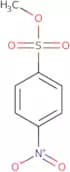
CAS:Methyl-4-nitrobenzenesulfonate is a chemical reagent that is used in the preparation of samples for structural analysis. It can be used to determine the structure of amines, glycol ethers, and polyethers by means of kinetic data. Methyl-4-nitrobenzenesulfonate has been used to analyze human serum and wastewater treatment samples. This chemical reagent is also used as a fluorescent derivative in analytical chemistry due to its high detection sensitivity.Formula:C7H7NO5SPurity:Min. 95%Color and Shape:PowderMolecular weight:217.2 g/mol3-Bromo-2-methyl-5-nitropyridine
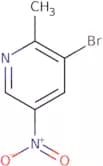
CAS:Please enquire for more information about 3-Bromo-2-methyl-5-nitropyridine including the price, delivery time and more detailed product information at the technical inquiry form on this pageFormula:C6H5BrN2O2Purity:Min. 95%Molecular weight:217.02 g/molH-Lys(4-nitro-Z)-pyrrolidide·HCl
CAS:Please enquire for more information about H-Lys(4-nitro-Z)-pyrrolidide·HCl including the price, delivery time and more detailed product information at the technical inquiry form on this page
Formula:C18H26N4O5·HClPurity:Min. 95%Molecular weight:414.88 g/mol4-Nitroguaiacol
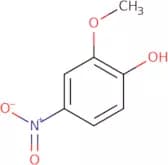
CAS:4-Nitroguaiacol is a nitro compound that has been shown to inhibit the growth of bacteria by reacting with fatty acids. The mechanism of this reaction is not well understood, but it may be due to the formation of an intermediate nitrite reductase that reduces nitrite to nitric oxide. 4-Nitroguaiacol has been shown to have antioxidative properties and can reduce hydrochloric acid in vitro. This compound also has been used as a clinical study for the treatment of bacterial infections.Formula:C7H7NO4Purity:Min. 95%Color and Shape:PowderMolecular weight:169.13 g/mol3-Fluoro-4-nitrobenzoic acid
CAS:3-Fluoro-4-nitrobenzoic acid is an organic solvent that is used as a reagent in the synthesis of peptidomimetics. 3-Fluoro-4-nitrobenzoic acid has been shown to be a nucleophilic addition agent, which can react with serine proteases in the presence of benzamidine. This reaction results in the formation of an amide bond between the amino group and carboxylic acid moiety of the serine protease, thereby inhibiting its activity. 3-Fluoro-4-nitrobenzoic acid is also used as a synthetic intermediate for peptides and other organic compounds.Formula:C7H4FNO4Purity:Min. 95%Color and Shape:PowderMolecular weight:185.11 g/mol5-Bromo-2-nitropyridine
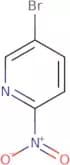
CAS:5-Bromo-2-nitropyridine is a hydrogen bond donor. It is an organic molecule with the chemical formula C5H5BrN3. The compound has been used in the synthesis of other molecules, such as nicotinic acetylcholine and mitochondrial membrane potential inhibitors. 5-Bromo-2-nitropyridine is also a good candidate for cancer treatment due to its ability to inhibit cell cycle progression at G2/M phase. 5-Bromo-2-nitropyridine can be synthesized by reacting 2,4,6-trinitrobenzenesulfonic acid with bromine and potassium carbonate in a reaction vessel at 200 °C for about 30 minutes.Formula:C5H3BrN2O2Color and Shape:PowderMolecular weight:202.99 g/mol(S)-(+)-Glycidyl-4-nitrobenzoate
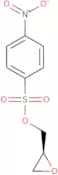
CAS:Glycidyl-4-nitrobenzoate (GLYNB) is an opioid receptor ligand, which binds to the κ opioid receptor. It has been used in biological testing and has been shown to have affinity for the κ opioid receptor. GLYNB may be a useful tool for investigating the molecular diversity of this receptor and its function in both normal and pathological conditions.Formula:C9H9NO6SPurity:Min. 95%Molecular weight:259.24 g/mol1-Acetyl-5-bromo-7-nitro-2,3-dihydro-1H-indole
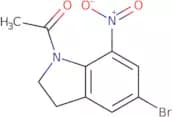
CAS:The 1-Acetyl-5-bromo-7-nitro-2,3-dihydro-1H-indole is a water soluble molecule. It has a molecular weight of 230.3 and a chemical formula of C8H6N2O2Br. The 1A5B7N1 is an aromatic heterocyclic compound that contains a ring with five carbon atoms, three nitrogens, and one oxygen. The 1A5B7N1 is also known as the 5 Bromo 7 Nitro 2,3 Dihydro 1 H Indole or the 5 Bromo 7 Nitro 2,3 Dihydroindole. This molecule has been seen to have bioactive properties in many different ways including photolysis efficiency and molecular orbital.Formula:C10H9BrN2O3Purity:Min. 95%Molecular weight:285.09 g/mol2,4-Dinitro-m-xylene
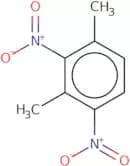
CAS:2,4-Dinitro-m-xylene is a chemical additive that is used in the preparation of samples for analysis. It converts benzonitrile to 2,4-dinitrobenzene with sodium salts. The electron donor can be either sodium or potassium. The nitrotoluene reacts through an electrolysis process to produce nitronium ions, which react with oxygen in the presence of alkanoic acids to form the desired product. 2,4-Dinitro-m-xylene has been found to be biodegradable and is not toxic to aquatic life. It is also used as a solvent for other organic materials.Formula:C8H8N2O4Purity:Min. 95%Color and Shape:PowderMolecular weight:196.16 g/mol3-Fluoro-4-nitroaniline
CAS:3-Fluoro-4-nitroaniline is an asymptomatic infection that inhibits the growth of bacteria by blocking the synthesis of proteins. This drug binds to the hydroxyl group, which is part of the amine function, and forms a covalent bond to the amino function in bacterial ribosomes. 3-Fluoro-4-nitroaniline blocks the formation of a tetrahydropyran ring in bacterial cells, preventing them from growing and multiplying. 3-Fluoro-4-nitroaniline also has been shown to have anticancer properties. It can inhibit tumor cell proliferation by inhibiting DNA synthesis and protein synthesis. The anticancer effects are due to its ability to inhibit cancer cell growth through inhibition of cellular enzymes such as topoisomerase II and cytosolic ribonucleotide reductase.Purity:Min. 95%HIV Protease Substrate IV
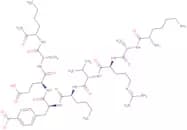
CAS:Please enquire for more information about HIV Protease Substrate IV including the price, delivery time and more detailed product information at the technical inquiry form on this pageFormula:C49H83N15O13Purity:Min. 95%Molecular weight:1,090.28 g/molalpha-Chloro-2-nitrobenzaldoxime
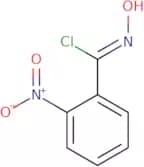
CAS:The heterocycle alpha-chloro-2-nitrobenzaldoxime is a functional group that can be oriented in two different ways. The diversity of the product arises from the fact that it is possible to create new functional groups by substitution on the benzene ring and on the nitrogen. Heterocyclization of alpha-chloro-2-nitrobenzaldoxime can be achieved by using other heterocycles such as isoxazoles, which are readily available in large quantities, as building blocks. This reaction can be catalyzed by reductive means with sodium borohydride and methanol.Formula:C7H5ClN2O3Purity:Min. 95%Molecular weight:200.58 g/mol1-(3-Carboxyphenyl)-2-nitroethene
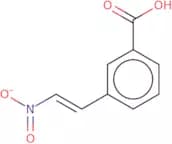
CAS:1-(3-Carboxyphenyl)-2-nitroethene is a reagent, speciality chemical, and versatile building block that is used in the synthesis of other compounds. It is also a useful intermediate or scaffold in many chemical reactions. 1-(3-Carboxyphenyl)-2-nitroethene has a CAS number of 98-36-4 and can be used as a high quality research chemical.Formula:C9H7NO4Purity:Min. 95%Color and Shape:PowderMolecular weight:193.16 g/mol4-Methyl-3-nitrophenyl isocyanate
CAS:4-Methyl-3-nitrophenyl isocyanate (4MPN) is a chiral diisocyanate that can be used as an activated diisocyanate. 4MPN is prepared by the carbonylation of 3-nitrobenzaldehyde and xylene with hydrogen chloride in the presence of a catalyst. Impurities, such as chlorides or sulfurs, can be detected using surface methodology techniques. The feedstock for this compound is usually xylene, which has a high boiling point. This product contains reactive functional groups that can be used to modify surfaces and create polyurethane products.Formula:C8H6N2O3Purity:Min. 95%Color and Shape:PowderMolecular weight:178.14 g/molN-[5-[5-(2-Methyl-1-oxoisoindolin-5-yl)thien-2-yl]pyridin-3-yl]-2-nitrobenzenesulfonamide
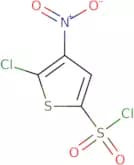
CAS:Please enquire for more information about N-[5-[5-(2-Methyl-1-oxoisoindolin-5-yl)thien-2-yl]pyridin-3-yl]-2-nitrobenzenesulfonamide including the price, delivery time and more detailed product information at the technical inquiry form on this pageFormula:C24H18N4O5S2Purity:Min. 95%Color and Shape:PowderMolecular weight:506.56 g/mol5-Chloro-4-nitrothiophene-2-sulfonylchloride
CAS:Please enquire for more information about 5-Chloro-4-nitrothiophene-2-sulfonylchloride including the price, delivery time and more detailed product information at the technical inquiry form on this pageFormula:C4HCl2NO4S2Purity:Min. 95%Molecular weight:262.09 g/mol





![N-[5-[5-(2-Methyl-1-oxoisoindolin-5-yl)thien-2-yl]pyridin-3-yl]-2-nitrobenzenesulfonamide](/_next/image/?url=https%3A%2Fstatic.cymitquimica.com%2Fproducts%2F3D%2Fthumb-webp%2FFM167955.webp&w=3840&q=75)