Nitro
Found 2518 products of "Nitro"
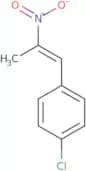
1-(4-Chlorophenyl)-2-nitropropene
CAS:1-(4-Chlorophenyl)-2-nitropropene is a versatile building block that can be used in the synthesis of a variety of compounds. It is an aromatic compound with a molecular weight of 122.1 and chemical formula CHClNO. It has a melting point of -44°C, boiling point of 166°C, and density at 20°C of 1.11 g/mL. This product has also been shown to be useful as an intermediate or reaction component for the synthesis of polymers, pharmaceuticals, pesticides, and other organic compounds. 1-(4-Chlorophenyl)-2-nitropropene is soluble in water (10 mg/mL) and alcohols (10 mg/mL). This product is classified as not hazardous according to the Globally Harmonized System (GHS) criteria for classification and labeling of chemicals.
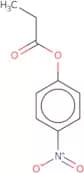
Formula:C9H8ClNO2Purity:Min. 95%Color and Shape:PowderMolecular weight:197.62 g/mol4-Nitrophenyl propionate
CAS:4-Nitrophenyl propionate is a synthetic surfactant that is used in many products, including detergents, fabric softeners, and dishwashing liquids. It has been shown to have a positioning effect on the enzyme lipase and to shift its enzymatic activity. 4-Nitrophenyl propionate can be used as a catalyst for sodium fusidate in the synthesis of microemulsions. The catalytic activity of 4-nitrophenyl propionate is constant and it has high catalytic efficiency.
Formula:CH3CH2COOC6H4NO2Purity:Min. 95%Color and Shape:White PowderMolecular weight:195.17 g/molRef: 3D-FN30549
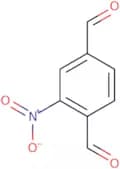
Discontinued product2-Nitroterephthalaldehyde
CAS:2-Nitroterephthalaldehyde is a chiral molecule that can be used in the supramolecular synthesis of macrocycles. This molecule has been shown to catalyze the formation of imines, which are important for the synthesis of macrocycles. The kinetic and thermodynamic properties of 2-Nitroterephthalaldehyde have been studied and found to be favorable for this type of reaction.
Formula:C8H5NO4Purity:Min. 95%Color and Shape:PowderMolecular weight:179.13 g/molRef: 3D-FN133686
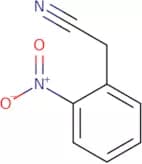
Discontinued product2-Nitrobenzylcyanide
CAS:2-Nitrobenzylcyanide is a potential use in the synthesis of β-unsaturated ketones, nitroalkanes, and biomolecular compounds. This compound reacts with nitrogen atoms to form an unsymmetrical nitrene group. The reaction selectivity is due to the active methylene group that is acidic, which selectively reacts with amines or cb1 receptor groups.
Formula:C8H6N2O2Purity:Min. 95%Color and Shape:Off-White PowderMolecular weight:162.15 g/molRef: 3D-FN26291
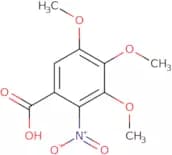
Discontinued product2-Nitro-3,4,5-trimethoxybenzoic acid
CAS:2-Nitro-3,4,5-trimethoxybenzoic acid (2-NTMB) is a potent anticancer agent that has shown cytotoxic effects in human epidermoid carcinoma cells. It inhibits the growth of cancer cells by interfering with their DNA synthesis and repair. 2-NTMB binds to DNA and blocks the action of enzymes involved in DNA synthesis and repair. This binding leads to cancer cell death through irradiation or by blocking the production of new proteins vital for cell division. 2-NTMB is bioisosteric with combretastatin A4, which means it can be substituted for this drug without significant loss of potency. It also has been shown to be an effective chemotherapeutic agent against breast cancer in mice.
Formula:C10H11NO7Purity:Min. 95%Color and Shape:PowderMolecular weight:257.2 g/molRef: 3D-FN70167
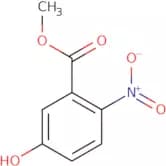
Discontinued productMethyl 5-hydroxy-2-nitrobenzoate
CAS:Methyl 5-hydroxy-2-nitrobenzoate is a synthetic pesticide that is used to control pests in animals. It has been shown to be an antigen that induces antibody production in mice. This chemical is also a ligand, as it binds with proteins and other molecules. Methyl 5-hydroxy-2-nitrobenzoate has been shown to inhibit the enzymatic activity of the organophosphorus pesticide, which is primarily used for pest control. The chemical was also found to inhibit the growth of plants by inhibiting protein synthesis and cell division at low concentrations.
Formula:C8H7NO5Purity:Min. 95%Color and Shape:White PowderMolecular weight:197.14 g/molRef: 3D-FM67198
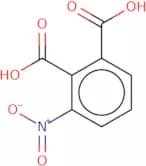
Discontinued product3-Nitrophthalic acid
CAS:3-Nitrophthalic acid is an organic compound that has been used in biological studies. It has been shown to bind to DNA and RNA, which may be due to hydrogen bonding interactions with the nitrogen atoms. 3-Nitrophthalic acid is synthesized by reacting sodium carbonate with trifluoroacetic acid, resulting in a carboxylate group. This compound has photochemical properties and can be used as a photosensitizer for the treatment of certain forms of cancer. 3-Nitrophthalic acid reacts with oxygen and generates singlet oxygen, which results in cellular damage.
Formula:C8H5NO6Purity:Min. 95%Color and Shape:PowderMolecular weight:211.13 g/molRef: 3D-FN32321
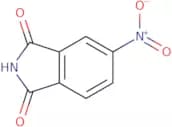
Discontinued product4-Nitrophthalimide
CAS:4-Nitrophthalimide is a nitroimidazole compound that has been shown to be active against bacterial strains belonging to the group P2. It is also soluble in organic solvents such as chloroform, ethanol, and acetone. 4-Nitrophthalimide has been used for experimental solubility data and as a pharmaceutical preparation. The reaction of 4-nitrophthalimide with diazonium salt produces 3-nitrophthalic anhydride, which is then hydrolyzed by hydrochloric acid to form nitrobenzene. This reaction can be monitored using fluorescence resonance spectroscopy.
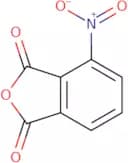
Formula:C8H4N2O4Purity:Min. 95%Color and Shape:PowderMolecular weight:192.13 g/mol3-Nitrophthalic anhydride
CAS:3-Nitrophthalic anhydride is a nucleophilic compound that is activated by the addition of hydrochloric acid and chloride. It reacts with dimethyl formamide to produce nitrobenzene, which can be oxidized to nitrobenzoic acid. 3-Nitrophthalic anhydride has been used as a precursor for pomalidomide, a drug used in the treatment of multiple myeloma and other cancers. In this reaction, n-dimethyl formamide reacts with 3-nitrophthalic anhydride to produce nitromethane, which can then be oxidized to nitrobenzoic acid. Molecular modeling studies have shown that 3-nitrophthalic anhydride binds to DNA through hydrogen bonding interactions and the formation of covalent bonds. The solubility data for 3-nitrophthalic anhydride show that it is soluble in water and organic solvents such as acetone or met
Formula:C8H3NO5Purity:Min. 85%Color and Shape:PowderMolecular weight:193.11 g/molRef: 3D-FN26343
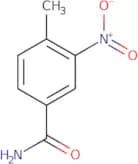
Discontinued product4-Methyl-3-nitrobenzamide
CAS:4-Methyl-3-nitrobenzamide is a nitrile that can be synthesized by the reaction of potassium hydroxide and 3-nitrobenzamide. It has been shown to react with dichloroethane to form 4-methyl-3-nitrobenzoic acid. The optimum temperature for this reaction is 120°C, which leads to a high yield of 4-methyl-3-nitrobenzamide. This product is also available in an isotopic form at high purity.
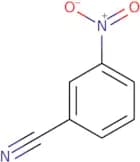
Formula:C8H8N2O3Purity:Min. 95%Color and Shape:PowderMolecular weight:180.16 g/mol3-Nitrobenzonitrile
CAS:3-Nitrobenzonitrile is a chemical compound with molecular formula C6H5NO2. It is used as an intermediate in the synthesis of other organic compounds. 3-Nitrobenzonitrile can be synthesized by reacting 3-nitrotoluene with sodium hydroxide in methanol solution. The reaction products are analyzed using a mass spectrometer, and the structural analysis is performed by using a matrix-assisted laser desorption/ionization time-of-flight mass spectrometry (MALDI TOF MS) technique. This compound can also be obtained from the reaction of nitrous acid with benzaldehyde in presence of a base catalyst. The structure of this molecule was first determined by magnetic resonance spectroscopy (NMR). This synthetic compound can also be identified via ionization techniques such as electron impact (EI) or chemical analyses such as gas chromatography–mass spectrometry (GCMS).
Formula:C7H4N2O2Purity:Min. 95%Color and Shape:PowderMolecular weight:148.12 g/molRef: 3D-FN16368
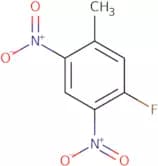
Discontinued product2,4-Dinitro-5-fluorotoluene
CAS:2,4-Dinitro-5-fluorotoluene is a fine chemical that can be used as a versatile building block in the synthesis of complex compounds. It is an intermediate in many reactions involving aliphatic nitro compounds and has been shown to be reactive with aromatic amines. This chemical has been used as a research chemical for the detection of proteins and nucleic acids and is also a good reagent for the synthesis of other chemicals. The compound reacts quickly with acid to produce a highly explosive gas which can be stabilized by reacting it with potassium nitrate or sodium bicarbonate.
Formula:C7H5FN2O4Purity:Min. 95%Color and Shape:PowderMolecular weight:200.12 g/molRef: 3D-FD67959
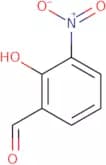
Discontinued product3-Nitrosalicylaldehyde
CAS:3-Nitrosalicylaldehyde is an oxidizing agent that reacts with DNA in vitro to form DNA adducts. 3-Nitrosalicylaldehyde also has antioxidative properties, which can be demonstrated by its ability to inhibit the oxidation of low density lipoprotein (LDL) in vivo. This compound has been shown to activate the metalloproteinase MT2 receptor, which is involved in the regulation of blood pressure and heart function. 3-Nitrosalicylaldehyde is metabolized by hydrolysis and reduction to form a neutral product, which has been shown to have antidiabetic effects on mice.
Formula:C7H5NO4Purity:Min. 95%Color and Shape:PowderMolecular weight:167.12 g/molRef: 3D-FN15275
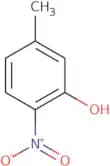
Discontinued product5-Methyl-2-nitrophenol
CAS:5-Methyl-2-nitrophenol is a phytotoxic chemical that is used as a synthetic intermediate in organic chemistry. It has been shown to have a high bioconcentration factor and can be found in wastewater. The major use of 5-methyl-2-nitrophenol is the synthesis of 2,4,6-trinitrophenylhydrazine (TNP) which is used as an analytical reagent for the determination of nitrates. The reaction mechanism of 5-methyl-2-nitrophenol involves intramolecular hydrogen transfer from the methylene group to the nitro group and subsequent elimination of HCl. This reaction product can be found by using analytical methods such as gas chromatography, mass spectrometry, or nuclear magnetic resonance spectroscopy. Functional groups on the reactant include phenols and nitro groups with the following endpoints: hydrochloric acid (HCl), kinetic method, and vapor pressure
Formula:C7H7NO3Purity:Min. 95%Color and Shape:PowderMolecular weight:153.14 g/molRef: 3D-FM70455
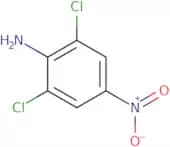
Discontinued product2,6-Dichloro-4-nitroaniline
CAS:2,6-Dichloro-4-nitroaniline is an organic compound that has been shown to have anti-inflammatory properties. It can be used for the treatment of inflammatory skin diseases such as psoriasis and eczema. Short-term exposure to 2,6-dichloro-4-nitroaniline showed no toxic effects in cell culture studies and 2,6-dichloro-4-nitroaniline does not cause damage to skin cells or light exposure. The hydroxyl group on the aromatic ring of this molecule can react with hydrochloric acid to form a reactive intermediate. This intermediate reacts with N2H2 molecules to form a molecule called dinitrochlorobenzene. Dinitrochlorobenzene is a highly toxic substance that will react with nitrogen atoms on the cell wall surface in an acidic environment, forming nitrosamines which are highly carcinogenic compounds.
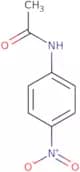
Formula:C6H4Cl2N2O2Purity:Min. 95%Color and Shape:Slightly Yellow PowderMolecular weight:207.01 g/mol4'-Nitroacetanilide
CAS:4'-Nitroacetanilide is an amide that has shown the ability to bind to the active site of a bacterial enzyme. This binding inhibits the enzyme's activity and prevents the conversion of nitrite to nitric oxide. 4'-Nitroacetanilide is stable in aqueous solution, which makes it suitable for intravenous administration. It is also used as a precursor for other substances with antibiotic properties. The molecular weight of 4'-Nitroacetanilide is 298 grams per mole and its chemical formula is C6H4NO2. This compound has been shown to be effective against group P2 enzymes, such as those found in Streptococcus pneumoniae and Haemophilus influenzae.
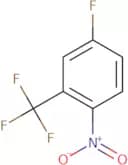
Formula:C8H8N2O3Purity:Min. 95%Molecular weight:180.16 g/mol5-Fluoro-2-nitrobenzotrifluoride
CAS:5-Fluoro-2-nitrobenzotrifluoride is a triamine that stabilizes complex molecules. It has been used in the synthesis of fluorinated compounds and as a nucleophile in organic reactions. The amido group, which is present on 5-fluoro-2-nitrobenzotrifluoride, reacts with electrophilic carbon atoms to form new bonds. This type of reaction is known as an amido substitution. 5-Fluoro-2-nitrobenzotrifluoride is also able to react with sodium nitrate to form a nitro group, which can be used for the synthesis of nitro compounds. As a result, this chemical has been used as a waveguide material in the fabrication of microns and operational amplifiers.
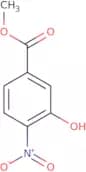
Formula:C7H3F4NO2Purity:Min. 95%Color and Shape:Clear LiquidMolecular weight:209.1 g/molMethyl 3-hydroxy-4-nitrobenzoate
CAS:Methyl 3-hydroxy-4-nitrobenzoate is a surfactant that has been shown to interact with toxins in the environment, such as polycyclic aromatic hydrocarbons. Methyl 3-hydroxy-4-nitrobenzoate interacts with these toxins by forming heterodimers and stabilizing them in solution. This interaction is achieved through hydrophobic interactions between the carboxylate group of methyl 3-hydroxy-4-nitrobenzoate and the other molecule's hydrophobic regions. The thermodynamic parameters for this interaction are determined by titration calorimetry.
Formula:C8H7NO5Purity:Min. 95%Color and Shape:PowderMolecular weight:197.14 g/molRef: 3D-FM71199
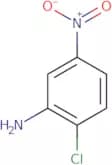
Discontinued product2-Chloro-5-nitroaniline
CAS:2-Chloro-5-nitroaniline (2C5N) is a drug substance that belongs to the group of amines. It is an intermediate that is used in the synthesis of caffeine and other amines. 2C5N has been shown to have genotoxic impurities, which may be due to its reaction with hydrochloric acid and acylation. 2C5N has also been shown to be soluble in water, but not chloroform or ethers.
Formula:C6H5ClN2O2Purity:Min. 95%Color and Shape:PowderMolecular weight:172.57 g/molRef: 3D-FC70430
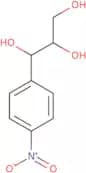
Discontinued product1-(4-Nitrophenyl)glycerol
CAS:1-(4-Nitrophenyl)glycerol has been shown to inhibit the growth of Gram-positive bacteria, including Streptococcus faecalis, and Gram-negative bacteria, including Pseudomonas aeruginosa. It is also used as a sample preparation for antimicrobial resistance testing.
Formula:C9H11NO5Purity:Min. 97 Area-%Color and Shape:Off-White PowderMolecular weight:213.19 g/mol