Nitro
Found 2518 products of "Nitro"
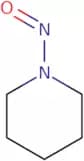
N-Nitrosopiperidine
CAS:N-Nitrosopiperidine is a nitrated aromatic amine that can be found in the environment. It has been shown to induce genotoxic effects and to inhibit liver microsomal enzyme activity. It is also shown to cause DNA damage in hl-60 cells and in the model system. N-Nitrosopiperidine may act by causing an increase in reactive oxygen species (ROS) production, which results in oxidative stress and cellular dysfunction. This compound has been shown to induce congestive heart failure, as well as chronic oral toxicity and maternal toxicity. N-Nitrosopiperidine has also been associated with hepatic tissues changes and fetal bovine abnormalities.
Formula:C5H10N2OPurity:Min. 95%Color and Shape:Yellow Clear LiquidMolecular weight:114.15 g/molRef: 3D-FN26386
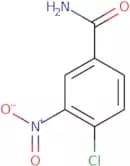
Discontinued product4-Chloro-3-nitrobenzamide
CAS:4-Chloro-3-nitrobenzamide (4CNBA) is a potent inducer of hepatic drug metabolizing enzymes. It reacts with methyl cinnamate to form the 4-chloro-3-nitrobenzamide methyl ester and chloride ions. This reaction is catalyzed by copper, which binds to the 4CNBA molecule. The chloride ion then displaces water from the ester, producing a nitroso intermediate. This intermediate breaks down into an unstable nitrite, which in turn reacts with hydrogen peroxide to form a hydroxylamine intermediate. Hydroxylamine can then react with sulfhydryl groups to produce reactive thiols that are responsible for the induction of detoxification enzymes in the liver.
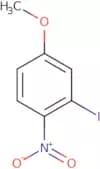
4CNBA has been shown to be toxic at high concentrations and is rapidly detoxified by Phase II enzymes such as glutathione S transferase, UDP glucuronosyltransferase, and N-acetylFormula:C7H5ClN2O3Purity:Min. 95%Color and Shape:PowderMolecular weight:200.58 g/mol4-Nitro-3-iodoanisole
CAS:4-Nitro-3-iodoanisole is a bauerine that is used as a ligand in asymmetric catalysis. It is an atropisomeric compound, meaning it can exist in two different forms. The two forms of 4-nitro-3-iodoanisole are identical except for the orientation of the axial ligands on opposite sides of the molecule. The axial ligands on one form are biphenyl and nitrous oxide, while the axial ligands on the other form are nitrous oxide and biphenyl. 4-Nitro-3-iodoanisole has been used to catalyze reactions such as alkylation and coupling reactions with a variety of substrates, including β-carbolines, phenols, and amines.
Formula:C7H6INO3Purity:Min. 95%Color and Shape:PowderMolecular weight:279.03 g/molRef: 3D-FN67687
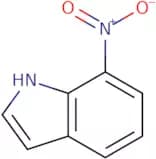
Discontinued product7-Nitroindole
CAS:7-Nitroindole is a hybridization analog of the base cytosine that has been used in biological studies. It has been shown to be active against microglia cells, which are involved in the inflammatory response. 7-Nitroindole's mechanism of action is not well understood; it may react with hydrochloric acid in the stomach to form nitrosamines and chloride ions, or it may react with hydrogen chloride to produce an ethyl ester. It also reacts with ethyl esters in the presence of light to form a photochemical reaction that generates fluorescence. The mechanism is not yet fully understood.
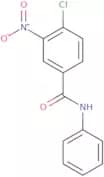
Formula:C8H6N2O2Color and Shape:PowderMolecular weight:162.15 g/mol4-Chloro-3-nitrobenzanilide
CAS:4-Chloro-3-nitrobenzanilide is a versatile building block for the preparation of complex compounds. It is used as a reagent in research and as a speciality chemical for the production of high quality fine chemicals. This compound can be used as a reaction component or scaffold to synthesize other compounds. 4-Chloro-3-nitrobenzanilide is a useful intermediate in organic synthesis because it has many functional groups that are easy to modify, making it easy to synthesize new compounds.
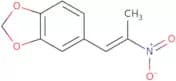
Formula:C13H9ClN2O3Purity:Min. 95%Color and Shape:PowderMolecular weight:276.67 g/mol1-(3,4-Methylenedioxyphenyl) 2-nitropropene
CAS:1-(3,4-Methylenedioxyphenyl) 2-nitropropene (1-MPNP) is a phosphatase inhibitor that is active against gram-negative bacteria by inhibiting enterotoxins and chlamydia. 1-MPNP inhibits the activity of tyrosine phosphatases, which are enzymes that play a major role in bacterial virulence. 1-MPNP competitively inhibits the activity of tyrosine phosphatases and prevents them from catalyzing the hydrolysis of polyphosphate substrates. This inhibition leads to an accumulation of polyphosphates in the bacterial cell membrane, which disrupts its permeability and leads to cell death.
Formula:C10H9NO4Purity:Min. 97.5 Area-%Color and Shape:Yellow PowderMolecular weight:207.18 g/molRef: 3D-FM67977
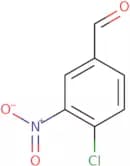
Discontinued product3-Nitro-4-chlorobenzaldehyde
CAS:3-Nitro-4-chlorobenzaldehyde is a copper complex that has been used in the study of molecular interactions. The molecule has been studied by a number of techniques, including binding experiments, vibrational spectroscopy, and light emission. 3-Nitro-4-chlorobenzaldehyde has shown bacteriostatic activity against Escherichia coli and Bacillus subtilis. This compound also appears to have potential as a drug target due to its ability to inhibit the growth of Pseudomonas aeruginosa. 3-Nitro-4-chlorobenzaldehyde may be useful in the treatment of industrial processes involving nitric acid.
Formula:C7H4ClNO3Purity:Min. 95%Color and Shape:White PowderMolecular weight:185.56 g/molRef: 3D-FN53972
Discontinued product2-Bromo-5-nitrobenzoic acid
CAS:2-Bromo-5-nitrobenzoic acid is an amine that has been shown to have a potent inhibitory effect on the enzyme fibrinogen, which is needed for blood clotting. It also inhibits other enzymes in the fibrinogen pathway, including those involved in protein synthesis and cellular metabolism. 2-Bromo-5-nitrobenzoic acid has been shown to inhibit cancer cells by blocking their ability to use amino acids as building blocks for new proteins. This drug may be used as a treatment for cancer and other diseases where protein synthesis is critical.
Formula:C7H4BrNO4Purity:Min. 95%Color and Shape:PowderMolecular weight:246.02 g/molRef: 3D-FB00222
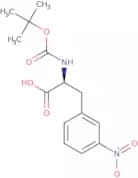
Discontinued productBoc-3-nitro-L-phenylalanine
CAS:Boc-3-nitro-L-phenylalanine is a chemical intermediate that is useful for the synthesis of a wide variety of compounds. It is a versatile building block with many applications in research and industry. Boc-3-nitro-L-phenylalanine has been used as a reaction component in organic synthesis, as well as in the production of pharmaceuticals and other specialized chemicals. This compound can be used as a reagent or starting material for the synthesis of other organic compounds. Boc-3-nitro-L-phenylalanine is an important chemical with high quality, which can be used in the production of many different types of products.
Formula:C14H18N2O6Purity:Min. 98 Area-%Color and Shape:PowderMolecular weight:310.3 g/mol5-Nitroisoquinoline
CAS:5-Nitroisoquinoline is a nitro compound that has been shown to be a potential biomarker for liver disease. 5-Nitroisoquinoline is synthesized from the reaction of hydroxylamine, sodium carbonate, and nitric acid. This chemical can also be found in human liver tissue. The titration calorimetry experiments performed on 5-nitroisoquinoline showed that the compound has a high heat of formation (194.1 kJ/mol) and low enthalpy of formation (-19.6 kJ/mol). Vibrational analysis revealed that there are four nitrogens in the molecule and two nitrogen atoms per molecule. X-ray crystal structures were obtained for 5-nitroisoquinoline with different solvents and hydrogen bonding was observed in all cases. Molecular modeling showed that there are five nitro groups, which would explain the name "5-nitro." The five nitrogen atoms coordinate to form a trigonal bip
Formula:C9H6N2O2Purity:Min. 95%Color and Shape:PowderMolecular weight:174.16 g/molRef: 3D-FN26314
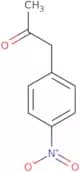
Discontinued product(4-Nitrophenyl)acetone
CAS:4-Nitrophenylacetone is a hypoglycemic agent that is used for the treatment of diabetes mellitus. It has been shown to be effective in vivo and in vitro studies at low concentrations. The mechanism of action is not well understood, but it may have effects on insulin sensitivity and the release of insulin from pancreatic beta cells, as well as an effect on the liver. 4-Nitrophenylacetone has been shown to have organocatalytic properties that allow it to catalyze acylation reactions with acetanilides or amides. This reaction produces iminium ion intermediates that can be hydrolyzed by water to form a variety of products, including carboxylic acids, amides, and nitriles.
Formula:C9H9NO3Purity:Min. 95%Color and Shape:PowderMolecular weight:179.17 g/molEthyl 3-nitrocinnamate
CAS:Ethyl 3-nitrocinnamate is a synthetic compound that belongs to the group of stilbene derivatives. It has been used as an intermediate in the synthesis of other compounds. Ethyl 3-nitrocinnamate is not naturally occurring and can be synthesized by isomerization of cinnamic acid and nitration of ethyl cinnamate. The stereochemical and stereoselective properties of this compound can be utilized for the synthesis of other compounds. Nitrobenzaldehyde reacts with nitrovinyl chloride to form oxetane, which then reacts with acetonitrile to produce ethyl 3-nitrocinnamate.
Formula:C11H11NO4Purity:Min. 95%Color and Shape:PowderMolecular weight:221.21 g/molRef: 3D-FE67963
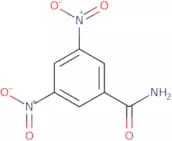
Discontinued product3,5-Dinitrobenzamide
CAS:3,5-Dinitrobenzamide is a sulfa drug that inhibits the growth of bacteria by inhibiting 3-dehydroquinate synthase (EC 4.2.1.23) and 3-dehydroquinate dehydratase (EC 4.2.1.46). The enzyme catalyzes the conversion of 3-dehydroquinic acid to quinic acid, which is an intermediate in the biosynthesis of benzoic acid from glucose. This inhibition occurs because 3,5-dinitrobenzamide forms a glycosidic bond with Cys34 in these enzymes, which prevents their function. This drug has been shown to have significant cytotoxicity against human pathogens and model organisms such as Salmonella typhimurium and Escherichia coli, but not against Saccharomyces cerevisiae or Candida albicans.
Formula:C7H5N3O5Purity:Min. 95%Color and Shape:PowderMolecular weight:211.13 g/mol1-(2,4,6-Trimethylphenyl)-2-nitropropene
CAS:1-(2,4,6-Trimethylphenyl)-2-nitropropene is a high quality chemical intermediate that can be used as a reagent in the synthesis of complex compounds. It has been shown to react with alcohols to form nitroalkenes and with amines to form nitroamines. This chemical also has application as a building block for pharmaceuticals, speciality chemicals, research chemicals, and versatile building blocks for organic synthesis. The compound is available in bulk amounts and can be used as a reaction component in many organic syntheses.
Formula:C12H15NO2Purity:Min. 95%Molecular weight:205.25 g/molRef: 3D-FT65840
Discontinued product2,4-Dinitrophenetole
CAS:2,4-Dinitrophenetole is a nucleophilic compound that reacts with the hydrogen bond of an acid. It is a thermodynamic and kinetic acid which reacts with bile acids in the second order. The rate enhancement of 2,4-dinitrophenetole is due to its uncoupling effect on hepg2 cells. This chemical has been shown to react faster with picric acid than with nitric acid solutions.
Formula:C8H8N2O5Purity:Min. 95%Color and Shape:PowderMolecular weight:212.16 g/mol3-Chloro-4-nitrobenzoic acid
CAS:3-Chloro-4-nitrobenzoic acid (3CNB) is an amine that has been shown to be a 5-HT1A receptor agonist. It has been used in animal models of anxiety, depression and schizophrenia. 3CNB is able to activate the 5-HT1A receptor, which is involved in the regulation of anxiety, mood and other behaviors. The activation energies for the binding of 3CNB to the 5-HT1A receptor are calculated to be 8.3 kcal/mol and 9.2 kcal/mol at pH 7.0 and 10 respectively. A clinical study found that this agent was effective in treating trichomonas vaginalis infections as well as reducing symptoms of irritable bowel syndrome. In vivo studies have revealed that 3CNB is capable of inducing a sustained increase in extracellular serotonin levels in rat brain tissue with a half life of 2 hours. Kinetic studies have also shown that nitro groups enhance
Formula:C7H4ClNO4Purity:Min. 98 Area-%Color and Shape:PowderMolecular weight:201.56 g/molRef: 3D-FC71155
Discontinued product4,6-Diamino-2-nitro-m-xylene
CAS:Please enquire for more information about 4,6-Diamino-2-nitro-m-xylene including the price, delivery time and more detailed product information at the technical inquiry form on this page
Formula:C8H11N3O2·2ClHPurity:Min. 95%Molecular weight:254.10 g/molRef: 3D-FD66782
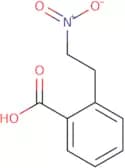
Discontinued product1-(2-Carboxyphenyl)-2-nitroethane
CAS:1-(2-Carboxyphenyl)-2-nitroethane is a versatile building block that is used in the synthesis of complex compounds and research chemicals, as well as in the synthesis of reagents and speciality chemicals. It is used as a reaction component or scaffold for the preparation of high quality products. 1-(2-Carboxyphenyl)-2-nitroethane can be used as an intermediate in organic reactions. This product has CAS No. 115912-92-0.
Formula:C9H9NO4Purity:Min. 95%Color and Shape:White/Off-White SolidMolecular weight:195.17 g/molRef: 3D-FC66733
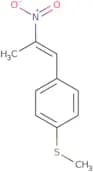
Discontinued product1-(4-(Methylthio)phenyl)-2-nitropropene
CAS:Please enquire for more information about 1-(4-(Methylthio)phenyl)-2-nitropropene including the price, delivery time and more detailed product information at the technical inquiry form on this page
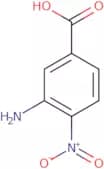
Formula:C10H11NO2SPurity:Min. 95%Color and Shape:PowderMolecular weight:209.27 g/mol3-Amino-4-nitrobenzoic acid
CAS:3-Amino-4-nitrobenzoic acid is a synthetic compound, which has been shown to inhibit the activity of trypanothione reductase. This inhibition of the enzyme causes an increase in the level of intracellular trypanothione, which is then acetylated by ATP sulfurylase and converted to trypanothione. 3-Amino-4-nitrobenzoic acid is also a potent inhibitor of fxa, which is a coagulation factor necessary for blood clotting. The active site of 3-amino-4-nitrobenzoic acid contains two nitroarenes that are responsible for its antithrombotic properties.
Formula:C7H6N2O4Purity:Min. 95%Color and Shape:PowderMolecular weight:182.13 g/molRef: 3D-FA05743
Discontinued product