Nitro
Nitro compounds are organic molecules containing one or more nitro groups (NO2). These compounds are widely used in the synthesis of explosives, pharmaceuticals, and dyes. At CymitQuimica, we offer a wide range of high-quality nitro compounds to support your research and industrial applications, ensuring safe and effective results. Our selection includes a variety of nitro compounds suitable for different chemical syntheses and applications.
Found 2516 products of "Nitro"
Sort by
Purity (%)
0
100
|
0
|
50
|
90
|
95
|
100
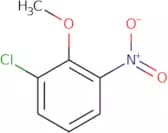
2-Chloro-6-nitroanisole
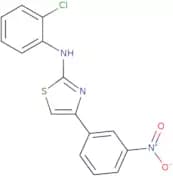
CAS:<p>2-Chloro-6-nitroanisole is a versatile building block that can be used to make a variety of products, including pharmaceuticals, agrochemicals, plastics, and other organic compounds. It can be used as a reagent or research chemical in the synthesis of complex molecules, such as synthetic cannabinoids. 2-Chloro-6-nitroanisole is also useful for making high quality compounds and has been used in the synthesis of a number of pharmaceuticals. This compound is an intermediate that can be used to create scaffolds for drug design.</p>Formula:C7H6ClNO3Purity:Min. 95%Color and Shape:PowderMolecular weight:187.58 g/mol(2-Chlorophenyl)(4-(3-nitrophenyl)(2,5-thiazolyl))amine
CAS:<p>Please enquire for more information about (2-Chlorophenyl)(4-(3-nitrophenyl)(2,5-thiazolyl))amine including the price, delivery time and more detailed product information at the technical inquiry form on this page</p>Purity:Min. 95%3-Methoxy-4-nitrobenzoic acid
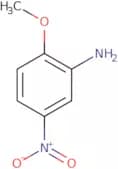
CAS:<p>3-Methoxy-4-nitrobenzoic acid is a potent and selective inhibitor of aromatase that can be used for the treatment of breast cancer. 3-Methoxy-4-nitrobenzoic acid inhibits the activity of serine proteases, which are enzymes important in protein degradation and cellular signaling. This drug has been shown to inhibit the activity of many other types of kinases, and this makes it a good candidate for use as an anti-cancer agent. 3-Methoxy-4-nitrobenzoic acid also has been shown to inhibit the formation and development of brain tumors when administered via whole body or brain uptake techniques. In addition to inhibiting tumor growth, this drug can prevent metastasis by preventing circulating tumor cells from entering new tissues. The inhibition of estrogen synthesis by 3methoxy-4 nitrobenzoic acid leads to breast cancer cell death in vitro and in vivo.</p>Formula:C8H7NO5Purity:Min. 95%Color and Shape:PowderMolecular weight:197.14 g/mol2-Methoxy-5-nitroaniline
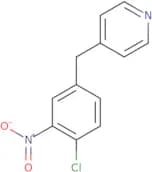
CAS:<p>2-Methoxy-5-nitroaniline is a nitro compound that is cytotoxic at high doses. It is a diazonium salt that can be synthesised from hydrochloric acid and nitrous acid. The toxicity of 2-methoxy-5-nitroaniline has been tested in rats and found to have significant cytotoxicity at doses of 5000 mg/kg, with a LD50 of 2700 mg/kg. The chemical structure of 2-methoxy-5-nitroaniline consists of an amine group, two nitro groups, and two methyl groups. This compound can be synthesized by reacting ammonia with formaldehyde in the presence of nitric acid. 2-Methoxy-5-nitroaniline has shown to inhibit transcription polymerase chain reactions (PCR) in mouse erythrocytes at concentrations as low as 0.1 mM. Dietary</p>Formula:C7H8N2O3Purity:95%NmrColor and Shape:PowderMolecular weight:168.15 g/mol4-(4-Chloro-3-nitrobenzyl)pyridine
CAS:<p>Ai Product Descriptions 50 Creative</p>Formula:C12H9ClN2O2Purity:Min. 95%Color and Shape:PowderMolecular weight:248.66 g/mol1-Methyl-2-nitro-3-((tetrahydrofuran-3-yl)methyl)guanidine
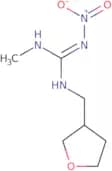
CAS:<p>1-Methyl-2-nitro-3-(tetrahydrofuran-3-yl)methyl)guanidine (1MNTG) is a pesticide that is used to control pests. It has been shown to be highly resistant to degradation by cytochrome P450, which may cause chronic exposure and/or analytical problems. 1MNTG has also been shown to cause genetic damage in bacteria, as well as enzyme activities in the liver and kidneys of rats exposed for short periods of time. 1MNTG has been shown to be an agonist of toll-like receptor 4, which can lead to health effects such as inflammation and have been shown to affect biochemical processes in vitro.</p>Formula:C7H14N4O3Purity:Min. 95%Color and Shape:PowderMolecular weight:202.21 g/mol4-Methoxy-2-nitroacetanilide
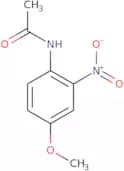
CAS:<p>4-Methoxy-2-nitroacetanilide is a byproduct of the manufacture of 4-methoxyacetanilide, which is used in the production of analgesics. It has been shown to be an environmental pollutant that is toxic to animals and plants. The toxicity of 4-methoxy-2-nitroacetanilide is due to its ability to react with amines and form nitrosamines. The rate of acetylation is determined by the kinetics of the reaction, while substituent effects on the molecule determine its reactivity as an electrophile.</p>Formula:C9H10N2O4Purity:Min. 95%Color and Shape:PowderMolecular weight:210.19 g/mol4-(Acetylamino)-3-nitrobenzoic acid
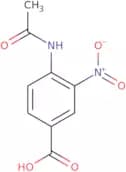
CAS:<p>4-(Acetylamino)-3-nitrobenzoic acid (AANBA) is a molecule that inhibits the growth of Mycobacterium tuberculosis and influenza virus. It has been shown to have tuberculostatic activity and is able to adsorb to the cavity of the enzyme protein, preventing access by other molecules. AANBA also has antiviral properties that may be due to its ability to inhibit viral particles from binding with a cell surface receptor or inhibiting the synthesis of viral proteins. AANBA binds to the chloride ion in order to maintain the negative charge of the molecule, which is crucial for its antiviral activity.</p>Formula:C9H8N2O5Purity:Min. 95%Color and Shape:Slightly Yellow PowderMolecular weight:224.17 g/molL-Glutamic acid gamma-(p-nitroanilide) hydrochloride
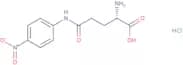
CAS:<p>Please enquire for more information about L-Glutamic acid gamma-(p-nitroanilide) hydrochloride including the price, delivery time and more detailed product information at the technical inquiry form on this page</p>Formula:C11H13N3O5·HClPurity:Min. 95%Color and Shape:SolidMolecular weight:303.7 g/mol2-Bromo-2-nitroethanol
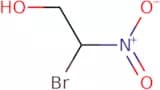
CAS:<p>2-Bromo-2-nitroethanol is a chemical reagent that has the hydroxyl group. It is a site specific biocide, which is used to kill bacteria. 2-Bromo-2-nitroethanol has bactericidal activity against gram negative and gram positive bacteria. It can be used as a preservative in food and pharmaceutical products. This chemical is also effective for killing bacteria in water and wastewater treatment plants. 2-Bromo-2-nitroethanol is applied to surfaces by spraying or dipping, or it can be added to water at concentrations of 0.5 ppm or higher. 2-Bromo-2-nitroethanol can also be used to treat textiles, paper, leather, and rubber products by dipping or spraying these materials with the chemical solution containing 2% concentration of 2-bromo-2 nitroethanol in an aqueous solution of sodium hydroxide (0.5</p>Formula:C2H4BrNO3Purity:Min. 95%Color and Shape:Clear LiquidMolecular weight:169.96 g/mol4-(Bromodifluoromethoxy)Nitrobenzene
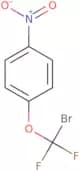
CAS:<p>4-(Bromodifluoromethoxy)Nitrobenzene is a versatile building block that can be used to synthesize a wide variety of organic and inorganic compounds. It is a brominated derivative of nitrobenzene, which is useful for the synthesis of complex compounds and research chemicals. 4-(Bromodifluoromethoxy)Nitrobenzene is also an intermediate for the synthesis of pharmaceuticals and other valuable chemical compounds. This compound has been shown to provide high quality results in reactions with other molecules. 4-(Bromodifluoromethoxy)Nitrobenzene can be used as a scaffold for the construction of more complex molecules.</p>Formula:C7H4BrF2NO3Purity:Min. 95%Color and Shape:LiquidMolecular weight:268.01 g/mol2-Chloro-5-nitrocinnamic acid
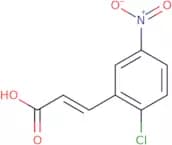
CAS:<p>2-Chloro-5-nitrocinnamic acid is a plant growth regulator that inhibits the root development of plants by interfering with the synthesis of 3-chlorocinnamic acid, which is a precursor in the biosynthesis of lignin. 2-Chloro-5-nitrocinnamic acid inhibits the enzyme cinnamoyl CoA reductase, which catalyzes the first step in this biosynthetic pathway. This compound also has shown to be a strong inhibitor of ester derivatives and pesticides, such as carbaryl and dichlorvos.</p>Formula:C9H6ClNO4Purity:Min. 95%Color and Shape:PowderMolecular weight:227.6 g/mol1-(3,4,5-Trimethoxyphenyl)-2-nitropropene
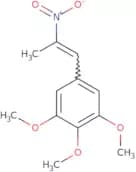
CAS:<p>1-(3,4,5-Trimethoxyphenyl)-2-nitropropene is a high quality chemical that is a reagent and useful intermediate. It has been shown to be a useful scaffold for the synthesis of various compounds and as a building block for the synthesis of speciality chemicals. This compound can be used in research and as a versatile building block in organic chemistry.</p>Formula:C12H15NO5Purity:Min. 97 Area-%Color and Shape:PowderMolecular weight:253.25 g/molc2'-Chloro-2-(4-nitrophenyl)cinnamonitrile
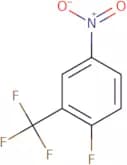
CAS:<p>C2'-Chloro-2-(4-nitrophenyl)cinnamonitrile is a fine chemical that is used as a reagent and building block in the synthesis of other compounds. C2'-Chloro-2-(4-nitrophenyl)cinnamonitrile has been shown to react with various reagents to form useful intermediates and speciality chemicals. It can be used as a versatile building block in the synthesis of complex compounds.</p>Formula:C27H46O2Purity:Min. 95%Color and Shape:PowderMolecular weight:402.65 g/mol2-Fluoro-5-nitrobenzotrifluoride
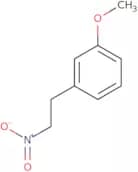
CAS:<p>2-Fluoro-5-nitrobenzotrifluoride is a chiral, fluorinated organic compound that has been shown to be an effective antiviral agent. It is active against Coxsackievirus B3 and other viruses in vitro. The antiviral activity of 2-fluoro-5-nitrobenzotrifluoride appears to be due to its ability to inhibit the virus's ability to bind and enter the host cell. In vivo studies have shown that 2-fluoro-5-nitrobenzotrifluoride can reduce the spread of coxsackievirus B3 in mice. This compound also has been shown to inhibit viral replication by preventing the synthesis of viral protein pai-1, which is necessary for viral assembly and release from infected cells.</p>Formula:C7H3F4NO2Purity:Min. 95%Color and Shape:PowderMolecular weight:209.1 g/mol1-(3-Methoxyphenyl)-2-nitroethane
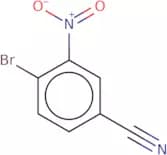
CAS:<p>1-(3-Methoxyphenyl)-2-nitroethane, also known as methyl isothiouronium chloride, is a chloride that can be used as an organocatalyst. It is able to catalyze the coupling of nitroalkanes with nitroalkenes in high yields and chemoselectivity, making it a valuable reagent for organic synthesis. 1-(3-Methoxyphenyl)-2-nitroethane can also be used for the preparation of conjugated dienes via the reaction of nitroalkenes with alkenes in the presence of base. This compound is easily recovered by distillation.</p>Formula:C9H11NO3Purity:Min. 95%Color and Shape:Clear LiquidMolecular weight:181.19 g/mol2-Bromo-5-cyanonitrobenzene
CAS:<p>2-Bromo-5-cyanonitrobenzene is a chemical compound that has been shown to have broad-spectrum activity against drug-resistant bacteria. It is able to kill gram-negative and gram-positive bacteria, including drug-resistant strains. The mechanism of action for 2-bromo-5-cyanonitrobenzene is not well understood but it has been observed that the molecule undergoes an oxidative cyclization reaction in the presence of chloride ions or hydroxides. This process leads to the formation of a nitrosobenzene metabolite which reacts with DNA to inhibit protein synthesis and cause cell death. 2-Bromo-5-cyanonitrobenzene has also been shown to be potent against a wide range of different types of bacteria, including those most commonly associated with skin infections, respiratory tract infections, and urinary tract infections.</p>Formula:C7H3BrN2O2Purity:Min. 95%Color and Shape:PowderMolecular weight:227.02 g/mol2,4-Dichloro-3-nitrophenol
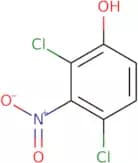
CAS:<p>2,4-Dichloro-3-nitrophenol is a synthetic chemical that is used as an intermediate in the synthesis of chloroamines. It is a derivative of phenol and has a chlorine atom on the 2 position. The alcohol group on the 4 position and the chlorine atom on the 3 position are both substituted with chlorine atoms. 2,4-Dichloro-3-nitrophenol has been shown to be effective for the synthesis of chloroamines resistant to nitro groups. This chemical has been shown to be resistant to amines and thus can be used for immobilization purposes. Furthermore, it can be used as an intermediate for chemists who work with organic chemistry due to its ability to undergo reactions with alcohols and phenols.</p>Formula:C6H3Cl2NO3Purity:Min. 95%Color and Shape:White Clear LiquidMolecular weight:208 g/mol3,4-Dimethoxy-6-nitrobenzaldehyde
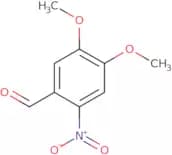
CAS:<p>3,4-Dimethoxy-6-nitrobenzaldehyde is a chemical compound that has been synthesized by the reaction of 3,4-dimethoxybenzaldehyde and nitric acid. The asymmetric synthesis of 3,4-Dimethoxy-6-nitrobenzaldehyde starts with the preparation of the corresponding ester, which is then reacted with nitric acid to produce the desired product. The chemical structure of 3,4-Dimethoxy-6-nitrobenzaldehyde consists of three aromatic rings: a benzene ring fused to a phenyl ring and a pyridine ring. This chemical can be used as an intermediate in the synthesis of epidermal growth factor (EGF). It also has been shown to bind to toll like receptor 4 (TLR4), which activates NFκB signaling pathway and induces apoptosis in monocytes.</p>Formula:C9H9NO5Purity:Min. 95 Area-%Color and Shape:White Yellow PowderMolecular weight:211.17 g/mol2,5-Dimethylnitrobenzene
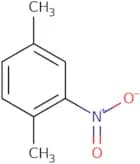
CAS:<p>2,5-Dimethylnitrobenzene is a glyoxal compound that can be used as an antifreeze or as a solvent. 2,5-Dimethylnitrobenzene is also a byproduct of the reaction between benzyl esters and deuterium isotope. The reactivity of 2,5-dimethylnitrobenzene has been studied in detail using techniques such as anhydrous sodium and fatty acid to activate it. It has also been shown to produce nitrous oxide when reacted with nitric acid in deionized water. The effects of the deuterium isotope have been studied on the reaction rate of 2,5-dimethylnitrobenzene with various chemicals.</p>Formula:C8H9NO2Purity:Min. 95%Molecular weight:151.16 g/mol