Nitro
Nitro compounds are organic molecules containing one or more nitro groups (NO2). These compounds are widely used in the synthesis of explosives, pharmaceuticals, and dyes. At CymitQuimica, we offer a wide range of high-quality nitro compounds to support your research and industrial applications, ensuring safe and effective results. Our selection includes a variety of nitro compounds suitable for different chemical syntheses and applications.
Found 2516 products of "Nitro"
Sort by
Purity (%)
0
100
|
0
|
50
|
90
|
95
|
100
3-(4-Nitrophenyl)propanoic acid - technical
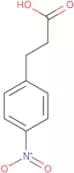
CAS:<p>3-(4-Nitrophenyl)propanoic acid is an inhibitor of aminopeptidases. Amino acid catabolism, in particular the cleavage of peptides by proteolytic enzymes, is a central process in cellular metabolism. Amino acid catabolism is regulated by a number of different enzymes, including aminopeptidases. 3-(4-Nitrophenyl)propanoic acid inhibits the activity of these enzymes and thereby prevents the degradation of amino acids. This product has been shown to inhibit aminopeptidase A with an IC50 value of about 0.5 mM and aminopeptidase B with an IC50 value of about 1 mM. 3-(4-Nitrophenyl)propanoic acid also has anti-inflammatory properties that may be due to its inhibition of prostaglandin synthesis.</p>Formula:C9H9NO4Purity:Min. 90 Area-%Color and Shape:PowderMolecular weight:195.17 g/mol2,6-Dinitrobenzene-1,4-dimethanol
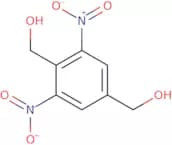
CAS:<p>2,6-Dinitrobenzene-1,4-dimethanol is a developer that has been shown to have a sensitivity of 0.5 mg/ml and a molecular weight of 235.3 g/mol. It is also an amplified developer that has been shown to reduce the weight of polymers by up to 20%. This molecule can be used for the production of polymers with functional moieties and monomers with chemically reactive groups. 2,6-Dinitrobenzene-1,4-dimethanol is soluble in organic solvents and can be used as a monomer in polymerization reactions.</p>Formula:C8H8N2O6Purity:Min. 95%Color and Shape:PowderMolecular weight:228.16 g/mol2-Nitro-4-tert-butylphenol
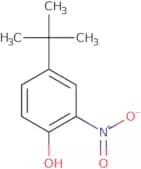
CAS:<p>2-Nitro-4-tert-butylphenol is a phenolic antioxidant that has been used as a substitute for 2,6-di-tert-butylphenol (BHT) in cellulose triacetate. It also has been used in the production of 16-membered macrolides and macrocyclization reactions. 2NBP has been shown to be a potent inhibitor of ionophore transport across membranes, with the ability to inhibit membrane protein function and affect macrocyclization. It is also able to form mesoporous materials with diameters in the range of 10 nm to 100 nm. Nitroarenes are good candidates for molecular size control because they can be easily synthesized by addition reactions, which makes them ideal for use in organic chemistry.</p>Formula:C10H13NO3Purity:Min. 95%Color and Shape:PowderMolecular weight:195.22 g/mol4'-Hydroxy-3'-nitroacetophenone
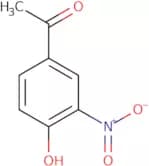
CAS:<p>4'-Hydroxy-3'-nitroacetophenone is a synthetic compound that has been used as an xanthine oxidase inhibitor. It has been shown to reversibly inhibit xanthine oxidase and prevent the accumulation of toxic metabolites that are produced by this enzyme. 4'-Hydroxy-3'-nitroacetophenone also inhibits the activities of other enzymes, such as covalent adducts with protein molecules and transfer reactions. The molecular modeling study of this compound showed that it binds to the active site of xanthine oxidase, forming a covalent adduct between the reactive oxygen species (ROS) and the phenolic OH group on the inhibitor molecule. 4'-Hydroxy-3'-nitroacetophenone was found to be safe in clinical studies, with reversible covalent binding and no inhibition of protein synthesis or cell growth at therapeutic concentrations.</p>Formula:C8H7NO4Purity:Min. 95%Color and Shape:PowderMolecular weight:181.15 g/molN-Nitrosoethylmethylamine
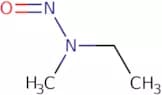
CAS:<p>N-Nitrosoethylmethylamine (NMMA) is a nitrosamine that can be found in water vapor. It has been shown to cause cell lysis and has been detected by LC-MS/MS using an in vitro assay. NMMA is readily soluble in water, making it a suitable candidate for wastewater treatment. This molecule is not cytotoxic or mutagenic but does have carcinogenic potential. NMMA also exhibits matrix effects that are dependent on the type of solvent used for extraction, as well as fluorescence spectrometry results. It was found to be a potent inducer of enzymes such as beta-lactamase, DNA gyrase, and topoisomerase IV, which may be useful for studying gene expression. Dispersive solid phase extraction can be used to extract NMMA from water sources such as soil and drinking water samples.</p>Formula:C3H8N2OPurity:Min. 95%Color and Shape:Clear LiquidMolecular weight:88.11 g/mol2-Iodo-4-nitrotoluene
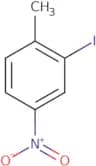
CAS:<p>2-Iodo-4-nitrotoluene is an analytical reagent that is used in chromatographic methods for the separation of copper complexes. It reacts with copper to form a copper complex, which can be detected by UV spectroscopy. 2-Iodo-4-nitrotoluene has been used as a reagent for the detection of antimalarial activity and also as a reagent for determining the presence of amines. The technique involves reacting 2-iodo-4-nitrotoluene with ammonia or an amine, forming a nitrosoamine that can be detected by nmr spectra. This chemical is reusable and yields high purity products, making it an ideal choice for techniques involving solvents.</p>Formula:C7H6INO2Purity:Min. 95%Color and Shape:PowderMolecular weight:263.03 g/molN-Nitroso-N-phenylhydroxylamine aluminium
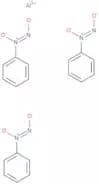
CAS:<p>N-Nitroso-N-phenylhydroxylamine aluminium (NNPA) is a nitrated organic compound that belongs to the thioxanthone family. It is a colorless, oily liquid that has a strong odor of hydrochloric acid. NNPA is used in the production of polyester resins and coatings, as well as in the manufacture of methacrylate polymers. The reaction system for this compound consists of aluminum chloride and calcium carbonate. This substance can be prepared by reacting trimethylolpropane with methacrylates and magnesium in an organic solvent such as isopropyl alcohol or acetone. NNPA can also be synthesized by reacting zinc powder with ammonium bicarbonate, followed by carbamoylation with an organic amine such as isopropylcarbamate.</p>Formula:C18H15AlN6O6Purity:Min. 95%Color and Shape:White PowderMolecular weight:438.33 g/mol2-(4-Chloro-3-nitrobenzoyl)benzoic acid
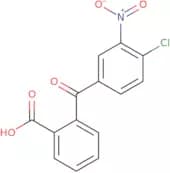
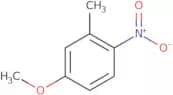
CAS:<p>2-(4-Chloro-3-nitrobenzoyl)benzoic acid is a high quality, reagent, and complex compound that is useful as an intermediate. It has the CAS number of 85-54-1 and is classified as a fine chemical. This compound can be used as a building block for speciality chemicals or research chemicals. It is also a versatile building block for reactions and has many applications in synthetic chemistry.</p>Formula:C14H8ClNO5Purity:Min. 95%Color and Shape:PowderMolecular weight:305.67 g/mol3-Methyl-4-nitroanisole
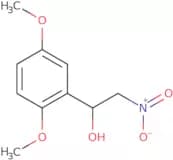
CAS:<p>3-Methyl-4-nitroanisole is a chemical compound used in the preparation of other compounds. It is obtained by reacting nitromethane with anisole in the presence of hydrochloric acid and a catalyst such as zinc chloride or copper chloride. It can be used to make melatonin, which is a hormone that regulates sleep cycles and seasonal changes in animals. 3-Methyl-4-nitroanisole can also be used to prepare nitrophenol, which is a precursor in the production of nylon. The luminescent properties of 3-methyl-4-nitroanisole are useful for analytical techniques such as UV spectroscopy, which can detect concentrations of this chemical at less than 1 ppm.</p>Formula:C8H9NO3Purity:Min. 95%Color and Shape:PowderMolecular weight:167.16 g/mol1-(2,5-Dimethoxyphenyl)-2-nitroethanol
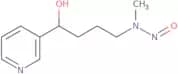
CAS:<p>1-(2,5-Dimethoxyphenyl)-2-nitroethanol is a chiral, asymmetric catalyst that has been shown to be effective in the enantioselective reduction of ketones. This process is important because it allows for the synthesis of chiral amino alcohols, which are then used in a variety of chemical reactions. The reaction can also be carried out with methyl amine as an amine source. 1-(2,5-Dimethoxyphenyl)-2-nitroethanol is an example of a catalyst that participates in catalysis through the lone pair on oxygen and nitrogen atoms.</p>Formula:C10H13NO5Purity:Min. 95%Color and Shape:White PowderMolecular weight:227.21 g/mol4-(Methylnitrosamino)-1-(3-pyridyl)-1-butanol
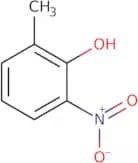
CAS:<p>4-(Methylnitrosamino)-1-(3-pyridyl)-1-butanol (NNAL) is a metabolite of nicotine that has been shown to be carcinogenic in vivo. It binds to DNA, forming adducts with guanine, and can cause mutations and chromosomal aberrations. 4-(Methylnitrosamino)-1-(3-pyridyl)-1-butanol is excreted in urine as a glucuronide conjugate. Its potential use as a biomarker for tobacco smoking has been demonstrated by the observation of increased levels following exposure to cigarette smoke. The urinary concentration of 4-(methylnitrosamino)-1-(3-pyridyl)-1-butanol has been correlated with the risk for lung cancer in humans, and it may be useful as an analytical method for determining tobacco consumption.</p>Formula:C10H15N3O2Purity:Min. 95%Color and Shape:PowderMolecular weight:209.25 g/mol2-Methyl-6-nitrophenol
CAS:<p>2-Methyl-6-nitrophenol (2MP) is a nitro compound that has been shown to have an inhibitory effect on the oxidation of sodium nitrate by sodium chloride. It also inhibits the photooxidation of biomimetic systems. 2MP is a chemical ionization reagent that can be used as a molecular descriptor in environmental chemistry studies. The regioselectivity of 2MP was studied using gas chromatography and mass spectrometry. The molecular descriptors were determined using electron ionization and chemical ionization, which were found to be similar.</p>Formula:C7H7NO3Purity:Min. 95%Color and Shape:Off-White PowderMolecular weight:153.14 g/mol1-(4-Bromophenyl)-2-nitropropene
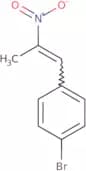
CAS:<p>1-(4-Bromophenyl)-2-nitropropene is a synthetic molecule that undergoes an efficient cycloaddition reaction with aldehydes. This reaction is used to synthesize 1,3-dienes and alpha,beta-unsaturated carbonyl compounds. When the substrate is an aldehyde, the final product is a 1,3-diene. When the substrate is an alpha,beta-unsaturated carbonyl compound, the final product is an alpha,beta-unsaturated ketone.</p>Formula:C9H8BrNO2Purity:Min. 95%Color and Shape:PowderMolecular weight:242.07 g/mol2-Acetamido-5-nitrobenzoic acid methyl ester
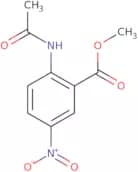
CAS:<p>2-Acetamido-5-nitrobenzoic acid methyl ester is an organic molecule that has the chemical formula C7H6N2O4. This compound belongs to a class of compounds called diazo compounds, which are characterized by a nitrogen atom with two bonds to carbon atoms and one bond to oxygen. 2-Acetamido-5-nitrobenzoic acid methyl ester is soluble in water and methanol. It has been shown to be chiral and exhibits optical activity. The experimental results show that the compound can exist in two different forms or conformations, which are distinguished by their x-ray diffraction patterns. These conformers have been identified as (1) the protonated form and (2) the torsion form. The protonated conformer has a molecular structure that contains a benzene ring with a hydrogen atom attached to it, while the torsion conformer does not contain this hydrogen atom</p>Formula:C10H10N2O5Purity:Min. 95%Color and Shape:PowderMolecular weight:238.2 g/mol3-Nitroacetanilide
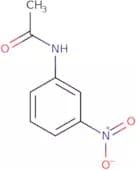
CAS:<p>3-Nitroacetanilide is a molecule that is found in the testes. It is a structural analog of acetanilide and has been shown to have similar biological function as acetanilide in inhibiting prostaglandin synthesis. 3-Nitroacetanilide has been shown to inhibit the production of prostaglandin E2 by inhibiting cyclooxygenase (COX) enzyme activity.</p>Formula:C8H8N2O3Purity:Min. 95%Color and Shape:Off-White PowderMolecular weight:180.16 g/mol4-Chloro-3,5-dinitrobenzoic acid
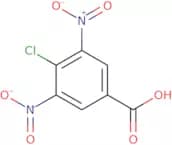
CAS:<p>4-Chloro-3,5-dinitrobenzoic acid is a redox potential chemical that has been shown to be reactive in the presence of nucleophiles. The toxicological studies on this chemical have focused on its hemolytic activity and conformational properties. 4-Chloro-3,5-dinitrobenzoic acid is a molecule with neutral ph and can react with lysine residues in proteins, which may lead to the release of caproic acid and nitrite ions. This chemical also has protease activity and can undergo transfer reactions with other molecules.</p>Formula:C7H3ClN2O6Purity:Min. 90%Color and Shape:PowderMolecular weight:246.56 g/molMethyl 2-methyl-3-nitrobenzoate
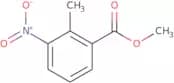
CAS:<p>Methyl 2-methyl-3-nitrobenzoate is a synthetic drug that has potent antitumor activity and inhibits tumor growth in a variety of animal models. It acts by inhibiting protein synthesis and inducing apoptosis, as well as by inhibiting the production of TNF-α. Methyl 2-methyl-3-nitrobenzoate is an alkylating agent that reacts with DNA, RNA, and other cell components to form crosslinks between them. This prevents the cells from dividing or repairing themselves. The inhibition of protein synthesis may be due to methyl 2-methyl-3-nitrobenzoate's ability to react with amide groups on proteins.</p>Formula:C9H9NO4Purity:Min. 95%Color and Shape:PowderMolecular weight:195.17 g/mol(S)-(+)-N-(3,5-Dinitrobenzoyl)-α-phenylglycine
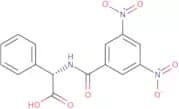
CAS:<p>(S)-(+)-N-(3,5-Dinitrobenzoyl)-alpha-phenylglycine is a chiral compound that is made up of two enantiomers. It has been shown to be a potent anthelmintic drug, but it is not currently used clinically due to its high toxicity. This compound destroys the parasite's gut lining by reacting with sulfoxide and capillaries in the intestine. The sulfoxide reacts with the pyrrole to form a sulfoxonium ion, which reacts with amino acid residues in the parasite's cell membrane to form a covalent bond. This reaction disrupts the integrity of the parasite's cell membrane and leads to cell death.</p>Formula:C15H11N3O7Purity:Min. 95%Color and Shape:White PowderMolecular weight:345.26 g/mol3'-Fluoro-2'-hydroxy-β-methyl-β-nitrostyrene
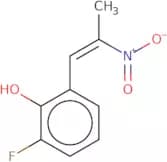
CAS:<p>3'-Fluoro-2'-hydroxy-beta-methyl-beta-nitrostyrene is a fine chemical with a CAS No. 1017060-19-3. It is an intermediate that can be used in the synthesis of complex compounds and research chemicals. This product also has high purity and quality, making it a versatile building block for speciality chemicals. 3'-Fluoro-2'-hydroxy-beta-methyl-beta-nitrostyrene is useful as a reaction component in the synthesis of many other chemical compounds.</p>Formula:C9H8FNO3Purity:Min. 95%Color and Shape:PowderMolecular weight:197.16 g/mol2-Methoxy-5-nitropyridine
CAS:<p>2-Methoxy-5-nitropyridine is an experimental model for the study of nucleophilic substitution reactions. It has been shown to catalyze a variety of nucleophilic substitutions, such as the reaction between dimethylformamide and methoxide. The uptake of 2-methoxy-5-nitropyridine in human cells has been studied using the mitochondrial cytochrome P450 (mt2) receptors, where it has been found that this compound binds to mt2 receptors with high affinity. The optical properties of 2-methoxy-5-nitropyridine have been determined by spectroscopic analysis and found to be similar to those of nitro compounds. Toxicity studies have also demonstrated that 2-methoxy-5-nitropyridine can cause liver damage at high doses, but there is no evidence that it causes cancer or causes reproductive toxicity.</p>Formula:C6H6N2O3Purity:Min. 95%Color and Shape:PowderMolecular weight:154.12 g/mol