Nitro
Nitro compounds are organic molecules containing one or more nitro groups (NO2). These compounds are widely used in the synthesis of explosives, pharmaceuticals, and dyes. At CymitQuimica, we offer a wide range of high-quality nitro compounds to support your research and industrial applications, ensuring safe and effective results. Our selection includes a variety of nitro compounds suitable for different chemical syntheses and applications.
Found 2516 products of "Nitro"
Sort by
Purity (%)
0
100
|
0
|
50
|
90
|
95
|
100
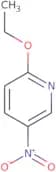
2-Ethoxy-5-nitropyridine
CAS:<p>2-Ethoxy-5-nitropyridine is a potassium salt of 2-ethoxy-5-nitropyridine. It has been used as a reagent in the synthesis of sulfonates, pyridines, and phenols. The nitrogen atom in this molecule can be oxidized to nitro group. This compound also reacts with anilines to form 2-chloro-5-nitropyridine and 2-hydroxy-5-nitropyridine. In addition, it can react with halogen to form substituted anilines or chloropyridines. 2-Ethoxy-5-nitropyridine is a nucleophile that can be used for the preparation of nucleophiles for biomolecular chemistry studies.</p>Formula:C7H8N2O3Purity:Min. 95%Color and Shape:PowderMolecular weight:168.15 g/mol5-Methyl-2-nitrobenzoic acid
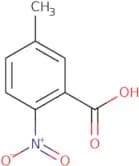
CAS:<p>5-Methyl-2-nitrobenzoic acid is a nitro compound that has been shown to have potent cytotoxicity in vivo. 5-Methyl-2-nitrobenzoic acid inhibits the proliferation of cervical cancer cells in vitro, and induces apoptosis. The functional groups present on this molecule are nitro and methyl. The linear model used to describe the structure of 5-methyl-2-nitrobenzoic acid is an electron withdrawing group, which is why it has such potent cytotoxic effects. It also shows optical properties such as vibrational spectroscopy, which can be used to identify this molecule</p>Formula:C8H7NO4Purity:Min. 95%Color and Shape:PowderMolecular weight:181.15 g/mol4-Bromo-2-fluoro-1-nitrobenzene
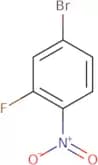
CAS:<p>4-Bromo-2-fluoro-1-nitrobenzene is a molecule that has anticancer activity. It inhibits cancer cells, but does not affect normal cells. The mechanism of action of 4-bromo-2-fluoro-1-nitrobenzene is not yet known. However, it may be due to its ability to react with the prenyl group in the cell membrane, which is important for cell growth and division. The human liver metabolizes 4-bromo-2-fluoro-1-nitrobenzene by kinetic and thermodynamic properties. This drug also has pharmacokinetic properties and can be detected in the bloodstream, urine, and feces for up to two weeks after administration. Fatty acid metabolism can cause drug reactions when taken with 4bromo2furo1nitrobenzene. Protein–protein interactions can also lead to side effects when taking this drug, such as enzyme inhibition</p>Formula:C6H3BrFNO2Purity:Min. 95%Color and Shape:PowderMolecular weight:220 g/mol4-Nitro-L-phenylalanine methyl ester hydrochloride
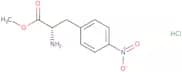
CAS:<p>4-Nitro-L-phenylalanine methyl ester hydrochloride is a 4-nitrophenyl derivative of L-phenylalanine. It is a useful building block, reagent, or scaffold in organic synthesis. This compound finds use as a precursor to other derivatives and it has been used in the preparation of complex compounds. 4-Nitro-L-phenylalanine methyl ester hydrochloride is also used as a reaction component for the synthesis of different organic compounds and as a useful intermediate.</p>Formula:C10H13N2O4ClPurity:Min. 98 Area-%Color and Shape:White PowderMolecular weight:260.67 g/molL-Alanine 4-nitroanilide hydrochloride
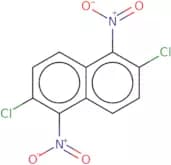
CAS:<p>L-alanine 4-nitroanilide hydrochloride (H-Ala-pNAHCl) functions as a substrate for L-alanine aminopeptidase, an enzyme found in bacterial cell walls that catalyzes the cleavage of L-alanine from peptides. Notably, significant activity of L-alanine aminopeptidase is specific to gram-negative microbes. Thus, the utilization of H-Ala-pNAHCl can provide evidence for distinguishing between gram-positive and gram-negative organisms. When acted upon by L-alanine aminopeptide, it undergoes cleavage into L-alanine and 4-nitroanine, with the latter compound causing bacterial suspensions to exhibit a yellow coloration.</p>Formula:C9H11N3O3•HClPurity:Min. 95%Color and Shape:PowderMolecular weight:245.66 g/mol2,6-Dichloro-1,5-dinitronaphthalene
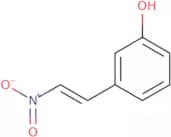
CAS:<p>2,6-Dichloro-1,5-dinitronaphthalene is an organic compound that is used as a reagent for the synthesis of other compounds. It can also be used in research for the synthesis of 2,6-dichloro-1,5-dinitronaphthalene derivatives. The CAS number for this compound is 320600-07-5. This compound is a versatile building block and has many uses as a fine chemical.</p>Formula:C10H4Cl2N2O4Purity:Min. 95%Color and Shape:PowderMolecular weight:287.06 g/mol1-(3-Hydroxyphenyl)-2-nitroethene
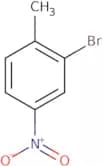
CAS:<p>1-(3-Hydroxyphenyl)-2-nitroethene is an organocatalytic chiral catalyst that has been shown to catalyze the asymmetric synthesis of a variety of organic compounds. The synthesis proceeds in two sequential steps: first, the enantioselective addition of nitroethane to a chiral thiourea followed by lactonization with quinine. This is an example of an asymmetric catalytic process.</p>Formula:C8H7NO3Purity:Min. 98 Area-%Color and Shape:PowderMolecular weight:165.15 g/mol2-Bromo-4-nitrotoluene
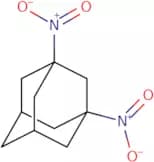
CAS:<p>2-Bromo-4-nitrotoluene (2BNT) is a mononitro substituted aromatic compound and a potent inhibitor of protein synthesis. It has been shown to have antimalarial activity, but it is not known to what extent the inhibition of protein synthesis contributes to its anti-malarial activity. 2-Bromo-4-nitrotoluene is also used in the preparation of imatinib, an anticancer drug that inhibits the growth of certain types of cancer cells. It can also be used as an inhibitor in vibrational spectroscopy.</p>Formula:C7H6BrNO2Purity:Min. 97.5%Color and Shape:PowderMolecular weight:216.03 g/mol1,3-Dinitroadamantane
CAS:<p>1,3-Dinitroadamantane is a reactive compound that is used in the synthesis of 1-nitropropane. It is also used as a catalyst for the conversion of phosphoribosyl pyrophosphate to adenosine monophosphate. 1,3-Dinitroadamantane can be hydrolyzed by carbon tetrachloride and acyclovir to form guanosine and leishmania. This compound has also been shown to cause regression of visceral leishmaniasis in mice. The mechanism of action for this compound is not yet known but it may involve the conversion of purines to pyrimidines or inhibition of DNA synthesis.</p>Formula:C10H14N2O4Purity:Min. 95%Molecular weight:226.23 g/mol2-Chloro-3-nitrobenzonitrile
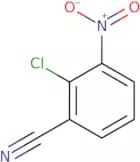
CAS:<p>2-Chloro-3-nitrobenzonitrile is a high quality, reagent, and complex compound that is useful as an intermediate for the synthesis of fine chemicals. It has CAS No. 34662-24-3 and can be obtained from chemical suppliers worldwide. The compound is also useful as a building block for the synthesis of pharmaceuticals and other speciality chemicals. 2-Chloro-3-nitrobenzonitrile is a versatile building block that can be used in organic reactions to produce research chemicals such as derivatives of indole or phenol compounds.</p>Formula:C7H3ClN2O2Purity:Min. 95%Color and Shape:PowderMolecular weight:182.56 g/moltrans-2,5-Dimethoxy-4'-nitrostilbene
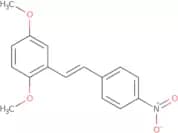
CAS:<p>Trans-2,5-dimethoxy-4'-nitrostilbene is a molecule that belongs to the class of polycyclic aromatic compounds. It is used as a versatile building block in organic synthesis, and is also an intermediate for the production of other compounds. Trans-2,5-dimethoxy-4'-nitrostilbene has been shown to be effective in the preparation of various pharmaceuticals such as diazepam and chloramphenicol. It is also used in research chemicals and speciality chemicals. The structure of trans-2,5-dimethoxy-4'-nitrostilbene can be described as a bicyclic compound with two phenyl rings joined by an oxygen bridge. Trans-2,5-dimethoxy-4'-nitrostilbene has CAS No. 552938 4 and molecular weight of 268.81 g/mol.</p>Formula:C16H15NO4Purity:Min. 95%Color and Shape:PowderMolecular weight:285.29 g/mol3-Hydroxy-4-methoxy-2-nitrobenzaldehyde
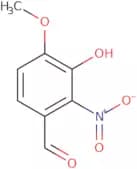
CAS:<p>3-Hydroxy-4-methoxy-2-nitrobenzaldehyde is a ternary complex that has been adsorbed onto the surface of an ion exchange resin. The adsorption process occurs through the formation of hydrogen bonds between the hydroxyl groups on the resin and the hydroxyl groups on the molecule. This complex is also soluble in chloroform, which may be due to its ability to form hydrogen bonds with itself and other molecules. The 3-hydroxy group on this molecule has been shown to react reductively with nitrophenol, forming a nitroso derivative. 3-Hydroxy-4-methoxy-2-nitrobenzaldehyde has been used as a template for the microbiological assay of azides and quinones.</p>Formula:C8H7NO5Purity:Min. 95%Molecular weight:197.14 g/mol4-isoPropylphenylnitroethene
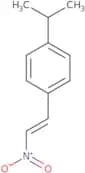
CAS:<p>4-IsoPropylphenylnitroethene is a fine chemical that is used as a versatile building block in the synthesis of complex compounds. 4-IsoPropylphenylnitroethene is an intermediate that can be used to synthesize other chemicals, such as research chemicals and reaction components. It can also be used as a reagent or speciality chemical. This compound has high quality, making it useful for research purposes.</p>Formula:C11H13NO2Purity:Min. 95%Molecular weight:191.23 g/mol7-Nitroindole-2-carboxylic acid
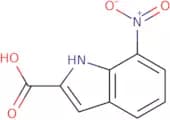
CAS:<p>7-Nitroindole-2-carboxylic acid is a molecule that has been shown to inhibit the activity of cytidine deaminase, an enzyme involved in the synthesis of DNA. This drug also inhibits the replication of dna and can be used for the treatment of cancer. 7-Nitroindole-2-carboxylic acid binds to basic proteins and has a helical structure. The affinity constants for this compound have not been reported, but it is thought that hydrogen bonding interactions are involved in its binding.</p>Formula:C9H6N2O4Purity:Min. 95%Color and Shape:PowderMolecular weight:206.16 g/mol4'-Benzyloxy-3'-nitroacetophenone
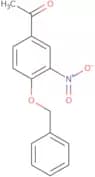
CAS:<p>4'-Benzyloxy-3'-nitroacetophenone is a nitro-substituted aromatic compound that has been studied as an inhibitor of xanthine oxidase. It is also known to inhibit cytochrome P450 and nitric oxide synthase. The molecular modeling study showed that 4'-benzyloxy-3'-nitroacetophenone binds to the active site of xanthine oxidase and blocks the binding site for xanthine, which stops the conversion of xanthine to uric acid. This inhibition leads to a decrease in urate production, which can help prevent gout attacks.</p>Formula:C15H13NO4Purity:Min. 95%Molecular weight:271.27 g/mol2-Chloro-N-(2-nitrophenyl)acetamide
CAS:<p>2-Chloro-N-(2-nitrophenyl)acetamide is an antimicrobial agent that is a ligand for thionyl chloride. It has efficient methods of production and can be used as a bioactive molecule in the synthesis of aminosulfonyl chlorides, amide chlorides, or transfer chlorides. This compound reacts with gram-negative bacteria by hydrolyzing chloride ions to produce nitrosyl chloride and releasing hydrogen gas. The reaction time and functional groups are determined by the parameters chosen for the reaction. 2-Chloro-N-(2-nitrophenyl)acetamide has luminescence properties that can be exploited to detect the presence of chloride ions at low concentrations.</p>Formula:C8H7ClN2O3Purity:Min. 95%Molecular weight:214.61 g/mol4'-Isopropyl-β-methyl-β-nitrostyrene
CAS:<p>4'-Isopropyl-beta-methyl-beta-nitrostyrene is a versatile building block that can be used in the synthesis of complex compounds. It has been used as a reagent or speciality chemical in research and development, and as an intermediate for the synthesis of high quality, useful scaffolds. It is also a useful building block for the preparation of high quality, useful compounds.</p>Formula:C12H15NO2Purity:Min. 95%Color and Shape:Clear LiquidMolecular weight:205.25 g/mol5-Chloro-2-methoxy-4-methylnitrobenzene
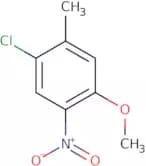
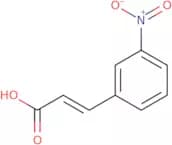
CAS:<p>5-Chloro-2-methoxy-4-methylnitrobenzene is a high quality chemical that can be used as a research chemical, reagent, or a useful scaffold. It is also an intermediate in the synthesis of organic compounds. 5-Chloro-2-methoxy-4-methylnitrobenzene is a versatile building block for the synthesis of other chemicals and has many uses in the pharmaceutical industry. The CAS number for this chemical is 101080-03-9.</p>Formula:C8H8ClNO3Purity:Min. 95%Color and Shape:PowderMolecular weight:201.61 g/moltrans-3-Nitrocinnamic acid
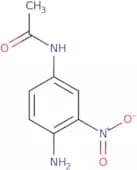
CAS:<p>Trans-3-Nitrocinnamic acid is a white solid that can be obtained by the nitration of cinnamic acid. Trans-3-Nitrocinnamic acid is an isoenzyme as it has different chemical properties than cis-3-nitrocinnamic acid. The intermolecular hydrogen bonding and vibrational frequencies are different in trans-3-nitrocinnamic acid, which causes the dipole to change and increases the solubility in water. The genotoxic activity of trans-3-nitrocinnamic acid was evaluated using the Ames test, which showed that it is not mutagenic. However, there were some genotoxic effects observed in rats after applying trans-3-nitrocinnamic acid on skin.</p>Formula:C9H7NO4Purity:Min. 95%Color and Shape:PowderMolecular weight:193.16 g/mol1-N-Acetyl-3-nitro-p-phenylenediamine
CAS:<p>1-N-Acetyl-3-nitro-p-phenylenediamine is a hydrolytic product of 1,4-diaminobenzene. It is an intermediate in the preparation of naphthalene diamine and has been shown to hydrolyze in acidic solutions.</p>Formula:C8H9N3O3Purity:Min. 95%Color and Shape:PowderMolecular weight:195.18 g/mol