Nitro
Nitro compounds are organic molecules containing one or more nitro groups (NO2). These compounds are widely used in the synthesis of explosives, pharmaceuticals, and dyes. At CymitQuimica, we offer a wide range of high-quality nitro compounds to support your research and industrial applications, ensuring safe and effective results. Our selection includes a variety of nitro compounds suitable for different chemical syntheses and applications.
Found 2516 products of "Nitro"
Sort by
Purity (%)
0
100
|
0
|
50
|
90
|
95
|
100
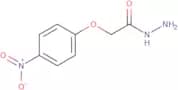
2-(4-Nitrophenoxy)acetohydrazide
CAS:<p>2-(4-Nitrophenoxy)acetohydrazide is a crystalline compound that can be used as a ligand for protein-ligand binding studies. It has also been shown to have anticancer activity in vitro against the human breast cancer cell line MCF-7. The bioassay results showed antiproliferative and proapoptotic effects on MCF-7 cells, and single crystal X-ray diffraction studies revealed that 2-(4-Nitrophenoxy)acetohydrazide is an inhibitor of the pyrazole derivatives x-ray structures, which are involved in cancer cell proliferation.</p>Formula:C8H9N3O4Purity:Min. 95%Molecular weight:211.17 g/mol2-Chloro-6-fluoronitrobenzene
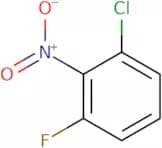
CAS:<p>2-Chloro-6-fluoronitrobenzene is an aromatic compound that has been used as a versatile building block in the synthesis of complex compounds. It is also used as a research chemical, reaction component, and speciality chemical. This compound has been shown to be useful for the preparation of pharmaceuticals, agrochemicals, and other organic compounds. 2-Chloro-6-fluoronitrobenzene is a colorless liquid with a boiling point of 130 degrees Celsius at atmospheric pressure. It has many uses in research and industry due to its versatility and high quality.</p>Formula:C6H3ClFNO2Purity:Min. 95%Color and Shape:PowderMolecular weight:175.54 g/mol4-Chloro-3-nitroacetophenone
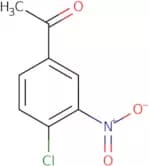
CAS:<p>4-Chloro-3-nitroacetophenone is a phenothiazine drug that is used in the treatment of lung conditions. It binds to the active site of human cytochrome P450, which is an enzyme that metabolizes many drugs and other foreign substances. 4-Chloro-3-nitroacetophenone inhibits the reaction by binding to the chloride ion and preventing it from leaving the enzyme's active site, which is necessary for its function. The drug has been shown to have a high affinity for protozoan tetrahymena, an organism that has been widely used as a model system in biochemistry research. 4-Chloro-3-nitroacetophenone also inhibits biochemical reactions involving nucleophilic substrates such as quinoline derivatives. The reaction rate of these substrates is decreased by this drug due to its ability to compete with water molecules for the nucleophilic reaction intermediate.</p>Formula:C8H6ClNO3Purity:Min. 95%Color and Shape:PowderMolecular weight:199.59 g/mol2-Hydroxy-5-nitrophenylacetic acid
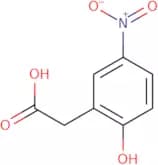
CAS:<p>2-Hydroxy-5-nitrophenylacetic acid is a versatile building block that can be used as a reagent, speciality chemical, or research chemical. It has been synthesized and characterized from the nitrobenzene derivative 2-hydroxyacetophenone. The compound has been shown to inhibit the growth of bacteria by binding to bacterial DNA gyrase and topoisomerase IV. This inhibits bacterial growth by preventing DNA replication and transcription. As an intermediate, 2-hydroxy-5-nitrophenylacetic acid is useful in organic synthesis as a reaction component or scaffold.</p>Formula:C8H7NO5Purity:Min. 95%Color and Shape:PowderMolecular weight:197.14 g/mol3-Fluoro-4-nitrotoluene
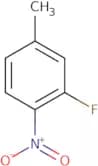
CAS:<p>3-Fluoro-4-nitrotoluene is a chemical that belongs to the class of nitro compounds. It is used as an intermediate for the synthesis of beta-cyclodextrin, which is a cyclic oligosaccharide that has been found to be effective in inhibiting influenza virus. 3-Fluoro-4-nitrotoluene can be produced through the reaction of formaldehyde with sodium nitrate and hydrofluoric acid in a liquid phase. This reaction takes place at room temperature and produces a yield of about 50%. The production of this compound is also efficient and inexpensive.</p>Formula:C7H6FNO2Purity:Min. 95%Color and Shape:PowderMolecular weight:155.13 g/mol3-Nitrobenzhydrazide
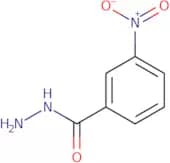
CAS:<p>3-Nitrobenzhydrazide is a chemical compound that can be synthesized by reacting an aldehyde with nitric acid. This reaction is catalyzed by the presence of an alkali metal hydroxide and produces an intramolecular hydrogen bond between the nitro group and the carbonyl oxygen. 3-Nitrobenzhydrazide has been shown to inhibit growth in bacteria, yeast, and fungi. The inhibition of bacteria may be due to its ability to bind to bacterial membranes and alter their permeability. 3-Nitrobenzhydrazide is also able to inhibit the synthesis of enzymes in fungi, which may lead to cell death. 3-Nitrobenzhydrazide has also been shown to have antimicrobial activity against bacteria such as Staphylococcus aureus and Pseudomonas aeruginosa.</p>Formula:C7H7N3O3Color and Shape:PowderMolecular weight:181.15 g/mol4-Nitrophenylnitroethene
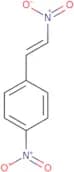
CAS:4-Nitrophenylnitroethene is an organic compound that is synthesized through a nitroaldol reaction. This process involves the condensation of nitric acid and phenylethyl alcohol. The product is then catalyzed with potassium carbonate to produce 4-nitrophenylnitroethene. Nitroaldol reactions are used to produce many different types of compounds, including pharmaceuticals, dyes, and fragrances. The synthesis of this compound was analyzed by high-resolution mass spectrometry and gas chromatography–mass spectrometry techniques. It was found that the mesoporous structure of the 4-nitrophenylnitroethene particles play a role in its chemical properties.Formula:C8H6N2O4Purity:Min. 95%Color and Shape:PowderMolecular weight:194.14 g/mol3-Cyano-4-methylnitrobenzene
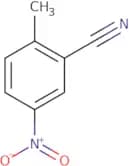
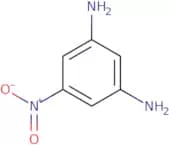
CAS:3-Cyano-4-methylnitrobenzene is a nitro compound that can be prepared by the reaction of nitric acid with aniline. It has been shown to have a strong affinity for oxygen, which may be due to its pyran ring. 3-Cyano-4-methylnitrobenzene has been found to react with acetonitrile in an electrochemical experiment, leading to the formation of nitronium ion and nitrate ion. The mechanism for this reaction is not well understood, but it offers a convenient way of preparing 3-cyano-4-methylnitrobenzene from nitric acid and aniline.Formula:C8H6N2O2Purity:Min. 95%Color and Shape:PowderMolecular weight:162.15 g/mol5-Nitro-m-phenylenediamine
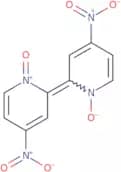
CAS:<p>5-Nitro-m-phenylenediamine is an organic compound that has the chemical formula CHNO. It is a white crystalline solid with a melting point of 158 °C. The compound is soluble in water and other polar solvents but insoluble in nonpolar solvents such as hexane. 5-Nitro-m-phenylenediamine can be prepared by nitration of m-phenylenediamine, which produces the desired product in about 30% yield and with impurities that must be removed by fractional crystallization. The compound is used as an intermediate for making dyes and pharmaceuticals.</p>Formula:C6H7N3O2Purity:Min. 95%Color and Shape:PowderMolecular weight:153.14 g/mol4,4'-Dinitro-2,2'-bipyridine-N,N'-dioxide - crude
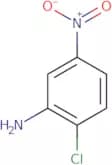
CAS:<p>4,4'-Dinitro-2,2'-bipyridine-N,N'-dioxide is a fine chemical with a high quality. It is a versatile building block with a wide range of applications in research and as a reagent. The compound is used in the synthesis of organic compounds and many other products. This product can be used as an intermediate for the production of more complex compounds or scaffolds. 4,4'-Dinitro-2,2'-bipyridine-N,N'-dioxide has been shown to be useful in the synthesis of pharmaceuticals and agrochemicals.</p>Formula:C10H6N4O6Purity:Min. 95%Color and Shape:Yellow PowderMolecular weight:278.18 g/mol2-Chloro-5-nitroaniline
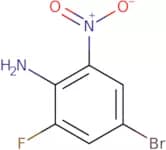
CAS:<p>2-Chloro-5-nitroaniline (2C5N) is a drug substance that belongs to the group of amines. It is an intermediate that is used in the synthesis of caffeine and other amines. 2C5N has been shown to have genotoxic impurities, which may be due to its reaction with hydrochloric acid and acylation. 2C5N has also been shown to be soluble in water, but not chloroform or ethers.</p>Formula:C6H5ClN2O2Purity:Min. 95%Color and Shape:PowderMolecular weight:172.57 g/mol4-Bromo-2-fluoro-6-nitroaniline
CAS:<p>Please enquire for more information about 4-Bromo-2-fluoro-6-nitroaniline including the price, delivery time and more detailed product information at the technical inquiry form on this page</p>Formula:C6H4BrFN2O2Purity:Min. 95%Molecular weight:235.01 g/mol2,4-Dinitrophenyl butyrate
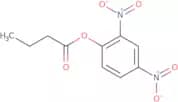
CAS:<p>2,4-Dinitrophenyl butyrate is a plant-derived compound that belongs to the group of fatty acids. It has shown radical scavenging activity in a homogeneous assay and has been found to be a strong inhibitor of pancreatic lipase. 2,4-Dinitrophenyl butyrate has also been used as a marker for proteolytic enzymes and has been shown to have inhibitory effects on pancreatic lipase. This compound is not only useful for studying enzyme inhibition, but it can also be used as an ingredient in food products.</p>Formula:C10H10N2O6Purity:Min. 98 Area-%Color and Shape:PowderMolecular weight:254.2 g/mol4-Hydroxy-3-nitrophenylethylamine nitrate
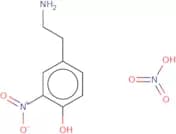
CAS:Controlled Product<p>4-Hydroxy-3-nitrophenylethylamine nitrate is a chemical that has been used as a reagent and reaction component. It can be used in the synthesis of complex compounds such as pharmaceuticals, agrochemicals, and high quality specialty chemicals. 4-Hydroxy-3-nitrophenylethylamine nitrate is an intermediate or building block for many organic syntheses due to its versatility. This compound has been shown to have a variety of useful applications including the production of antihistamines, anticonvulsants, antidepressants, antipsychotics, appetite suppressants, and decongestants.</p>Formula:C8H10N2O3•HNO3Purity:Min. 95%Color and Shape:PowderMolecular weight:245.19 g/mol4-Methoxy-2-nitroaniline
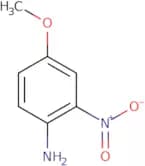
CAS:<p>4-Methoxy-2-nitroaniline is a molecule that has been shown to be able to form an intramolecular hydrogen bond with the 5' carbon of the sugar ring. This reaction leads to the formation of an alkoxy radical, which reacts with chloride ions in acidic conditions. The formation of this intermediate product is reversible, and can be used for analysis of hydrochloric acid. 4-Methoxy-2-nitroaniline has also been shown to react with diazonium salt in the presence of acid, forming a molecule that contains two amines. This reaction can be reversed by adding hydrogen chloride to the solution and analyzing the solution's acidity.</p>Formula:C7H8N2O3Purity:Min. 98 Area-%Color and Shape:PowderMolecular weight:168.15 g/mol1-[[5-(p-Nitrophenyl)furfurylidene]amino]-hydantoin sodium
CAS:<p>Dantrolene sodium is a muscle relaxant that belongs to the group of pharmacological agents. It is used to treat muscle spasms and hyperactivity in patients with neuromuscular disorders. Dantrolene sodium inhibits calcium release by blocking the activity of the enzyme ryanodine receptor in skeletal muscle cells. This inhibition prevents uncontrolled contraction of muscles and reduces their energy consumption. The drug also has an effect on malignant hyperthermia, which is caused by an increase in the production of adenosine triphosphate (ATP) due to increased cellular metabolism. Dantrolene sodium can inhibit ATP synthesis, thus reducing energy production and stabilizing cell membranes, thereby preventing cell death in neurons and other tissues.</p>Formula:C14H10N4O5•NaPurity:Min. 95%Color and Shape:Yellow PowderMolecular weight:337.24 g/mol5-Fluoro-2-nitrobenzotrifluoride
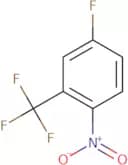
CAS:<p>5-Fluoro-2-nitrobenzotrifluoride is a triamine that stabilizes complex molecules. It has been used in the synthesis of fluorinated compounds and as a nucleophile in organic reactions. The amido group, which is present on 5-fluoro-2-nitrobenzotrifluoride, reacts with electrophilic carbon atoms to form new bonds. This type of reaction is known as an amido substitution. 5-Fluoro-2-nitrobenzotrifluoride is also able to react with sodium nitrate to form a nitro group, which can be used for the synthesis of nitro compounds. As a result, this chemical has been used as a waveguide material in the fabrication of microns and operational amplifiers.</p>Formula:C7H3F4NO2Purity:Min. 95%Color and Shape:Clear LiquidMolecular weight:209.1 g/mol4-Bromo-3-fluoronitrobenzene
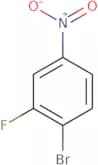
CAS:<p>Please enquire for more information about 4-Bromo-3-fluoronitrobenzene including the price, delivery time and more detailed product information at the technical inquiry form on this page</p>Formula:C6H3BrFNO2Purity:Min. 95%Color and Shape:PowderMolecular weight:220 g/mol2-Chloro-5-nitrobenzophenone
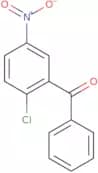
CAS:<p>2-Chloro-5-nitrobenzophenone is a reactive intermediate that belongs to the class of aryl chlorides. It has been used in organic synthesis as a monomer and homologue for the preparation of other organic compounds. 2-Chloro-5-nitrobenzophenone can be synthesized from malonic acid and an aryl chloride by treatment with sodium hydroxide or potassium carbonate in an organic solvent. This compound reacts with acetonitrile at room temperature to form chloroform, nitronium ion, and hydrogen chloride. The reaction system can also be prepared by treating 2-chloro-5-nitrobenzophenone with pyridine in acetonitrile under reflux conditions.<br>2-Chloro-5-nitrobenzophenone is used as a reagent in plant cell culture experiments where it induces DNA cleavage and inhibits protein synthesis.</p>Formula:C13H8ClNO3Purity:Min. 95%Color and Shape:PowderMolecular weight:261.66 g/mol3-Amino-6-nitropyridine
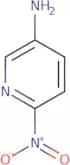
CAS:<p>3-Amino-6-nitropyridine is a nitropyridine and a coupler. It is used as a reagent to synthesize hydroxylamine, aralkyl, and cycloalkyl intermediates. 3-Amino-6-nitropyridine can also be used as an intermediate in the synthesis of medicines such as copper.</p>Formula:C5H5N3O2Purity:Min. 98 Area-%Color and Shape:PowderMolecular weight:139.11 g/mol

![1-[[5-(p-Nitrophenyl)furfurylidene]amino]-hydantoin sodium](/_next/image/?url=https%3A%2Fstatic.cymitquimica.com%2Fproducts%2F3D%2Fthumb-webp%2FFN44999.webp&w=3840&q=75)