Ketones
Ketones are organic compounds characterized by the presence of a carbonyl group (C=O) bonded to two carbon atoms. These compounds are highly versatile and play a crucial role in various chemical reactions, including oxidation, reduction, and condensation. Ketones are essential intermediates in the synthesis of pharmaceuticals, fragrances, and polymers. At CymitQuimica, we provide a wide range of high-quality ketones to support your research and industrial applications.
Found 18870 products of "Ketones"
Sort by
Purity (%)
0
100
|
0
|
50
|
90
|
95
|
100
Stigmast-4-ene-3,6-dione
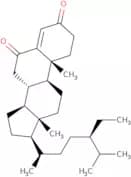
CAS:Controlled ProductStigmast-4-ene-3,6-dione is a tannin found in the bark of many plants. It has been shown to have neuroprotective effects by binding to cannabinoid receptor CB2 and activating its downstream signaling pathway. Stigmast-4-ene-3,6-dione also has anti-inflammatory properties due to its ability to inhibit fatty acid synthesis through its inhibition of acetyl CoA carboxylase (ACC). This compound also has antioxidant properties and is able to inhibit the production of reactive oxygen species by binding with copper ions.Purity:Min. 95%6-Methoxy-1,4-dihydroquinoxaline-2,3-dione
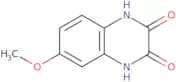
CAS:6-Methoxy-1,4-dihydroquinoxaline-2,3-dione is a nitrile that is generated by the catalytic oxidation of quinoxaline. It is a colorless to yellow solid with a melting point of about 155°C. 6-Methoxy-1,4-dihydroquinoxaline-2,3-dione has been shown to be an effective nitrile for the synthesis of diketene. 6-Methoxy-1,4-dihydroquinoxaline-2,3-dione can be converted into hydrochloric acid and ethanol through hydrolysis with hydrochloric acid or ethanol in the presence of heat. This reaction will proceed more quickly at higher temperatures. The filtration method can be used to remove any unwanted solids from the reaction mixture.Formula:C9H8N2O3Purity:Min. 95%Color and Shape:PowderMolecular weight:192.17 g/mol1,4-Dihydroxy-2-butanone
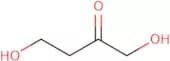
CAS:1,4-Dihydroxy-2-butanone is a synthetic organic compound, often described as an intermediate or precursor in various biochemical processes. It is primarily derived from chemical synthesis methods involving the manipulation of butanone derivatives. Its chemical stability and reactivity make it a valuable compound in laboratory settings.The mode of action of 1,4-Dihydroxy-2-butanone involves its participation as a key intermediate in the biosynthesis of riboflavin, or vitamin B2, in microorganisms. Within this pathway, it undergoes several enzymatic transformations, contributing to the formation of complex structures necessary for riboflavin synthesis.The uses and applications of 1,4-Dihydroxy-2-butanone are predominantly found in research environments, where it serves as a critical component in studies focused on understanding and synthesizing riboflavin. Additionally, its role in elucidating enzyme mechanisms and exploring metabolic pathways makes it an essential compound for scientists working in the fields of biochemistry and metabolic engineering. This compound's contribution to fundamental research provides insights into potential biotechnological applications and innovations in vitamin production.Formula:C4H8O3Purity:Min. 97 Area-%Color and Shape:White PowderMolecular weight:104.1 g/mol1,3-Diphenylacetone
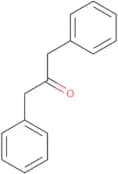
CAS:1,3-Diphenylacetone is a fine chemical that can be used as a building block for research chemicals, as a reagent in organic synthesis, or as a speciality chemical. It is also a versatile building block and has been shown to be useful in the formation of complex compounds. 1,3-Diphenylacetone can react with electrophiles to form new carbon-carbon bonds and has been used in reactions involving nucleophilic substitution, electrophilic addition, and Michael reactions. 1,3-Diphenylacetone is also water soluble and has been shown to be compatible with both ionic and covalent solvents.Formula:C15H14OPurity:Min. 99.0 Area-%Molecular weight:210.28 g/molD-Phenylalanyl-prolyl-arginyl chloromethyl ketone
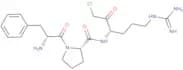
CAS:D-Phenylalanyl-prolyl-arginyl chloromethyl ketone is a chemical compound that inhibits the proteolytic activity of serine proteases. It binds to the thrombin receptor on the surface of cells and prevents activation of fibrinogen by thrombin, which is an enzyme that promotes clotting. D-Phenylalanyl-prolyl-arginyl chloromethyl ketone also blocks platelet aggregation and has shown an ability to induce muscle cell proliferation. This drug has been used in pharmacological experiments as an inhibitor binding agent.Formula:C21H31ClN6O3Purity:Min. 90 Area-%Color and Shape:PowderMolecular weight:450.96 g/mol1,3-Diphenylacetone, 97.0%+
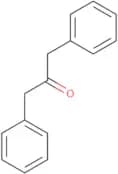
CAS:1,3-Diphenylacetone is a high quality chemical that is used as a reagent and intermediate in the production of specialty chemicals. It can be used to synthesize other compounds such as pharmaceuticals, pesticides, and lubricants. 1,3-Diphenylacetone has been shown to be an effective building block for a variety of chemical reactions. This compound is also versatile because it can be used as a research chemical or scaffold for synthesis of other compounds. 1,3-Diphenylacetone has CAS number 102-04-5 and can be found in the speciality chemical category.Formula:C15H14OPurity:Min. 97.0 Area-%Molecular weight:210.28 g/molRef: 3D-D-6112
1kgTo inquire5kgTo inquire250gTo inquire500gTo inquire2500gTo inquire-Unit-kgkgTo inquire3,8-Dihydroxy-6H-benzo[c]chromen-6-one
CAS:3,8-Dihydroxy-6H-benzo[c]chromen-6-one (3,8 DHC) is a natural compound that has been shown to have antioxidant and anti-inflammatory properties. It increases the production of ATP (cellular energy) by activating the ATP binding cassette transporter and increasing autophagy. 3,8 DHC may also inhibit apoptosis (cell death), which has been observed in studies involving balloon injury and atherosclerotic lesions. This compound may also have potential therapeutic benefits for bowel disease, cancer, and neuronal death.
Formula:C13H8O4Purity:Min. 95%Color and Shape:White To Beige To Yellow To Brown SolidMolecular weight:228.2 g/mol(-)-Isolongifolen-9-one
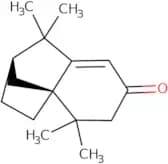
CAS:(-)-Isolongifolen-9-one is a sesquiterpenoid compound, which is a type of naturally occurring terpenoid. It is primarily derived from plants and essential oils, particularly those in the Pinaceae family. The compound's molecular structure contributes to its characteristic aromatic properties, making it a subject of interest in both chemical and biological research.Formula:C15H22OPurity:Min. 95%Molecular weight:218.33 g/mol3-((2-Aminophenyl)amino)-5-phenylcyclohex-2-en-1-one
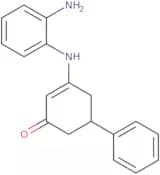
CAS:Please enquire for more information about 3-((2-Aminophenyl)amino)-5-phenylcyclohex-2-en-1-one including the price, delivery time and more detailed product information at the technical inquiry form on this pageFormula:C18H18N2OPurity:Min. 95%Color and Shape:PowderMolecular weight:278.35 g/mol3-(4-ethoxyphenyl)spiro[1,3-thiazolidine-2,3'-indoline]-4,7-dione
CAS:Please enquire for more information about 3-(4-ethoxyphenyl)spiro[1,3-thiazolidine-2,3'-indoline]-4,7-dione including the price, delivery time and more detailed product information at the technical inquiry form on this pagePurity:Min. 95%3-((3,5-bis(trifluoromethyl)phenyl)amino)-5-phenylcyclohex-2-en-1-one
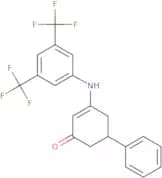
CAS:Please enquire for more information about 3-((3,5-bis(trifluoromethyl)phenyl)amino)-5-phenylcyclohex-2-en-1-one including the price, delivery time and more detailed product information at the technical inquiry form on this pagePurity:Min. 95%3-(tert-butyl)-4-((2-hydroxy-3-methoxyphenyl)methylene)-1-phenyl-2-pyrazolin-5-one
CAS:Please enquire for more information about 3-(tert-butyl)-4-((2-hydroxy-3-methoxyphenyl)methylene)-1-phenyl-2-pyrazolin-5-one including the price, delivery time and more detailed product information at the technical inquiry form on this pagePurity:Min. 95%2-Phenyl-1,3-indandione
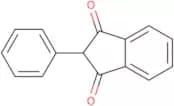
CAS:2-Phenyl-1,3-indandione is a coumarin derivative that is used as an anti-inflammatory drug. It inhibits the release of arachidonic acid from phospholipids in the cell membrane and consequently inhibits the formation of prostaglandins. The drug has been shown to inhibit light-induced tumor promotion in mice with cervical cancer, which may be due to its ability to inhibit the activity of oxidative enzymes such as cytochrome P450. 2-Phenyl-1,3-indandione also inhibits sodium-dependent glucose transport and energy metabolism by binding to potassium channels. This drug also has immunosuppressive effects on lymphocyte transformation and autoimmune diseases through hydrogen bonding interactions with protein molecules.Formula:C15H10O2Purity:Min. 95%Color and Shape:PowderMolecular weight:222.24 g/mol5-[3,4-(Methylenedioxy)phenyl]-cyclohexane-1,3-dione
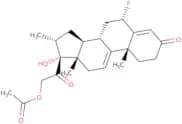
CAS:5-[3,4-(Methylenedioxy)phenyl]-cyclohexane-1,3-dione is a versatile building block for the synthesis of complex compounds. It is a reagent that is used in the preparation of research chemicals and speciality chemicals. The compound has been shown to be useful as a building block or scaffold for various reactions. This chemical also has many useful applications, such as being an intermediate in the synthesis of pharmaceuticals and agrochemicals. 5-[3,4-(Methylenedioxy)phenyl]-cyclohexane-1,3-dione is available commercially with CAS No. 55579-76-5 and can be used in high quality experiments when it is required as a reaction component.Formula:C13H12O4Purity:Min. 95%Molecular weight:232.23 g/mol6α-Fluoro-17,21-Dihydroxy-16α-Methylpregna-4,9(11)-Diene-3,20-Dione 21-Acetate
CAS:Controlled Product6alpha-Fluoro-17,21-Dihydroxy-16alpha-Methylpregna-4,9(11)-Diene-3,20-Dione 21-Acetate is a synthetic angiostatic agent that inhibits the angiogenic process by affecting the growth of new blood vessels. It has been shown to inhibit proteolytic activity and to have an inhibitory effect on tumour necrosis factor-α (TNF-α) induced activation of endothelial cells and their proliferation. 6alpha-Fluoro-17,21-Dihydroxy-16alpha-Methylpregna-4,9(11)-Diene 3,20 Dione 21 Acetate also inhibits the growth of fetal bovine aortic endothelial cells in culture. The drug was also found to significantly reduce the monolayer cell viability after uptake by endothelial cells.Formula:C24H31FO5Purity:Min. 95%Molecular weight:418.5 g/mol5-a-Cholestan-3-one
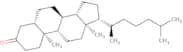
CAS:Controlled Product5-a-Cholestan-3-one is a sterol that has been shown to have antiinflammatory activity and inhibit skin tumor formation. The sterols are the primary lipids in the human body, with 5-a-cholestan-3-one being one of the most abundant, making up about 50% of total sterols. The 5-a-cholestan-3-one is found in cholesterol, which is an important component of cell membranes. It also plays a role in the synthesis of bile acids and coprostanol. This compound can be found in fecal samples as well as wastewater treatment plants, where it is used for sample preparation. There are two different forms of 5-a-cholestan 3 one; protocatechuic acid, which is an acidic form found mainly in plants, and neutral cholic acid which can be found in humans or animals.Formula:C27H46OPurity:Min. 95%Color and Shape:PowderMolecular weight:386.65 g/mol5-Chloro-2-adamantanone
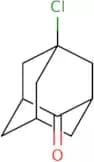
CAS:5-Chloro-2-adamantanone is an organic solvent that has nucleophilic properties. It can act as a reactive, nucleophile, or carbonyl group. 5-Chloro-2-adamantanone is synthesized by the reaction of 2-chloroadamantane with chlorosulfonic acid in the presence of zinc chloride at room temperature. The yield of this reaction is dependent on the concentration of zinc chloride used and ranges from 23% to 66%. This reaction can be optimized by altering the reaction time and temperature, as well as by using different halides.Formula:C10H13ClOPurity:Min. 95%Molecular weight:184.66 g/mol2-Methyl-1,3-cyclohexanedione
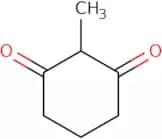
CAS:2-Methyl-1,3-cyclohexanedione is an organic compound that has been used in the synthesis of a variety of drugs. The functional theory for this type of reaction is based on the conformational properties and steric interactions of the reactants. This compound can react with alkyl halides to form ethers or esters by using a lipase or boronic ester as a catalyst. 2-Methyl-1,3-cyclohexanedione has also been used in asymmetric syntheses and radiation damage studies. It is stable under acidic conditions and its carbonyl group can be replaced with a supercritical carbon dioxide group to make it more chemically stable.Formula:C7H10O2Purity:Min. 98%Color and Shape:PowderMolecular weight:126.15 g/mol5-Chloro-2-methyl-2H-isothiazol-3-one hydrochloride
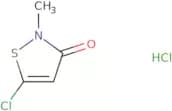
CAS:5-Chloro-2-methyl-2H-isothiazol-3-one hydrochloride (Kathon CG) is a preservative that belongs to the group of sesquiterpene lactones. It is used in cosmetics, pharmaceuticals, and industrial products as an antimicrobial agent. Kathon CG has been shown to be effective against bacteria such as Escherichia coli and Staphylococcus aureus. Kathon CG has also been found to be nontoxic to human cells in vitro at concentrations up to 100%. The optimum concentration for this preservative has been found to be 0.0025% in vivo on human skin and 0.025% in vitro on human skin. This preservative is not toxic to humans or animals when ingested at doses up to 2 g/kg body weight and can cause dermatitis at concentrations of 10%.Formula:C4H5Cl2NOSPurity:Min. 95 Area-%Color and Shape:Red PowderMolecular weight:186.06 g/molAzepan-4-one hydrochloride
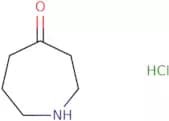
CAS:Azepan-4-one hydrochloride is a versatile building block that can be used as a precursor to many other compounds. It is an important reagent in organic synthesis and is also used as a reactant in the preparation of complex compounds. Azepan-4-one hydrochloride has been shown to be useful for the synthesis of valuable research chemicals, such as thiophene and benzothiophene derivatives. It is also an intermediate in the production of high quality pharmaceuticals, such as anti-cancer drugs and antibiotics. Azepan-4-one hydrochloride is a useful scaffold for the design of new compounds with desired properties.BR> Azepan-4-one hydrochloride can be used as an intermediate for pharmaceuticals, speciality chemicals, and research chemicals.BR> Azepan-4-one hydrochloride can be converted into other products by using it as a building block or reagent in organic synthesis.BRFormula:C6H11NO•HClPurity:Min. 95%Color and Shape:PowderMolecular weight:149.62 g/mol

![3,8-Dihydroxy-6H-benzo[c]chromen-6-one](/_next/image/?url=https%3A%2Fstatic.cymitquimica.com%2Fproducts%2F3D%2Fthumb-webp%2FFD171109.webp&w=3840&q=75)
![3-(4-ethoxyphenyl)spiro[1,3-thiazolidine-2,3'-indoline]-4,7-dione](/_next/image/?url=https%3A%2Fstatic.cymitquimica.com%2Fproducts%2F3D%2Fthumb-webp%2FFE169782.webp&w=3840&q=75)

![5-[3,4-(Methylenedioxy)phenyl]-cyclohexane-1,3-dione](/_next/image/?url=https%3A%2Fstatic.cymitquimica.com%2Fproducts%2F3D%2Fthumb-webp%2FFM66989.webp&w=3840&q=75)