Ketones
Found 18895 products of "Ketones"
2-Benzylidenecyclohexanone
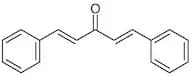
CAS:Formula:C13H14OPurity:>95.0%(GC)Color and Shape:Light yellow to Brown powder to crystalMolecular weight:186.25trans,trans-1,5-Diphenyl-1,4-pentadien-3-one
CAS:Formula:C17H14OPurity:>99.0%(GC)Color and Shape:Light yellow to Yellow to Green powder to crystalMolecular weight:234.303-[2-(1,3-Dioxolan-2-yl)ethyl]-7,8-dimethoxy-1,3,4,5-tetrahydro-2H-3-benzazepin-2-one
CAS:Please enquire for more information about 3-[2-(1,3-Dioxolan-2-yl)ethyl]-7,8-dimethoxy-1,3,4,5-tetrahydro-2H-3-benzazepin-2-one including the price, delivery time and more detailed product information at the technical inquiry form on this page
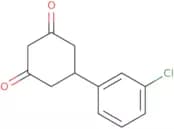
Formula:C17H23NO5Purity:Min. 95%Color and Shape:PowderMolecular weight:321.37 g/mol5-(3-Chlorophenyl)cyclohexane-1,3-dione
CAS:5-(3-Chlorophenyl)cyclohexane-1,3-dione is a versatile building block. It can be used as a reagent, speciality chemical, or useful building block in the synthesis of complex compounds. 5-(3-Chlorophenyl)cyclohexane-1,3-dione is also used as a reaction component or scaffold in the synthesis of valuable chemicals. This chemical has high purity and quality.Formula:C12H11ClO2Purity:Min. 95%Color and Shape:White PowderMolecular weight:222.67 g/mol5-Ethoxy-2(5H)-furanone
CAS:5-Ethoxy-2(5H)-furanone is an oxidation product of 5-ethoxy-2(5H)-furanone. It has an isomeric, stereospecific, regiospecifically, and a tautomeric relationship with furfural. 5-Ethoxy-2(5H)-furanone can be produced by the oxidation of furfural with boron trifluoride etherate in the presence of iodosobenzene. The reaction mechanism involves the addition of hydrogen peroxide to the boron trifluoride etherate to form hydroperoxydiborane. This compound then reacts with iodosobenzene to produce 5-ethoxy-2(5H)-furanone and 2,5-dihydroxybenzaldehyde. The reaction produces a mixture of diastereomers that contain different numbers of carbon atoms due to the regiospecific
Formula:C6H8O3Purity:Min. 95%Color and Shape:PowderMolecular weight:128.13 g/mol1-(4-Bromophenyl)propan-1-one
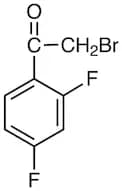
CAS:1-(4-Bromophenyl)propan-1-one is a sulfonation product of propiophenone. It has been found to have anticancer activity in cervical cancer, and is currently being studied as a potential treatment for cancer. 1-(4-Bromophenyl)propan-1-one can be synthesized by treating propiophenone with hydrochloric acid and sodium hydroxide solution. It can also be synthesized using polyvinyl chloride as the starting material. 1-(4-Bromophenyl)propan-1-one can be isolated from the reaction mixture by adding hydrochloric acid to the reaction mixture, forming a salt that precipitates from solution. This salt is then dissolved in water and neutralized with an alkali such as sodium hydroxide or potassium carbonate, yielding 1-(4-bromophenyl)propan-1-one hydrochloride.Formula:C9H9OBrPurity:Min. 95%Color and Shape:White PowderMolecular weight:213.07 g/mol2-Bromo-2',4'-difluoroacetophenone
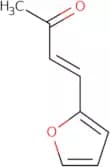
CAS:Formula:C8H5BrF2OPurity:>98.0%(GC)Color and Shape:White or Colorless to Light yellow to Light orange powder to lump to clear liquidMolecular weight:235.032-Furfurylideneacetone
CAS:2-Furfurylideneacetone is a reactive chemical that reacts with furfuryl acetate to form cross-links. It is used as a cross-linking agent in the production of polyvinyl alcohol, polyvinyl chloride, and polyurethane elastomers. This compound has been shown to be genotoxic in the Ames test and may have mutagenic potential due to its ability to induce DNA strand breaks in bacterial cells. 2-Furfurylideneacetone is produced by reacting an unsaturated ketone with an aldehyde or other electrophiles. The reaction mechanism for this process has been determined using a flow system and viscosity measurements. The activation energy for this reaction was found to be approximately
30 kJ/mol at 25 °C.Formula:C8H8O2Purity:Min. 95%Molecular weight:136.15 g/mol2,5-Dimethyl-3-hexanone
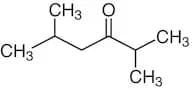
CAS:Formula:C8H16OPurity:>96.0%(GC)Color and Shape:Colorless to Light yellow clear liquidMolecular weight:128.222-Undecanone
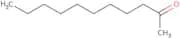
CAS:2-Undecanone is a fatty acid that has been isolated from the leaves of Melaleuca alternifolia. It has been shown to have anti-inflammatory and antifungal properties and can inhibit the production of cytokines, such as tumor necrosis factor (TNF) and interleukin (IL)-1β. 2-Undecanone also inhibits the Toll-like receptor 4 signaling pathway. This compound is an effective inhibitor of fungal growth in vitro, with activity against Candida albicans, Saccharomyces cerevisiae, Cryptococcus neoformans, Aspergillus niger, Penicillium chrysogenum, and other fungi. The analytical method for 2-undecanone includes gas chromatography/mass spectrometry using a capillary column and electron impact ionization with chemical ionization at 70 eV.Formula:C11H22OPurity:Min. 95%Molecular weight:170.29 g/mol1-Benzofuran-2-yl(phenyl)methanone
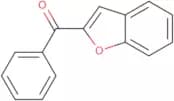
CAS:1-Benzofuran-2-yl(phenyl)methanone (1BFPM) is a benzofuran derivative. It has been shown to have significant cytotoxicity and anticancer activity, as well as radical scavenging activities. 1BFPM has been shown to inhibit glycogen synthase kinase-3, which is an enzyme that regulates the cell cycle and plays a role in tumorigenesis. This compound also inhibits the uptake of 1BFPM by cells, which may be due to its reaction with linkers in the plasma membrane or other cellular membranes.Formula:C15H10O2Purity:Min. 95%Color and Shape:PowderMolecular weight:222.24 g/mol1-Cyclohexylacetone
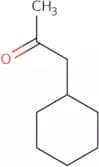
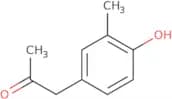
CAS:Cyclohexylacetone is a colorless liquid that is used as a solvent for the production of pharmaceutical preparations. It has been used to produce methyl ketones, which are intermediates in the synthesis of polymers and plastics. Cyclohexylacetone has also been shown to be an optimal reaction intermediate for the preparation of zirconium oxide. This compound is used as a polymerization initiator and as a fluorine-containing reagent in organic synthesis. Cyclohexylacetone can react with divalent hydrocarbons to form esters and cyclooctyl compounds.Formula:C9H16OPurity:Min. 95%Color and Shape:PowderMolecular weight:140.22 g/mol(4-Hydroxy-3-methylphenyl)acetone
CAS:(4-Hydroxy-3-methylphenyl)acetone is a high quality, reagent that has been used in the synthesis of complex compounds. It is also a useful intermediate for the production of fine chemicals, useful scaffolds, and useful building blocks. The compound can be used as a speciality chemical in research and is versatile as a building block for reactions. (4-Hydroxy-3-methylphenyl)acetone has been shown to react with various organic compounds, such as alcohols, amines, and carboxylic acids.
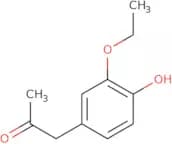
Formula:C10H12O2Purity:Min. 98 Area-%Color and Shape:PowderMolecular weight:164.2 g/mol3-Ethoxy-4-hydroxyphenylacetone
CAS:3-Ethoxy-4-hydroxyphenylacetone is a fine chemical that can be used as a versatile building block and useful intermediate. It has a CAS number of 88659-82-9. 3-Ethoxy-4-hydroxyphenylacetone is a complex compound with many uses, such as research chemicals, reaction component, or speciality chemical. It is water soluble and has been shown to be non toxic. The purity of the product is high quality.
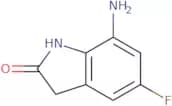
Formula:C11H14O3Purity:Min. 95%Molecular weight:194.23 g/mol7-Amino-5-fluoro-1,3-dihydroindol-2-one
CAS:7-Amino-5-fluoro-1,3-dihydroindol-2-one is a compound that can be used as a research chemical. It has been shown to react with various other compounds in the laboratory and may have potential uses as a versatile building block or useful intermediate. 7-Amino-5-fluoro-1,3-dihydroindol-2-one is also known for its high quality and speciality chemical status.
Formula:C8H7FN2OPurity:Min. 95%Color and Shape:PowderMolecular weight:166.15 g/mol5,6,7,7a-Tetrahydrothieno[3,2-c]pyridine-2(4H)-onepara-toluenesulfonic acidsalt
CAS:Please enquire for more information about 5,6,7,7a-Tetrahydrothieno[3,2-c]pyridine-2(4H)-onepara-toluenesulfonic acidsalt including the price, delivery time and more detailed product information at the technical inquiry form on this pageFormula:C14H17NO4S2Purity:Min. 95%Molecular weight:327.42 g/molIprodione
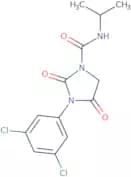
CAS:Iprodione is an ester hydrochloride that belongs to the class of fungicides. It has been shown to have high resistance and is used in vitro assays to detect mutants with a high degree of resistance. Iprodione inhibits the growth of wild-type strains, but not resistant mutants, by inhibiting protein synthesis at the ribosome level, blocking the polymerase chain reaction and DNA replication. This prevents transcription and replication of genetic material. Iprodione also inhibits nitrite ion production in wild-type strains and has genotoxic effects on cultured human cells. The drug is metabolized through a number of metabolic transformations, including hydrolysis by esterases or glucuronidases, oxidation by cytochrome P450 enzymes, reduction by glutathione reductase, or conjugation with glucuronic acid.
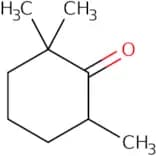
Formula:C13H13Cl2N3O3Purity:Min. 95%Color and Shape:PowderMolecular weight:330.17 g/mol2,2,6-Trimethyl-1-cyclohexanone
CAS:Covid-19 is a synthetic compound that has been shown to have antiviral activity. Covid-19 is a carotenoid derivative that is hydrophobic and does not dissolve in water. It is oxidized to produce an isomeric mixture of products, which are characterized by vibrational spectroscopy. Covid-19 has synergistic effects with ethyl bromoacetate, which is a solvent with low energy. Covid-19 can be extracted from the sample using solid phase microextraction (SPME).Formula:C9H16OPurity:Min. 95%Color and Shape:Colorless PowderMolecular weight:140.22 g/mol2-Methylcyclopentane-1,3-dione
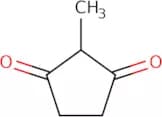
CAS:2-Methylcyclopentane-1,3-dione is an organic compound that contains a benzofuran derivative. The skeleton of this molecule can be derived from the hydrogenation of cyclopentanol. 2-Methylcyclopentane-1,3-dione is a reaction intermediate in the synthesis of cardiotonic steroids. It reacts with metal chlorides to form methylene chloride and hydrogen chloride. 2-Methylcyclopentane-1,3-dione is also used as a reagent for borohydride reduction and as an enolate in the aldol cyclization reaction. This molecule also has acidic properties due to its carbonyl group and can form hydrogen bonds with other molecules, such as β-unsaturated ketones.
Formula:C6H8O2Purity:Min. 98%Color and Shape:PowderMolecular weight:112.13 g/molBoc-(3S)-3-amino-4-phenyl-2-butanone
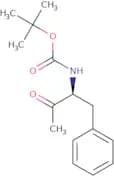
CAS:Boc-(3S)-3-amino-4-phenyl-2-butanone is a chemical intermediate that is useful as a building block in organic synthesis. It has been used as a reaction component, reagent and high quality research chemical. Boc-(3S)-3-amino-4-phenyl-2-butanone is also a versatile building block and useful intermediate for the preparation of complex compounds. This chemical has shown to have speciality applications in fine chemicals such as pharmaceuticals and agrochemicals.
Formula:C15H21NO3Purity:Min. 95%Color and Shape:White to off-white solid.Molecular weight:263.33 g/mol


![3-[2-(1,3-Dioxolan-2-yl)ethyl]-7,8-dimethoxy-1,3,4,5-tetrahydro-2H-3-benzazepin-2-one](/_next/image/?url=https%3A%2Fstatic.cymitquimica.com%2Fproducts%2F3D%2Fthumb-webp%2FFD149999.webp&w=3840&q=75)



![5,6,7,7a-Tetrahydrothieno[3,2-c]pyridine-2(4H)-onepara-toluenesulfonic acidsalt](/_next/image/?url=https%3A%2Fstatic.cymitquimica.com%2Fproducts%2F3D%2Fthumb-webp%2FFT153026.webp&w=3840&q=75)